You’ve found the perfect hat design for your brand, but the price quote seems higher than expected. This frustration hits many entrepreneurs when they first explore custom headwear manufacturing.
Custom hat pricing varies based on six key factors: design complexity1, material selection2, customization extent3, order quantity4, production timeline5, and quality specifications6. Understanding these cost drivers helps you make informed decisions and optimize your budget while achieving your desired product quality.
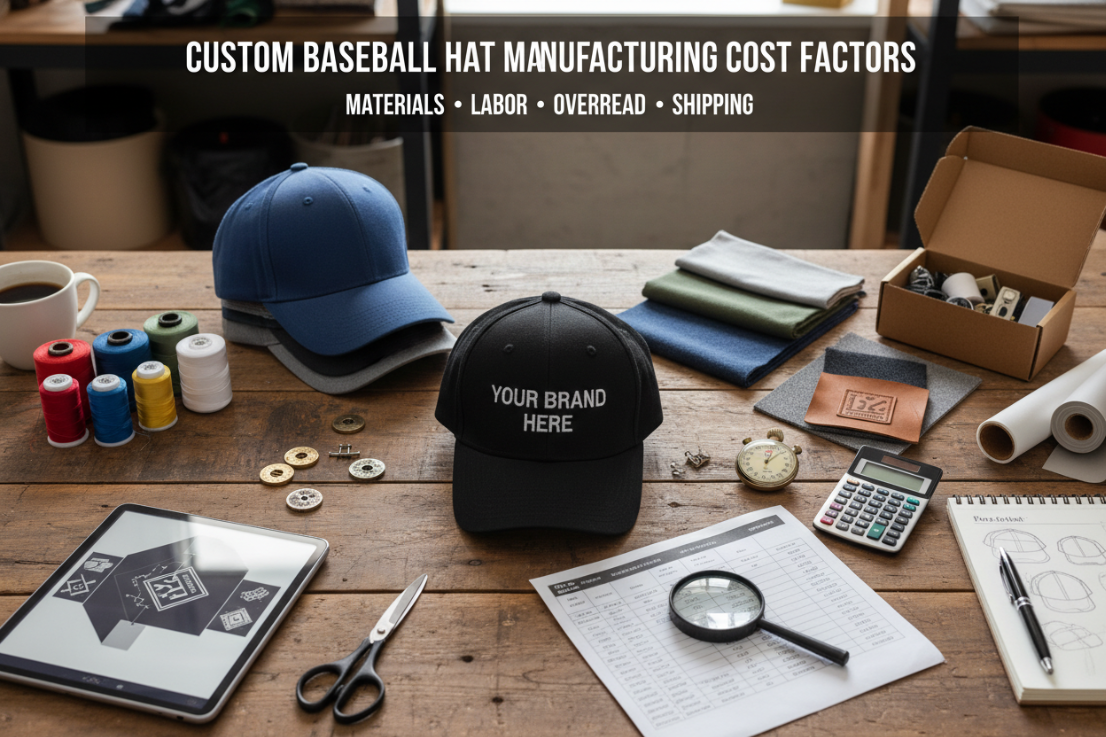
I’ve worked with hundreds of brands over the years, and pricing confusion is one of the most common challenges new customers face. Let me break down exactly what drives these costs so you can plan your orders more effectively.
Is Manufacturing Cost a Variable Cost?
Most new brand owners assume hat manufacturing follows a simple fixed-price model. They expect every hat to cost the same regardless of specifications. This assumption often leads to budget surprises.
Yes, manufacturing cost is primarily a variable cost7 that changes based on materials, labor intensity, setup requirements, and order specifications. Fixed costs like machinery and facility overhead8 are distributed across all orders, while variable cost7s directly correlate with your specific requirements.
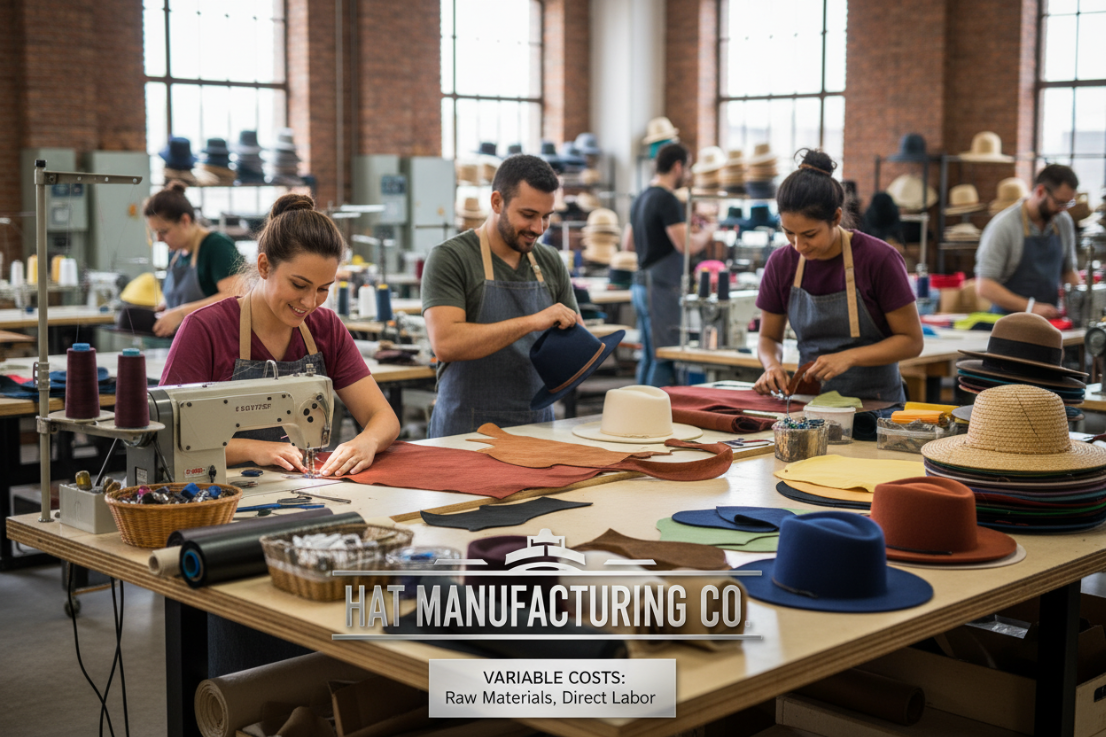
Manufacturing costs split into two main categories. Fixed costs include factory rent, equipment maintenance, and basic staffing. These costs stay constant whether we produce 100 hats or 10,000 hats. Variable costs change with every order decision you make.
Material costs represent the largest variable expense.9 A basic cotton twill cap costs significantly less than a premium wool blend with moisture-wicking properties10. Labor costs vary based on design complexity1. A simple single-color embroidery11 takes 15 minutes per hat, while a detailed multi-color design with 3D puff elements12 can take 45 minutes.
Setup costs create another variable element. Each new design requires digitizing for embroidery machines13, color matching for threads, and quality testing14. These setup costs get distributed across your order quantity4. A 200-piece order absorbs setup costs differently than a 2,000-piece order.
| Cost Type | Examples | Impact on Pricing |
|---|---|---|
| Fixed | Factory overhead, equipment | Distributed across all orders |
| Variable – Materials | Fabric, threads, hardware | Direct per-unit cost |
| Variable – Labor | Embroidery time, assembly | Varies with complexity |
| Variable – Setup | Design digitizing, sampling | Decreases per unit with larger orders |
Quality control requirements add another variable layer. Standard inspection might catch major defects, while premium quality control involves detailed measurements, color verification, and finish consistency checks15. Each quality level requires different time investments and skilled labor.
How to Price Custom Hats Based on Design and Quantity?
Pricing strategy becomes clearer when you understand the relationship between design choices and production requirements. Every design element translates into specific manufacturing steps and costs.
Custom hat pricing follows a formula: Base Material Cost + Design Complexity Multiplier + Setup Costs ÷ Order Quantity + Quality Premium16 = Final Unit Price. Design complexity and order quantity4 create the biggest pricing variations, often ranging from $3 to $15 per hat for the same base style.

Design complexity affects pricing through multiple channels. Simple designs use basic embroidery with standard thread colors. Complex designs require specialty threads, multiple needle changes, and precise positioning. I’ve seen orders where design complexity1 alone doubled the labor cost per hat.
Embroidery stitch count17 directly correlates with production time. A simple text logo might use 3,000 stitches, while an intricate graphic design can require 15,000 stitches. Each additional 1,000 stitches adds roughly 2-3 minutes to production time. When you multiply this across hundreds of hats, the labor cost impact becomes significant.
Color requirements create another pricing variable. Standard thread colors are readily available and cost-effective. Custom color matching requires special thread orders, color testing, and potential minimum quantities. Pantone color matching18 for corporate brands often adds $0.50-$1.00 per hat due to these requirements.
Order quantity creates the most dramatic pricing differences through economies of scale. Setup costs remain constant whether you order 200 or 2,000 hats. A $200 setup cost adds $1.00 per hat to a 200-piece order but only $0.10 per hat to a 2,000-piece order.
| Order Quantity | Setup Cost Impact | Material Savings | Total Savings per Hat |
|---|---|---|---|
| 200 pieces | $1.00 | $0.00 | $1.00 |
| 500 pieces | $0.40 | $0.25 | $0.65 |
| 1,000 pieces | $0.20 | $0.50 | $0.70 |
| 2,000 pieces | $0.10 | $0.75 | $0.85 |
Material quantity discounts start appearing at higher volumes. Fabric suppliers offer better pricing for larger cuts. Thread suppliers provide bulk discounts. Even packaging costs decrease per unit when ordering larger quantities. These savings compound to create substantial per-unit price reductions.
What Categories of Manufacturing Costs Affect Hats?
Understanding cost categories helps you make strategic decisions about where to invest your budget and where to optimize for savings. Each category impacts your final price differently.
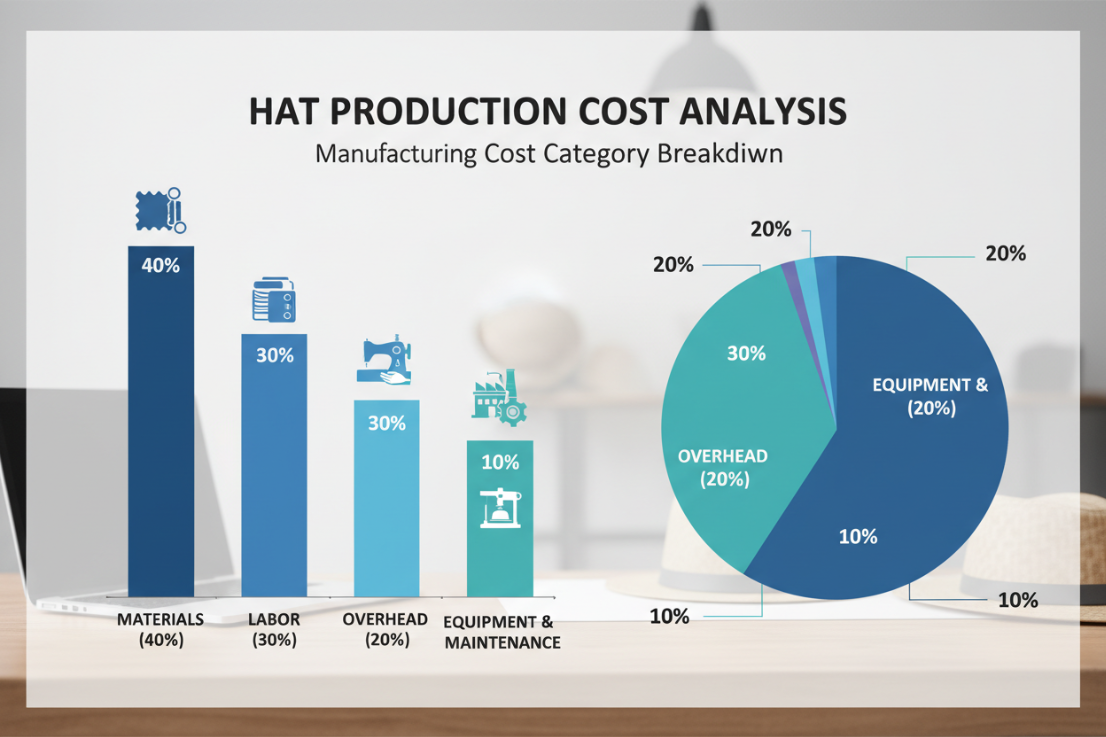
Hat manufacturing costs fall into five main categories: raw materials (40-50%), direct labor (25-35%), overhead allocation (10-15%), quality control (5-10%), and packaging/shipping (5-8%). Material selection and labor intensity create the largest cost variations between different hat styles and customization levels.
Raw material costs include fabric, interfacing, thread, hardware, and labels. Fabric choice creates the biggest impact here. Basic cotton twill costs around $1.50 per hat, while premium performance fabrics can cost $4.00 or more. Thread costs vary from $0.10 for basic polyester to $0.40 for specialty metallic threads.
Hardware selection affects costs more than most people realize. Basic plastic snapback closures cost $0.15, while metal buckle closures cost $0.45. Eyelets, buttons, and decorative elements each add incremental costs. Premium hardware can add $1-2 per hat to your total material cost.
Direct labor encompasses cutting, sewing, embroidery, and assembly operations. Skilled embroidery operators command higher wages than basic assembly workers. Complex designs require experienced operators who can handle intricate positioning and thread changes. Rush orders often require overtime rates, increasing labor costs by 25-50%.
Overhead allocation includes factory utilities, equipment depreciation, and administrative costs. Modern embroidery machines cost $50,000-$100,000 each. This equipment cost gets distributed across all production. High-volume factories achieve better overhead distribution, which is why established manufacturers often offer better pricing than smaller operations.
Quality control costs vary significantly based on your requirements. Basic visual inspection might cost $0.05 per hat. Detailed measurement verification, color matching, and packaging inspection can cost $0.25 per hat. Export documentation and compliance testing add additional quality-related expenses.
| Cost Category | Low-End Hat | Premium Hat | Cost Difference |
|---|---|---|---|
| Materials | $2.00 | $5.50 | $3.50 |
| Labor | $1.50 | $3.25 | $1.75 |
| Overhead | $0.75 | $1.00 | $0.25 |
| Quality Control | $0.10 | $0.35 | $0.25 |
| Packaging | $0.15 | $0.40 | $0.25 |
Packaging and shipping costs often get overlooked during initial planning. Individual polybags cost $0.05, while premium branded boxes cost $0.35. International shipping requires specific packaging standards that can add to per-unit costs. Documentation and compliance requirements for different countries create additional administrative expenses.
Understanding these cost categories helps you optimize your orders. You might choose premium fabric but standard hardware to balance quality and cost. Or you might increase order quantity4 to reduce overhead allocation while maintaining your desired quality level.
Conclusion
Custom hat pricing depends on design complexity1, materials, quantity, timeline, and quality requirements. Understanding these factors helps you optimize costs while achieving your brand goals.
-
See real-world examples of how complexity changes stitch time, setup, and labor—so you can simplify where it matters. ↩ ↩ ↩ ↩
-
Compare common hat fabrics by durability, feel, and price to choose the right material without overpaying. ↩
-
Learn which add-ons (embroidery types, hardware, labels) drive cost so you can prioritize high-ROI upgrades. ↩
-
Understand bulk price breaks and what MOQ levels unlock meaningful savings for your next production run. ↩ ↩ ↩ ↩
-
Get clarity on rush fees, overtime costs, and realistic lead times to avoid expensive schedule decisions. ↩
-
Find checklists and standards that prevent defects and costly reorders while keeping QC spend reasonable. ↩
-
A solid definition helps you forecast pricing changes when materials, labor time, or specs shift. ↩ ↩
-
Learn how factories spread overhead—useful for negotiating and comparing quotes across suppliers. ↩
-
Understand the drivers behind fabric pricing so you can value-engineer without sacrificing perceived quality. ↩
-
Helps you decide if performance wool blends justify the premium for your audience and climate use. ↩
-
See typical pricing ranges and when single-color delivers the best branding impact per dollar. ↩
-
Learn whether puff is worth it, plus design rules that prevent cracking, flattening, or wasted spend. ↩
-
Understand digitizing fees, file ownership, and quality factors that influence clean embroidery results. ↩
-
Discover common tests and inspections that catch defects early and protect your brand reputation. ↩
-
Get a QC scope you can copy into POs to reduce variance between samples and bulk production. ↩
-
A pricing model helps you sanity-check quotes and identify which lever lowers cost fastest. ↩
-
Learn how stitch count translates into minutes and money so you can optimize artwork for budget. ↩
-
Avoid color surprises by learning the matching process, limitations, and typical upcharges for brand colors. ↩