
You order 500 custom hats for $2,500, but your final bill hits $3,200. The extra $700 wasn’t a mistake.
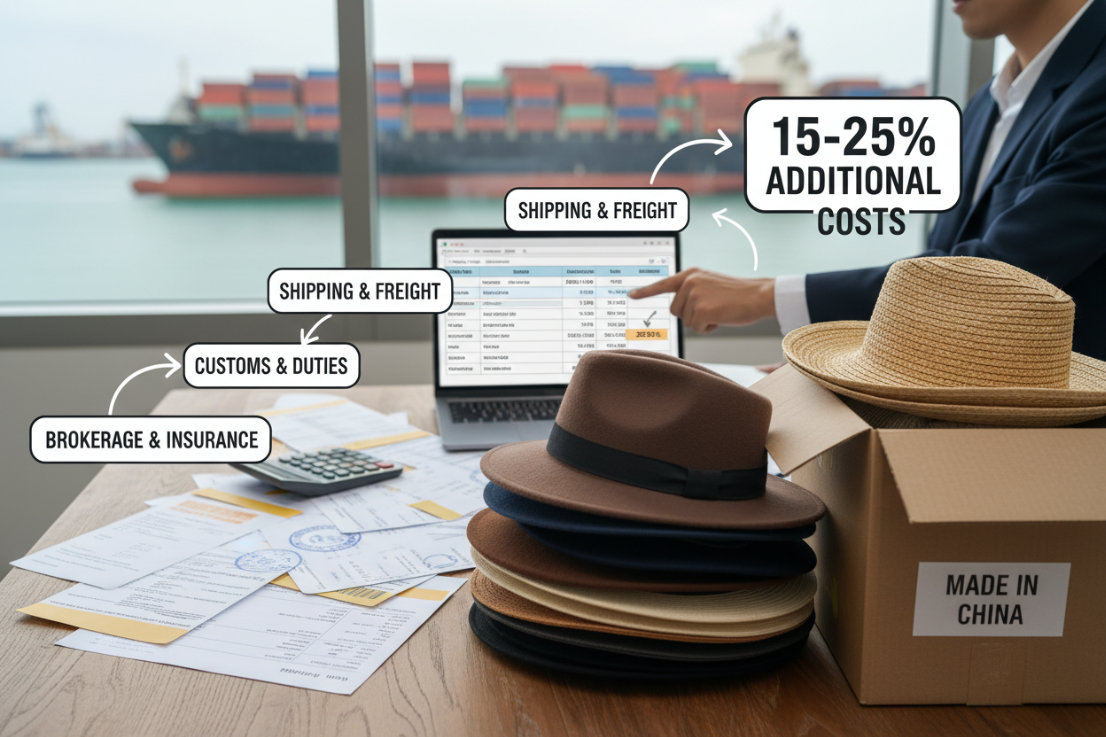
International hat manufacturing involves hidden costs beyond factory prices1. Shipping, customs duties, brokerage fees, and insurance2 typically add 15-25% to your base order cost, making proper budget planning3 essential for profitable imports.
Most small brands get shocked by their first international order. I’ve seen customers call us confused about why their "cheap" hats suddenly became expensive. The truth is simple: factory price is just the starting point.
What Hidden Costs Are Involved in Importing Hats Internationally?
Your hat order travels thousands of miles before reaching your warehouse. Each step costs money.
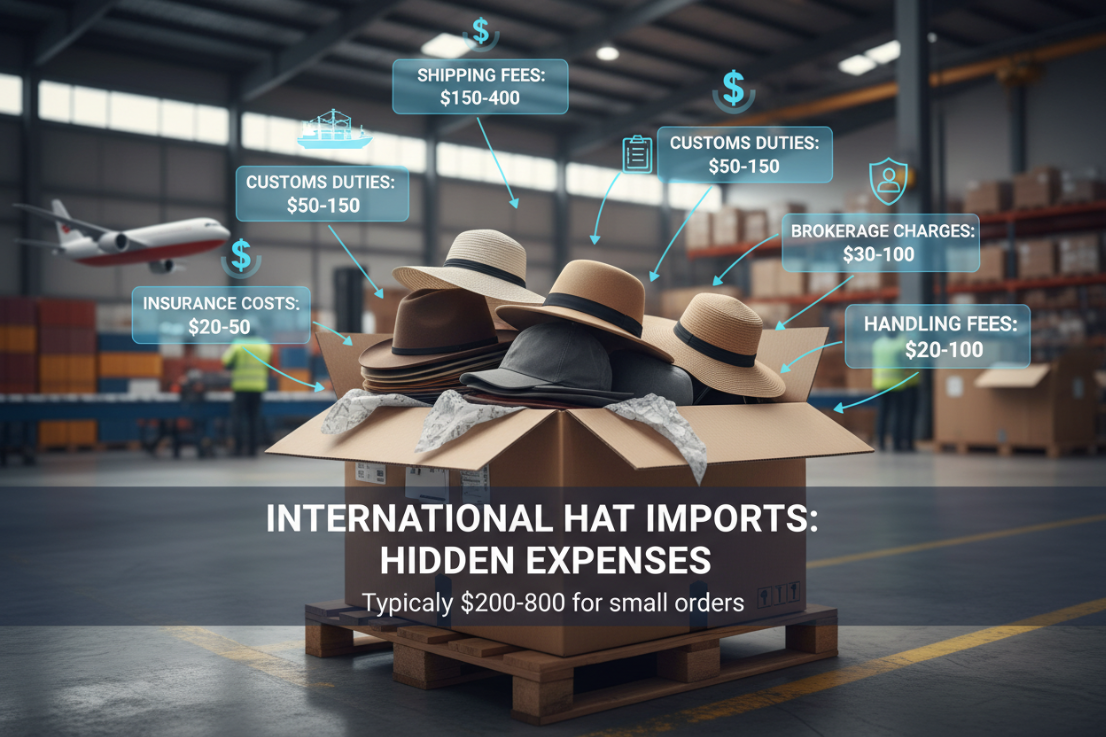
International hat imports include shipping fees, customs duties, brokerage charges, insurance costs, and handling fees.4 These hidden expenses typically range from $200-800 for small orders, depending on shipping method and destination country.
Breaking Down Every Hidden Fee
Let me walk you through what actually happens to your money. When we ship 500 baseball caps from our factory in China to a customer in Los Angeles, here’s the real cost breakdown:
| Cost Category | Typical Range | Example (500 caps) |
|---|---|---|
| Base Manufacturing | $3.50-5.00/unit | $2,250 |
| International Shipping | $1.50-4.00/kg | $180-320 |
| Customs Duties | 6.5-17.6% of value | $146-396 |
| Brokerage Fees | $50-150/shipment | $85 |
| Insurance | 0.5-2% of value | $11-45 |
| Documentation | $25-75/shipment | $40 |
| Total Hidden Costs | 15-25% of base | $462-886 |
The shipping method makes a huge difference. Air freight5 costs more upfront but saves on storage fees. Sea freight6 looks cheaper but adds port charges and longer transit times. Express shipping through DHL or FedEx7 includes most handling fees but costs the most per kilogram.
I always tell our customers to budget an extra 20% minimum8 for their first international order. This covers most surprises and gives you room for delays or extra fees.
How Do Shipping, Customs, and Duties Affect Landed Cost?
Each country has different rules and rates. What works for Canada might be expensive for Germany.
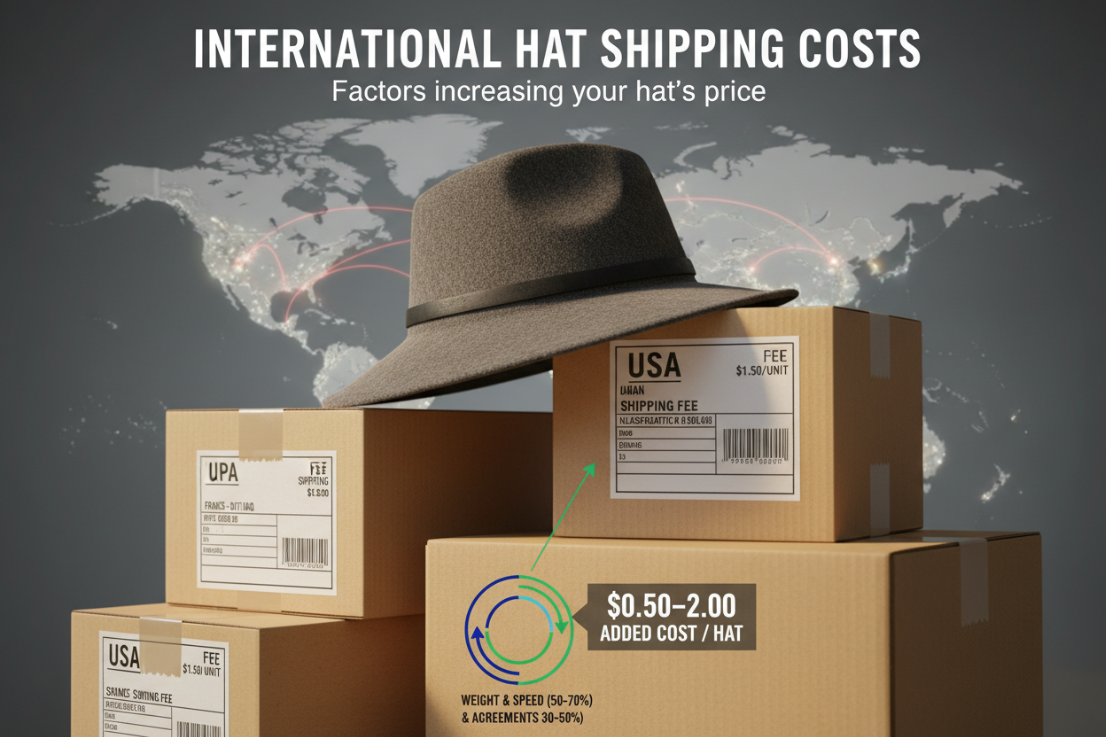
Shipping costs vary by weight and speed9, while customs duties depend on product classification10 and country agreements. Combined, these factors can increase your hat costs by $0.50-2.00 per unit depending on destination and shipping method.
Real Numbers from Real Shipments
Here’s what our customers actually pay when importing to different markets. These numbers come from shipments we’ve handled in the past six months:
United States (HS Code 6505.0011)
- Customs duty: 6.5% of declared value
- Express shipping: $8-12/kg (3-5 days)
- Average hidden costs: 18% of order value
European Union (Germany example)
- Customs duty: 5.7% + VAT 19%12
- Express shipping: $9-14/kg (4-6 days)
- Average hidden costs: 22% of order value
Canada
- Customs duty: 11-17.6% depending on materials
- Express shipping: $10-15/kg (3-5 days)
- Average hidden costs: 20% of order value
The duty rates change based on hat materials and construction. Knitted caps face different rates than woven baseball caps. Cotton hats have different classifications than synthetic blends. Your freight forwarder13 should know these details, but many small importers get surprised by the variations.
Can International Buyers Avoid Unexpected Import Fees?
You can’t eliminate all fees, but you can predict and control most of them with proper planning.
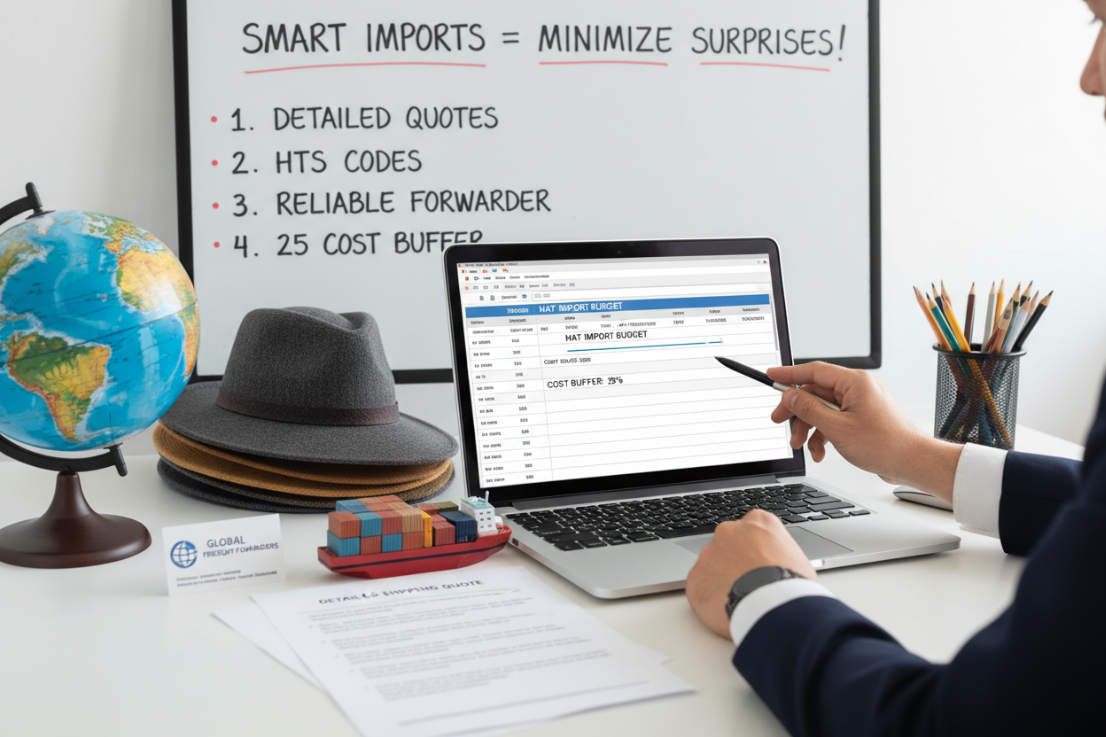
Smart importers minimize surprises by getting detailed shipping quotes, understanding duty classifications, using reliable freight forwarder13s, and building 20-25% cost buffers into their budgets for international hat orders.
Strategies That Actually Work
After handling thousands of international shipments, I’ve learned what works and what doesn’t. Here are the proven methods our successful customers use:
Get Complete Quotes Upfront
Ask your supplier for door-to-door pricing14, not just factory prices. At Anthea, we provide detailed cost breakdowns including estimated duties and shipping for every quote. This eliminates surprises later.
Choose the Right Shipping Method
Express shipping costs more but includes most handling fees in one price. Sea freight6 looks cheaper but adds port charges, trucking, and storage fees. For orders under 100kg, express often costs less overall.
Work with Experienced Freight Partners
We’ve partnered with DHL, FedEx, and reliable sea freight companies for years. They know hat classifications, common issues, and how to avoid delays. Cheap, unknown forwarders often create expensive problems.
Understand Your Country’s Rules
Each destination has different duty rates and documentation requirements. Some countries offer reduced rates for certain materials or small business imports. Research these before ordering, not after your shipment arrives.
Build Safety Margins
Always budget 20-25% extra for your first few orders. As you gain experience, you can reduce this buffer. But new importers who budget exactly face cash flow problems when unexpected fees appear.
How Do You Calculate Total Landed Cost for Overseas Hat Orders?
Accurate landed cost15 calculation prevents budget disasters and ensures profitable pricing for your finished products.
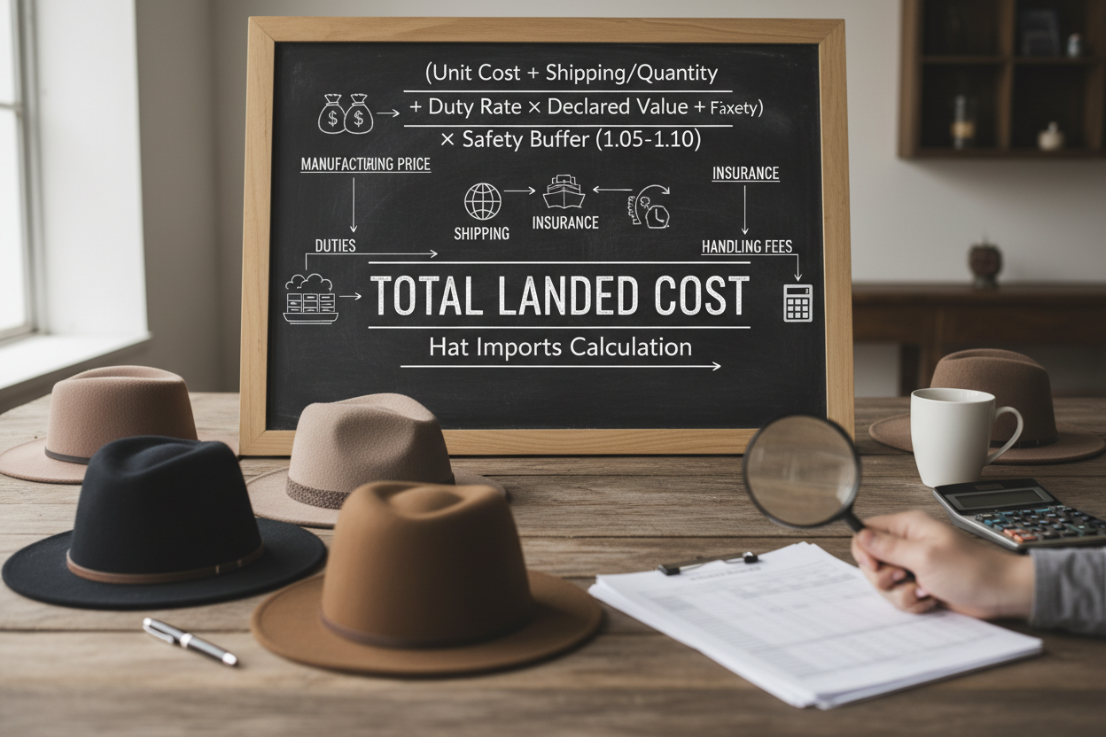
Total landed cost15 equals manufacturing price plus shipping, duties, insurance, and handling fees. Use this formula: (Unit Cost + Shipping/Quantity + Duty Rate × Declared Value + Fixed Fees/Quantity) × Safety Buffer (1.05-1.10).16
The Complete Calculation Method
Let me show you exactly how to calculate landed cost15s using a real example. This is the same method I use when quoting customers:
Example Order: 500 Custom Baseball Caps to Los Angeles
| Step | Calculation | Amount |
|---|---|---|
| 1. Base Manufacturing | 500 units × $4.50 | $2,250 |
| 2. International Shipping | 45kg × $7/kg | $315 |
| 3. Customs Duty | $2,250 × 6.5% | $146 |
| 4. Brokerage & Handling | Fixed fee | $85 |
| 5. Insurance | $2,250 × 1% | $23 |
| 6. Documentation | Fixed fee | $40 |
| Subtotal | $2,859 | |
| 7. Safety Buffer | $2,859 × 5% | $143 |
| Total Landed Cost | $3,002 | |
| Per Unit Cost | $3,002 ÷ 500 | $6.00 |
Your $4.50 hat actually costs $6.00 landed. This is why proper calculation matters for pricing your products.
Quick Estimation Method
For fast estimates, multiply your factory price by these factors:
- Express shipping to US/Canada: × 1.20-1.25
- Express shipping to Europe: × 1.25-1.30
- Sea freight6 to US/Canada: × 1.15-1.20
- Sea freight6 to Europe: × 1.20-1.25
Factors That Change Your Costs
Order size affects per-unit shipping costs. Larger orders spread fixed fees across more units. Material choices impact duty rates. Shipping method changes both speed and cost. Destination country determines duty rates and documentation requirements.
I recommend using spreadsheet templates that automatically calculate these costs as you change variables. This helps you compare different scenarios and find the most cost-effective approach for your specific situation.
Conclusion
Hidden costs add 15-25% to international hat orders, but proper planning and reliable partners make them predictable and manageable.
-
Clarifies common add-on charges so you can price products correctly and avoid margin-killing surprises. ↩
-
A solid overview helps you forecast landed cost accurately and choose the best shipping/clearance options. ↩
-
Teaches frameworks to plan cash flow, set buffers, and keep imports profitable from day one. ↩
-
Breaks down each fee type so you can audit quotes and spot missing line items before shipping. ↩
-
Helps you balance speed vs cost, and understand when air can be cheaper overall for smaller shipments. ↩
-
Explains port/terminal charges and timelines so you avoid “cheap” freight that becomes expensive later. ↩ ↩ ↩ ↩
-
Shows what’s bundled in courier rates and what you may still owe, reducing surprise invoices on delivery. ↩
-
Gives a practical buffer rule-of-thumb backed by industry guidance to protect your first-order cash flow. ↩
-
Helps you estimate freight accurately and compare quote structures across carriers and forwarders. ↩
-
Explains why the right HS code matters and how misclassification can raise duties or trigger penalties. ↩
-
Lets you verify classification and approximate duty exposure for hats before committing to production. ↩
-
Shows how VAT is applied on import value so you can forecast total cash due at customs. ↩
-
Helps you choose the right partner and understand services that prevent delays, fees, and paperwork issues. ↩ ↩
-
Ensures quotes include end-to-end costs (freight, clearance, delivery) so you can compare apples-to-apples. ↩
-
Defines the core metric for true unit economics, ensuring your retail/wholesale pricing stays profitable. ↩ ↩ ↩
-
Provides a repeatable calculation method you can plug into a spreadsheet to prevent underquoting. ↩