High manufacturing costs can ruin your budget. Ordering too few hats makes them expensive, while buying too many traps your cash. Here is how order sizes change your final price.
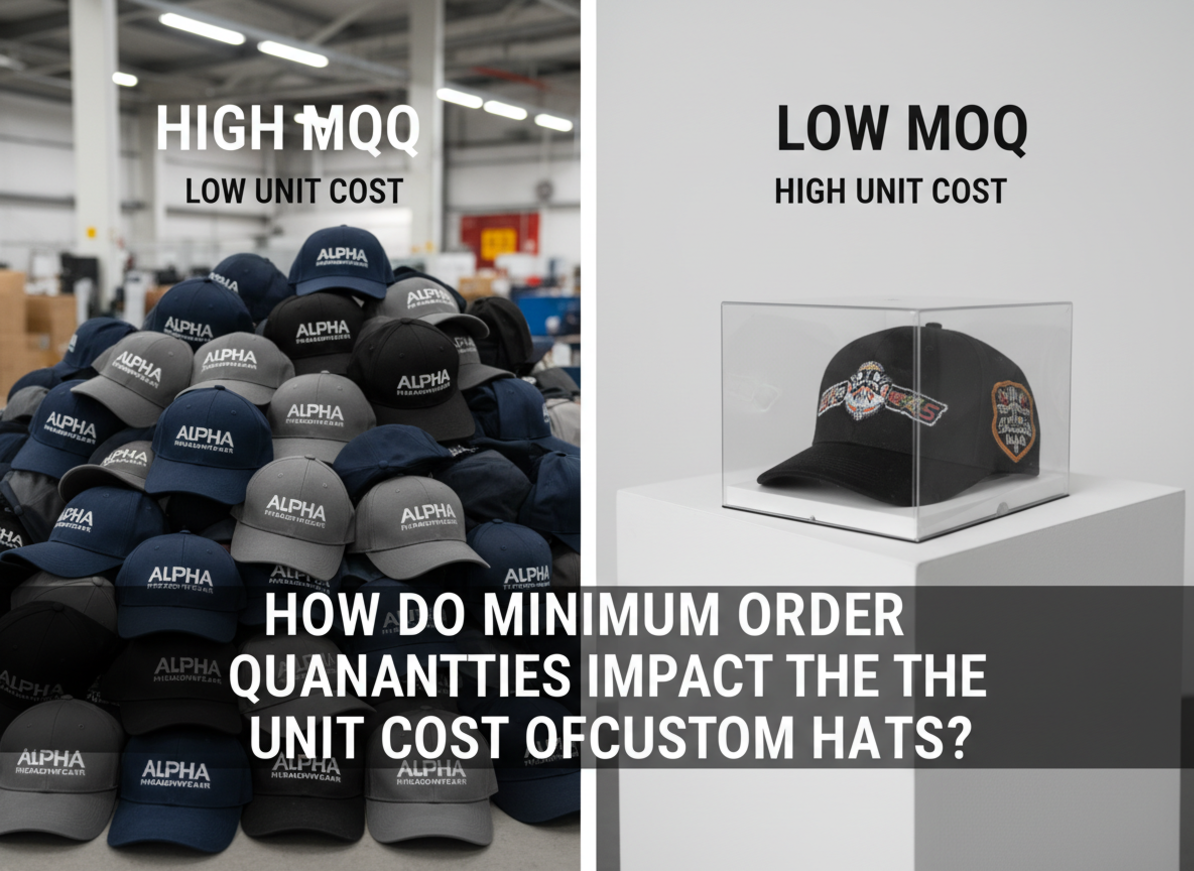
Minimum Order Quantities (MOQ)1 directly affect unit costs2. Small orders have high per-unit costs3s](https://www.investopedia.com/ask/answers/042715/whats-difference-between-production-cost-and-manufacturing-cost.asp)[^2] because setup fees and labor are shared across fewer items. Large orders lower the unit cost through economies of scale4. Factories offer tiered pricing5, meaning your price drops as your order size grows.
Understanding this pricing rule is the secret to building a profitable brand. If you want to save money without taking huge risks, you need to read the details below.
How does MOQ affect custom hat unit cost?
You want to start a hat brand. High sample costs might scare you. You must know how factory fees work before you place your first order.
MOQ affects custom hat unit costs6s](https://www.investopedia.com/ask/answers/042715/whats-difference-between-production-cost-and-manufacturing-cost.asp)[^2] because factories charge fixed setup fees7. When you order 50 hats, you pay a large share of these fees per hat. When you order 500 hats, the fixed fees spread out, making each hat much cheaper to produce.
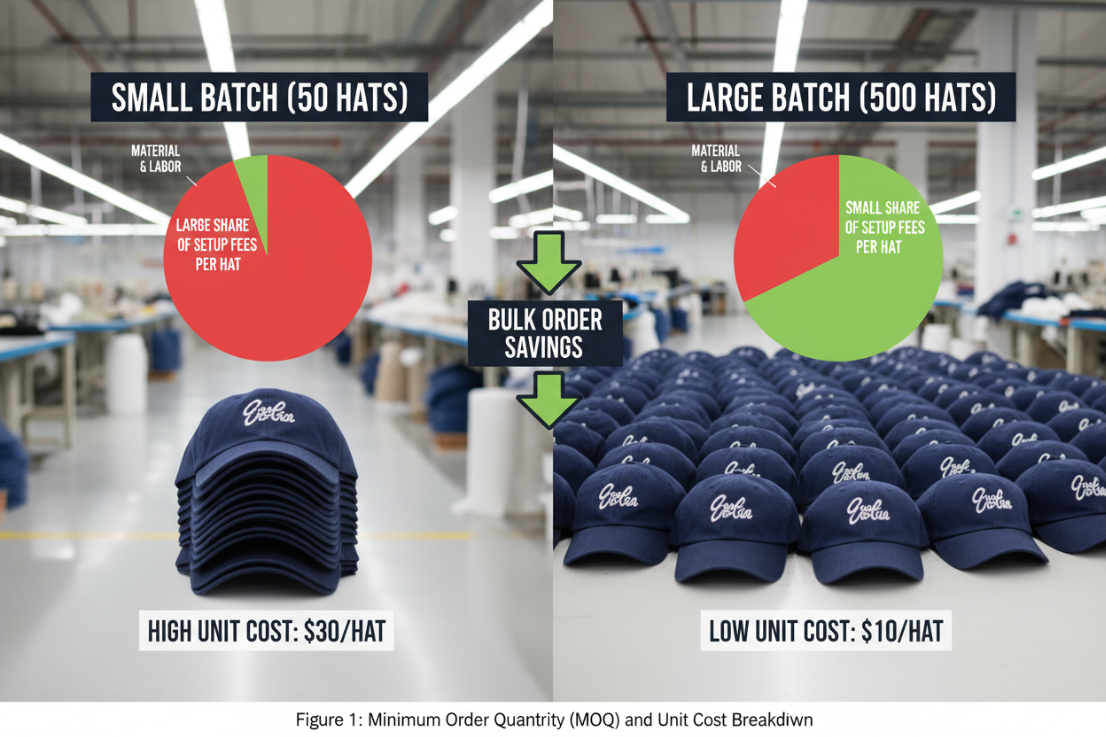
I remember when I helped a young brand owner from New York. He wanted to make a very detailed trucker hat. He only wanted 50 pieces. When I told him the price per hat, he was shocked. I had to explain how a factory works.
The Real Cost Behind Making a Hat
Making a custom hat is not just about fabric. We have to set up machines, create embroidery tapes8, and cut materials. These steps take the exact same amount of time whether we make 50 hats or 500 hats.
Fixed Costs vs. Variable Costs
To understand this better, we can break down the costs into two main parts.
| Cost Type | What It Includes | How It Changes |
|---|---|---|
| Fixed Costs | Embroidery digitizing9, machine setup10, cutting molds11 | Stays the same for the whole order. |
| Variable Costs | Fabric, thread, packing materials, labor per hat | Goes up as you order more items. |
When your MOQ is low, the fixed costs make up a huge part of your unit price. If the setup fee is $100, ordering 50 hats adds $2 to each hat. Ordering 500 hats only adds $0.20 to each hat. This is why we at Anthea set our MOQ at 200 pieces. It is the perfect middle point. It keeps setup costs low but does not force you to buy too many hats.
Why do larger orders reduce per-unit price?
Paying too much per hat limits your profit. You might struggle to grow your business. Ordering more items is the best way to lower your costs and make more money.
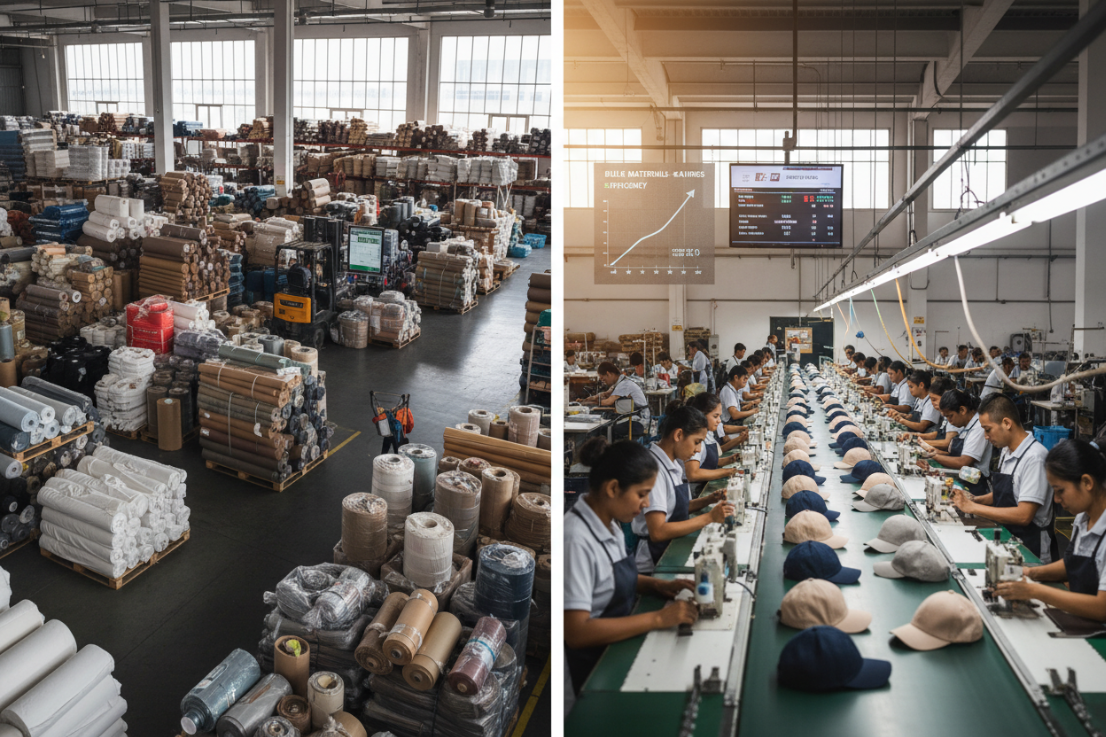
Larger orders reduce the per-unit price through economies of scale4. Factories buy materials in bulk12 at lower prices. Workers also become faster when making the same design repeatedly. This saves time and material, and the factory passes these savings directly to you.
When I talk to street brand founders, they always ask how they can get better prices. The answer is always volume. But why does volume change the price so much?
Buying Materials in Bulk
Factories buy fabric by the roll13. If you order a small number of hats, we might have to buy a whole roll of fabric and waste half of it. You end up paying for that waste. When you place a larger order, we use all the material. We also get discounts from our fabric suppliers.
Labor Speed and Factory Efficiency14
Human labor is a big part of making custom headwear.
| Production Stage | Small Order Speed | Large Order Speed |
|---|---|---|
| Sewing | Slow, workers must check the new design often. | Fast, workers learn the pattern and work quickly. |
| Embroidery | Machines stop often to change small batches. | Machines run non-stop for hours. |
| Quality Check | Takes more time to learn the new standards. | Very fast because the standards are clear. |
When workers make 1000 hats, they get into a rhythm. This rhythm saves hours of labor. Less labor time means we spend less money making your hats. We then give you a lower price. This is how large orders create a win-win situation for both the brand and the factory.
How do factories structure price breaks for different volumes?
Unclear pricing can ruin your plans. You might order the wrong amount and lose money. Knowing how factories use price tiers helps you pick the most profitable order size.
Factories use tiered pricing5 to offer discounts at specific volume breaks. Common price breaks happen at 100, 200, 500, and 1000 units15. As you reach a new tier, the unit cost drops. This system helps factories plan production and encourages brands to order more.
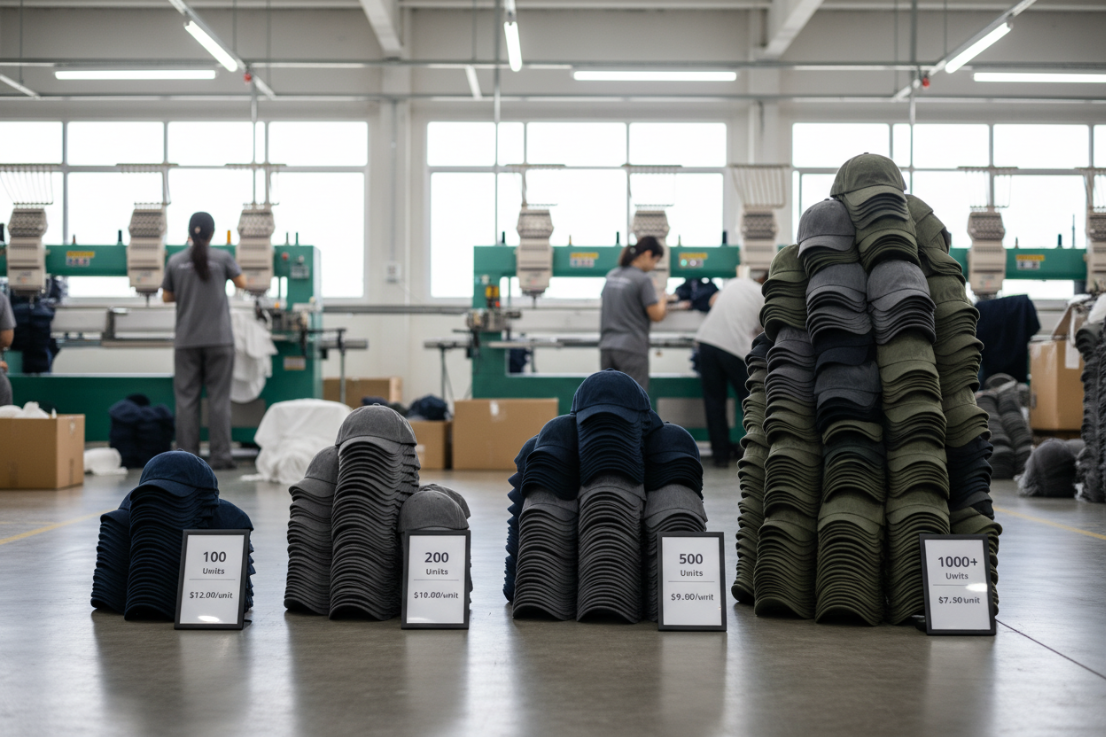
Many new clients ask me for a simple price list. I always tell them that a flat price does not exist in custom manufacturing. Instead, we use a tiered system.
Understanding Price Tiers
A price tier is simply a discount level. When you hit a certain number of hats, the price goes down. We design these tiers based on our production lines. For example, a single embroidery machine might hold 20 hats at once. Ordering in multiples of 20 or 100 makes our job easier.
Example of a Standard Pricing Structure
Let us look at a basic example of how an order for custom baseball caps might be priced.
| Order Quantity (MOQ) | Unit Price (Example) | Total Cost | Best For |
|---|---|---|---|
| 50 units | $10.00 | $500 | Testing a new logo |
| 200 units | $6.50 | $1300 | Small brand launch |
| 500 units | $4.50 | $2250 | Growing online store |
| 1000+ units | $3.50 | $3500+ | Big retail events |
As you can see, jumping from 50 to 200 units drops the unit price a lot. You get four times the hats, but you do not pay four times the total price. At Anthea, we focus on the 200-unit tier. We know it gives independent fashion brands a great price without forcing them to buy thousands of hats at once.
How can small brands balance cost savings with inventory risk16?
Dead stock destroys small businesses. Buying too many hats ties up your cash. You need a smart strategy to get low prices without filling your garage with unsold hats.
Small brands can balance costs and risks by choosing flexible MOQs. Do not order 1000 hats just for a cheap price. Start with 200 units to test the market. This gives you a reasonable profit margin while keeping your upfront investment and storage needs low.
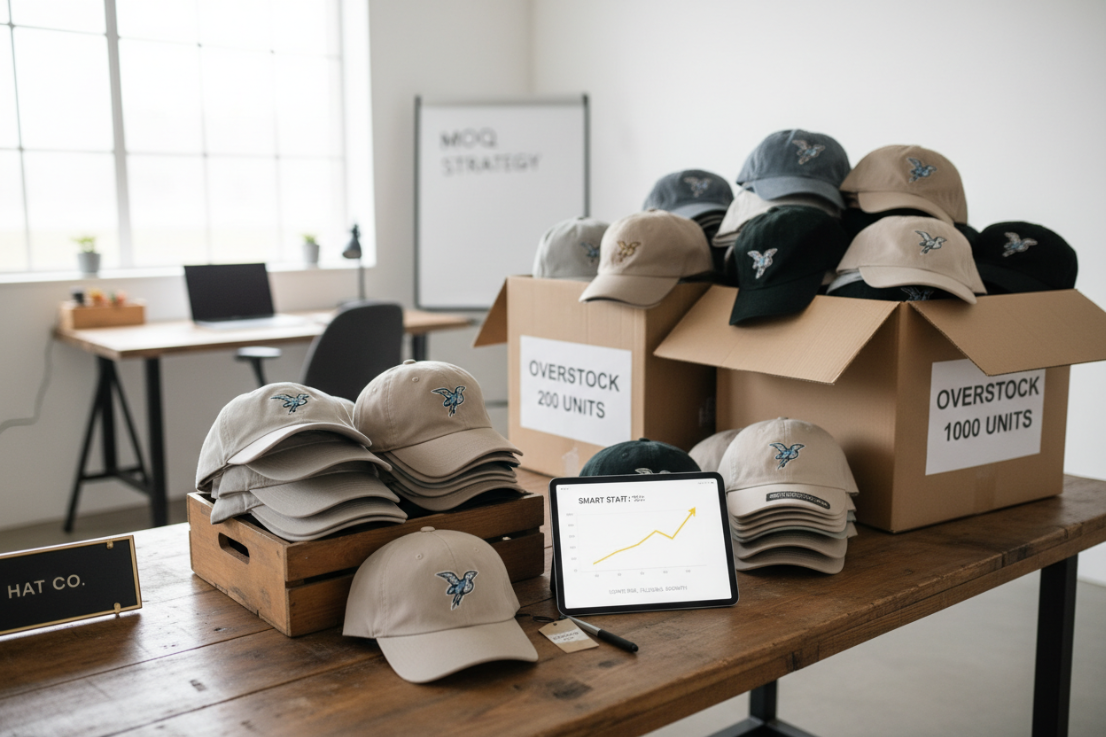
I often see young business owners make a big mistake. They look at the price for 2000 hats and get greedy. They order way too much. Six months later, they still have boxes of hats they cannot sell. Their money is stuck in those boxes.
The Danger of Over-Ordering
A cheap unit cost means nothing if you cannot sell the product. You must think about your cash flow. If you spend all your money on hats, you will have no money left for marketing.
Finding the Sweet Spot
You have to find the balance between a good price and a safe risk. Here is how you can judge your choices.
| Strategy | Pros | Cons |
|---|---|---|
| Low MOQ (50 pcs) | Very low risk, easy to test ideas. | High unit cost, low profit margin. |
| Medium MOQ (200 pcs) | Good profit margin, manageable risk. | Needs some upfront cash. |
| High MOQ (1000+ pcs) | Highest profit margin, lowest unit cost. | High risk, needs lots of storage space. |
This is exactly why we built Anthea around a 200-piece MOQ. It is the perfect sweet spot. It allows you to test new bucket hats or snapbacks with a great markup. You can sell out quickly, keep your cash flowing, and then order more when you know the design is a winner.
Conclusion
MOQ shapes your unit cost through fixed fees and economies of scale4. Choose a flexible factory partner to balance great prices with safe inventory levels for your growing brand.
-
Gives clear definitions and formulas so you can negotiate with factories and plan orders confidently. ↩
-
Helps you understand the cost-per-item math so you can choose an order size that protects margins. ↩
-
Clarifies why small runs feel overpriced and what levers actually reduce the unit price. ↩
-
Shows why higher volumes get cheaper, helping you time bigger orders when demand is proven. ↩ ↩ ↩
-
Lets you spot the best breakpoints so you can buy just enough to unlock meaningful discounts. ↩ ↩
-
Provides a realistic cost breakdown to compare quotes and avoid missing hidden line items. ↩
-
Explains unavoidable factory charges so you can forecast true costs before placing an order. ↩
-
Explains a specialized step that drives setup cost, useful when choosing embroidery complexity. ↩
-
Helps you price artwork conversion correctly so digitizing fees don’t surprise you later. ↩
-
Details the time and cost drivers behind setup, improving your understanding of MOQ logic. ↩
-
Shows when tooling is needed, which impacts lead times, pricing, and reorders. ↩
-
Explains bulk purchasing mechanics so you can judge if a factory’s discount claims are real. ↩
-
Helps you understand fabric waste and minimums, which often inflate pricing on low volumes. ↩
-
Connects repetition to faster output, helping you plan runs that reduce labor cost per unit. ↩
-
Gives typical tier benchmarks so you can request quotes in the right quantities to compare. ↩
-
Offers proven tactics to avoid dead stock while still getting acceptable pricing and margins. ↩