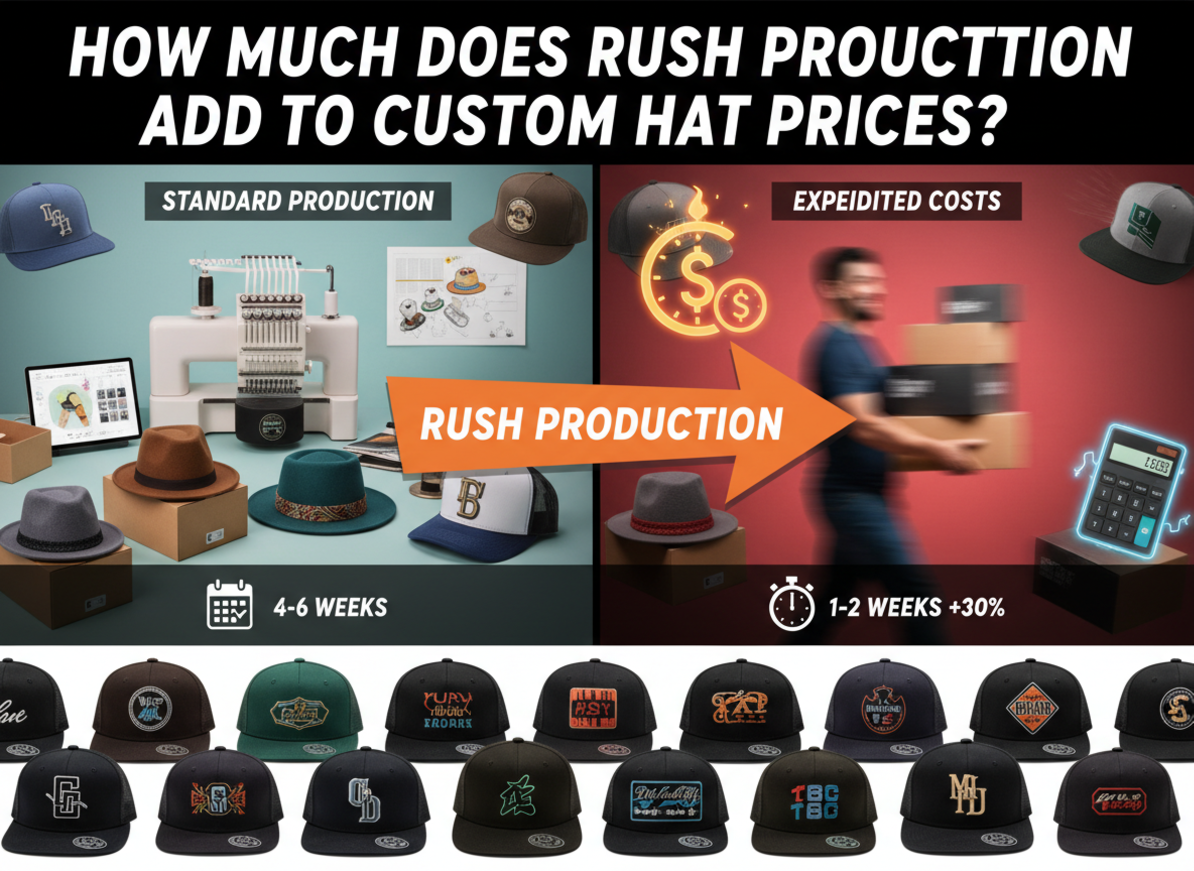
Running your brand on tight deadlines? Rush production can save your launch, but it comes with a price tag that might surprise you.
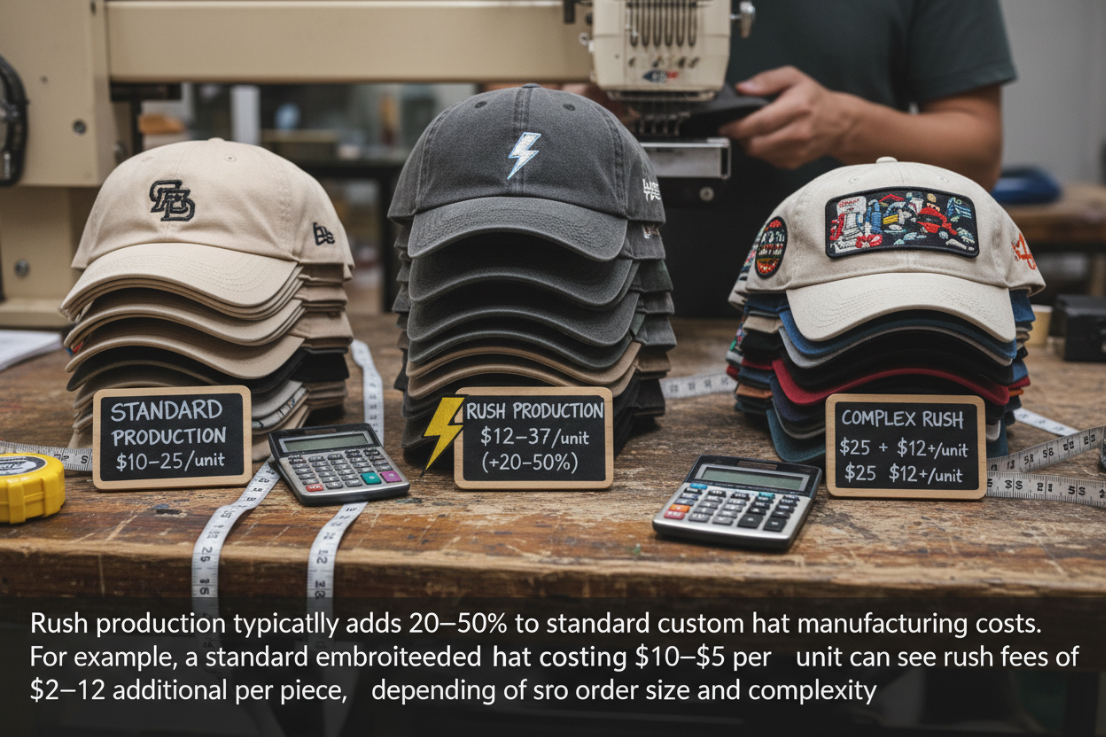
Rush production typically adds 20–50% to standard custom hat manufacturing costs.1 For example, a standard embroidered hat costing $10–$25 per unit2 can see rush fees of $2–$12 additional per piece3, depending on order size and complexity.
I learned this the hard way when a client needed 500 caps for a surprise brand collaboration. The rush fees almost doubled their budget. Let me break down exactly what you’re paying for and how to avoid these costs.
How much does rush production cost for custom hats?
Your rush order pricing depends on how fast you need your hats and what customization you’re requesting.
Rush production adds $2–$12 per unit to standard hat prices. A basic embroidered cap that normally costs $12 might jump to $18 with rush production, while complex designs can see even higher increases.
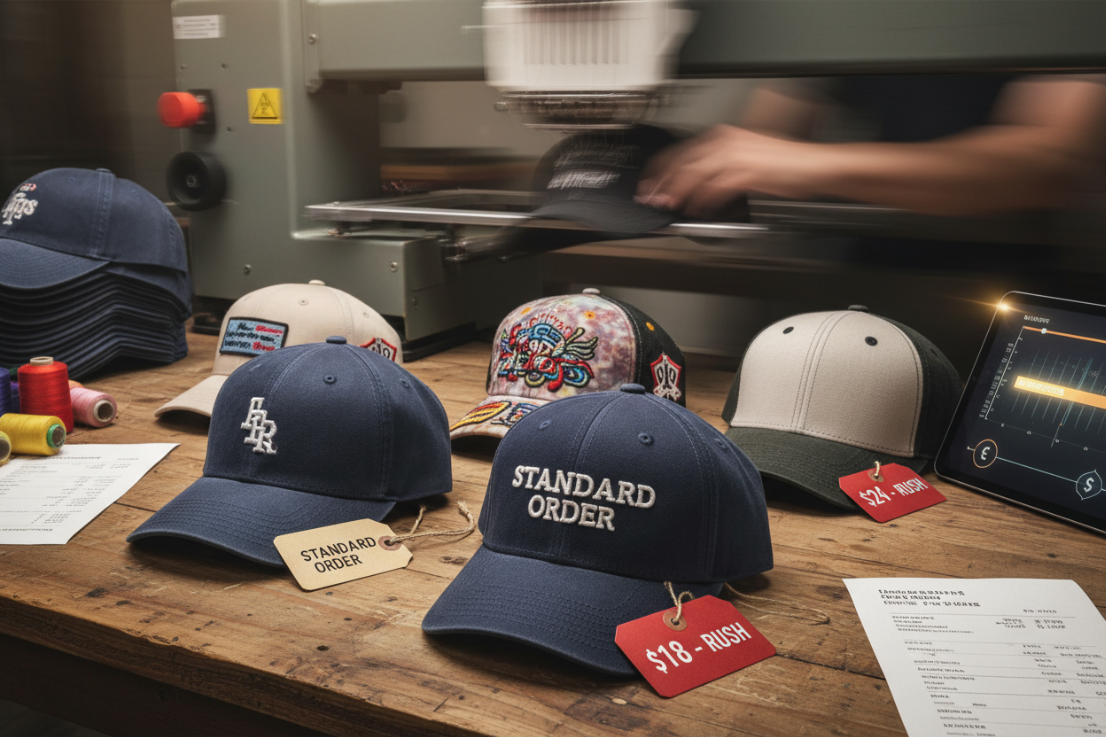
The rush fee structure works differently across order sizes4. Small orders of 200–500 pieces5 typically see the highest percentage increases. I’ve seen rush fees add 40–50% to small batch orders because the factory has to interrupt their regular production schedule.
Larger orders of 1,000+ pieces6 often get better rush rates. The per-unit rush fee drops to $2–$5 because factories can dedicate entire production lines to your order. This makes the disruption more manageable.
Different customization methods also affect rush pricing. Screen printing rush orders cost less than embroidery7 because the setup is faster. Complex embroidery with multiple colors or 3D effects8 can add $8–$12 per unit in rush fees.
At Anthea, we structure our rush pricing transparently. Orders needed in 10–15 days add 25% to standard pricing.9 Orders needed in 7–10 days add 35%.10 Anything faster than 7 days requires custom quotes because we need to evaluate production capacity.
The timeline also matters for your final cost. A 2-week rush is much cheaper than a 1-week rush. Factories can often squeeze 2-week orders into their regular schedule with minimal overtime costs.
What factors contribute to expedited hat manufacturing fees?
Three main cost drivers make rush orders expensive: labor, materials, and logistics.
Overtime labor costs account for 40–60% of rush fees.11 Factories must pay workers time-and-a-half or double wages to meet tight deadlines, plus they often need to pull workers from other projects.
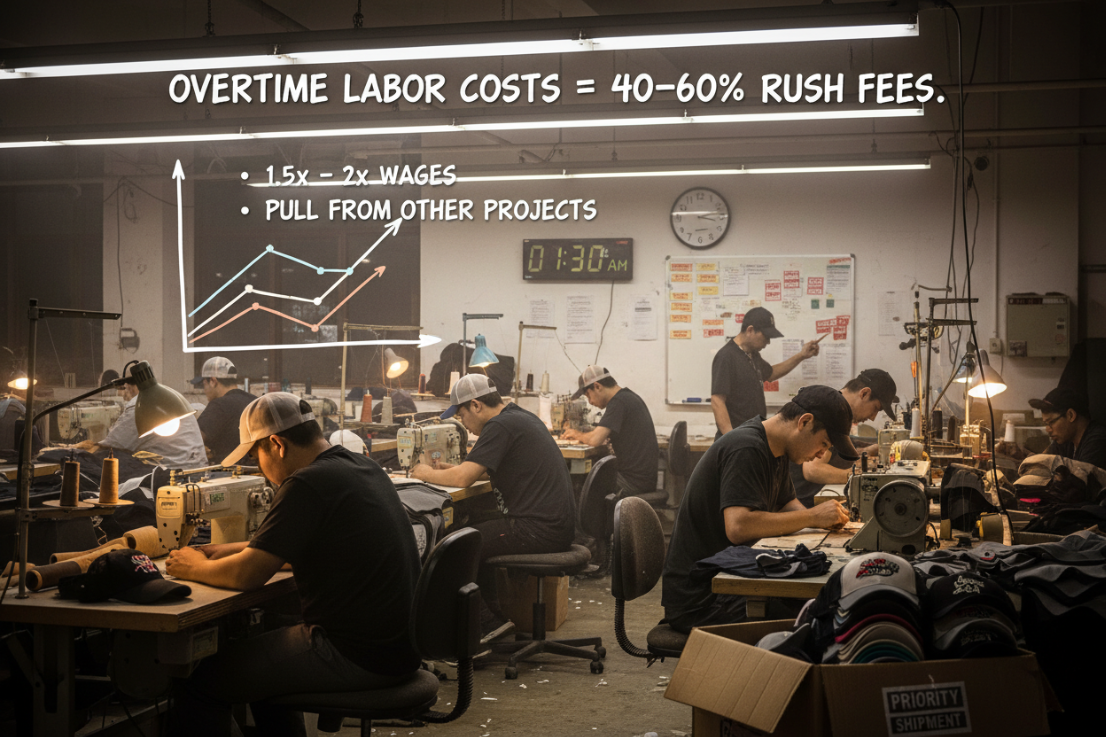
Labor costs spike because rush orders disrupt normal workflow. Workers who usually handle 8-hour shifts might need to work 12-hour days. Night shifts cost even more because of shift premiums.
Priority scheduling12 adds another layer of cost. Your rush order jumps ahead of other clients’ orders. The factory must reorganize their entire production schedule. This creates inefficiencies that get passed to you through higher pricing.
Material sourcing becomes expensive under time pressure. Standard orders use materials the factory already has in stock. Rush orders might need overnight shipping for specific thread colors or fabric types. These expedited shipping costs can add $200–$500 to your total order13.
Quality control also requires more resources during rush production. Inspectors work overtime to maintain standards while moving fast. Some factories assign dedicated QC staff to rush orders, which increases your cost.
Machine setup costs multiply with rush orders. Normally, factories batch similar orders together to minimize setup time. Rush orders often run alone, so you pay for the full machine setup instead of sharing costs with other orders.
Packaging and shipping logistics cost more too. Rush orders need expedited shipping methods. Air freight instead of sea freight can add $2–$5 per unit14 to your final cost. Express courier services like DHL or FedEx charge premium rates for fast delivery.
How can brands minimize the need for rush orders?
Smart planning and efficient processes eliminate most rush order situations.
Plan your production timeline 6–8 weeks before your launch date.15 This gives you 2–3 weeks for sampling, 3–4 weeks for production, and 1 week buffer for shipping delays.
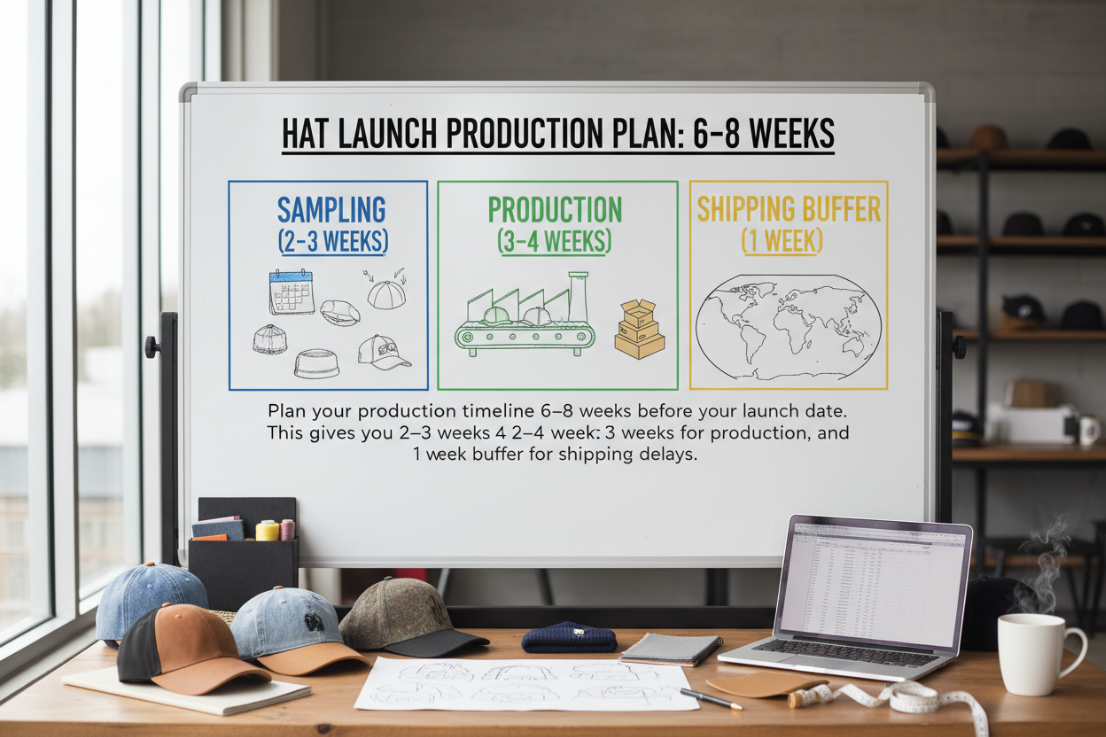
Start with accurate sampling timelines. Many brands underestimate sampling time and end up rushing production. Good manufacturers like Anthea provide realistic sampling schedules upfront. Our 7–10 day sampling helps brands plan better.
Build relationships with reliable manufacturers before you need them. Having a trusted partner means faster communication and priority treatment during busy seasons. I’ve seen brands get rush-level service at standard prices because they’ve built strong relationships.
Order your materials early, especially for custom colors or special fabrics. Standard black and navy hats are always in stock, but custom Pantone colors might need 2–3 weeks lead time16. Planning your color palette around readily available options saves time and money.
Use seasonal planning to your advantage. Order summer hats in winter and winter beanies in summer. Factories have lighter schedules during off-seasons and can offer better pricing and faster turnaround.
Consider holding inventory for popular designs. If you know certain styles sell well, order larger quantities during slow periods. This lets you restock quickly without rush fees.
Create design templates that work with your manufacturer’s standard processes. Complex designs with many customization elements take longer to produce. Streamlined designs move through production faster.
Communication prevents most rush situations. Weekly check-ins during production catch problems early. Clear artwork approval processes prevent last-minute design changes that trigger rush situations.
Are there per-unit discounts for bulk rush production?
Volume definitely helps reduce rush fees, but the discounts aren’t as steep as regular production discounts.
Bulk rush orders of 1,000+ pieces typically see 30–40% lower per-unit rush fees compared to small orders. However, the total rush premium still ranges from 20–35% above standard pricing.
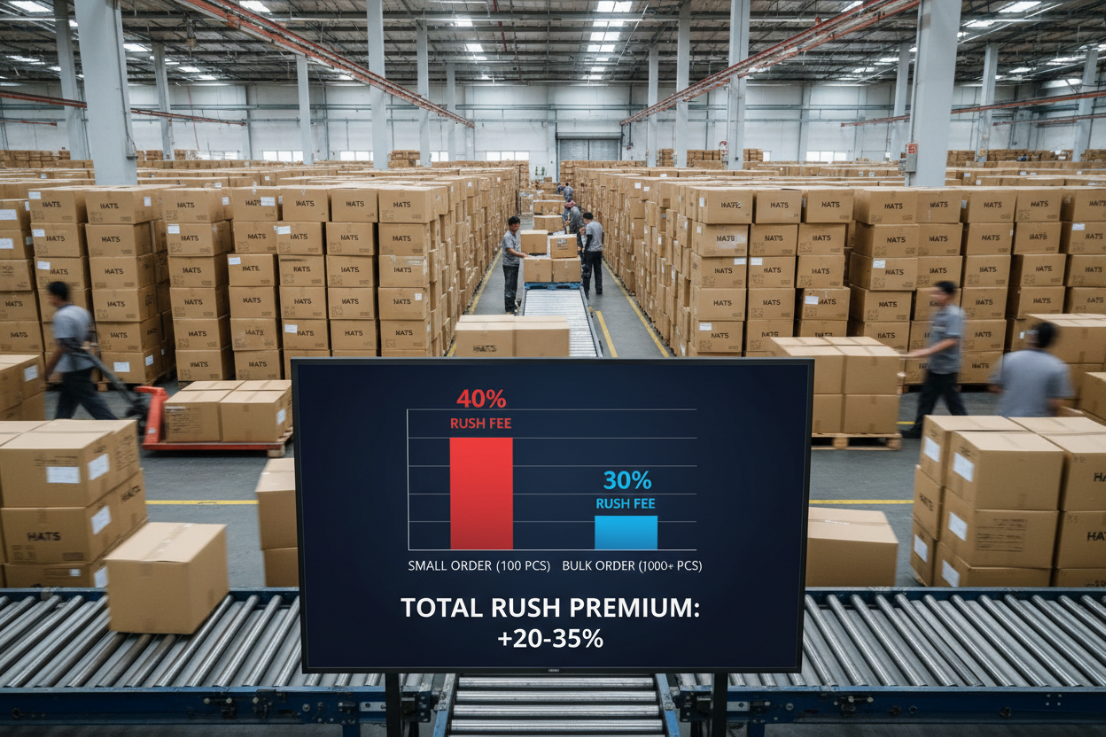
The volume discount structure works differently for rush orders. Regular production might offer 20–30% discounts for bulk orders. Rush production discounts are usually 10–15% because the operational challenges remain the same regardless of order size.
Large rush orders do get some advantages. Factories can dedicate entire production lines to your order, which improves efficiency. The setup costs get spread across more units, reducing the per-piece impact.
However, very large rush orders (5,000+ pieces) sometimes cost more per unit than medium orders. The factory might need to run multiple shifts or outsource parts of the order, which increases complexity and cost.
Timing affects bulk rush discounts too. A 1,000-piece order needed in 2 weeks gets better pricing than the same order needed in 1 week. The extra time lets factories optimize their production schedule.
Different manufacturers offer different bulk rush structures. Some offer tiered pricing based on quantity. Others use flat percentage increases regardless of order size. At Anthea, we evaluate each large rush order individually because production capacity varies by season.
Payment terms can also affect bulk rush pricing. Paying 100% upfront for large rush orders sometimes earns additional discounts because it reduces the manufacturer’s risk.
The key is asking about volume discounts upfront when requesting rush quotes. Many manufacturers don’t automatically apply bulk discounts to rush orders unless you specifically request them.
Conclusion
Rush production adds significant costs but proper planning and strong manufacturer relationships can minimize these expenses while maintaining flexibility for urgent needs.
-
Get independent benchmarks on typical rush markups so you can spot inflated quotes and budget accurately. ↩
-
Compare real market pricing to your supplier quote to confirm you’re starting from a fair baseline. ↩
-
Learn what causes low vs high rush fees so you can negotiate based on complexity, volume, and timing. ↩
-
Understand scale effects so you can choose quantities that minimize per-unit rush premiums. ↩
-
See operational reasons behind small-batch rush pricing and how to reduce the percentage increase. ↩
-
Find guidance on when larger quantities unlock better rush pricing and when they don’t. ↩
-
Choose the fastest decoration method with the best rush economics for your deadline. ↩
-
Know the true time/cost impact of premium embroidery so you can simplify designs without sacrificing quality. ↩
-
Validate whether a 25% rush premium is standard for that timeline and avoid overpaying. ↩
-
Confirm realistic 7–10 day rush pricing and set expectations before committing to a tight schedule. ↩
-
Understand the biggest cost driver so you can reduce rush fees by easing labor constraints and timelines. ↩
-
Learn how schedule disruption increases costs—useful for negotiating or planning around peak periods. ↩
-
See when expediting materials/shipping is worth it and how to avoid surprise add-ons. ↩
-
Get clear freight cost comparisons to decide whether speed is worth the per-unit premium. ↩
-
Use a proven planning framework to reduce rush needs, prevent delays, and protect margins. ↩
-
Avoid color-related delays by understanding realistic lead times and planning palettes around availability. ↩