Choosing between embroidery and printing for your custom hats can be confusing. Many brand owners struggle with cost planning1 and design choices2. The wrong decision can hurt your budget and brand image.
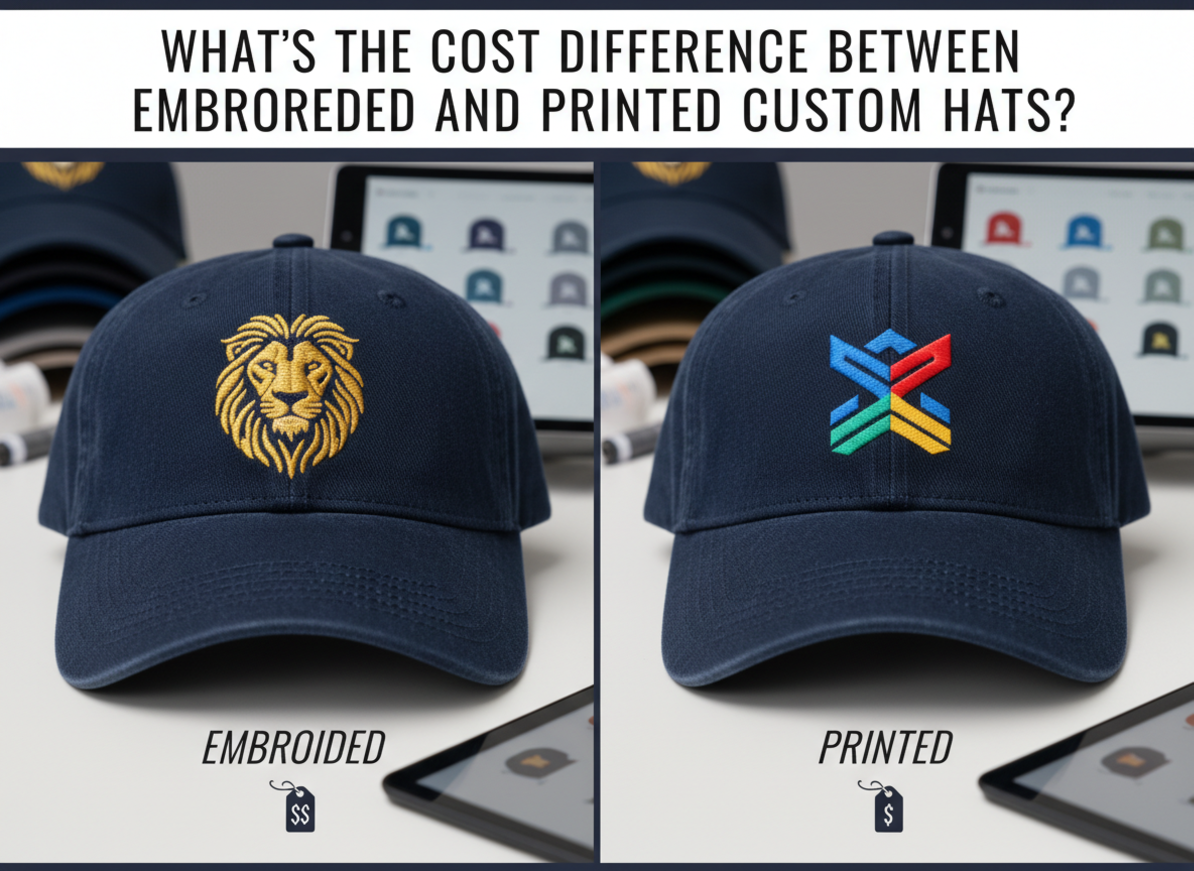
Embroidery typically costs $2.50–$35 per hat, while printing ranges from $3–$10 per hat. The choice depends on your design complexity3, order quantity4, and desired quality level5.
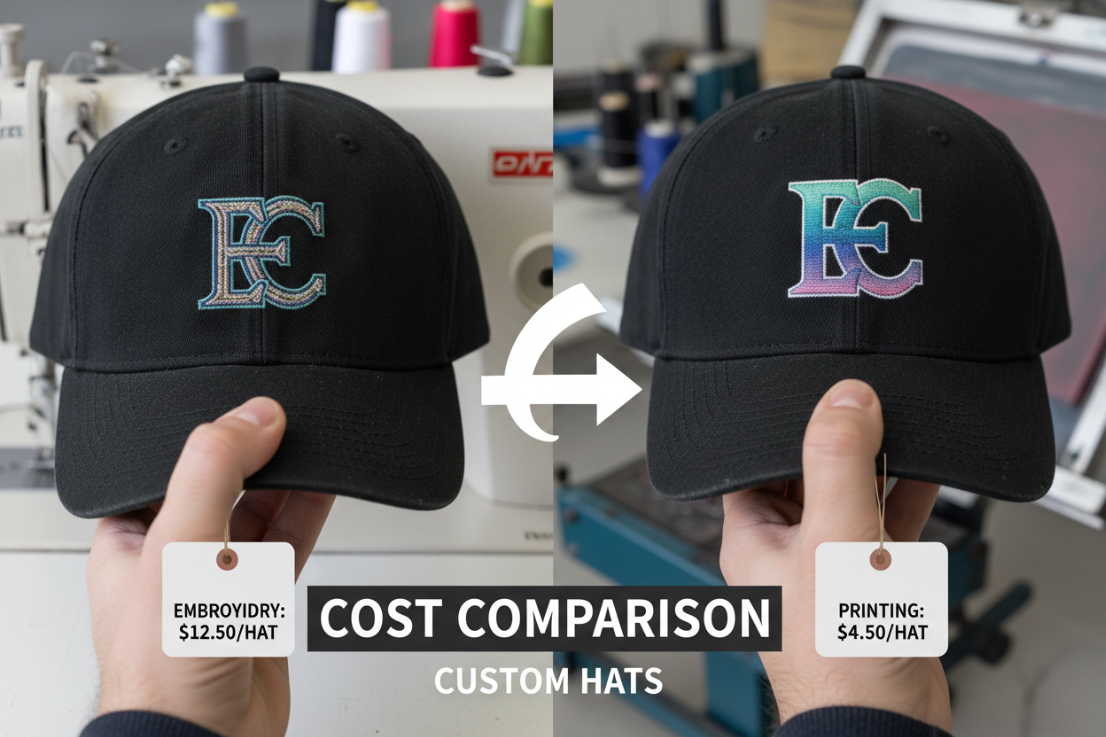
I’ve helped hundreds of brands navigate this decision over the years. The cost difference goes beyond simple pricing. Your choice affects brand perception, product durability, and customer satisfaction. Let me break down everything you need to know.
How much does it typically cost to embroider a hat?
Embroidery pricing seems complex at first glance. Many new brand owners get surprised by the various cost factors. Understanding these elements helps you plan your budget better.
Basic embroidery costs $2.50–$8 per hat for simple designs under 10,000 stitches6. Complex designs with high stitch counts can reach $15–$35 per hat, especially for premium features.
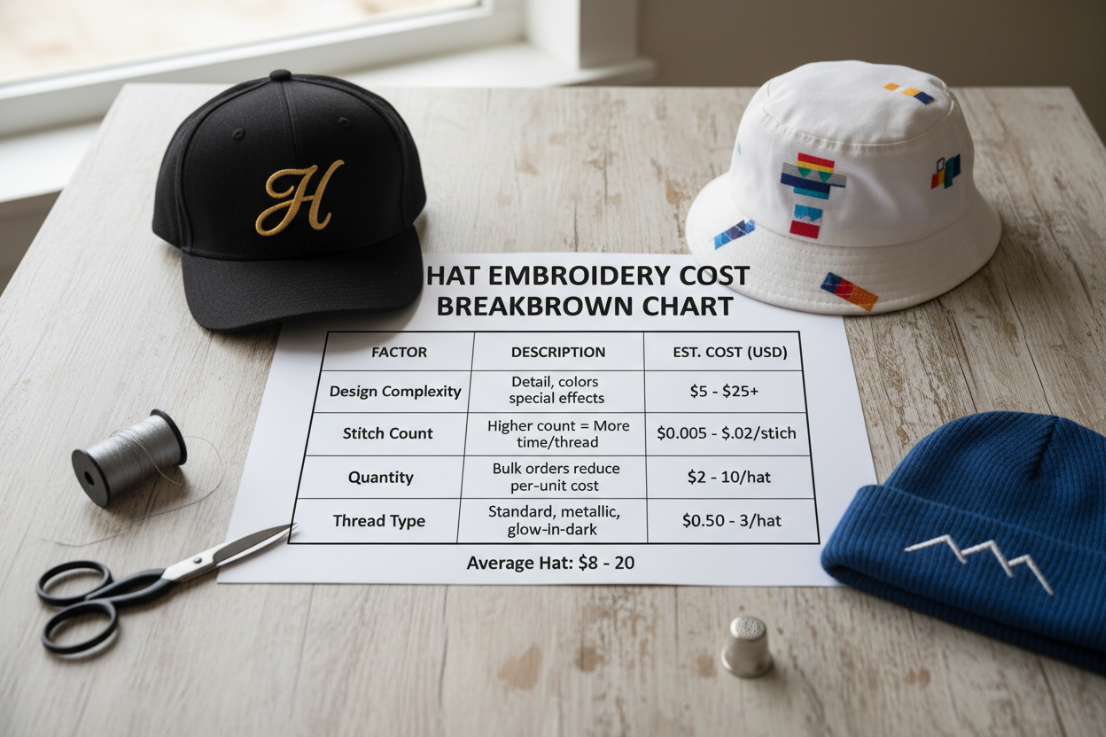
The embroidery cost structure has several key components that directly impact your final price. Stitch count7 serves as the primary pricing factor – more stitches6 mean higher costs. A simple text logo might use 3,000-5,000 stitches8s](https://fabricatedcustoms.com/blogs/custom-apparel-blog/embroidery-pricing-explained-stitch-count-logos-and-why-size-matters)[^6], while detailed artwork can require 15,000+ stitches9s](https://fabricatedcustoms.com/blogs/custom-apparel-blog/embroidery-pricing-explained-stitch-count-logos-and-why-size-matters)[^6].
Design complexity affects pricing significantly. Simple single-color text costs less than multi-color logos10 with gradients and fine details. The embroidery machine needs more time and thread changes for complex designs.
| Design Type | Stitch Count | Cost Range |
|---|---|---|
| Simple text | 3,000-5,000 | $2.50-$4 |
| Basic logo | 6,000-10,000 | $4-$8 |
| Complex design | 12,000+ | $10-$20 |
| Premium features | Varies | +$6-$15 |
Premium embroidery features add substantial costs. 3D puff embroidery11 creates raised effects but costs $6-$10 extra per location. Metallic threads12 look stunning but increase costs by $3-$8 per hat. Multiple embroidery locations13 multiply these costs – front, back, and side placements each count separately.
Setup costs include digitizing fees14 for new designs. Most factories charge $50-$150 for converting your artwork into embroidery files. This one-time cost gets spread across your order quantity4, making larger orders more economical per piece.
How does embroidery cost compare to printing?
Printing offers different cost advantages and limitations compared to embroidery. The comparison isn’t always straightforward. Each method has sweet spots where it performs better financially.
Printing typically costs $3-$10 per hat with lower setup fees. Screen printing15 works best for large quantities, while digital printing suits smaller orders with complex graphics.
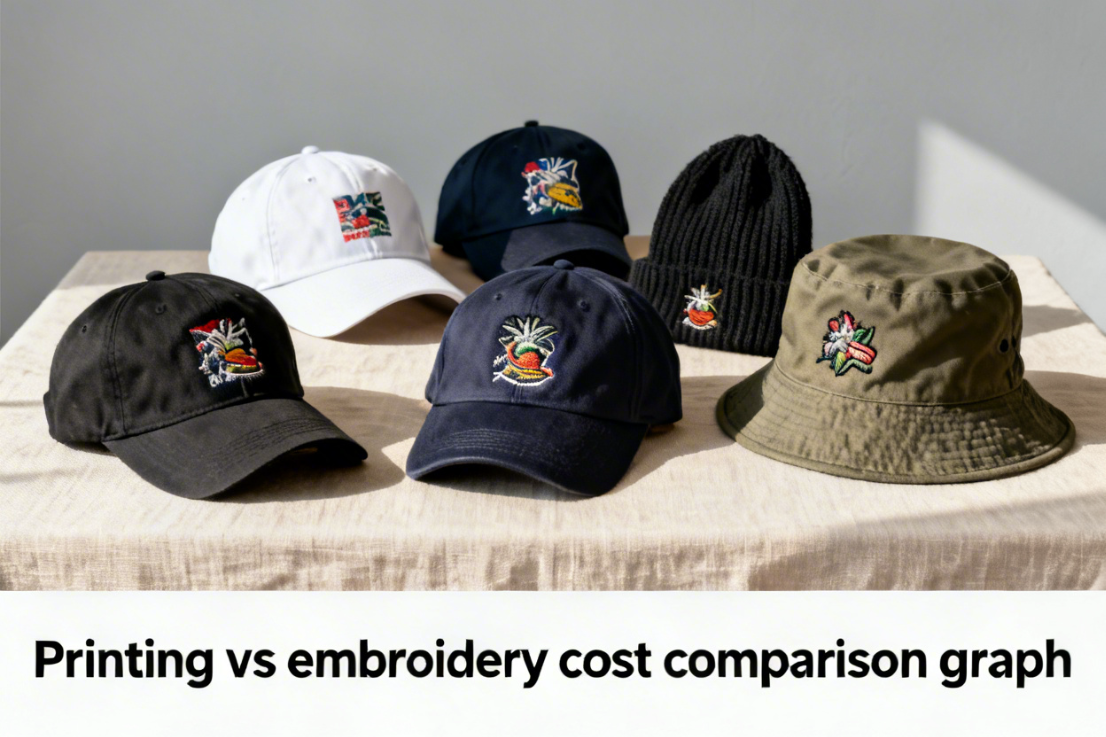
Screen printing15 provides the most economical option for large orders with simple designs. The setup cost gets distributed across more pieces, reducing per-unit costs significantly. A 1,000-piece order might cost $3-$5 per hat, while 200 pieces could cost $6-$8 each.
Heat transfer printing16 offers middle-ground pricing with faster setup times. The material costs range from $2-$6 per transfer, plus application labor. This method works well for orders between 50-500 pieces where screen printing setup costs become prohibitive.
Digital printing17 handles complex, full-color designs efficiently. The per-piece cost stays relatively consistent regardless of color count. However, the base cost starts higher at $5-$10 per hat, making it less suitable for budget-conscious projects.
| Printing Method | Best Quantity | Cost Range | Setup Fee |
|---|---|---|---|
| Screen printing15 | 500+ pieces | $3-$7 | $50-$200 |
| Heat transfer | 50-500 pieces | $4-$8 | $25-$75 |
| Digital printing17 | 25-200 pieces | $5-$10 | $0-$50 |
Quality differences affect long-term value. Embroidery lasts longer and maintains appearance through repeated washing. Printing quality varies by method – screen printing offers excellent durability, while some heat transfers may fade or peel over time. This durability factor influences customer satisfaction and brand reputation.
What factors influence embroidery and printing prices?
Multiple variables affect your final decoration costs beyond the basic method choice. Understanding these factors helps you optimize your budget. Smart planning can reduce costs without sacrificing quality.
Order quantity, design complexity3, hat quality, location count, and rush timing significantly impact both embroidery and printing costs. Larger orders and simpler designs typically reduce per-piece pricing.
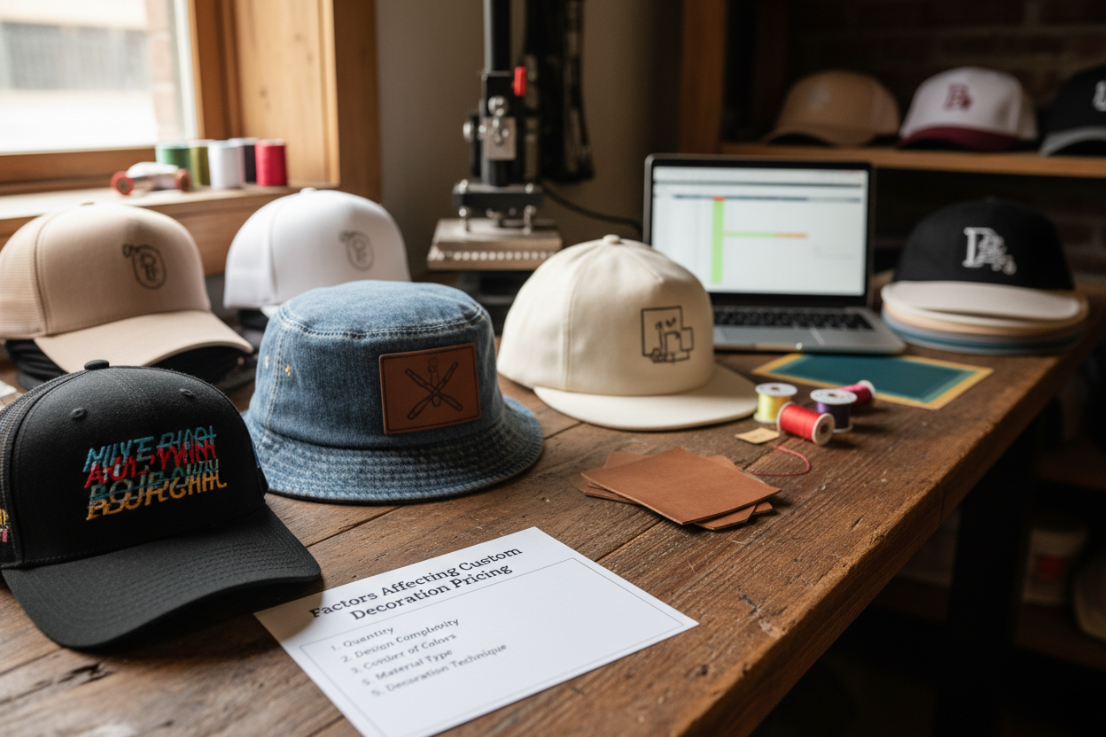
Order quantity creates the biggest cost impact through economies of scale18. Setup costs get distributed across more pieces, reducing individual unit costs. A 200-piece embroidery order might cost $12 per hat, while 1,000 pieces could drop to $6 per hat for the same design.
Hat quality and material affect decoration costs. Premium hats with structured crowns hold embroidery better but may require special needles or techniques. Mesh trucker hats need backing material for embroidery, adding $1-$2 per piece. Cotton caps absorb ink differently than polyester blends, affecting print quality and costs.
Design placement and size directly influence pricing. Standard front panel placement costs less than side, back, or multiple locations. Larger designs require more materials and time for both embroidery and printing. A 2-inch logo costs significantly less than a 4-inch design.
Thread and ink color counts matter for both methods. Embroidery machines need thread changes between colors, increasing labor time. Screen printing15 requires separate screens for each color, multiplying setup costs. Digital printing17 handles multiple colors efficiently but may cost more per piece.
Rush orders19 typically add 25-50% to standard pricing. Factories prioritize rush jobs, potentially disrupting regular production schedules. Planning ahead saves money and ensures better quality control.
Seasonal demand20 affects pricing and availability. Peak seasons like back-to-school or holiday periods see higher costs and longer lead times. Off-peak ordering often provides better pricing and faster turnaround.
When should I choose embroidery versus printing for hats?
The decoration method choice affects your brand image, customer perception, and profit margins. Each method suits different business goals and customer expectations. Making the right choice requires balancing multiple factors.
Choose embroidery for premium brands, simple logos, and long-term durability. Select printing for budget-conscious projects, complex graphics, and large colorful designs requiring fine detail reproduction.
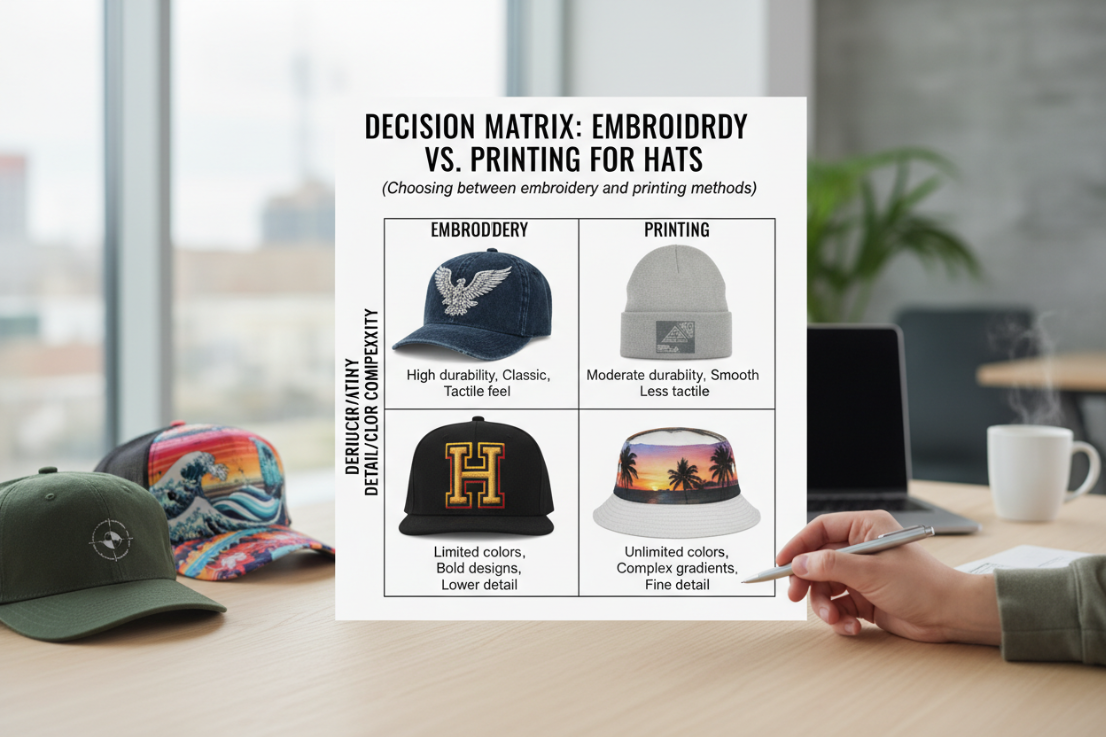
Brand positioning influences decoration method selection significantly. Premium and luxury brands typically prefer embroidery for its perceived quality and professional appearance. The raised, textured feel of embroidery communicates value and craftsmanship to customers.
Budget-conscious brands often choose printing for better cost efficiency. Printing allows more design flexibility within tighter budget constraints. Startups and promotional campaigns frequently select printing to maximize order quantities within fixed budgets.
Design characteristics determine method suitability. Embroidery works best for text, simple logos, and designs with clean lines. Fine details, gradients, and photographic images reproduce better through printing methods. Embroidery cannot achieve the same level of detail as high-quality printing.
Target customer expectations play crucial roles. Corporate clients and professional organizations often expect embroidered logos for their perceived quality. Fashion-forward brands might prefer printing for its ability to reproduce complex artwork and trendy graphics.
Product usage and durability requirements guide method selection. Embroidery withstands heavy use, frequent washing, and outdoor conditions better than most printing methods. Work uniforms, team caps, and promotional items for long-term use benefit from embroidery’s durability.
| Consider Embroidery When | Consider Printing When |
|---|---|
| Premium brand image | Budget-conscious projects |
| Simple logo designs | Complex, colorful artwork |
| Long-term durability needed | Large quantity orders |
| Professional appearance | Quick turnaround required |
| Corporate or team branding | Fashion-forward designs |
At Anthea, I’ve seen brands successfully use both methods within their product lines. Premium items feature embroidery, while seasonal or promotional pieces use printing. This strategy maximizes profit margins while meeting diverse customer needs.
Testing both methods with small sample orders helps determine customer preferences. Some brands discover their audience values the premium feel of embroidery enough to pay higher prices. Others find printing meets quality expectations while improving profit margins.
Conclusion
Embroidery costs more but delivers premium quality and durability, while printing offers budget-friendly options for complex designs. Choose based on your brand positioning, design needs, and customer expectations.
-
Gives frameworks to forecast unit costs, setup fees, and margins so you don’t underprice or overspend. ↩
-
Helps you pick artwork styles that reproduce well on hats and avoid costly revisions or disappointments. ↩
-
Explains why details, gradients, and fine lines change pricing and which method best matches your art. ↩ ↩
-
Shows breakpoints where setup fees get diluted, helping you choose the most cost-efficient quantity. ↩ ↩
-
Sets realistic expectations on feel, finish, and longevity so you choose a method that fits your brand. ↩
-
Teaches stitch-count basics so you can estimate costs and simplify artwork to hit a target price. ↩ ↩
-
A clear guide to the main driver of embroidery cost, with practical examples for logos and text. ↩
-
Benchmarks your design against common stitch ranges to predict cost before requesting quotes. ↩
-
Helps you identify “high stitch” designs early and avoid sticker shock or production issues. ↩
-
Explains color-change labor impacts so you can decide whether to simplify colors or switch methods. ↩
-
Shows the look, limits, and pricing adders so you can decide if the premium effect is worth it. ↩
-
Covers visual payoff vs durability/care considerations, helping you avoid premature wear complaints. ↩
-
Prevents surprise charges by explaining how each placement is priced and how to prioritize locations. ↩
-
Helps you understand one-time setup costs and how clean artwork can lower fees and speed approvals. ↩
-
Explains when screen printing wins on price and durability so you can choose the best run size. ↩ ↩ ↩ ↩
-
Clarifies pros/cons (feel, cracking, care) so you can pick it for the right use case. ↩
-
Helps you match complex artwork to the right process and avoid muddy prints or poor adhesion. ↩ ↩ ↩
-
Shows why larger orders drop unit costs and how to plan inventory to capture savings safely. ↩
-
Prepares you for typical rush premiums and tradeoffs, helping you schedule to save money. ↩
-
Helps you order ahead of peak seasons to secure better pricing and avoid missed sales windows. ↩