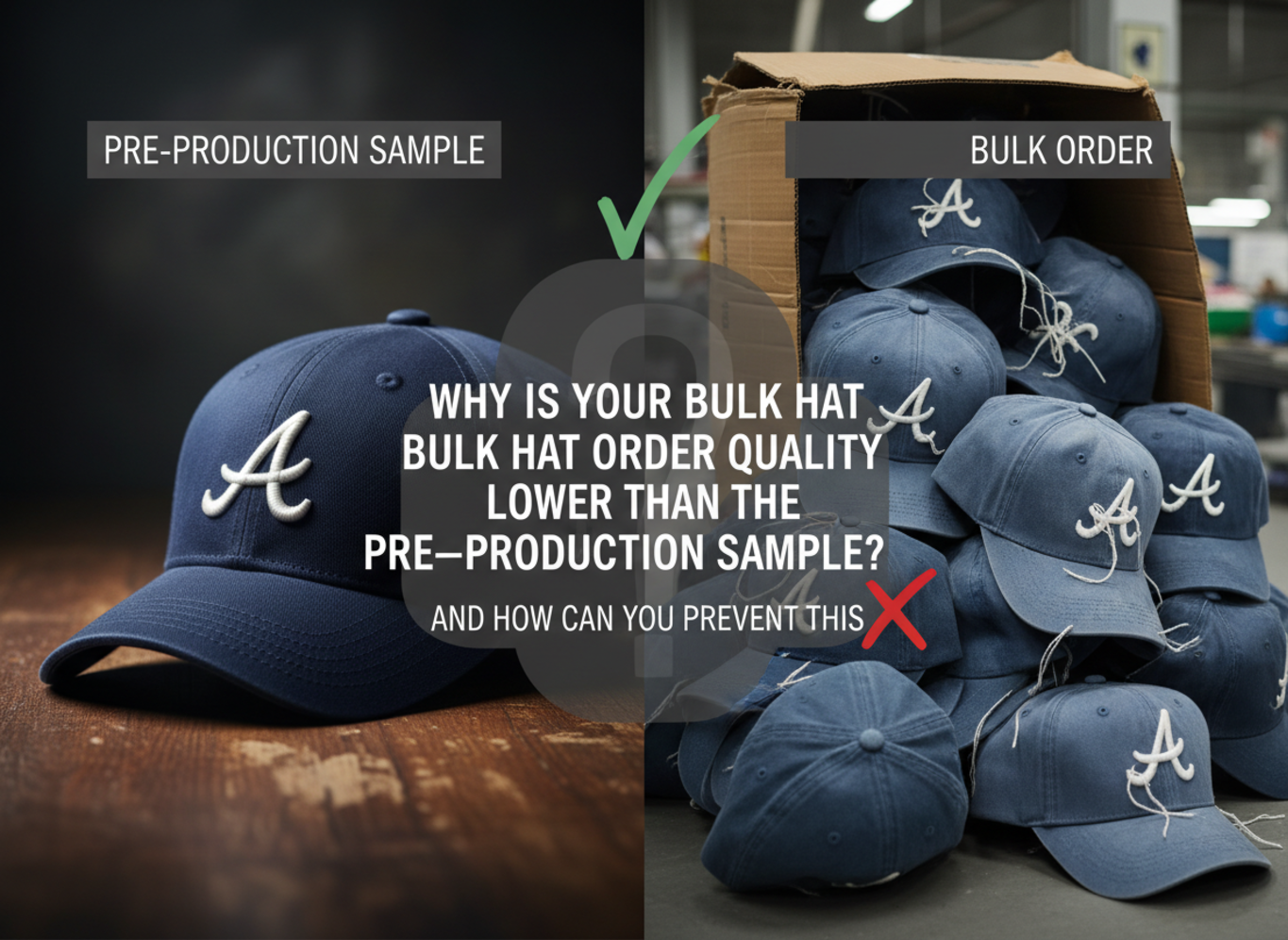
You received a perfect sample hat, but your bulk order arrived with crooked logos and wrong colors1. This is a nightmare for your brand reputation. I will explain why this happens.
The difference usually happens because samples are made by master tailors in a slow environment, while bulk orders are made on high-speed assembly lines2. To prevent this, you must approve a "Pre-Production Sample3," set clear quality limits4, and work with a factory that owns its supply chain5.
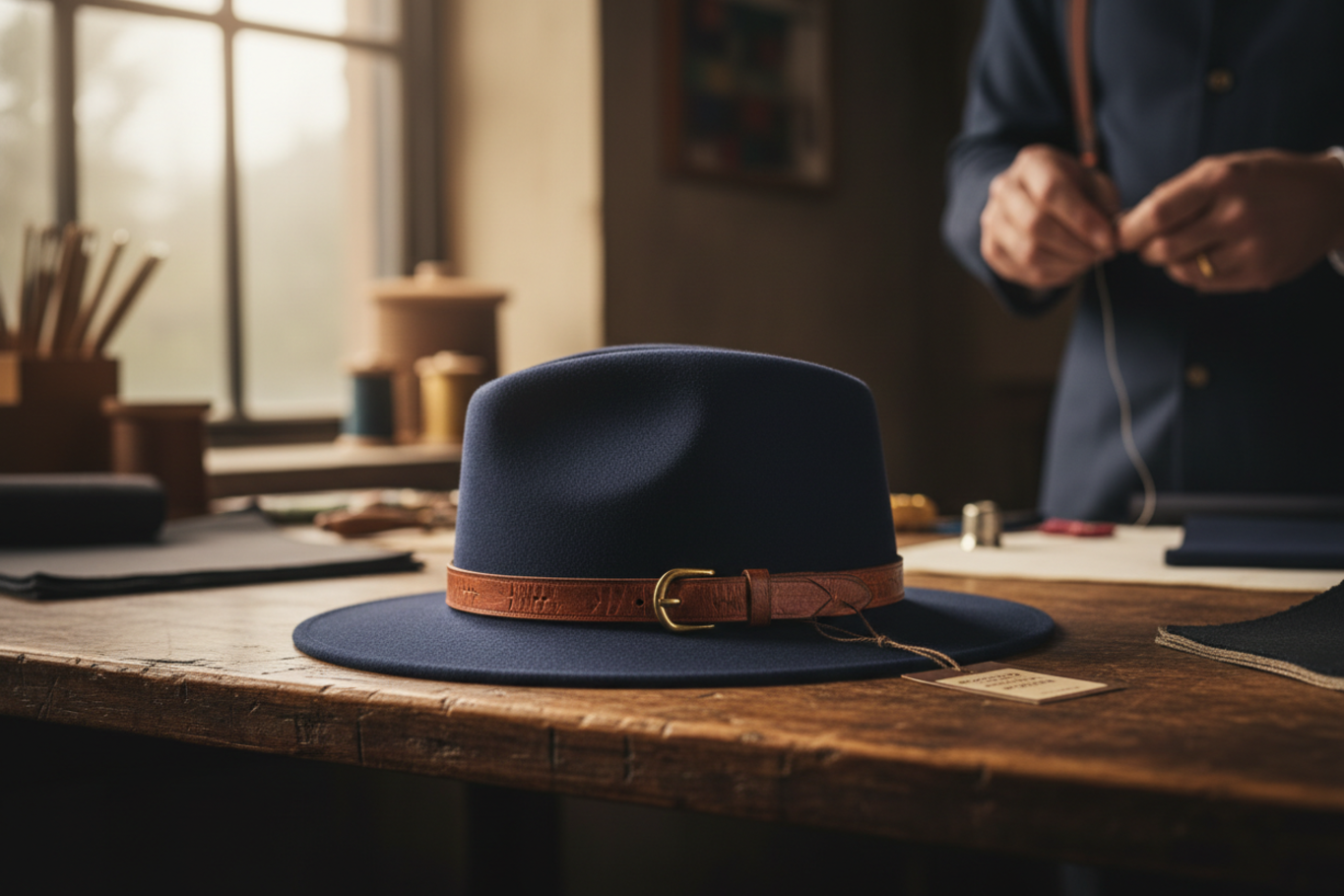
You put a lot of time into your design. You want your customers to feel the quality when they open the box. It is frustrating when the final product does not match your vision. I have seen many brand owners struggle with this. Read on to understand the manufacturing process better.
What is a pre-production sample and why is it important?
Many new brand owners confuse a sales sample6 with a pre-production sample. If you skip this step, you are gambling with your money.
A pre-production (PP) sample is the final prototype made with the exact fabric, color, and accessories intended for the bulk order7. It acts as the "contract" between you and the factory8, setting the standard for mass production quality.
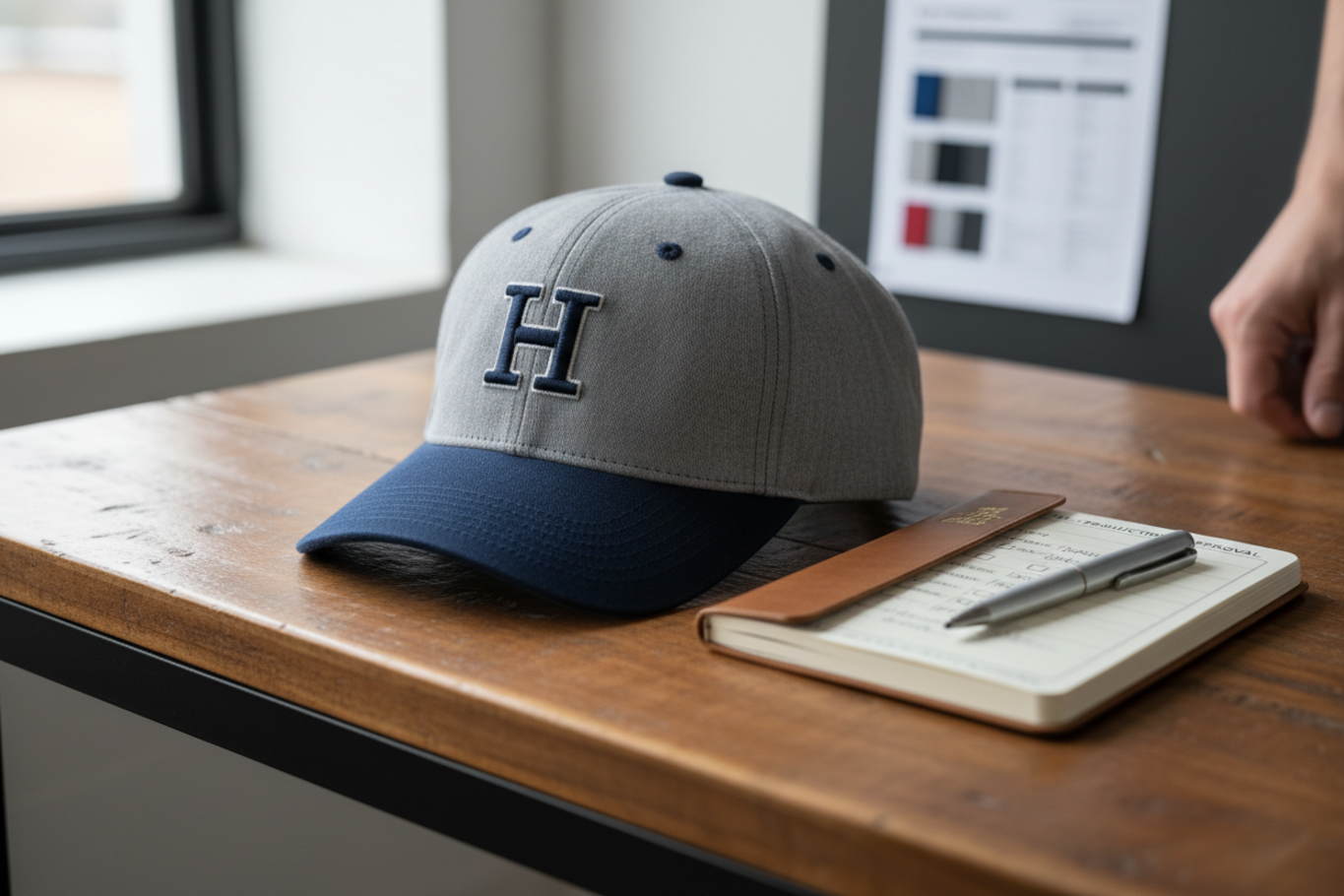
You need to understand the role of this sample deeply. In the hat manufacturing industry, we have different types of samples. A "proto sample9" is just to check the shape. A "sales sample6" is for you to take photos. But the "PP sample" is the most critical one.
When I work with clients at Anthea, I insist on the PP sample. Why is it so vital? It tests the actual supply chain. Sometimes, the fabric we used for the initial sample was from a market stock. But for the PP sample, we dye the fabric specifically for your order. This reveals if the color will shift.
Also, the PP sample tests the embroidery file on the actual fabric. A design might look good on a computer. It might look good on a piece of felt. But when we stitch it onto the curved front panel of a trucker hat, it might warp. The PP sample catches these errors before we cut fabric for 200 or 500 hats.
Here is a simple breakdown of sample types:
| Sample Type | Purpose | Materials Used |
|---|---|---|
| Proto Sample | Check shape and fit | Available stock fabric |
| Sales Sample | Marketing and photos | Correct fabric (mostly) |
| PP Sample | Quality Standard for Bulk | Exact bulk materials |
| Shipping Sample10 | Final verification | Taken from bulk pile |
If you do not have a signed and approved PP sample, you cannot argue with the factory later. The factory can say, "We thought this was acceptable." The PP sample removes the guessing.
What causes sample-to-production quality gaps?
You might wonder why a factory cannot just copy the sample exactly. The sample was perfect. The bulk order is messy.
The main cause is the difference between the "Sample Room11" and the "Production Line12." Samples are made one by one by highly skilled masters, while bulk orders are split among many workers who must work very fast to meet deadlines.
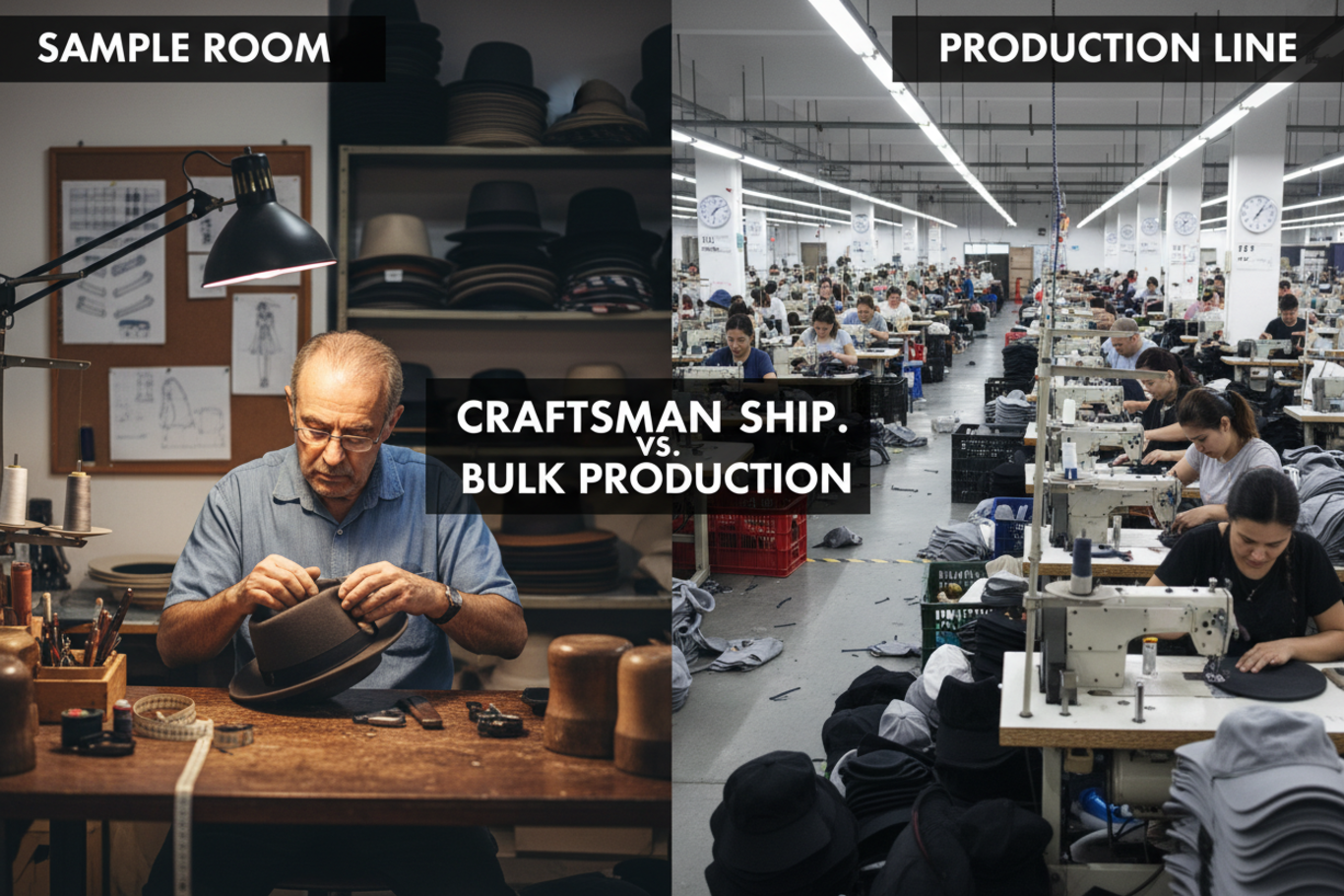
I want you to imagine two different rooms. Room A is the Sample Room11. Here, the sewers are the best in the factory. They have years of experience. They take their time. They might take two hours to sew one hat. They adjust the machine tension perfectly for that single item. They hand-cut the fabric to ensure the pattern aligns perfectly.
Room B is the Production Floor. Here, the goal is speed and efficiency. We are making hundreds of hats. The process is broken down. One person sews the visor. Another person joins the panels. A third person attaches the sweatband. If one person in this chain makes a small error, it affects the whole batch.
Also, the machinery is different. Sample machines are often different models than the heavy-duty machines on the line. The heavy machines run faster. This speed can cause the thread to pull tighter. This creates puckering on the seams.
Another factor is the "Cutting13" stage. For a sample, we cut one layer of fabric with scissors or a laser. It is precise. For bulk orders, we stack 50 layers of fabric. We use a large electric saw. The blade can bend slightly as it goes through the bottom layers. This means the bottom layer of fabric might be 2 millimeters larger than the top layer. This slight difference changes the fit of the hat.
Why does bulk production quality differ from samples?
Beyond the workers, there are material and environmental factors. These are often invisible until the goods arrive at your warehouse.
Bulk production quality varies because material batches change. Fabric dye lot14s can differ slightly in shade, and high-speed embroidery machines vibrate more, which can affect the precision of small text or detailed logos compared to the slow sample process.
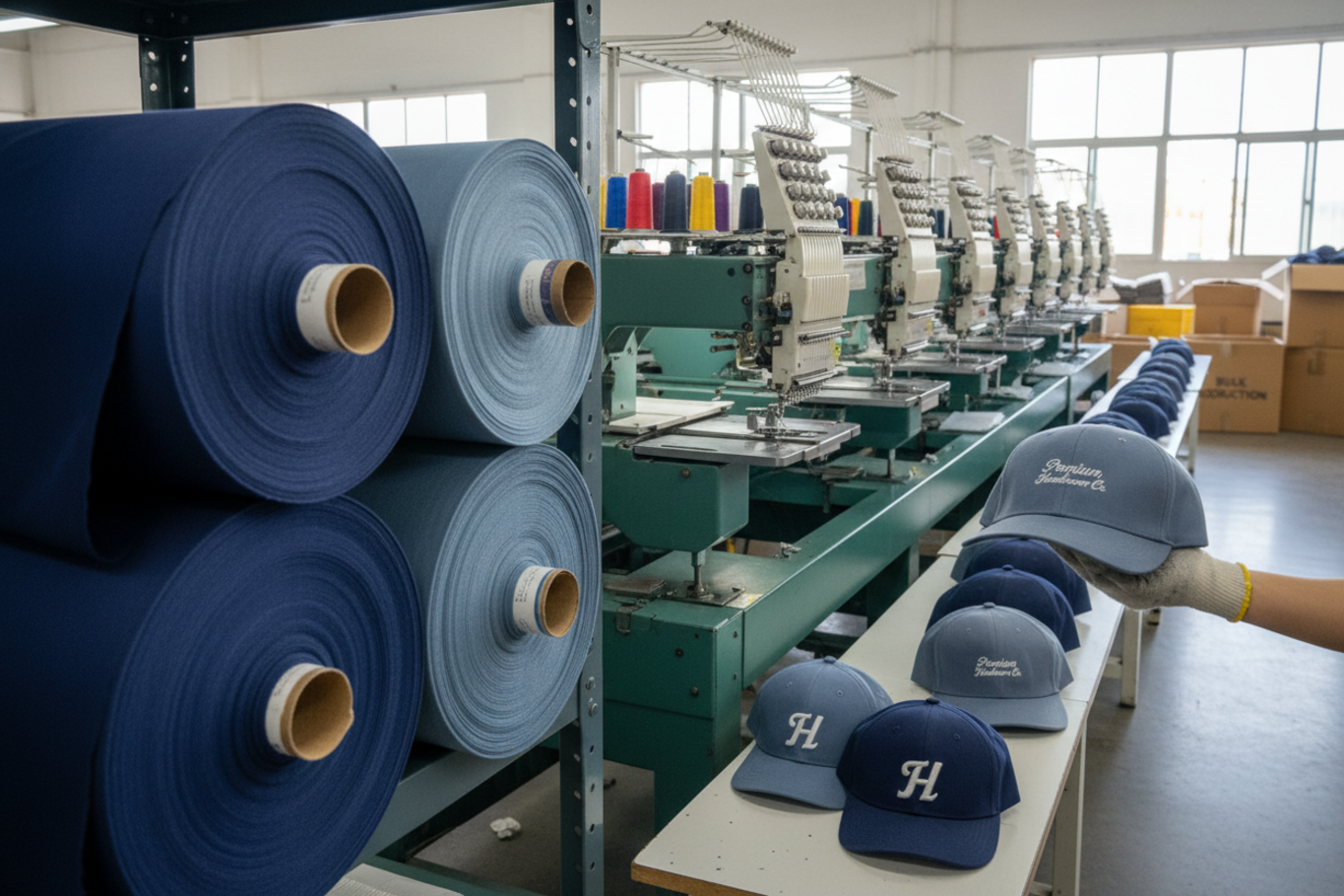
Let’s dig into the materials. Fabric is not ink on paper. It is a physical thing that reacts to the environment. When we buy fabric for a sample, we buy 2 yards. When we buy for your order, we buy 200 yards. These 200 yards might come from a different "dye lot14."
A dye lot14 is a batch of fabric dyed at the same time. Temperature and humidity affect how fabric absorbs color. The navy blue in your sample might be slightly darker than the navy blue in your bulk order. This is standard in the textile industry, but it can be a shock if you are not expecting it.
Then there is the embroidery. In the sample stage, we hoop the hat manually and check it carefully. In bulk production, the operators must hoop hundreds of hats an hour. If a hat is not hooped perfectly straight, the logo will be tilted.
Also, consider the "resting time15" of materials. In mass production, materials are moved quickly. Sometimes, fabric shrinks after it is cut if it was not "relaxed" properly. A good factory knows to let fabric rest. A cheap factory rushes this step.
Here are technical reasons for the difference:
- Machine Speed: Bulk machines run at 1000 stitches per minute; sample machines run slower.
- Thread Tension: High speed increases tension, potentially causing fabric to wrinkle.
- Manual Handling: Workers get tired. The 1st hat is perfect. The 500th hat might have a loose thread.
How can brands maintain quality during mass production?
You are far away from the factory. You cannot stand next to the machine. But you can still have control.
You can maintain quality by requiring "Inline Inspections16" and asking for photos of the first finished products off the line. Do not wait until the order is packed to check the quality; catch the problems while the machines are still running.
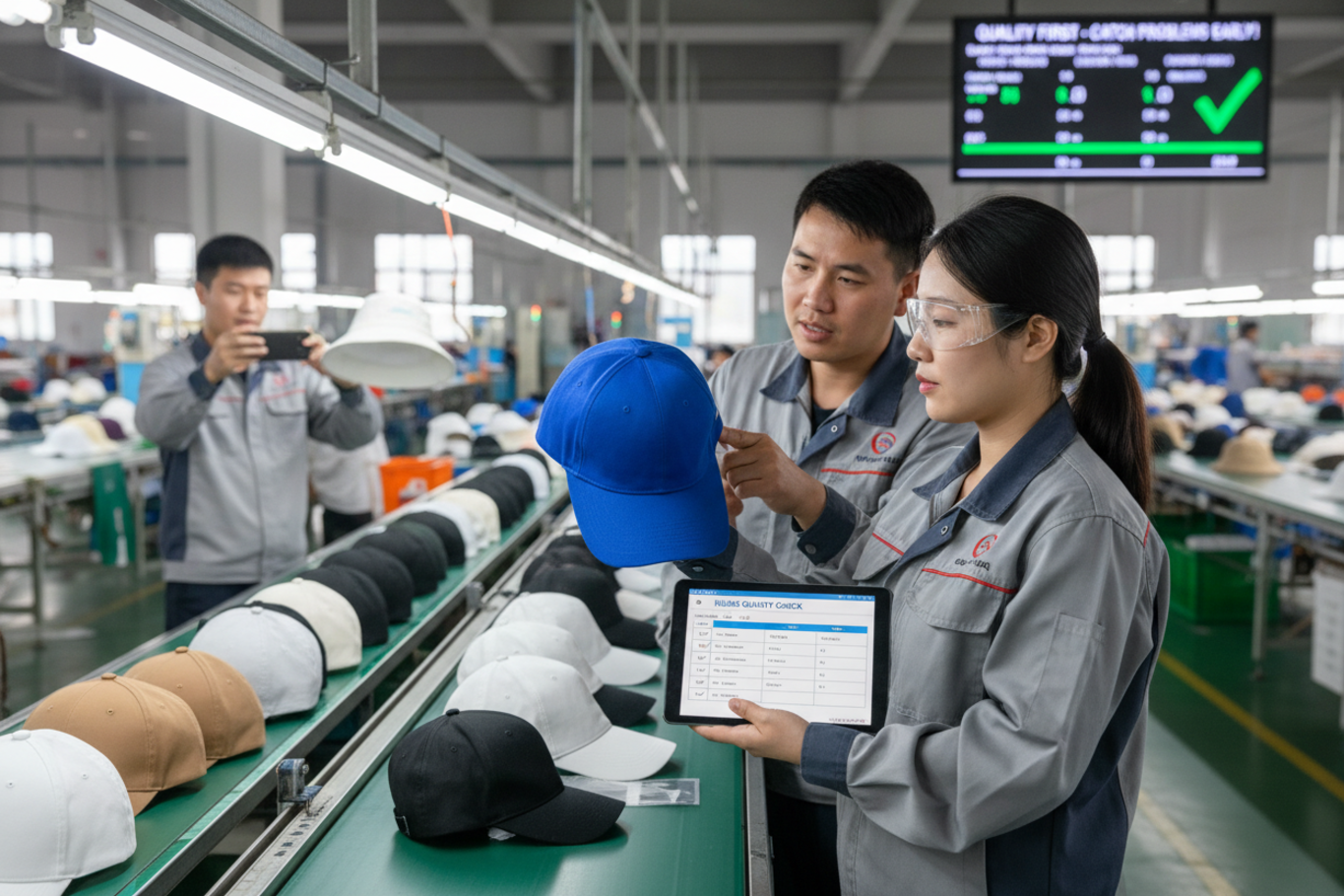
I always tell my clients to be involved during the process, not just at the end. At Anthea, we send photos and videos during production. But you should ask for this from any supplier.
First, establish an "Inline Inspection." This happens when 10% or 20% of the order is done. Ask the factory to take a photo of a random hat from the pile. Check the logo placement. Check the inside stitching. If you see a mistake now, the factory can fix the machines for the remaining 80% of the order.
Second, understand "AQL" (Acceptable Quality Limit). This is an industry standard. It admits that in a batch of 1000 hats, maybe 2 or 3 will have minor defects. You need to agree on what is a "major defect" and what is a "minor defect."
- Critical Defect17: The hat is unsafe or totally wrong (wrong color, sharp needle left inside).
- Major Defect: The customer would return it (crooked logo, hole in fabric).
- Minor Defect: The customer probably won’t notice (a loose thread inside the sweatband).
If you do not define this, the factory will define it for you. And their standard is usually lower than yours. You must tell them: "If the logo is tilted more than 3 degrees, I will not pay for that hat." When they know you are checking, they work more carefully.
How do you prevent quality control issues in bulk orders?
Prevention is better than fixing mistakes. It saves you money and stress. It starts before you even pay the deposit.
Prevent issues by creating a detailed "Tech Pack18" that lists every measurement and material code. Choose a factory that offers low MOQs so you can test their bulk quality with a small order before committing to thousands of pieces.
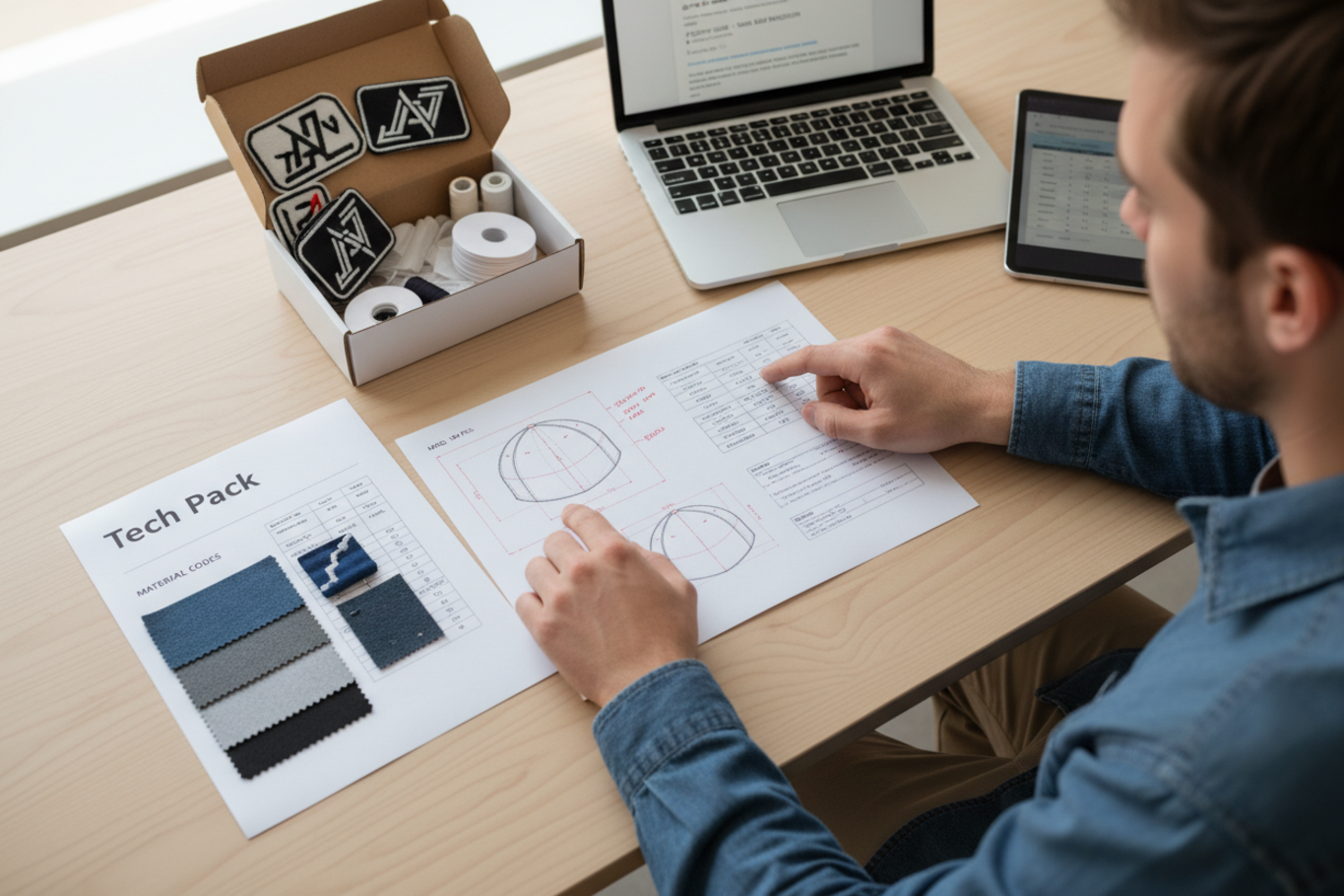
The "Tech Pack18" is your blueprint. Many creators just send a logo file and say "make me a black hat." This is dangerous. A Tech Pack18 should include:
- Pantone Codes19: Don’t say "Red." Say "Pantone 186 C."
- Dimensions: How wide is the logo? How far is it from the bottom seam?
- Stitch Type: Do you want 3D puff embroidery or flat embroidery?
- Material Swatches: Photos of the specific mesh or cotton twill you want.
If you are a new brand, do not order 5,000 hats at once. This is why Anthea offers a low MOQ of 200 pieces. This allows you to test our bulk consistency. If the 200 hats are great, then you can order 2,000 next time.
Also, build a relationship with your supplier. I have found that when clients treat me as a partner, I work harder for them. If they treat me like a machine, the communication is cold. Explain your brand vision to the factory. Tell them, "My customers are very picky about the brim shape."
Finally, ask about their internal QC (Quality Control) team. A trading company usually does not see the hats until they are in boxes. A factory like ours has a team at the end of the line trimming threads and steaming shapes. We reject bad hats before you ever see them.
Conclusion
The gap between samples and bulk orders comes from different processes and human error. You can fix this by demanding a PP sample, using a detailed Tech Pack18, and monitoring production.
-
Learn root causes and proven prevention steps to protect brand reputation and avoid costly reworks. ↩
-
Understand where speed introduces defects so you can set the right controls before mass production. ↩
-
A solid guide helps you use PP samples to lock specs and reduce disputes with factories. ↩
-
See best-practice thresholds and documentation methods that keep quality measurable and enforceable. ↩
-
Shows how supply-chain control reduces dye-lot, material swaps, and timeline risks. ↩
-
Clarifies sample purposes so you don’t rely on marketing samples for production decisions. ↩ ↩
-
A checklist helps ensure nothing changes between approval and the production run. ↩
-
Learn how to document approvals to strengthen claims if bulk goods don’t match expectations. ↩
-
Helps you sequence sampling correctly and avoid paying for unnecessary revisions later. ↩
-
Shows how to confirm bulk output matches standards right before goods leave the factory. ↩
-
Explains skill, tools, and pacing differences so you can plan controls for scale-up. ↩ ↩
-
Understand process handoffs and error points to target inspections and training effectively. ↩
-
Learn why stacking and saw cutting can shift dimensions and how to specify tolerances. ↩
-
Practical guidance to avoid color mismatch surprises when ordering larger yardage. ↩ ↩ ↩
-
Shows how relaxation time stabilizes fabric so sizing stays consistent after cutting. ↩
-
Helps you catch problems early while machines are still running—before the full batch is done. ↩
-
Understand safety and “stop-ship” issues so you can enforce non-negotiable quality rules. ↩
-
A strong tech pack reduces ambiguity on measurements, materials, and construction details. ↩ ↩ ↩ ↩
-
Using standardized color references reduces ‘wrong color’ outcomes and re-dye costs. ↩