
Searching for a warm knit hat often leaves buyers staring at two words — watch cap and beanie — wondering whether they are looking at the same product or two genuinely different things. The confusion is real, and buying the wrong style can mean a hat that slips off, lets cold air in at the ears, or looks out of place. Understanding the difference can save you from that mistake.
A watch cap is a close-fitting, typically cuffed knit hat designed for warmth and function1, often made from heavier wool or acrylic. A beanie is a broader category that includes many styles of knit hat2 — some cuffed, some not — worn for everyday casual use. In many cases, a watch cap can be understood as a specific, more functional type within the wider beanie family, but the two terms are not always interchangeable.
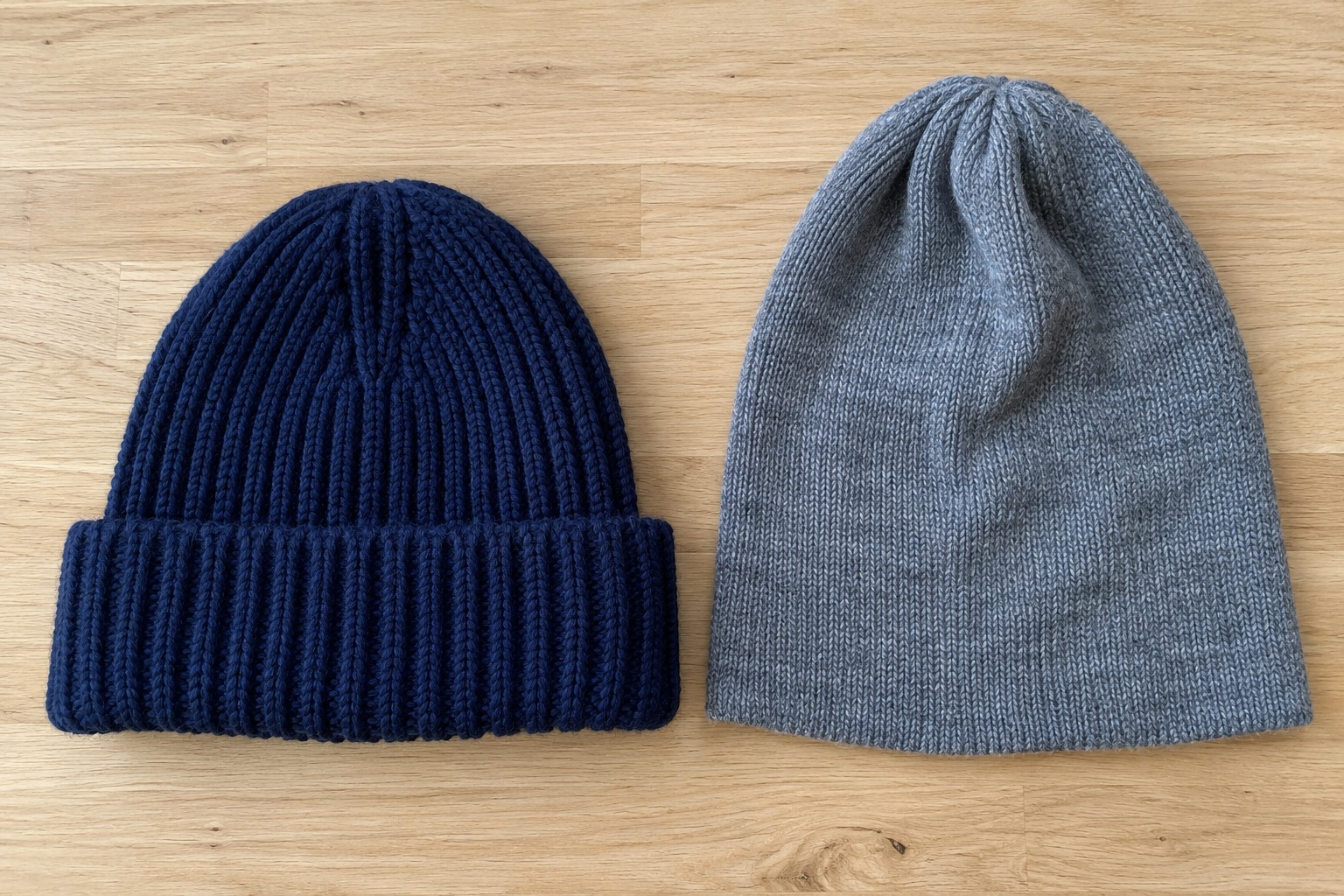
The naming alone does not tell the full story. What actually matters is structure, fit, material, and intended use — and those details vary significantly between the styles most commonly labeled "watch cap" and those most commonly labeled "beanie." Let’s break each one down.
What Is a Watch Cap?
Buyers frequently ask whether a watch cap is just a marketing name for a regular knit hat. It is a fair question, but the answer involves real structural differences.
A watch cap is a snug, close-fitting knit hat, typically with a single or double cuff at the brim. It sits low on the forehead and covers the ears fully. It is designed primarily for warmth and practical use in cold or outdoor environments.

The watch cap has a distinct identity that most experienced hat buyers and suppliers recognize immediately. Its defining characteristics go beyond the name.
Key Structural Features of a Watch Cap
- Cuffed brim: The bottom edge is folded up once or twice, creating a reinforced band that helps the hat stay in place and adds a layer of insulation over the ears.3
- Close fit: The knit is typically tighter, and the overall silhouette hugs the head rather than sitting loosely or bunching at the crown.
- No significant slouch: Unlike many beanies, a watch cap does not have excess fabric designed to drape at the back of the head.
- Ear coverage as a priority: The cuff and cut work together to keep the ears covered during active movement or wind.
- Heavier knit construction: Watch caps are often knitted from thicker yarn with higher stitch density compared to lightweight fashion beanies.4
Common Materials
Watch caps are typically made from:
| Material | Warmth Level | Common Use |
|---|---|---|
| Wool blend | High | Outdoor, cold climates |
| Merino wool | High + soft | Premium outdoor, sensitive skin |
| Heavy acrylic | Medium–High | Workwear, budget-friendly |
| Cotton-acrylic blend | Medium | Transitional seasons |
From my experience working with product buyers across different markets, wool blend and heavy acrylic are the most requested materials for watch caps. Buyers prioritizing warmth over cost almost always lean toward wool content.
What Is a Beanie?
Many buyers assume "beanie" is just a casual word for any knit hat, and in broad commercial use, they are not entirely wrong — but the term does cover a specific style range.
A beanie is a soft knit hat worn close to or on top of the head. The category is wide: it includes cuffed and uncuffed versions, fitted and slouchy silhouettes, lightweight fashion styles, and heavier functional cuts. Beanies prioritize everyday wearability over maximum thermal performance.
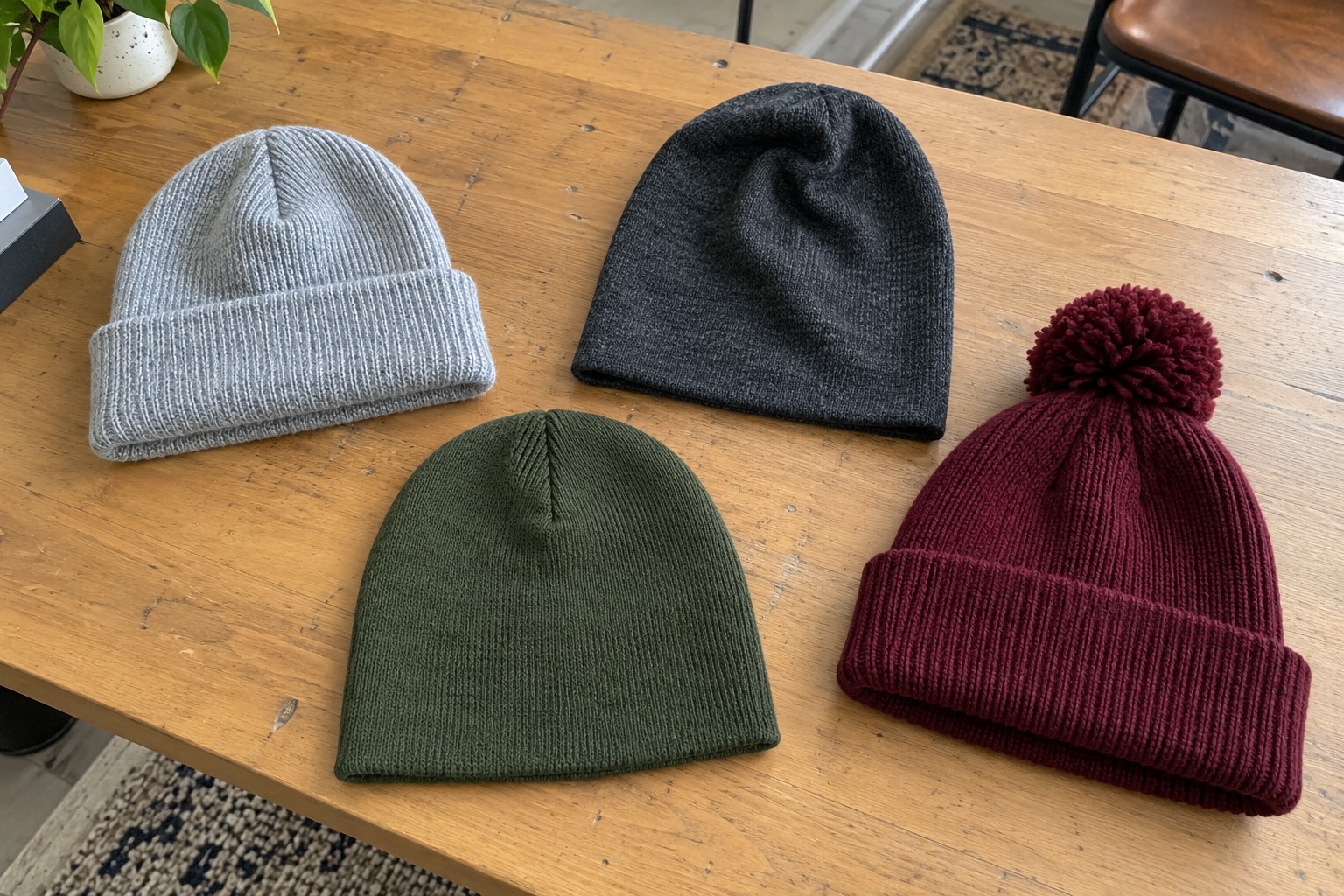
Understanding what the beanie category actually includes helps buyers avoid picking a hat that looks right but does not perform the way they expect.
Style Variations Within the Beanie Category
The word "beanie" covers more ground than most buyers expect:
- Cuffed beanie: Folded brim, similar in appearance to a watch cap but often in lighter knit weights
- Uncuffed beanie (slouchy): Extra fabric at the crown drapes down; fashionable but offers less ear coverage
- Fitted beanie: No cuff, no slouch; sits flat against the skull
- Pom-pom beanie: Decorative ball at the crown; primarily casual or winter fashion
- Fisherman beanie: Short cuff, sits high on the head; minimal ear coverage
- Bobble beanie: Similar to pom-pom, popular in colder-weather fashion markets
This variety is why the term "beanie" is less precise than "watch cap" when you are buying for a specific functional outcome. Two products both labeled "beanie" can fit and perform very differently.5
Watch Cap vs Beanie: What’s the Difference?
This is the question most buyers are really asking, and the honest answer is nuanced. The difference is not always about the name — it is about specific design decisions that affect fit, warmth, and use case.
The core difference is this: a watch cap is a specific, function-first style defined by a snug fit, cuffed brim, and ear-covering length. A beanie is a broad category with significant variation in fit, length, structure, and knit weight. A watch cap is often a type of beanie, but not all beanies are watch caps.
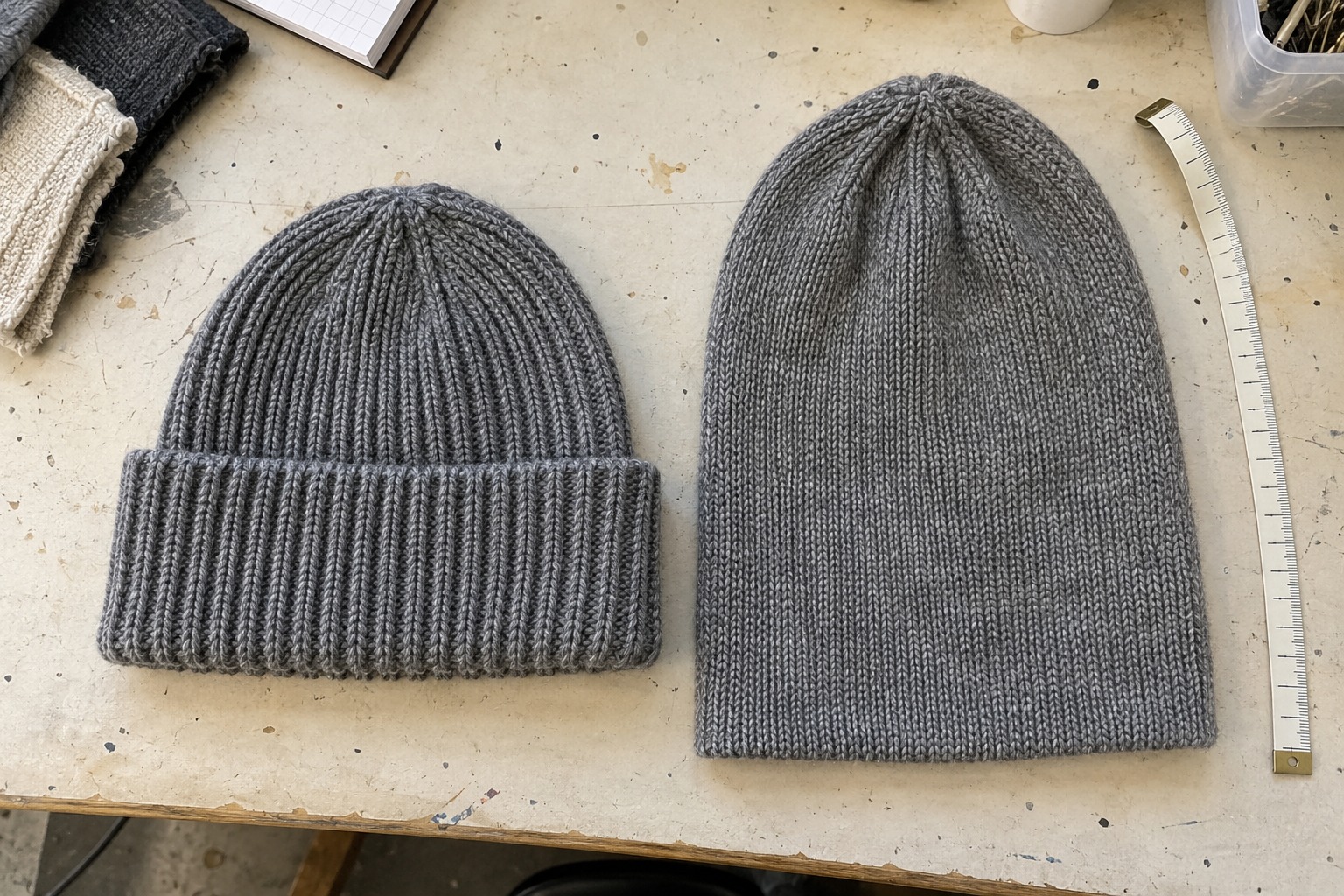
Side-by-Side Comparison
| Feature | Watch Cap | Beanie |
|---|---|---|
| Fit | Snug, close to head | Varies: fitted to slouchy |
| Cuff | Almost always cuffed | May or may not have a cuff |
| Ear coverage | Full, consistent | Varies by style |
| Crown silhouette | Flat or minimal | Flat to extended slouch |
| Knit weight | Typically heavier | Wide range, often lighter |
| Primary purpose | Warmth, function | Everyday wear, style |
| Style tone | Utilitarian, workwear | Casual, fashion-forward |
| Decoration | Rarely | Common (pom-poms, logos) |
Where the Confusion Comes From
In my experience reviewing product listings and talking with buyers across different regions, the two terms are often used interchangeably by retailers6. A knit hat marketed as a beanie in one catalog may appear as a watch cap in another — with nearly identical construction. This is especially common in markets where "beanie" is the dominant term and "watch cap" is considered a subcategory or variant.
Practical advice: When evaluating either product, look past the name. Check the cuff, measure the crown-to-brim length, ask about yarn weight, and confirm whether the design covers the ears when worn. Those details matter far more than what the label says.
Is a Watch Cap the Same as a Beanie?
Buyers ask this question constantly, and it reveals genuine uncertainty — not a simple misunderstanding.
Not exactly. A watch cap shares many construction features with a cuffed beanie, and many suppliers use the terms interchangeably. However, a watch cap typically implies a tighter fit, heavier knit, and more deliberate ear coverage than the average beanie. Think of it as a specific style within a broader family.
When the Two Terms Overlap
- A heavy, cuffed, close-fitting knit hat is simultaneously described as a "beanie" and a "watch cap" in many product catalogs.
- The overlap is highest for navy blue, black, or olive green cuffed hats in heavy acrylic or wool.
- The distinction becomes clearest at the extremes: a thin, colorful pom-pom hat is almost never called a watch cap; a tight navy wool cuffed hat is rarely called a slouchy beanie.
The safest approach is to evaluate the product on its own specifications rather than relying on the name to define what you are getting.
Why Is It Called a Watch Cap?
The origin of the name is a common point of curiosity among buyers who encounter the term for the first time.
The name "watch cap" is widely believed to derive from maritime use.7 Sailors standing watch on deck in cold conditions needed a hat that would stay securely on the head in wind, cover the ears, and provide reliable warmth without excess bulk8. The close-fit, cuffed knit hat became standard for that function — and the association with "standing watch" gave the style its name.

How the Name Spread Into General Use
- The style moved from naval and maritime use into broader military and workwear contexts.
- Surplus stores and outdoor retailers adopted the term when selling similar hats to civilian buyers.
- Over time, "watch cap" became associated with any snug, cuffed, heavy knit hat — regardless of who was wearing it or why.
- Today, the term appears in outdoor gear, workwear, and general apparel product listings worldwide.
It is worth noting that the name carries different levels of recognition depending on the market. In some regions, "watch cap" is a well-understood product term. In others, the same hat is simply sold as a cuffed beanie or a knit hat, with "watch cap" rarely appearing in retail communication.
Watch Cap vs Beanie: Fit and Design
Fit is often the deciding factor for buyers — not warmth, not material, but whether the hat stays where it should and creates the right silhouette.
A watch cap fits snugly and stays in place through movement. A beanie has more variation: some fit just as closely, but others are designed to sit loosely or drape at the back. The right choice depends on how and where you plan to wear the hat.

Fit Variables to Evaluate
Crown length:
- Watch caps typically have a shorter, more measured crown. The hat fits over the skull without bunching.
- Beanies, especially slouchy versions, have a longer crown section that allows fabric to drape.
Brim width and cuff:
- Watch cap cuffs are usually wider and sit firmly over the forehead and ears.
- Beanie cuffs vary. Some are narrow and decorative; others are similar in width to a watch cap cuff.
Head circumference range:
- Watch caps are typically designed for a narrower range of head sizes, relying on stretch and close knit for fit.
- Beanies, especially one-size-fits-most styles, often use more elastic or open-knit construction to fit a wider range.
Silhouette:
- Watch cap: sits close, minimal profile, utilitarian look
- Cuffed beanie: similar to watch cap, but may have more crown room
- Slouchy beanie: relaxed, casual, visually softer
For buyers who want a hat that performs consistently during physical activity or in windy conditions, the watch cap fit is usually more reliable.
Watch Cap vs Beanie: Materials and Warmth
Warmth is the most common concern I hear from buyers in colder climates — and it is the area where specification details matter most.
Warmth is not determined by the product name. It is determined by material, yarn weight, knit density, and design coverage.9 A heavy wool watch cap will outperform a lightweight acrylic beanie in cold conditions, but a heavy cuffed beanie in the same wool can perform similarly.
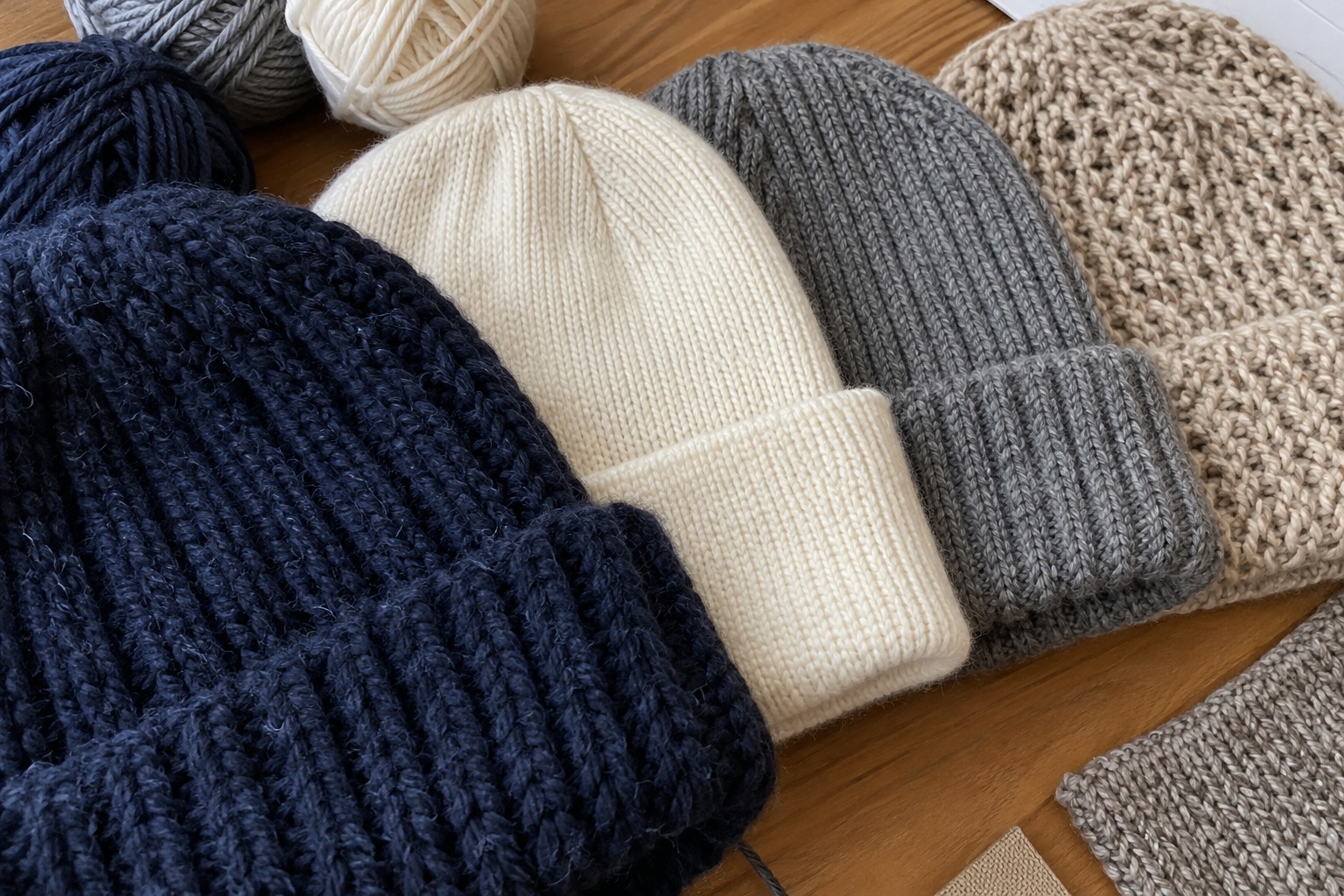
Warmth Factors to Evaluate
1. Fiber content:
- Wool and wool blends trap air effectively and retain warmth even when damp. They are the most thermally reliable natural fiber for knit hats.
- Merino wool adds softness to wool’s warmth — a practical upgrade for buyers who find standard wool itchy.
- Heavy acrylic is the most common cost-effective option. Quality varies significantly by yarn grade. Heavy-gauge acrylic can be genuinely warm; thin acrylic offers minimal insulation.
- Cotton breathes well but provides less insulation than wool or acrylic in cold temperatures.
2. Knit density:
A tighter knit reduces airflow through the fabric.10 Watch caps typically use tighter construction than fashion beanies. When comparing products in the same fiber, check whether the knit feels open or dense when held up to light.
3. Coverage area:
A hat that consistently covers the ears provides meaningfully more warmth than one that rides up during wear. The cuffed, close-fit design of a watch cap supports consistent ear coverage better than most slouchy beanie styles.
4. Cuff layers:
A folded cuff creates two layers of fabric at the brim — the area most exposed to wind. This structural detail adds insulation at the most critical point.
| Factor | Watch Cap | Light Beanie | Heavy Cuffed Beanie |
|---|---|---|---|
| Fiber (typical) | Wool blend / heavy acrylic | Thin acrylic | Heavy acrylic / wool |
| Knit density | High | Low–Medium | Medium–High |
| Cuff layers at brim | Yes (double) | Varies | Yes (usually) |
| Ear coverage consistency | High | Low–Medium | Medium–High |
| Overall warmth rating | High | Low–Medium | Medium–High |
Military Watch Cap vs Beanie
The military association shapes how many buyers think about watch caps — but the reality is more practical than historical.
A military watch cap is the functional standard from which the civilian watch cap style evolved. It is defined by close fit, full ear coverage, heavyweight knit, and minimal decoration. It is made to perform, not to look fashionable. A standard beanie, by contrast, has no such origin or functional specification.

What Distinguishes Military-Style Watch Caps
- Color: Military watch caps are typically navy, black, olive drab, or khaki. These are functional colorways, not fashion choices.
- Knit weight: Military specifications favor heavy wool or wool-blend construction for maximum cold-weather performance.11
- Construction: Double-knit or thick single-knit construction is standard. Decorative elements like pom-poms or textured patterns are absent.
- Fit: The hat is designed to fit under a helmet if needed — snug, without excess fabric that would create pressure points.
- Cuff: A wide, structured cuff is standard, providing both ear coverage and stability.
For civilian buyers, a military-inspired watch cap offers the same functional benefits: warmth, fit stability, and ear coverage — without requiring military-specification sourcing. Many commercial watch caps use the same structural principles with civilian-grade materials.
Beanies marketed as "military style" usually adopt the color palette but may not replicate the fit or knit weight. If functional performance is the priority, the construction details matter more than the label.
Watch Cap vs Fisherman Beanie
The fisherman beanie is one of the most commonly confused alternatives to a watch cap. They look related but behave very differently in practice.
A fisherman beanie sits high on the head with a short, minimal cuff. It is a fashion-forward style that prioritizes a clean, understated look. A watch cap, in contrast, sits lower and covers the ears fully. The difference in coverage is significant for cold-weather use.

Key Differences at a Glance
| Feature | Watch Cap | Fisherman Beanie |
|---|---|---|
| Sits on head | Low, covering ears | High, above ears |
| Cuff | Wide, functional | Short, minimal |
| Ear coverage | Full | None or minimal |
| Style tone | Utilitarian, workwear | Clean, fashion-minimal |
| Warmth for ears | High | Low |
| Good for cold weather | Yes | Limited |
| Good for mild weather / indoors | Yes | Yes |
Who Chooses the Fisherman Beanie?
The fisherman beanie is popular among buyers who want a simple, unobtrusive knit hat that complements an outfit without adding bulk or covering the ears. It works well in mild temperatures or as an indoor accessory. In genuine cold — especially with wind — the lack of ear coverage becomes a practical problem.
If you are shopping for warmth and wondering whether to choose a watch cap or a fisherman beanie, the watch cap is the clearer answer for cold outdoor use.
Who Should Choose a Watch Cap?
Choosing a watch cap is the right call in specific scenarios. The style is not right for every buyer, but for those who match its use case, it is hard to beat
-
"Beanie (seamed cap)", https://en.wikipedia.org/wiki/Beanie_(seamed_cap). A general reference on knit caps identifies the watch cap as a close-fitting knitted cap associated with cold-weather wear and naval terminology; this supports the article’s definition, although it may not specify every design feature used in modern retail descriptions. Evidence role: definition; source type: encyclopedia. Supports: A neutral reference should define a watch cap as a close-fitting knit cap, often cuffed and associated with cold-weather or naval use.. Scope note: The support is contextual because retail construction details vary by manufacturer. ↩
-
"Knit cap", https://en.wikipedia.org/wiki/Knit_cap. Reference works commonly define a beanie as a close-fitting cap and often treat it as one term within the wider knit-cap vocabulary; this supports the article’s broad usage of the term, though it does not classify all commercial substyles. Evidence role: definition; source type: encyclopedia. Supports: A neutral reference should show that beanie is a common term for a knitted cap and may overlap with other knit-cap names.. Scope note: The source may define the word rather than map every retail style category. ↩
-
"Thermal Insulation of Protective Clothing Materials in Extreme …", https://pmc.ncbi.nlm.nih.gov/articles/PMC10024235/. Textile research on clothing insulation shows that fabric thickness and layered construction increase thermal resistance; this supports the mechanism by which a folded knit cuff can improve warmth over the ears, although it does not test watch caps specifically. Evidence role: mechanism; source type: paper. Supports: A textile study should support that additional fabric layers and thickness increase thermal resistance, which explains why a folded cuff can add insulation.. Scope note: The support is mechanistic rather than a direct comparison of cuffed and uncuffed hats. ↩
-
"Material and Structural Functionalization of Knitted Fabrics for …", https://pmc.ncbi.nlm.nih.gov/articles/PMC9104909/. Military procurement specifications for watch caps describe material and construction requirements for cold-weather knitted headwear; these documents support the association between watch caps and heavier functional construction, though they do not represent every civilian product sold under the name. Evidence role: general_support; source type: government. Supports: A government or military specification should document material and construction requirements for watch caps, providing a benchmark for heavier functional construction.. Scope note: Military specifications provide a benchmark rather than a complete survey of retail beanies. ↩
-
"Knit cap", https://en.wikipedia.org/wiki/Knit_cap. General references on knit caps describe multiple named forms and regional terms for knitted headwear, supporting the article’s point that a single retail label such as ‘beanie’ can encompass varied designs; the source does not directly measure performance differences. Evidence role: general_support; source type: encyclopedia. Supports: A neutral overview should document that knit caps appear under several names and in multiple forms, supporting the claim that the beanie label covers varied designs.. Scope note: The support concerns terminology and variation, not laboratory-tested performance. ↩
-
"Knit cap", https://en.wikipedia.org/wiki/Knit_cap. Lexical and encyclopedia sources treat ‘watch cap,’ ‘beanie,’ and related terms as overlapping names for knitted caps in some contexts; this supports the article’s statement about interchangeable usage, although it does not quantify retailer behavior. Evidence role: definition; source type: encyclopedia. Supports: A terminology source should show that watch cap, beanie, and knit cap are overlapping or synonymous terms in common usage.. Scope note: The support is lexical and contextual rather than a systematic retail audit. ↩
-
"Naval History and Heritage Command", https://en.wikipedia.org/wiki/Naval_History_and_Heritage_Command. Naval history and etymological accounts commonly associate the watch cap with sailors’ cold-weather headwear and the practice of standing watch; this supports the maritime explanation of the name, though the precise first use of the term may remain difficult to document. Evidence role: historical_context; source type: institution. Supports: A naval history or etymology source should connect the watch cap name to maritime or naval watch-standing contexts.. Scope note: The support may establish historical association rather than prove a single definitive origin. ↩
-
"Extended Cold Weather Clothing System", https://en.wikipedia.org/wiki/Extended_Cold_Weather_Clothing_System. Cold-weather clothing guidance from military or government sources emphasizes insulated head covering as part of thermal protection in cold environments; this supports the functional rationale for a close-fitting watch cap, although it does not specifically compare bulk levels among hat styles. Evidence role: mechanism; source type: government. Supports: A cold-weather clothing manual should support the importance of insulated, close-fitting headwear for warmth and function in cold environments.. Scope note: The evidence supports the cold-weather function generally, not the exact design trade-off. ↩
-
"Thermoregulatory Performance and Thermal Comfort Analysis …", https://pmc.ncbi.nlm.nih.gov/articles/PMC12693357/. Studies of textile thermal comfort show that fiber composition, yarn and fabric structure, thickness, and air permeability influence insulation; this supports the article’s claim that warmth depends on material and construction rather than product naming. Evidence role: mechanism; source type: paper. Supports: Research should show that fiber composition, fabric thickness, stitch density, and coverage affect thermal insulation and air permeability.. ↩
-
"Microscopic image dataset for air-permeability classification of …", https://pmc.ncbi.nlm.nih.gov/articles/PMC13230785/. Research on knitted fabrics reports that stitch density, porosity, and fabric structure influence air permeability; this supports the article’s explanation that a tighter knit can reduce airflow through a hat fabric. Evidence role: mechanism; source type: paper. Supports: A textile engineering paper should show that stitch density and fabric porosity affect air permeability in knitted fabrics.. ↩
-
"UNIFORMS AND FORMATIONS", https://media.defense.gov/2014/Feb/21/2002655447/-1/-1/1/140221-N-ZZ182-5357.pdf. U.S. military specifications and uniform references for knit watch caps document wool or wool-blend cold-weather headwear requirements; this supports the article’s military example, although current commercial ‘military style’ beanies may not follow those specifications. Evidence role: case_reference; source type: government. Supports: A military specification or uniform regulation should document wool material requirements or approved watch-cap construction.. Scope note: The evidence applies to specified military items rather than all products marketed as military style. ↩