
The most useful way to compare different types of hats is not simply by appearance. For a brand or merchandise buyer, the real differences are crown structure, panel construction, brim shape, closure, material, decoration area, fit, and intended use.
For most custom headwear programs, eight useful style families are baseball caps, dad hats, snapbacks, trucker hats, 5-panel caps, bucket hats, beanies, and rope hats.
There is no single “best” type. A structured snapback may suit a streetwear collection, while a relaxed dad hat may fit a lifestyle brand better. Performance and outdoor programs may benefit from trucker or technical cap constructions, while bucket hats and beanies open different seasonal opportunities.
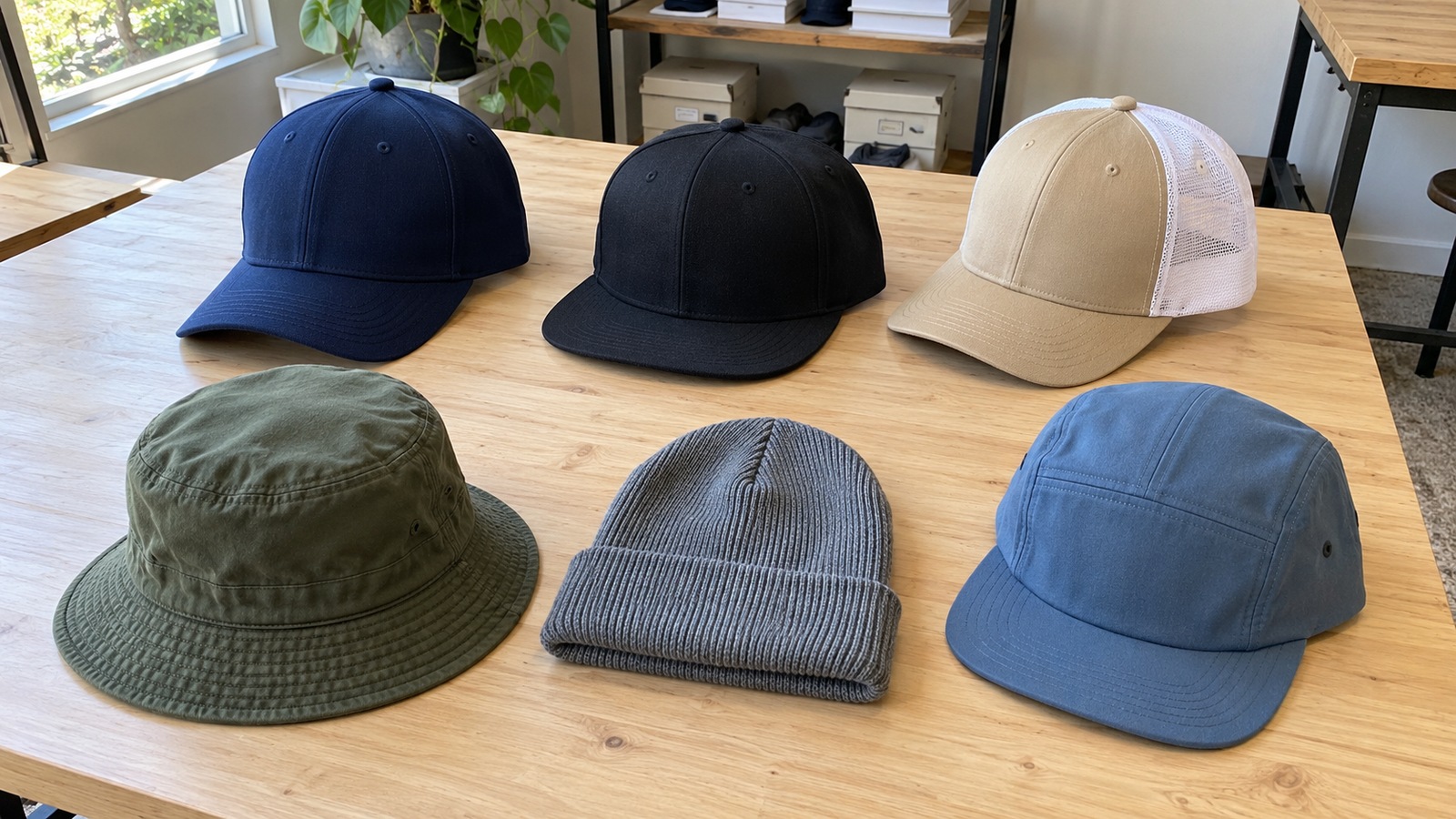
Different Types of Hats at a Glance
| Hat type | Typical construction | Brim | Typical closure | Good starting point for |
|---|---|---|---|---|
| Baseball cap | Structured or semi-structured, often 5 or 6 panels | Usually curved | Strap, buckle, snap or fitted | Retail, teams, corporate merchandise |
| Dad hat | Low-profile, usually unstructured | Curved | Fabric strap or buckle | Lifestyle and understated branding |
| Snapback | Commonly structured with a defined crown | Flat or slightly curved | Plastic snap | Streetwear and bold front branding |
| Trucker hat | Solid or foam front with mesh back | Curved or flat | Usually snap | Outdoor, events and casual programs |
| 5-panel cap | Five-piece crown with distinctive front construction | Flat or curved | Strap or snap | Minimal, skate and contemporary brands |
| Bucket hat | Soft crown with full surrounding brim | Downward brim | Usually none | Fashion, festivals and seasonal collections |
| Beanie | Knitted, brimless construction | None | None | Winter, outdoor and lifestyle programs |
| Rope hat | Cap construction with rope detail above visor | Curved or flat | Varies | Golf, outdoor and heritage-inspired collections |
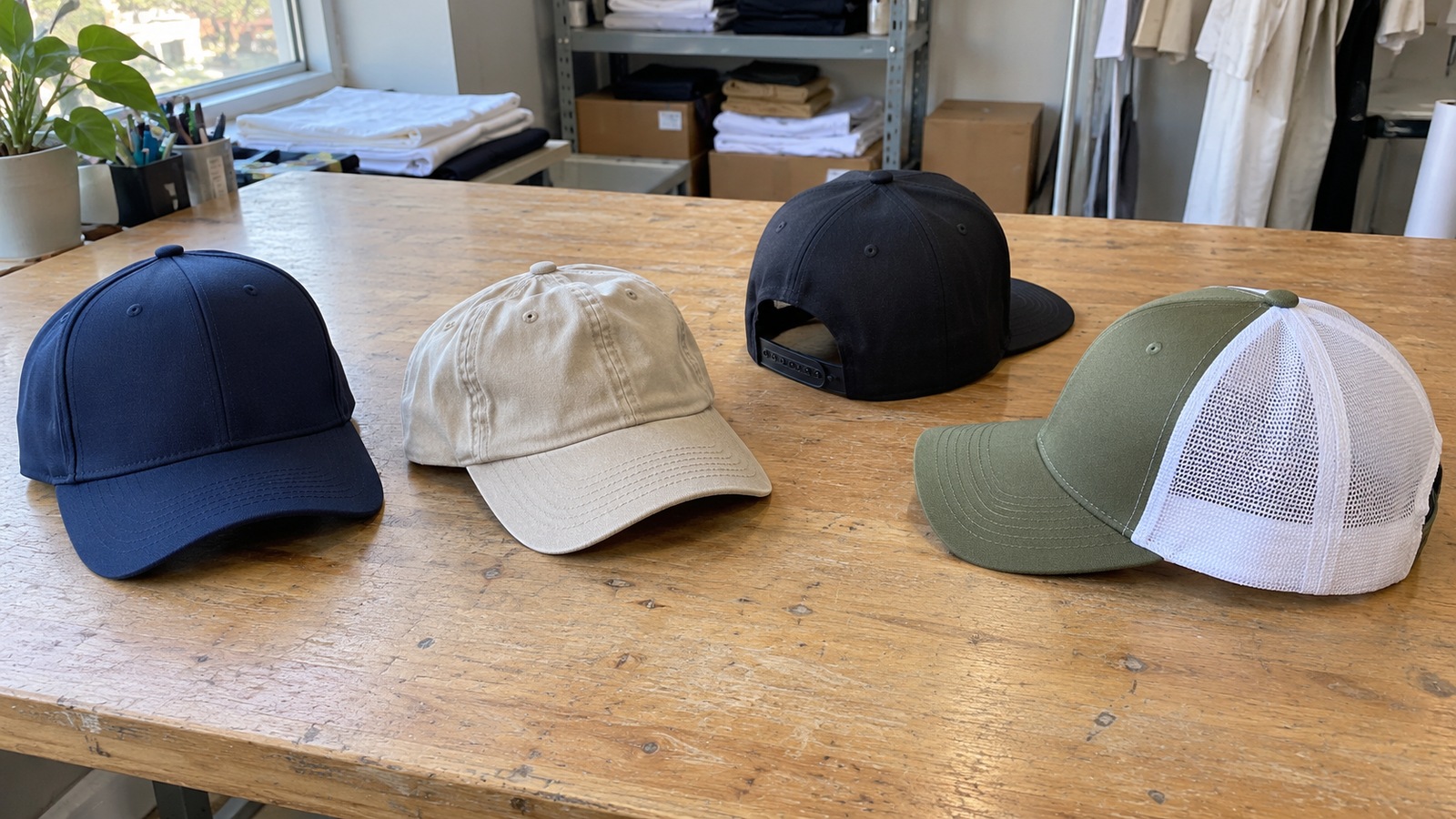
Hat Style Is Only One Part of the Specification
Two hats sold under the same style name can perform very differently.
Before choosing a style, separate these specification decisions:
- Crown structure: structured, semi-structured or unstructured.
- Panel construction: 5-panel, 6-panel or another pattern.
- Profile: low, medium or high crown.
- Brim: flat, pre-curved, flexible or full surrounding brim.
- Closure: snap, buckle, fabric strap, hook-and-loop or fitted sizing.
- Material: cotton, polyester, nylon, blends, mesh, knit yarn or specialty fabrics.
- Decoration: flat embroidery, 3D embroidery, patch, print or other application.
- Finishing: washing, brushing, water-resistant treatments and other finishing choices.
This matters because changing any one of these variables can change the appearance, comfort, branding surface and manufacturing result without changing the basic hat category.
1. Baseball Caps: The Versatile Starting Point
A baseball cap generally combines a rounded crown with a projecting visor. Within that basic shape, buyers can specify different profiles, structures, panel counts, fabrics and closures.
That versatility makes the baseball cap a practical starting point for retail collections, sports programs, uniforms and branded merchandise.
For custom projects, pay particular attention to crown structure and front-panel seams. Both affect how a logo sits on the finished cap.
Buyers evaluating this category can explore Anthea’s custom baseball cap options.
2. Dad Hats: Relaxed and Low Profile
A dad hat is best understood as a relaxed variation within the cap family rather than an entirely unrelated construction.
Typical characteristics include:
- an unstructured or lightly structured crown;
- a relatively low profile;
- a curved visor;
- a fabric strap or buckle closure;
- a softer, broken-in appearance.
Dad hats work particularly well when the brand direction calls for understated, casual headwear.
The important sourcing question is not simply “Do you make dad hats?” Ask how the crown, fabric and finishing will create the intended relaxed shape.
3. Snapbacks: Structure and Adjustable Fit
“Snapback” technically describes the adjustable snap closure, although the market commonly uses the term for a structured cap with a relatively bold profile and often a flatter visor.
That distinction matters when writing a specification.
A buyer requesting a snapback should still define:
- crown height;
- panel construction;
- front-panel structure;
- visor shape;
- fabric;
- snap color;
- decoration method.
For brands developing this silhouette, Anthea’s custom snapback page provides a useful next step after style selection.
4. Trucker Hats: Mesh Changes the Product
The defining feature of a trucker hat is its combination of a solid front area with mesh back panels.
That construction changes more than appearance. Mesh influences ventilation, weight, stretch, color presentation and the overall hand feel of the cap.
The front may also vary. Some trucker constructions use foam, while others use woven fabric panels. That choice affects both the silhouette and the decoration surface.
For outdoor, promotional and casual lifestyle programs, a trucker can therefore be more useful than simply specifying a “breathable baseball cap.”
5. 5-Panel Caps: A Different Front-Panel Geometry
Panel count is not just a manufacturing detail.
A 5-panel construction creates a different crown geometry from many conventional 6-panel baseball caps. Depending on the pattern, it can also provide a comparatively uninterrupted front area for branding.
That makes the style useful for minimalist collections, skate-inspired headwear and contemporary merchandise.
Before ordering, compare the actual crown pattern rather than relying on “5-panel” alone. Crown height, brim shape and fabric can make two 5-panel designs look substantially different.
6. Bucket Hats: A Different Branding Canvas
Bucket hats move away from the visor-and-crown construction used by most caps.
They typically have a soft crown and a downward-sloping brim around the entire head. That gives designers different possibilities for embroidery, prints, repeated patterns and other decoration.
The sourcing variables also change. Buyers should consider:
- crown depth;
- brim width and stiffness;
- fabric weight;
- lining;
- stitching;
- eyelets;
- reversible construction where required;
- decoration placement.
See Anthea’s custom bucket hats when the collection calls for this silhouette.
7. Beanies: Knit Construction Requires Different Decisions
Beanies are brimless knitted headwear and should not be specified like sewn caps.
Important variables include knit structure, yarn, cuff construction, finished depth, stretch, fit and branding method.
A cuffed beanie also provides a different decoration area from an uncuffed or slouch-style design.
For seasonal merchandise and cold-weather collections, buyers can review Anthea’s custom beanie options separately from woven cap programs.
8. Rope Hats: A Detail That Changes the Character of a Cap
A rope hat is useful because it shows why hat terminology can become confusing.
The rope itself is a design element positioned near the junction of the crown and visor. The underlying cap can still vary in crown profile, panel construction, brim shape and performance characteristics.
Rope detailing is frequently used when a brand wants a golf, outdoor, resort or heritage-inspired direction without moving to a completely different headwear category.
Anthea also maintains a dedicated rope hat manufacturing page for buyers exploring this direction.
How to Choose the Right Hat Type for Your Brand
Instead of asking which hat is most popular, start with the product’s job.
For a versatile core merchandise cap: start by comparing structured and unstructured baseball-cap constructions.
For relaxed lifestyle branding: consider a dad hat or softer 5-panel construction.
For streetwear with a defined silhouette: compare snapback and structured 5-panel options.
For outdoor use and ventilation: evaluate trucker construction alongside suitable performance fabrics.
For summer or festival collections: consider bucket hats.
For winter merchandise: move into knitted beanies.
For golf, resort or heritage positioning: compare rope-cap constructions with conventional baseball caps.
After choosing the general style, specify fabric separately. Material choice affects feel, durability, structure, decoration behavior and cost. Anthea’s guide to how materials affect custom baseball-cap manufacturing cost covers that decision in more detail.
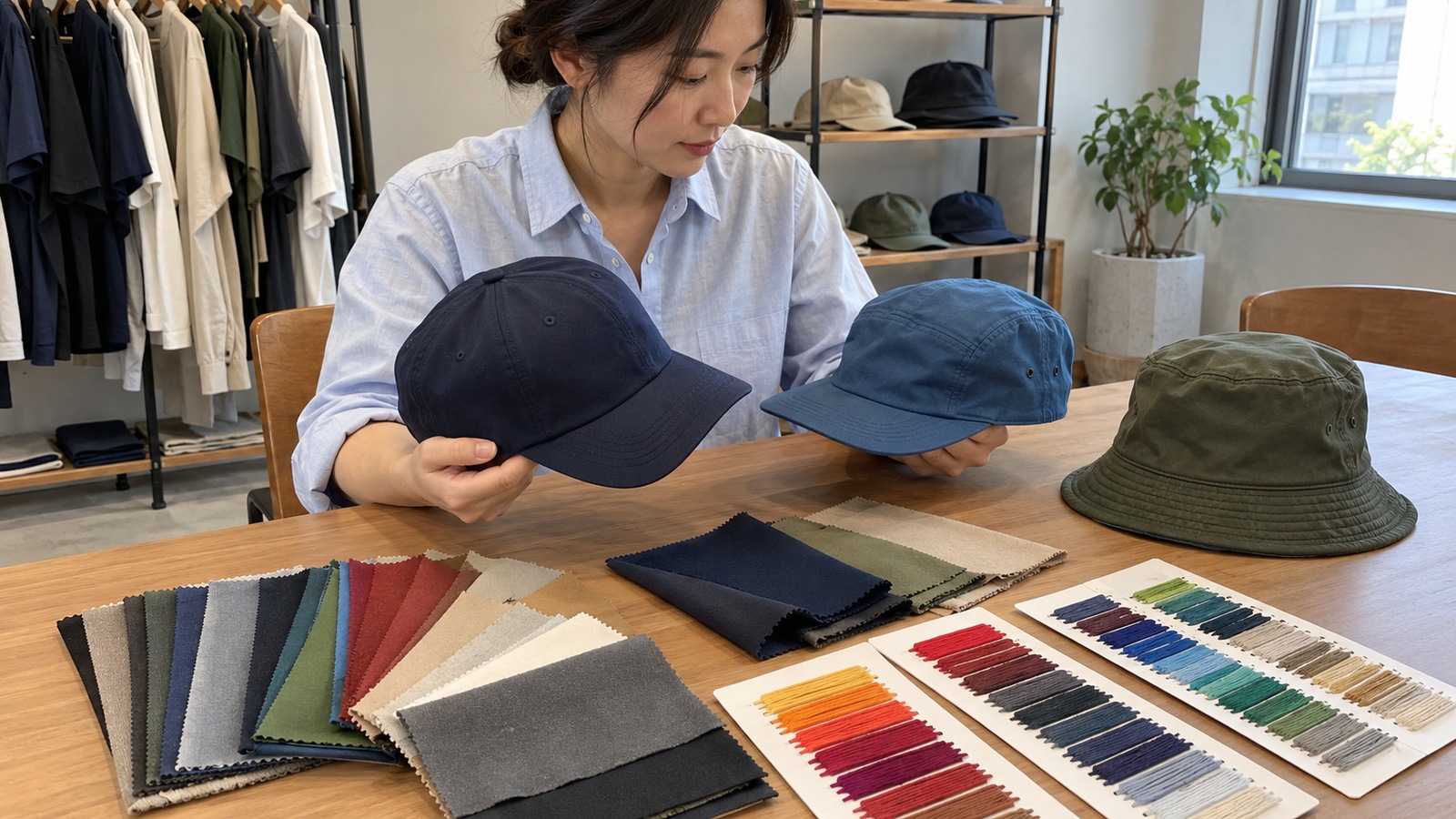
What Should You Specify Before Requesting a Hat Sample?
A useful sourcing brief should go beyond a style name.
Include:
- Hat style or reference silhouette.
- Structured or unstructured crown.
- Panel construction and desired profile.
- Brim shape.
- Closure or sizing system.
- Preferred fabric, weight and finish.
- Main color and contrast details.
- Logo artwork and desired decoration technique.
- Logo position and approximate scale.
- Intended use and target customer.
- Expected order quantity and target cost range.
- Any packaging or private-label requirements.
Then evaluate a physical sample as a complete product. Check fit, crown shape, brim, material hand feel, stitching, logo execution, color and finishing together.
A material or decoration decision that looks correct in isolation can behave differently once applied to a specific hat construction.
Frequently Asked Questions About Different Types of Hats
What are the most common types of hats for custom branding?
Baseball caps, dad hats, snapbacks, trucker hats, 5-panel caps, bucket hats and beanies are all common starting points. The right choice depends on the audience, use case and desired brand aesthetic.
What is the difference between a baseball cap and a snapback?
A baseball cap describes a broader cap style. A snapback refers specifically to a snap-adjustable closure and, in common retail usage, often describes a structured cap with a bolder profile. A baseball-style crown can therefore also use a snap closure.
What is the difference between a dad hat and a baseball cap?
A dad hat is generally a softer, lower-profile and more relaxed version of the cap silhouette, usually with a curved visor and adjustable strap. Baseball caps cover a wider range of structures and profiles.
What type of hat has no brim?
A beanie is one of the most common brimless styles used in contemporary custom headwear.
Are 5-panel and 6-panel hats very different?
They can be. Panel count changes seam placement and crown geometry, which can affect silhouette and decoration space. The final result also depends on profile, structure and fabric.
Which type of hat is best for embroidery?
There is no universal answer based on style alone. Embroidery results depend on the available decoration area, panel seams, fabric stability, logo dimensions, stitch density and crown construction. Evaluate the logo and hat specification together.
Should I choose the hat style or the fabric first?
Usually start with the intended use and silhouette, then select a fabric that helps produce the required structure, comfort and appearance. The two decisions should be confirmed together during sampling.
From Hat Type to Production-Ready Specification
Choosing the type of hat is the beginning of a custom headwear project, not the end.
The strongest sourcing decisions connect the style to the wearer, fabric, crown construction, brim, closure, decoration method, budget and physical sample. That turns a broad request such as “I need a snapback” into a specification a manufacturer can actually test and reproduce.
If you are comparing several styles for a new collection, review Anthea’s custom headwear collection and narrow the project to two or three sample directions before committing to bulk production.