
Baseball caps packed in one carton can look like a simple number question, but the answer can change quickly. If a buyer uses the wrong packing assumption, the quotation may look cheaper than it really is. The practical solution is to confirm cap style, packing method, carton size, and shipping target before comparing offers.
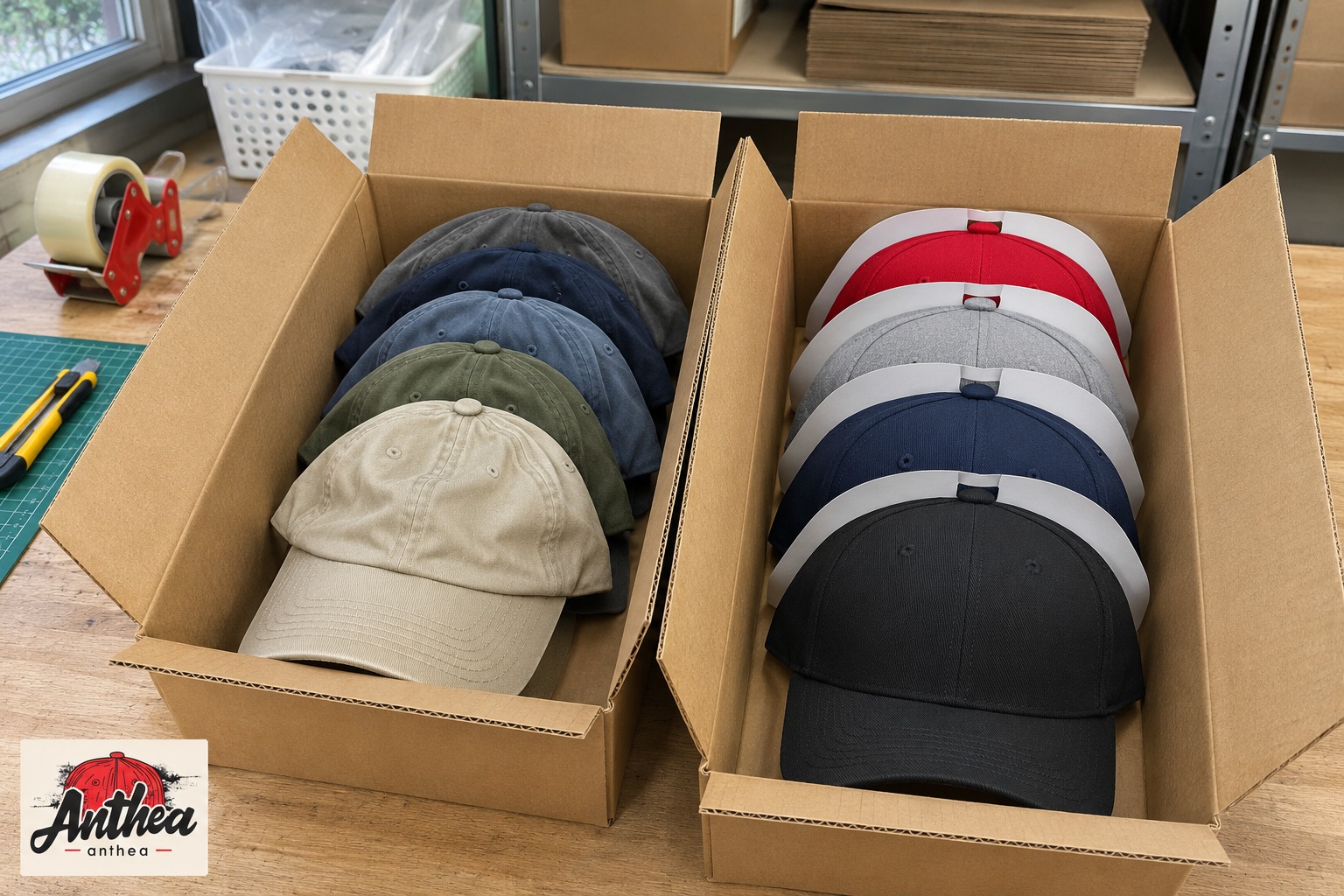
A common reference answer is that one carton may hold around 100–200 baseball caps, but this is not a fixed industry standard. The final carton quantity depends on cap structure, individual packaging, anti-crush needs, carton dimensions, and whether the buyer wants lower freight volume or better retail presentation.

In buyer inquiries, I usually treat carton quantity as part of the quotation discussion, not as a single isolated number. The best packing plan should protect the caps, support accurate freight estimation, and avoid misleading price comparisons between suppliers.
How Many Baseball Caps Packed in One Carton Is a Reasonable Reference?
Many first-time importers ask for one carton quantity because they want a fast freight estimate. That is understandable. However, if the number is given without the cap type and packaging method, it may create a false expectation and lead to cost confusion later.
A reasonable reference is about 100–200 baseball caps per carton, depending on style and packing. Structured caps usually need more protection and may fit fewer pieces. Unstructured caps may allow more flexible packing. Buyers should verify the final quantity with the supplier before confirming price or shipment volume.
Why the Answer Is Usually a Range
When I respond to inquiries, I avoid saying, “One carton always packs 144 caps,” because that number only makes sense under a specific packing plan. A 144-piece carton may be suitable for one cap style, but it may not work for another cap with a high crown, rigid front panel, thick embroidery, or retail packaging.
A safer way to think about it is:
Carton quantity is a packing decision, not only a counting decision.
Here are common reference examples that buyers may see in quotations:
| Reference Carton Quantity | Possible Situation | Buyer Reminder |
|---|---|---|
| 100 pcs/carton | Structured caps with better shape protection | Lower deformation risk, higher carton volume per piece |
| 144 pcs/carton | Common trade reference for many basic caps | Must confirm cap style and carton size |
| 150 pcs/carton | Possible for standard caps with simple packing | Check gross weight and carton dimensions |
| 200 pcs/carton | More compact packing or softer caps | Higher risk if shape protection is weak |
These are reference examples only. Buyers should verify them with actual samples, carton dimensions, and supplier packing photos before using them for freight calculation.
The Real Question Behind the Buyer’s Question
When a buyer asks, “How many caps can you pack in one carton?” I usually hear a deeper question:
- “Can I reduce shipping cost?”
- “Can I compare your offer with another supplier?”
- “Will the caps arrive in good shape?”
- “Can I estimate container loading?”
- “Can I present the product directly to retailers?”
These are all valid concerns. Still, the answer changes depending on the buyer’s priority.
If the buyer cares most about freight saving, the supplier may suggest tighter packing. If the buyer cares most about shape protection and presentation, the supplier may reduce the quantity per carton and use more careful inner packing. If the buyer needs brand packaging, the carton quantity may decrease because each cap takes more space.
A Practical Inquiry Example
In a real inquiry, I would not answer only with “144 pcs/carton.” I would ask several follow-up questions first:
- Is the cap structured or unstructured?
- Does each cap need an individual polybag?
- Does the cap include hangtags, stickers, or insert cards?
- Does the buyer need retail box packaging?
- Does the carton have a preferred size?
- Is the shipment by sea, air, courier, or mixed transport?
This type of confirmation helps both sides. The buyer gets a more realistic quotation, and the supplier avoids revising the packing details after the buyer has already calculated freight.
What Affects Baseball Caps Packed in One Carton Most?
A buyer may feel frustrated when two suppliers give different carton quantities for the same product. That difference does not always mean one supplier is wrong. It often means the suppliers are using different carton sizes, different packing methods, or different protection standards.
The main factors affecting baseball caps packed in one carton are cap structure, packing accessories, anti-crush requirements, carton dimensions, and shipment method. A structured cap, individual bag, hangtag, or brand box can reduce carton quantity. A soft cap with simple bulk packing may allow more pieces.

Structured vs. Unstructured Caps
The first thing I confirm is whether the cap is structured or unstructured.
A structured baseball cap usually has a reinforced front panel. It keeps its shape better when worn, but it can also deform if pressed too hard during packing. Because of this, suppliers may pack fewer pieces in a carton or arrange the caps more carefully.
An unstructured baseball cap is softer. It usually has less rigid support in the front panel. It may compress more easily, so the carton can sometimes hold more pieces. However, “more pieces” does not always mean better packing. If the fabric wrinkles or the brim bends, the buyer may face complaints after delivery.
| Cap Type | Packing Flexibility | Main Risk | Possible Carton Quantity Impact |
|---|---|---|---|
| Structured cap | Lower | Front panel deformation | Fewer pieces per carton |
| Unstructured cap | Higher | Fabric creasing | More pieces possible |
| Foam-front cap | Medium | Foam dents | Needs careful stacking |
| High-crown cap | Lower | Crown pressure damage | Fewer pieces likely |
| Kids’ cap | Higher | Smaller size but still needs shape control | Quantity may increase |
Individual Polybags and Retail Details
Many buyers request individual polybags. This is common because it keeps each cap cleaner and easier to distribute. However, polybags add volume. If the cap also includes a barcode sticker, hangtag, brand card, or silica gel, the packing process becomes more controlled and may use more space.
Common packaging details include:
- One cap per polybag
- Several caps bundled in one larger bag
- Hangtag attached to the sweatband or back strap
- Brand sticker on brim
- Printed insert card
- Retail display box
- Outer carton shipping marks
Each detail affects labor, volume, and sometimes carton quantity. If a buyer compares two offers but only checks unit price, the comparison can be misleading.
For example, Supplier A may quote 200 pcs/carton with simple bulk packing. Supplier B may quote 120 pcs/carton with individual polybags, hangtags, and stronger carton protection. The unit price and freight estimate will not be comparable unless the buyer checks all packing details.
Anti-Crush Requirements
Baseball caps are not fragile like glass, but they can still lose commercial value if they arrive with crushed crowns or bent brims. This is especially important for retail buyers and brand owners.
Anti-crush packing may include:
- Lower quantity per carton.
- More careful cap nesting.
- Stronger export cartons.
- Internal support or separation.
- Clear “do not press” handling marks.
I prefer to discuss anti-crush needs before quoting final packing. If the buyer says the caps are for promotional giveaways, they may accept simple packing. If the caps are for retail display, they may need better shape protection.
Carton Size and Gross Weight
Carton quantity also depends on carton dimensions. A larger carton may hold more caps, but it may not always be better. Large cartons can be harder to handle. They may deform when stacked. They may also create different freight results because shipping cost often depends on volume as well as actual weight.
For sea freight, carton volume matters for CBM estimation. For air or courier shipments, volumetric weight may matter more. That is why buyers should ask for:
- Carton size: length × width × height
- Gross weight per carton
- Net weight per carton
- Pieces per carton
- Packing method
- Carton material strength if needed
These details are more useful than carton quantity alone.
Is Packing More Baseball Caps in One Carton Always Better?
Many buyers first assume that more pieces per carton means lower shipping cost. That can be true in some cases. However, it is not always the best decision. If packing is too tight, the caps may arrive creased, flattened, or unsuitable for retail presentation.
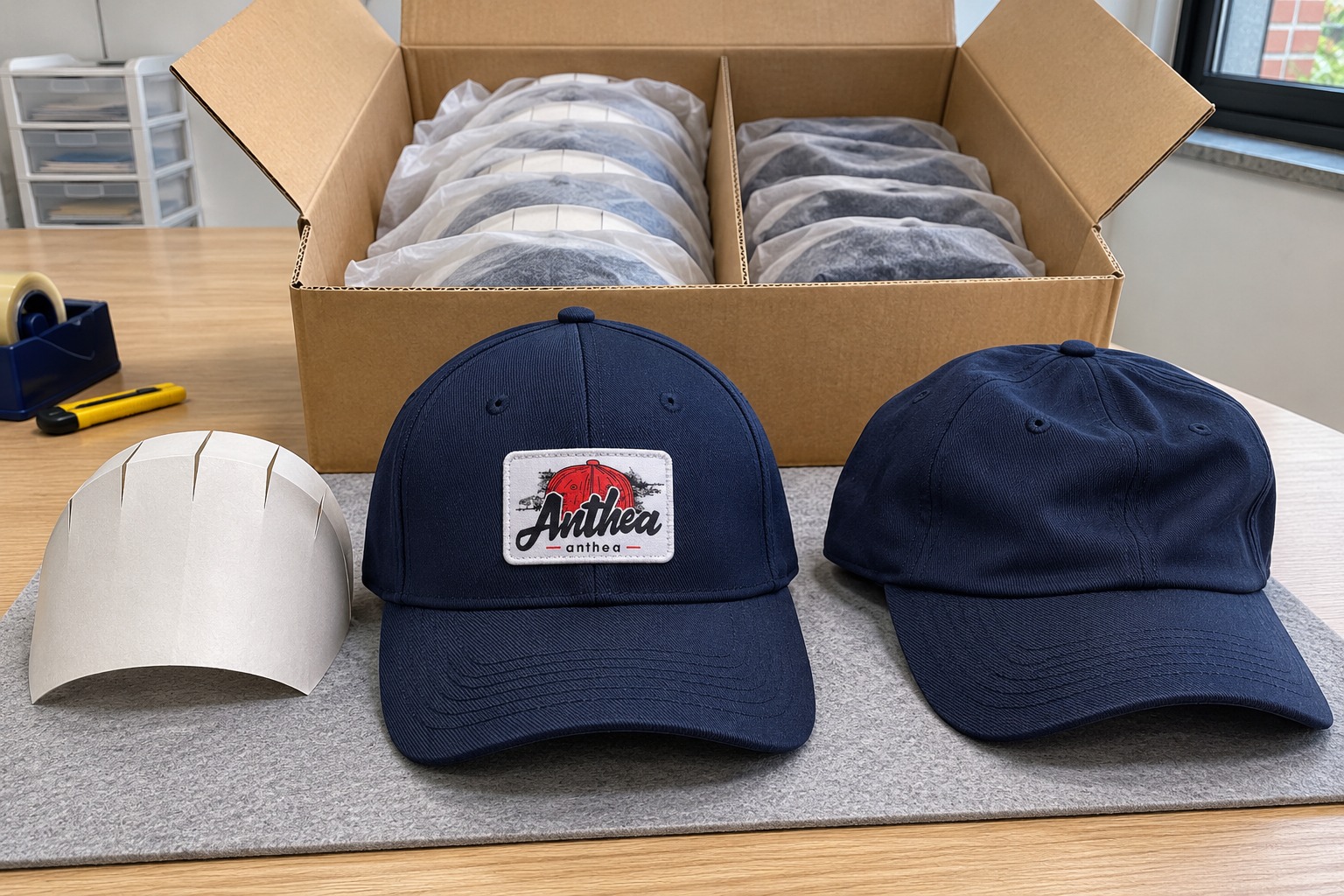
Packing more baseball caps in one carton is not always better. Higher carton quantity can reduce shipping volume, but it may increase the risk of crown deformation, brim bending, fabric creasing, and poor presentation. Buyers should balance freight savings against product protection and customer expectations.
The Freight-Saving Side
Freight cost is a real concern. Many importers work with tight margins. If the caps are promotional items or wholesale basics, the buyer may prefer compact packing to reduce the cost per piece.
A tighter packing method can help with:
- Lower carton count
- Lower total CBM
- Simpler warehouse handling
- Better container loading efficiency
- Lower estimated freight per cap
This matters especially for sea shipments, where buyers often ask for total volume. If a supplier can reduce carton count without damaging product quality, the buyer may benefit.
However, freight savings should be measured carefully. If the supplier reduces carton count by using weak cartons or pressing structured caps too tightly, the buyer may pay more later through complaints, discounts, or rejected goods.
The Product-Protection Side
Caps are visual products. Buyers and end customers judge them quickly. A cap that looks crushed may feel “cheap” even if the fabric and stitching are acceptable.
Common packing damage includes:
-
Flattened front panels
This is more common with structured caps when cartons are pressed during transport. -
Bent brims
Curved brims can lose shape if packed incorrectly. Flat brims may also bend at the edges. -
Fabric wrinkles
Unstructured caps can crease if compressed too tightly. -
Logo deformation
Embroidery, patches, and printed logos may look uneven if the cap is squeezed. -
Poor retail appearance
Even minor deformation can hurt presentation when the caps are sold in shops or online.
Cost Saving vs. Presentation Quality
I usually suggest that buyers choose packing based on their sales channel.
| Buyer Type | Packing Priority | Suggested Direction |
|---|---|---|
| Promotional buyer | Cost control | Compact but still safe packing |
| Wholesaler | Balance | Standard carton quantity with basic protection |
| Retail brand | Presentation | Lower carton quantity and better shape control |
| Online seller | Low complaint rate | Individual packing and stronger protection |
| Distributor | Handling efficiency | Clear carton marks and consistent carton quantity |
If the caps are sold as low-cost promotional items, compact packing may be acceptable. If the caps carry a brand logo and will be displayed to consumers, better protection usually matters more.
My Practical View from Inquiry Handling
When I handle packaging questions, I try to avoid pushing only the highest carton quantity. A buyer may like the lower freight estimate at first, but they may not like the result if the caps arrive in poor shape.
A better question is:
“What carton quantity gives us acceptable freight cost while keeping the caps in sellable condition?”
This question creates a better discussion. It allows the supplier to recommend a realistic plan based on the cap design, packing requirement, and order volume.
How Should Buyers Compare Quotes With Different Baseball Caps Packed in One Carton?
Buyers often compare supplier quotations side by side. That is normal in sourcing. The problem begins when one supplier quotes 100 pcs/carton and another quotes 200 pcs/carton, but the buyer treats the two offers as equal.
Buyers should not compare quotes only by the number of baseball caps packed in one carton. They should compare carton size, gross weight, net weight, packing method, cap protection, carton strength, and included packaging materials. Without these details, freight estimates and unit prices may not reflect the same product condition.

Why Two Quotes May Not Be Comparable
Let us say two suppliers quote the same cap style.
| Item | Supplier A | Supplier B |
|---|---|---|
| Unit price | Lower | Higher |
| Carton quantity | 200 pcs | 120 pcs |
| Packing | Bulk packing | Individual polybag + hangtag |
| Carton size | Larger or unclear | Confirmed |
| Protection level | Basic | Better shape protection |
| Freight estimate | Lower at first glance | Higher at first glance |
At first, Supplier A may look cheaper. But if Supplier A does not include individual bags, hangtags, or strong carton protection, the price comparison is incomplete. Supplier B may be quoting a more finished product.
That is why buyers should request a full packing breakdown before deciding.
Information Buyers Should Ask For
Before comparing prices, buyers can ask every supplier to provide the same information:
- Cap style and material
- Cap size and crown type
- Structured or unstructured
- Packing method
- Pieces per inner bag, if any
- Pieces per export carton
- Carton dimensions
- Gross weight and net weight
- Shipping marks
- Photos or videos of sample packing, if possible
This list may look simple, but it prevents many sourcing mistakes.
Unit Price Is Not the Only Cost
A low unit price can become less attractive if the packing creates problems. For example:
- The buyer may pay more freight than expected because carton size is larger.
- The caps may need repacking after arrival.
- Retail customers may complain about deformation.
- The importer may lose time sorting damaged pieces.
- The final landed cost may be higher than planned.
For this reason, I treat packing details as part of the quotation, not as a later warehouse issue.
Ask for the Same Packing Basis
If a buyer wants a fair comparison, I recommend sending the same packing request to all suppliers. For example:
“Please quote based on 144 pcs per carton, each cap in one polybag, with hangtag, export carton suitable for sea shipment. Please provide carton size, gross weight, net weight, and CBM.”
This request helps suppliers quote on the same basis. If one supplier suggests a different packing method, the buyer can still compare the reason.
Confirm Before Freight Calculation
Freight estimates can change if carton quantity changes. For sea freight, total CBM matters. For air freight, volumetric weight can affect cost. For courier shipments, carton size can strongly influence the final chargeable weight.
Buyers should not calculate final freight using a guessed carton quantity. They should ask the supplier to confirm packing details after sample approval or before order confirmation. If the cap design changes, the packing may also need to change.
What Packing Details Should Buyers Confirm Before Ordering Baseball Caps?
A buyer may think packing is a small detail after the cap design, color, and logo are confirmed. In practice, packing affects quotation accuracy, product condition, shipment planning, and customer satisfaction. A clear packing request can save many emails and avoid later disputes.
Before ordering baseball caps, buyers should confirm cap style, order quantity, individual packaging, brand materials, carton quantity, carton dimensions, gross weight, shipping method, and protection level. Buyers should also state whether they prefer freight saving, retail presentation, or a balanced packing plan.
The Basic Packing Checklist
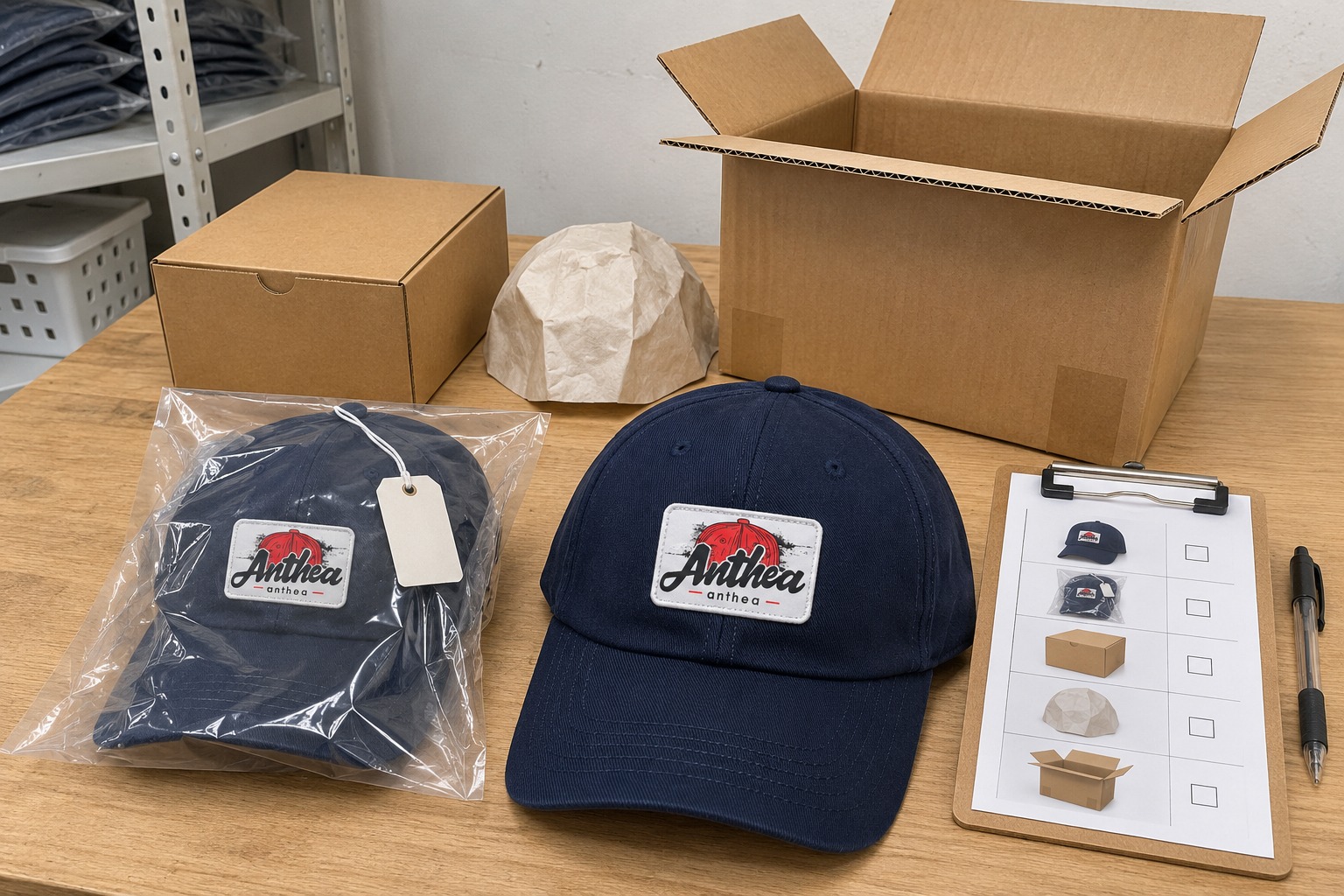
In buyer inquiries, we usually confirm the basic product and packing details before giving a reliable answer. A buyer can prepare the following information:
- Cap type: 5-panel, 6-panel, trucker cap, snapback, dad cap, sports cap
- Structure: structured or unstructured
- Logo method: embroidery, patch, print, woven label
- Order quantity: total pieces and color breakdown
- Packing: bulk, individual polybag, inner box, retail box
- Brand items: hangtag, barcode sticker, insert card, logo bag
- Carton preference: pieces per carton or maximum carton size
- Transport method: sea, air, courier, or local forwarding
- Destination: country, port, or warehouse address
- Protection level: standard, improved, or retail-grade
The more complete the inquiry is, the more accurate the quotation can be.
Packaging Options and Their Impact
Different packaging options affect both appearance and freight.
| Packaging Option | Benefit | Possible Impact on Carton Quantity |
|---|---|---|
| Bulk packing | Lower cost and faster packing | More caps may fit |
| Individual polybag | Cleaner and easier distribution | Slightly fewer caps may fit |
| Hangtag and sticker | Better retail readiness | Small space and labor increase |
| Retail box | Strong presentation | Much fewer caps per carton |
| Extra internal support | Better anti-crush protection | Lower carton quantity |
| Stronger export carton | Better transport safety | May increase carton cost |
A buyer should not choose packaging only by cost. The best choice depends on the sales channel.
Sample Packing Confirmation
If the order is large or the cap is for retail, buyers can ask for sample packing confirmation. This does not need to be complicated. The supplier can provide photos showing:
- One cap packed in its polybag.
- Several caps arranged inside the carton.
- The outer carton after closing.
- Shipping marks on the carton.
- Carton dimensions and gross weight.
This visual confirmation helps the buyer understand what will actually ship.
Trial Orders and Practical Testing
For new buyers, a trial order can be useful. It allows the buyer to check not only the cap quality but also the packing result after real transportation. If the first shipment arrives in good condition, the buyer can keep the same packing plan for repeat orders.
If there are issues, the buyer can adjust:
- Reduce pieces per carton.
- Improve carton strength.
- Add individual bags.
- Change cap arrangement.
- Add support materials.
- Separate colors or styles better.
I often see buyers improve their packing standards after the first order. That is normal. Sourcing is a process, and packaging becomes clearer after real shipment experience.
How Can Buyers Request an Accurate Carton Quantity From a Supplier?
A vague inquiry often receives a vague answer. If a buyer only asks, “How many caps per carton?” the supplier may give a rough reference. If the buyer wants a dependable quotation and freight estimate, the inquiry should include product, packing, and shipping requirements.
Buyers can request an accurate carton quantity by sending cap style, order quantity, packaging requirements, carton preference, destination, transport method, and protection expectations. They should also ask the supplier to provide pieces per carton, carton size, gross weight, net weight, and packing photos when possible.
A Simple Inquiry Template
Buyers can use a message like this:
Hello, please quote baseball caps with the following details:
Cap style: 6-panel structured baseball cap
Quantity: 5,000 pcs
Logo: front embroidery
Packing: one cap per polybag with hangtag
Carton requirement: please suggest suitable pcs/carton
Shipment: sea freight to [destination port]
Priority: balance freight cost and shape protection
Please provide unit price, carton size, gross weight, net weight, CBM, and production lead time.
This kind of inquiry saves time because the supplier can understand the buyer’s real requirement.
What Suppliers Usually Need Before Confirming
Before giving a final packing answer, suppliers often need to check:
- Actual cap height and brim style
- Logo thickness or patch size
- Whether caps can be nested safely
- Whether each color needs separate cartons
- Whether the buyer needs barcode control
- Whether the buyer has carton size restrictions
- Whether shipment is LCL, FCL, air, or courier
These details affect the final packing plan.
Why Order Quantity Matters
Order quantity can also influence packing decisions. For a small trial order, the supplier may use standard cartons that are convenient and available. For a large order, the supplier may optimize carton size and loading plan more carefully.
For example, if a buyer orders 500 pcs, the supplier may use a practical carton arrangement based on stock carton sizes. If the buyer orders 50,000 pcs, carton dimensions and container loading become more important. In that case, even a small change in carton size can affect total CBM.
FOB Quotation and Packing Information
When buyers request FOB pricing, the quotation usually depends on product specification, quantity, and packaging method. A complete packing plan helps the supplier calculate costs more accurately.
A useful FOB quotation request should include:
- Product style and specification.
- Total quantity.
- Packaging method.
- Logo and brand requirements.
- Delivery timeline.
- Loading port or shipment method.
- Carton packing information request.
If the buyer changes from bulk packing to individual brand packaging later, the price and carton quantity may need adjustment. It is better to discuss this early.
A Practical Note From My Work
In daily inquiry communication, I find that buyers who send clear packing requirements get better quotations faster. They also avoid the common problem of comparing one supplier’s simple bulk packing against another supplier’s retail-ready packing.
The goal is not to force every supplier into the same carton quantity. The goal is to make sure every quote is based on the same commercial expectation.
Frequently Asked Questions
Is 144 baseball caps per carton a standard quantity?
No. A 144-piece carton is a common reference in some trade discussions, but it is not a universal standard. The final quantity depends on cap style, structure, carton size, packaging materials, and protection requirements. Buyers should confirm the exact packing plan with the supplier.
Can unstructured caps fit more pieces per carton?
Usually, unstructured caps can be packed more flexibly because they are softer. However, buyers should still consider fabric creasing, brim shape, and final presentation. More pieces per carton may reduce volume, but it can create quality complaints if the packing is too tight.
Should each baseball cap be packed in an individual polybag?
Individual polybags are useful when buyers want cleaner handling, easier distribution, or retail preparation. They may slightly reduce the number of caps per carton because they add volume. Buyers should confirm whether polybags, hangtags, stickers, or barcode labels are included in the quote.
What information is needed for a freight estimate?
Buyers should ask for pieces per carton, carton dimensions, gross weight, net weight, total carton count, and shipping method. For sea freight, total CBM is important. For air or courier shipment, volumetric weight may affect the final freight cost.
Why do two suppliers give different carton quantities?
Two suppliers may use different carton sizes, packing methods, protection levels, or packaging accessories. One may quote bulk packing, while another includes individual polybags and hangtags. Buyers should compare the full packing details, not only the number of caps per carton.
Conclusion
Baseball caps packed in one carton should be treated as a practical packaging and shipping decision, not as a fixed number. A reference range such as 100–200 pcs/carton can help early planning, but buyers should confirm cap structure, packaging method, carton size, gross weight, and protection needs before comparing quotes. If you need an accurate packing plan, send your cap style, order quantity, packaging requirements, destination, and transport method, and I can help prepare a clearer quotation basis.