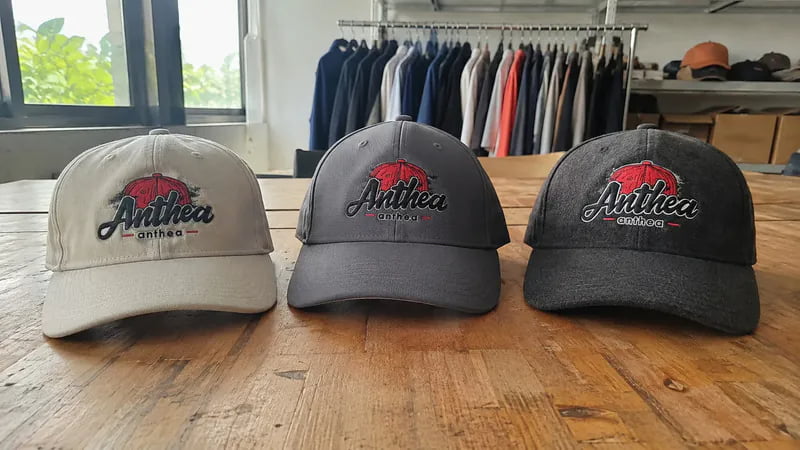
If you are developing a custom hat collection, the best fabric is not simply the most expensive or the most durable. It is the material that fits the hat’s end use, structure, decoration method, target price and brand positioning.
For most custom headwear projects, the practical starting point is simple:
- Choose cotton twill for lifestyle, fashion and everyday caps where a soft, natural hand feel and embroidery versatility matter most.
- Choose polyester for sports, outdoor and high-use programs where quick drying, shape retention, color stability or sublimation matter more.
- Choose a wool blend for structured, premium or heritage-inspired caps where texture, warmth and a substantial retail feel support the product story.
- Choose a cotton/polyester blend when you want a balance of comfort, durability, production consistency and cost for a larger commercial program.
There is no universal winner. A streetwear snapback, a golf cap and an event giveaway may all need different fabrics even when the basic cap silhouette looks similar.
This guide compares cotton, polyester and wool from a B2B product-development perspective so you can make a better material decision before sampling and bulk production.
Cotton vs Polyester vs Wool: Quick Comparison
| Factor | Cotton Twill | Polyester | Wool / Wool Blend | Cotton/Poly Blend |
|---|---|---|---|---|
| Hand feel | Soft, natural | Smooth to technical | Textured, substantial | Balanced |
| Breathability | Generally good | Depends strongly on weave/finish | Moderate | Generally good |
| Moisture absorption | High | Low | Moderate to high | Medium |
| Quick drying | Low | High | Low | Medium |
| Shape retention | Good | Very good | Very good in suitable constructions | Very good |
| Embroidery | Excellent on stable twills | Very good on stable fabrics | Excellent on dense, stable fabrics | Excellent |
| Sublimation | Not suitable | Excellent on suitable polyester | Not suitable | Limited |
| Best positioning | Lifestyle / fashion | Sports / outdoor / promo | Premium / heritage / seasonal | Corporate / promo / general retail |
| Typical hat styles | Dad hats, baseball caps, 5-panel caps | Performance caps, baseball caps, truckers | Snapbacks, structured caps | Baseball caps, promo caps |
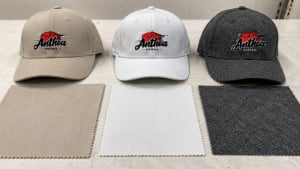
The short answer: cotton wins on natural feel and lifestyle versatility, polyester wins on technical performance and quick drying, and wool blend wins on premium structure and heritage styling. For many commercial orders, a cotton/poly blend is the practical middle ground.
The Fabric Name Alone Is Not Enough
One of the most common sourcing mistakes is specifying only "100% cotton" or "100% polyester" and assuming that tells the factory how the finished cap should perform.
It does not.
Fiber content is only one part of the specification. The weave, fabric weight, finishing, backing and cap construction can change how the material feels and performs.
A soft washed cotton used for an unstructured dad hat behaves very differently from a heavy cotton canvas. A lightweight polyester performance fabric behaves differently from a dense polyester twill.
For a production-ready fabric decision, define at least these points:
- End use: lifestyle, sports, outdoor, uniform, merchandise or premium retail.
- Hat structure: structured or unstructured crown, panel count and brim style.
- Decoration: flat embroidery, 3D puff, patch, print, heat transfer or sublimation.
- Desired hand feel: soft, crisp, technical, brushed or textured.
- Performance requirement: quick dry, water resistance, breathability, abrasion resistance or easy care.
- Color and finish: solid dyed, washed, pigment-dyed, printed or all-over graphic.
- Commercial target: target cost, order quantity and retail positioning.
This is why fabric selection should happen before final sample approval—not after the logo and construction have already been locked.
When Is Cotton the Best Fabric for Custom Hats?
Cotton twill is one of the safest starting points for lifestyle and fashion headwear. It gives a familiar natural surface, works across structured and unstructured silhouettes, and pairs well with many common decoration methods.
Cotton is especially strong when the product brief prioritizes:
- a soft or natural hand feel;
- classic lifestyle styling;
- garment washing or a worn-in appearance;
- flat or 3D embroidery;
- patches and labels;
- dad hats, baseball caps and casual 5-panel designs.
For brands selling a lifestyle product rather than a technical performance product, cotton can make the cap feel less "sport synthetic" and more like part of an apparel collection.
Cotton does have limitations.
It absorbs moisture. That can be comfortable in casual wear, but it becomes a disadvantage when the cap is expected to handle heavy sweating, frequent rain or repeated athletic use. A wet cotton cap usually takes longer to dry than a comparable polyester performance cap.
Cotton can also shrink or change hand feel depending on the weave, dyeing and washing process. If fit consistency matters across a bulk order, the exact fabric and finishing should be approved on a physical sample.
For lifestyle programs, Anthea’s custom baseball cap options include cotton twill and canvas alongside embroidery, patch and private-label customization.
Choose cotton when: the customer should notice comfort, natural texture and brand styling before technical performance.
When Is Polyester Better Than Cotton for Hats?
Polyester is usually the better choice when a hat needs to perform under heat, sweat, travel or repeated use.
Because polyester absorbs much less moisture than cotton, properly engineered polyester fabrics can dry quickly and maintain shape well. Performance mesh and lightweight technical constructions can also improve airflow, which is useful for sports and outdoor headwear.
Polyester is a strong option for:
- golf and running caps;
- sports teams;
- outdoor and travel headwear;
- promotional caps that need durability;
- moisture-management designs;
- full-color sublimated graphics;
- products that need good color consistency across repeat production.
Breathability is not determined by fiber content alone.
A tightly woven polyester fabric may feel less breathable than cotton twill, while a lightweight polyester mesh or perforated performance fabric can provide far more airflow.
For active headwear, the better question is:
Does the actual fabric construction provide the airflow, moisture management and drying speed required by the use case?
That question is more useful than simply asking whether cotton or polyester is "more breathable."
Polyester also has another major advantage when sublimation is required.
If your artwork uses gradients, photographic detail or all-over graphics, suitable polyester fabrics can be sublimated. Sublimation is not the right process for standard cotton or wool fabrics.
This makes polyester particularly attractive for performance collections, event merchandise and highly graphic designs.
Choose polyester when: quick drying, durability, stable appearance or full-color technical decoration matters more than a natural hand feel.
When Does Wool or a Wool Blend Make More Sense?
Wool and wool-blend fabrics occupy a different position.
They are typically selected because they create a richer texture, more substantial hand feel and stronger premium or heritage impression.
That makes wool blends a natural fit for:
- structured snapbacks;
- varsity and team-inspired designs;
- premium streetwear;
- autumn and winter collections;
- heritage merchandise;
- high-stitch-count or dimensional embroidery on stable fabric constructions.
Wool blend is often less about solving a performance problem and more about communicating the right product identity.
A structured wool-blend snapback can feel intentionally heavier and more substantial than a lightweight performance cap.
The trade-offs are equally clear: wool is generally warmer, requires more care, and can raise the material cost. For hot-weather promotions or athletic use, it is rarely the first choice.
Anthea’s custom snapback hats can be developed in wool blend, cotton twill, polyester and acrylic, allowing the fabric to be matched to the intended structure and branding technique.
Choose wool blend when: premium structure, texture and seasonal or heritage positioning are part of the product value.
What About Cotton/Polyester Blends?
For many B2B programs, the best answer is not a pure fiber.
A cotton/polyester blend can combine some of cotton’s familiar hand feel with the dimensional stability and durability of polyester.
The exact result depends on the blend ratio, yarn and fabric construction, so the ratio should be treated as a starting point rather than a complete performance specification.
Blends are worth considering for:
- corporate merchandise;
- uniforms and team programs;
- general-purpose baseball caps;
- promotional orders;
- brands balancing comfort, durability and unit economics.
If cost is a major part of your decision, read Anthea’s guide to how material choices affect custom baseball cap manufacturing cost.
Material is only one cost driver. Fabric weight, finishing, decoration and order quantity can also change the final quote.
Which Hat Fabric Is Best for Embroidery?
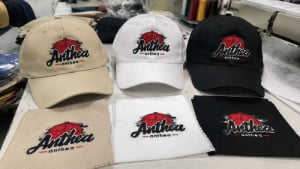
For most embroidered custom hats, a stable cotton twill, polyester twill or dense wool blend can all work well.
The best choice depends on the logo and hat construction—not just the fiber.
| Decoration | Cotton Twill | Polyester | Wool Blend | Key Buying Note |
|---|---|---|---|---|
| Flat embroidery | Excellent | Very good | Excellent | Stable fabric reduces puckering |
| 3D puff embroidery | Excellent on structured panels | Very good on suitable twill | Excellent on dense structured fabric | Crown support and backing matter |
| Woven patch | Excellent | Excellent | Very good | Useful for fine artwork |
| PVC patch | Excellent | Excellent | Good | Strong option for outdoor programs |
| Screen print | Very good | Good, fabric dependent | Limited | Test ink/finish on actual fabric |
| Heat transfer | Good | Very good | Limited | Temperature compatibility must be tested |
| Sublimation | No | Excellent on suitable polyester | No | Best for full-color/all-over graphics |
Embroidery quality is strongly affected by fabric stability, logo size, stitch density, backing and machine settings.
A complex logo on a lightweight fabric may need additional stabilization even if the fiber itself is embroidery-friendly.
Before production, test the real artwork on the real fabric. A digital mockup can confirm placement and proportions, but only a physical sample shows how the material reacts to dense stitching.
If you are still preparing the artwork, Anthea’s guide to common hat logo design mistakes explains the logo issues that can create problems before embroidery even begins.
Which Material Is Best for Different Hat Applications?
The most reliable way to choose is to work backward from how the cap will be sold and worn.
| End Use | Recommended Starting Point | Why |
|---|---|---|
| Lifestyle / DTC fashion | Cotton twill | Natural hand feel, versatile styling, strong embroidery compatibility |
| Running / golf / active use | Performance polyester | Quick drying, lightweight and technical fabric options |
| Outdoor / travel | Polyester, rPET or nylon depending on specification | Fast drying and functional finishes can be prioritized |
| Premium streetwear | Cotton twill or wool blend | Strong hand feel, structure and retail positioning |
| Heritage / varsity collection | Wool blend | Dense texture, classic structure and premium character |
| Corporate merchandise | Cotton/poly blend or polyester | Durable, repeatable and commercially practical |
| All-over graphic cap | Sublimation-ready polyester | Best match for gradients and full-color coverage |
| Washed dad hat | Cotton twill | Works naturally with soft, washed styling |
| Eco-positioned collection | GOTS-certified organic cotton or recycled polyester where appropriate | Gives the material claim a defined standard rather than a vague "eco" label |
For products with a wider brim and more outdoor or resort use, material requirements can change.
Anthea’s custom bucket hats include organic cotton and recycled polyester options, giving buyers different routes for casual, outdoor and sustainability-focused programs.
Cotton or Polyester for Hot Weather Hats?
For casual hot-weather wear, cotton can feel soft and comfortable.
For high-output sports or situations where the hat will become wet with sweat, lightweight performance polyester is often more practical because it dries faster.
The decision should therefore be based on activity level:
- Casual summer lifestyle: start with lightweight cotton or a breathable cotton blend.
- Running, golf or active team use: start with performance polyester or a ventilated technical fabric.
- Outdoor travel: consider quick-dry polyester, rPET or nylon constructions with ventilation.
Do not evaluate "hot-weather performance" from fiber content alone.
Ask for the fabric construction, weight, ventilation design and any functional finishing, then test a physical sample.
Does Fabric Choice Affect Custom Hat Cost?
Yes, but fabric composition alone does not determine the finished unit cost.
Two cotton caps can have different costs because one uses a heavier fabric, garment washing, premium color development or a more complex construction.
The same is true for polyester and wool.
When comparing quotations, evaluate these items together:
- fabric type and weight;
- dyeing, washing or performance finishing;
- structured versus unstructured construction;
- embroidery stitch count and number of placements;
- patches, labels and trims;
- closure hardware;
- custom packaging;
- quantity per design and color.
The correct goal is not to choose the cheapest fabric.
It is to choose the lowest-risk specification that still meets the product’s performance, brand and margin requirements.
For Anthea’s custom baseball cap programs, the current standard starting MOQ is 200 pieces per design, with typical sampling stated at 7–10 days. Final requirements can vary by construction and customization, so confirm the specification before placing a bulk order.
What About Organic Cotton and Recycled Polyester?
If sustainability is part of the brief, make the claim specific.
"Natural," "recycled" and "eco-friendly" are not interchangeable specifications.
Buyers should identify the material, the relevant certification or traceability requirement, and what documentation is required for their market or retail program.
Two common routes in custom headwear are:
- Organic cotton: useful for brands that want a natural-fiber story with a recognized organic textile standard.
- Recycled polyester (rPET): useful when buyers want recycled content while retaining many of polyester’s practical properties.
Anthea currently lists GOTS-certified organic cotton and recycled polyester options for compatible custom bucket-hat projects.
Sustainability should not be selected in isolation. The material still needs to work with the crown structure, logo process, color target, wear conditions and target price.
A Simple Fabric Decision Tree for Buyers
If you need a fast starting point, use this sequence:
1. Is the hat mainly for sports, golf or high-sweat outdoor use?
Yes → Start with performance polyester.
No → Continue.
2. Is the design built around a premium structured or heritage look?
Yes → Compare wool blend with a heavier cotton twill.
No → Continue.
3. Is natural hand feel or a washed lifestyle look important?
Yes → Start with cotton twill.
No → Continue.
4. Is the project a high-volume corporate or promotional program that needs balanced performance and cost?
Yes → Test a cotton/polyester blend or polyester specification.
No → Continue.
5. Does the design require all-over sublimated graphics?
Yes → Choose a sublimation-compatible polyester.
No → Select the fabric based on hand feel, structure and decoration tests.
6. Is certified or traceable material part of the retail requirement?
Yes → Add the relevant organic or recycled material requirement to the specification before sampling.
This decision tree will not replace a physical sample, but it will narrow the field quickly and make supplier conversations more productive.
How to Specify the Fabric Before Sampling
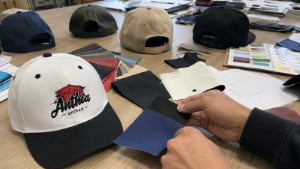
Instead of sending a supplier a message such as "I need a high-quality cotton cap," give them a short commercial brief:
Product: 6-panel unstructured baseball cap
Use: Lifestyle retail collection
Fabric direction: Soft cotton twill, matte appearance
Color: Pantone reference provided
Logo: Front flat embroidery + side woven label
Finish: Washed / broken-in look
Target quantity: 500 pcs per color
Priority: Soft hand feel and consistent fit after sampling
This type of brief gives the manufacturer enough context to recommend an appropriate fabric construction rather than guessing from fiber content alone.
At Anthea, material choice can then be evaluated together with hat structure, logo method, color, private-label details and order quantity before the physical sample is approved.
What Is the Best Fabric for Custom Hats?
There is no single best fabric.
Cotton twill is a strong all-round option for lifestyle and embroidered caps; polyester is usually better for sports, quick-dry performance and sublimation; wool blend is strong for premium, structured and heritage-inspired hats.
The best choice is the fabric that matches the end use, structure, decoration and target price.
Is Cotton or Polyester Better for Baseball Caps?
Cotton is often better for casual, fashion and washed baseball caps because of its natural hand feel.
Polyester is often better for sports and high-use baseball caps because it dries faster and can offer better shape and color stability.
A cotton/poly blend can provide a useful balance for general commercial programs.
What Fabric Is Best for Embroidered Hats?
Stable cotton twill, polyester twill and dense wool blends can all produce excellent embroidery.
Fabric weight and stability, logo stitch density, backing and machine setup matter as much as fiber content.
Always test the final artwork on a physical sample.
Is Wool Good for Snapback Hats?
Yes.
Wool blends are well suited to structured snapbacks when a dense, premium or heritage appearance is desired.
They are less suitable for hot-weather performance programs where a lightweight quick-dry fabric would be more practical.
What Is the Best Hat Material for Hot Weather?
For casual hot-weather wear, lightweight cotton can be comfortable.
For running, golf or heavy sweating, performance polyester is usually more practical because it dries faster.
Ventilation, fabric weight and weave should be evaluated alongside fiber content.
Can Polyester Hats Be Embroidered?
Yes.
Many polyester twills and performance fabrics can be embroidered successfully.
Lightweight or stretch fabrics may need different backing, underlay or thread tension to prevent puckering.
Can Cotton Hats Be Sublimated?
Standard dye sublimation is designed for polyester or high-polyester substrates, not ordinary cotton.
If the design depends on full-color sublimation, specify a compatible polyester fabric at the beginning of product development.
Are Recycled Polyester and Organic Cotton Available for Custom Hats?
They can be, depending on the hat style and project requirements.
Anthea currently lists GOTS-certified organic cotton and recycled polyester (rPET) options for its custom bucket-hat programs.
Ask for the appropriate material and documentation requirements before sampling.
Final Recommendation: Choose by Use Case, Then Validate by Sample
If you remember only one thing from this comparison, remember this:
Cotton is the lifestyle choice, polyester is the performance choice, and wool blend is the premium-structure choice—but the final decision should always be validated on the actual hat construction and logo.
For B2B buyers, material selection is not an isolated fabric decision.
It influences comfort, crown shape, decoration quality, color, cost and ultimately how the finished hat is positioned in the market.
If you are developing a new headwear program, start with the use case and brand target, narrow the material family, then approve the actual fabric and decoration together on a physical sample.
Need help choosing the right fabric for your custom hat?
Anthea supports OEM/ODM headwear development for brands, teams and merchandise projects, including custom baseball caps, custom snapbacks and custom bucket hats.
Share your design, quantity, use case and logo method to request a fabric recommendation and sample quote.