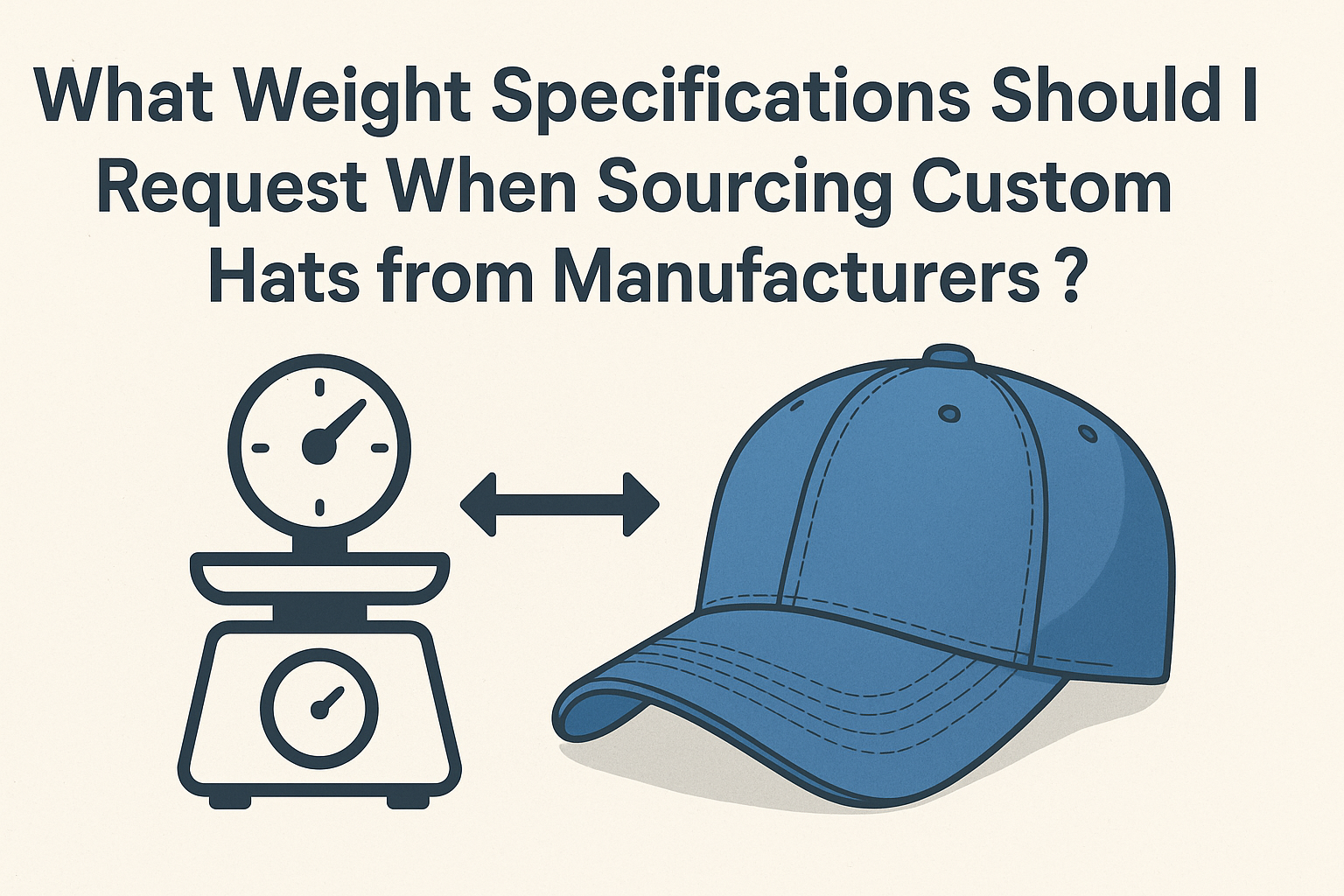
If your hats come out too flimsy or too heavy, the problem usually starts with missing weight specs. It’s not just fabric—weight affects shipping, pricing, and customer satisfaction.
Professional manufacturers should give you the total hat weight, fabric GSM, and a tolerance range (±5g). Without this, you risk inconsistent products, surprise shipping fees, and lower quality control.
Let’s go over what weight specs matter most—and how to request them from your manufacturer with confidence.
What weight specifications should every custom hat order include?
When you order hats, your supplier should provide more than just design files and materials. You need real, physical metrics.
The most important specs include unit weight (in grams), fabric GSM, reinforcement details, and decoration weight impact.
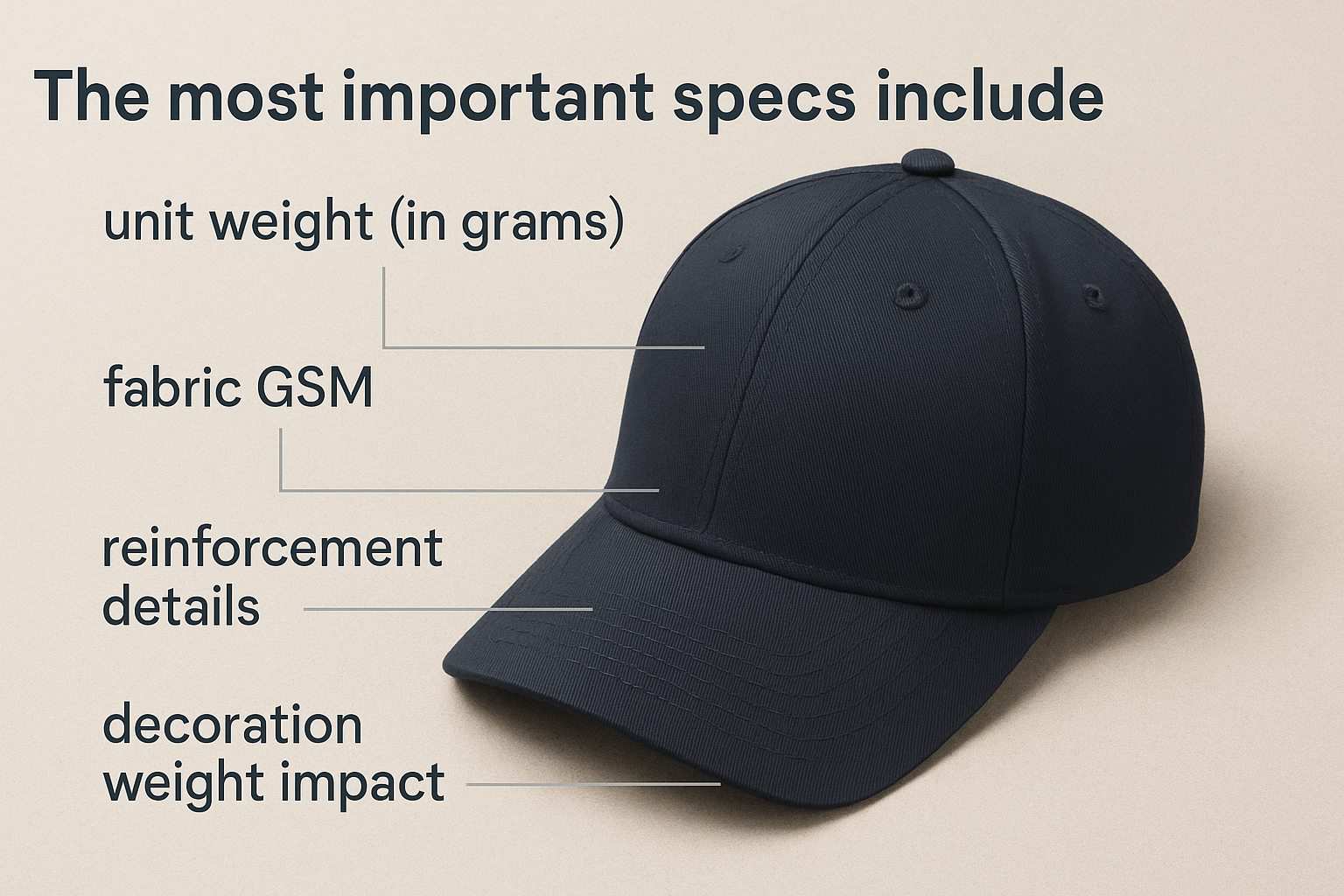
The full weight spec checklist
Here’s what to ask for when requesting a hat quote:
| Specification | Description |
|---|---|
| Total Hat Weight (g)1 | Final weight of one completed hat. Should include embroidery, patches, closures, etc. |
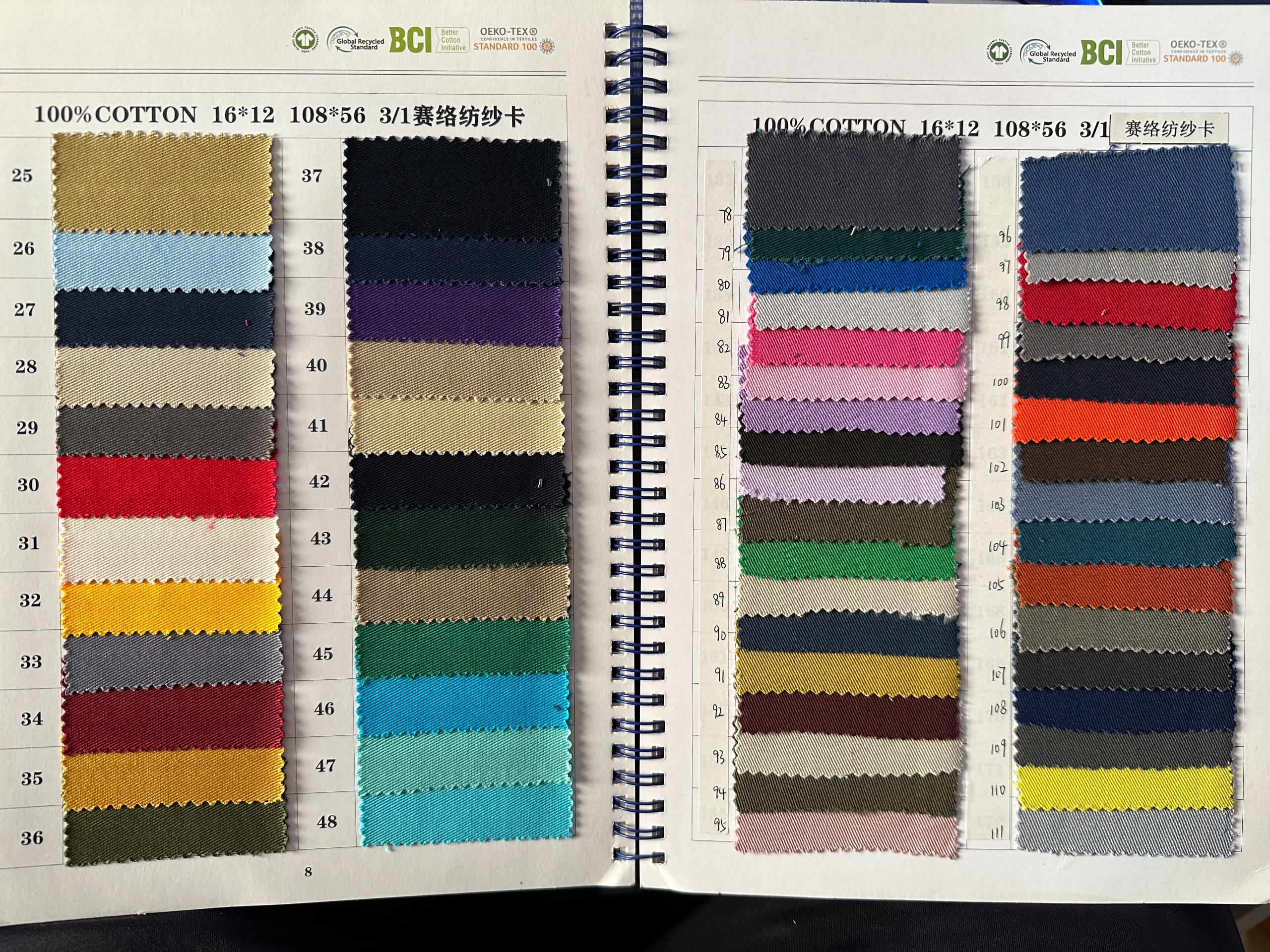
| Fabric GSM2 | Fabric weight per square meter. For cotton, common ranges are 210–330g; for polyester, 150–220g. |
| Reinforcement Materials3 | Buckram or foam weight used in front panels or brims. Often adds 10–25g. |
| Decoration Add-Ons4 | Embroidery, applique, or patchwork adds 5–20g depending on density and thread count. |
| Tolerance Range5 | Industry standard is ±5g variation per unit. Ask your factory to confirm this in writing. |
By having this info in your PO, you avoid misunderstandings and help your supplier produce consistent results every time.
Why do weight tolerances matter in production?
Even good factories have some variation. But too much weight fluctuation across units can signal quality issues—or cause shipping cost surprises.
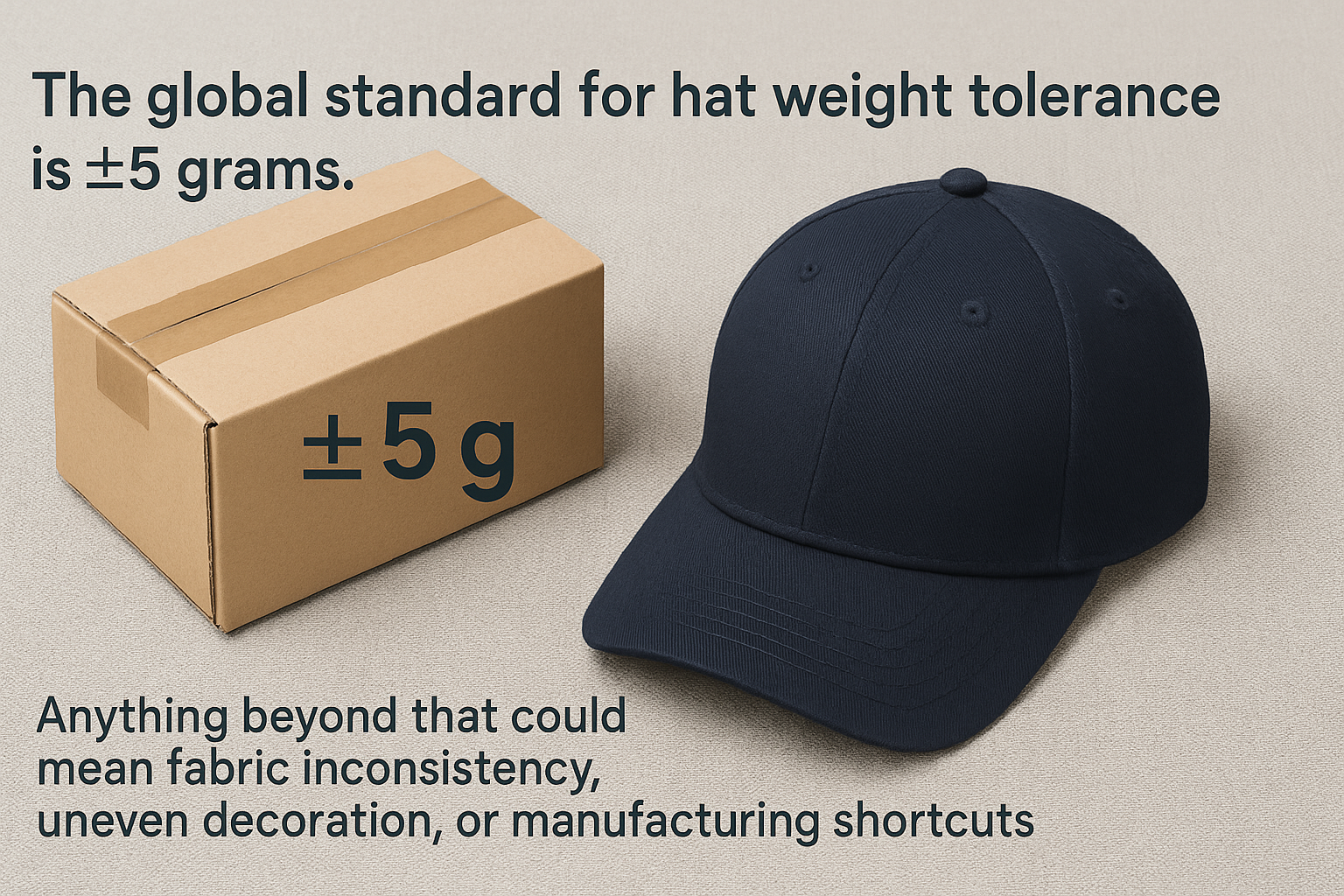
The global standard for hat weight tolerance is ±5 grams. Anything beyond that could mean fabric inconsistency, uneven decoration, or manufacturing shortcuts.
What happens when tolerance isn’t specified?
Let’s say you order 1,000 caps quoted at 100g each. If 200 of them weigh 115g, that’s 3kg of extra shipping weight—and higher freight fees. It also means some customers may get hats that feel bulkier or don’t sit right on the head.
You should always ask:
- What’s the expected unit weight per style?
- What’s the allowed variation during bulk production?
- Can I see this confirmed in the sample approval report?
At Anthea, we always include tolerance limits in our spec sheets and confirm them again before mass production.
How can weight specs help with quality control?
Quality isn’t just about how it looks. It’s also about how it feels—and how it matches expectations.
Weight consistency ensures that your product line has the same build, feel, and structure across every unit and every reorder.

What QC inspectors look for
Here’s how hat weight fits into a professional QC checklist:
- Sample Check: Inspector weighs random units. If 10% are above the weight limit, the batch may fail.
- Fabric Check: Swatches are checked for GSM accuracy.
- Construction Review: Panel stitching, sweatbands, and brims are checked against weight-related spec.
If you plan to scale or work with international logistics, weight consistency protects your brand’s quality—and reputation.
How do you communicate specs to your supplier?
It’s not about pushing the factory. It’s about giving them clear instructions.
Provide your weight target upfront, request it as part of your tech pack or PO, and confirm again before production begins.
Sample email language
Here’s an example message to send your factory:
“For this cap style, please confirm the following:
– Expected finished unit weight: grams
– Fabric GSM2:
– Brim reinforcement: ___
– Weight tolerance: ±5g maximum allowed
Please include these in the production spec sheet and pre-production sample approval.”
This way, both sides are clear—and you’ll avoid last-minute surprises.
Conclusion
Weight isn’t just a number. It’s a key to quality, shipping cost, and brand consistency. Get clear on your specs early—and work with a factory that respects them.
Contact
Anthea Custom Headwear Co., Ltd.
🌐 Visit Website
📧 [email protected]
📱 WhatsApp: +86 18132712127
-
Understanding total hat weight helps ensure product consistency and customer satisfaction. ↩
-
Fabric GSM is crucial for determining the quality and durability of hats, impacting customer perception. ↩ ↩
-
Choosing the right reinforcement materials can enhance the structure and longevity of your hats. ↩
-
Decoration add-ons can significantly impact the weight and aesthetic of hats, influencing customer choices. ↩
-
A defined tolerance range ensures quality control and minimizes shipping cost surprises. ↩