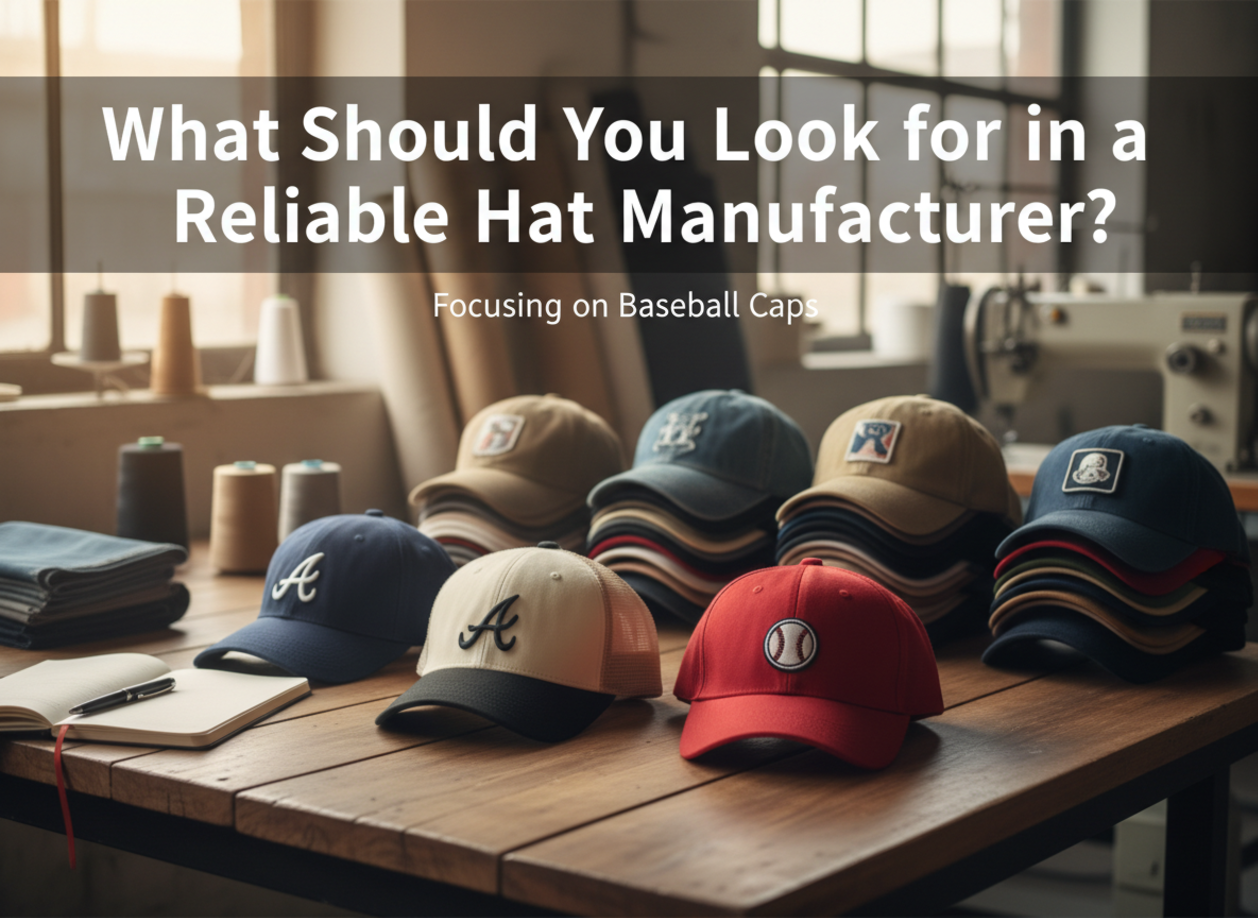
Too many people choose a manufacturer based only on price. They later regret it. If you’re serious about your brand, you must choose right the first time.
A reliable hat manufacturer1 delivers consistent quality2, meets deadlines, communicates clearly, and supports small MOQs3. You can trust them to follow through with what they promise.
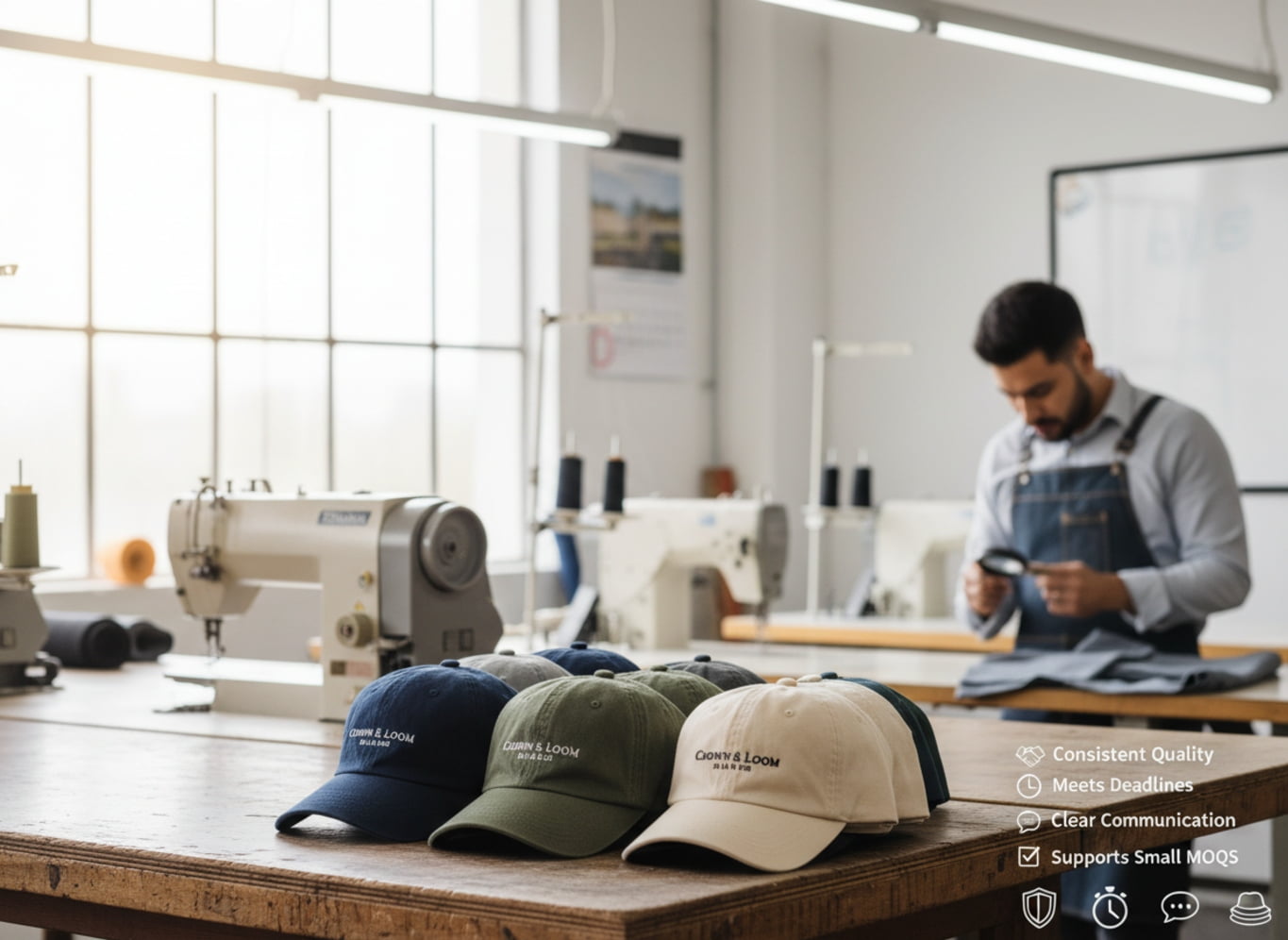
A bad choice can delay your launch, damage your reputation, and waste your money. A good partner helps you grow, launch fast, and protect your brand.
What Are the Key Quality Indicators of a Hat Manufacturer?
If a hat looks great in pictures but falls apart in real life, customers won’t come back. You only get one first impression. That’s why quality must come first.
A good manufacturer uses strong stitching4, clear embroidery5, and high-grade materials. What you see in the sample is what you get in bulk.
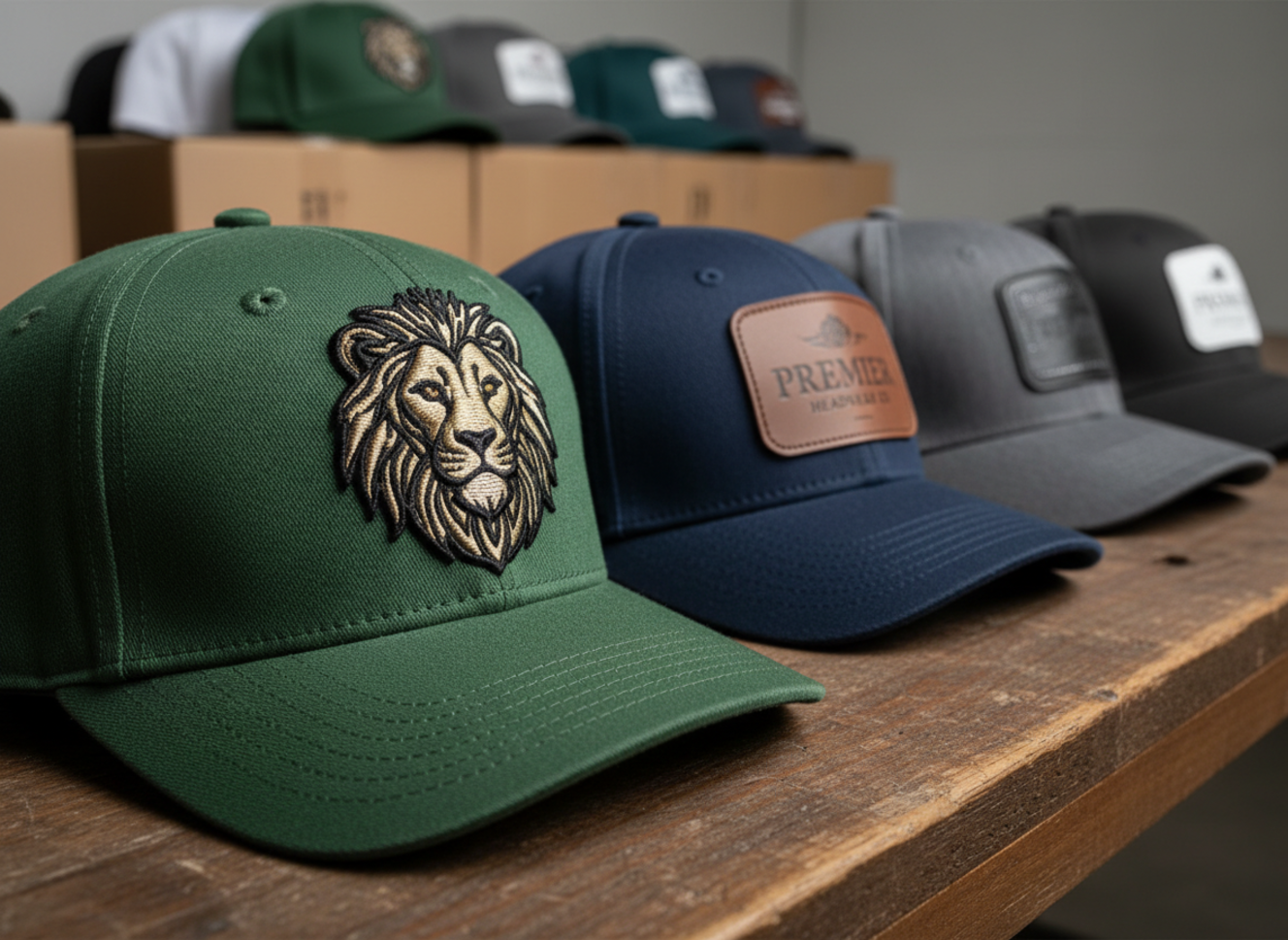
Signs of Good Craftsmanship and Bulk Quality
When I visit a factory or talk to a new supplier, the first thing I ask for is a sample. I look closely at the seams. I pull at the fabric. I check the logo embroidery for sharpness and color accuracy. I ask them, “Will the bulk order look exactly like this?”
In too many cases, the answer is vague. That’s a red flag. A reliable partner will give you the same quality in all units, not just the one perfect sample.
They should also show me pictures or videos of the production line6. I want to see the machines they use, the cutting process, and how they check each hat before packing. A factory that hides this information usually has something to hide.
Here’s a quick checklist to spot quality:
| Feature | What to Look For |
|---|---|
| Stitching | Even, tight, and no loose threads |
| Embroidery | Clean edges, no color bleeding |
| Fabric | Feels strong, no thin or cheap texture |
| Logo Positioning | Aligned properly on every piece |
| Label or Tag Quality | Straight, clean, not half-sewn |
Ask to see production videos. Ask how they train workers. Ask how many QC checks happen per 100 pieces. If they can’t answer, that’s your answer.
How Do You Judge a Manufacturer’s Communication?
Communication can make or break your production. Some suppliers reply fast and solve problems. Others disappear for days. You need the first kind.
A reliable supplier replies fast, gives clear updates, and solves issues without delay. They are easy to talk to and care about your success.
[^7]-can-make-or-break-y.png "fast supplier communication")
What to Expect From Good Communication
When I work with a new supplier, I send them a test message first. I ask something simple: “Can you do puff embroidery?” I check how long they take to respond and how clearly they answer. This tells me a lot about how the production process will go.
If they answer in 12–24 hours, explain things clearly, and offer examples, I move forward. If I wait days or get one-word replies, I stop. I don’t want surprises during production.
During sampling and bulk production, a good supplier updates me regularly. They might say, “Your fabric has arrived,” or “Your embroidery test is done—see attached photos.” This gives me peace of mind.
When problems happen—and they will—a good supplier tells me immediately. They don’t wait until the deadline. They also offer solutions. For example, if a thread color is out of stock, they suggest close alternatives and wait for my decision.
Quick reply times, clarity, and transparency are signs of a professional partner. You deserve that.
Why Do MOQs and Sampling Speed Matter So Much?
If you’re a small brand or creator, you can’t buy 1000 hats at once. You also can’t wait 4 weeks just for a sample. You need flexible MOQs and fast sampling7.
A strong manufacturer offers low MOQs—around 200 pieces—and delivers samples within 7 to 10 days. This lets you test ideas and launch quickly.
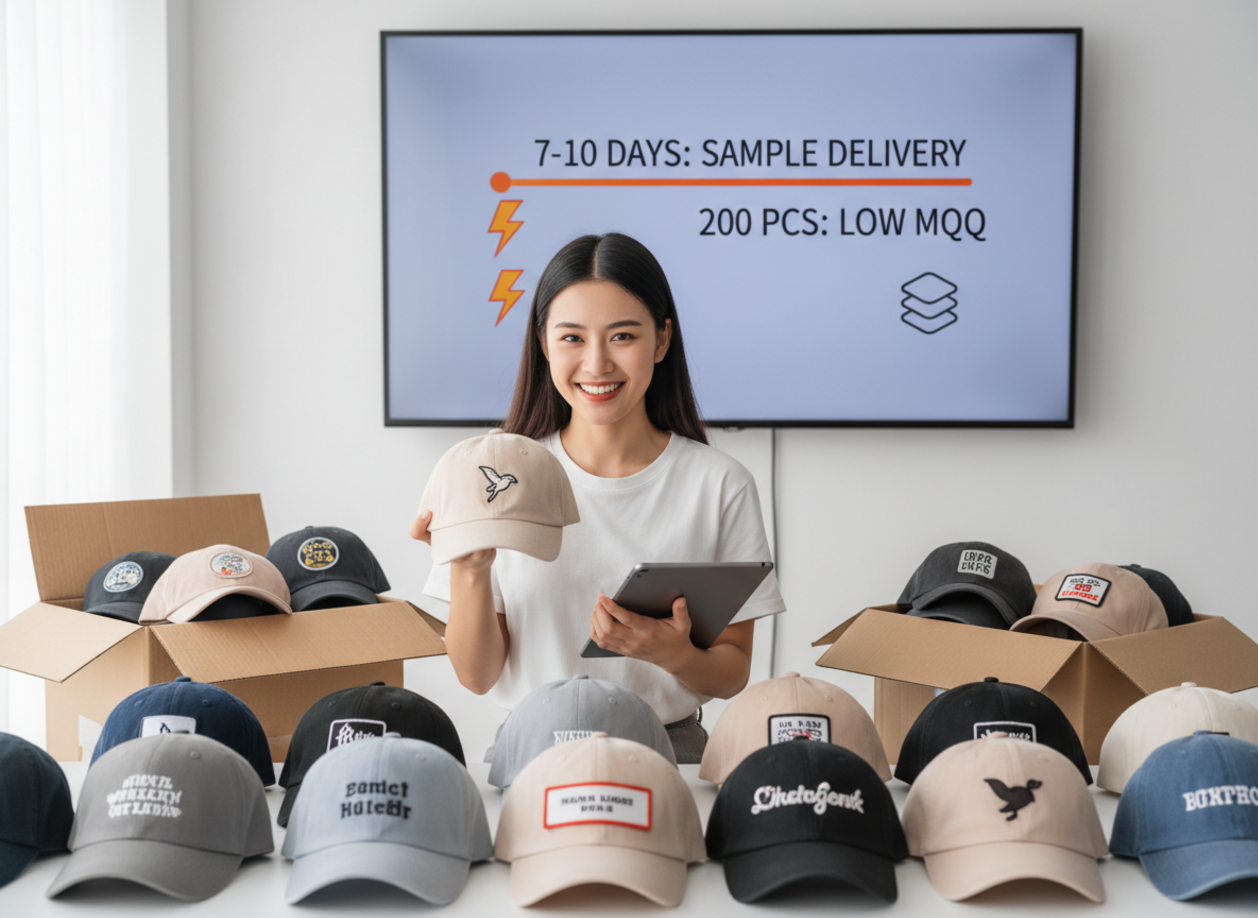
How Small Orders and Fast Samples Help You Win
When I launched my first merch drop, I didn’t have a big budget. I wanted to test one design—just 200 hats. Some suppliers said no or asked for 500+ units. Others took over a month just to show me a sample. That didn’t work for me.
Then I found a factory that said, “Yes, we can do 200 units. Your sample will be ready in 7 days.” That changed everything.
For small brands, fast sampling7 lets you test and adjust designs quickly. You can show fans the sample, gather feedback, and build hype before you order the full batch. This keeps cash flow healthy and avoids overstock.
Here’s what I now expect from any reliable supplier:
| Feature | Minimum Expectation |
|---|---|
| MOQ | 200 pcs per design or lower |
| Sample Lead Time | 7–10 days |
| Sample Revisions | 1–2 rounds allowed |
| Visual Mockups | Provided before sample making |
| Sample Shipping | Global options (DHL, FedEx) |
Fast samples mean faster drops. Low MOQs mean lower risk. If your supplier can’t offer that, find one who can.
How Do You Know if a Supplier is Truly Reliable?
Some suppliers sound great until you place an order. Then the delays, excuses, and problems begin. You need proof of reliability—not just promises.
A reliable supplier delivers on time, shows past work, shares client reviews8, and gives clear production timeline9s. They do what they say.
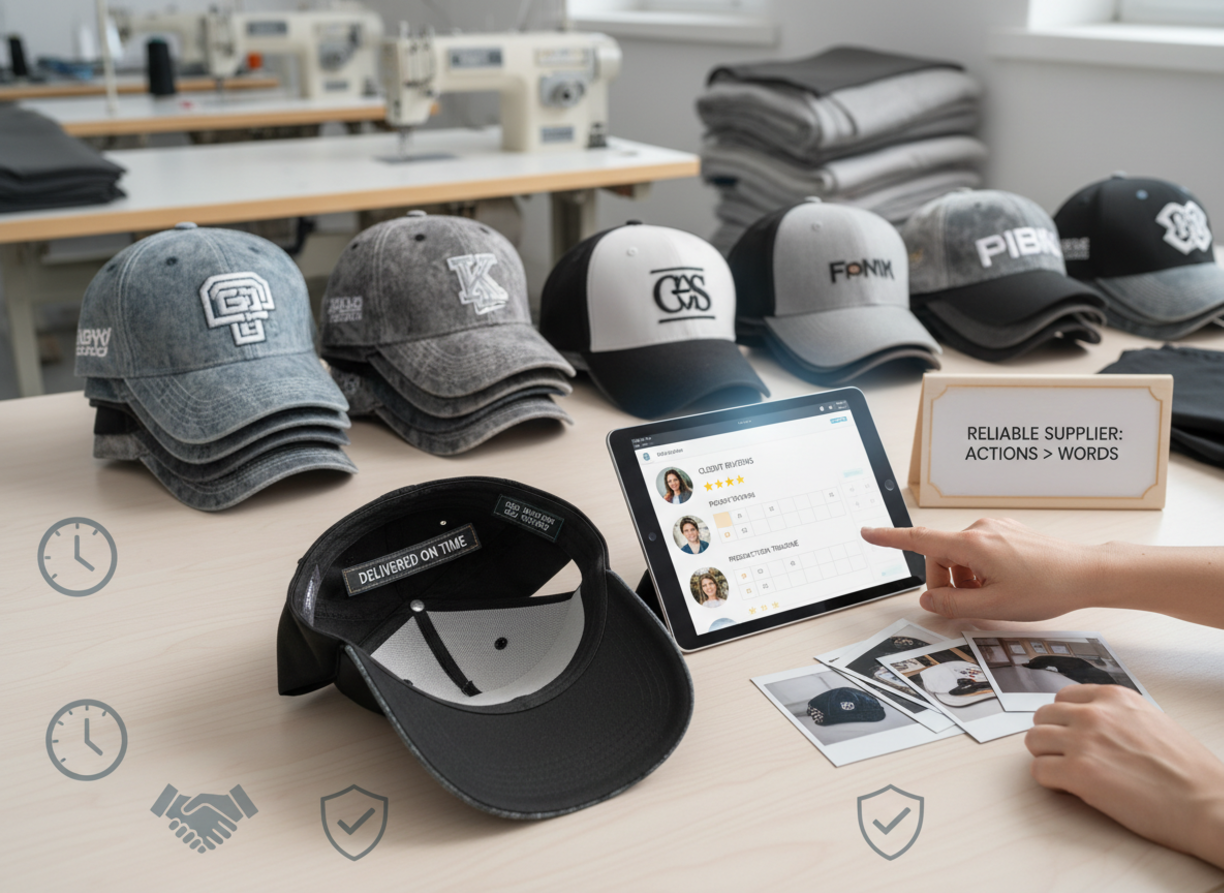
How to Check for Real Reliability
When I choose a new manufacturer, I don’t go by words alone. I ask for real signs. I ask for their production timeline9 and where their recent orders shipped. I check their social proof—customer reviews10, Instagram tags, even Reddit posts.
Some of the things I check include:
- Their review score on Alibaba or Made-in-China
- How many years they’ve been in business
- If they’ve worked with brands like mine
- If they’ve been to global trade shows like MAGIC or Canton Fair
Most importantly, I ask about delivery records11. A reliable supplier gives me a clear timeline, like: “Sample in 7 days, production 18–21 days, shipping 5–10 days.” I write that down and hold them to it.
Here’s a chart of what reliable vs. risky suppliers usually look like:
| Trait | Reliable Supplier | Risky Supplier |
|---|---|---|
| Communication | Fast and helpful | Slow and unclear |
| Samples | Match bulk exactly | Bulk is worse than sample |
| Reviews / References | Public and positive | Hard to find or fake |
| Timeline | Specific and realistic | Vague or always changing |
| Delivery Performance | 90%+ on-time rate | Frequent delays |
Ask questions. Read reviews. Get it in writing. And trust your gut—if something feels off, it usually is.
Conclusion
Choose slow and smart, not fast and cheap. A good manufacturer is more than a vendor—they’re your launch partner.
-
Explore this link to understand the key traits that define a trustworthy hat manufacturer. ↩
-
Learn about the practices that guarantee consistent quality in manufacturing. ↩
-
Discover why small Minimum Order Quantities are crucial for small brands and startups. ↩
-
Find out how strong stitching impacts the durability and quality of hats. ↩
-
Understand the significance of clear embroidery for brand representation. ↩
-
See real examples of production lines to gauge manufacturing quality. ↩
-
Explore the benefits of fast sampling for quick product launches. ↩ ↩
-
Discover methods to verify manufacturer reliability through client feedback. ↩
-
Explore how a clear production timeline can prevent delays and issues. ↩ ↩
-
Gain insights on how to effectively analyze customer reviews for better decision-making. ↩
-
Understand the importance of delivery records in assessing supplier reliability. ↩