One wrong supplier can cause shipping disasters1, ruined product launches, and months of lost revenue.
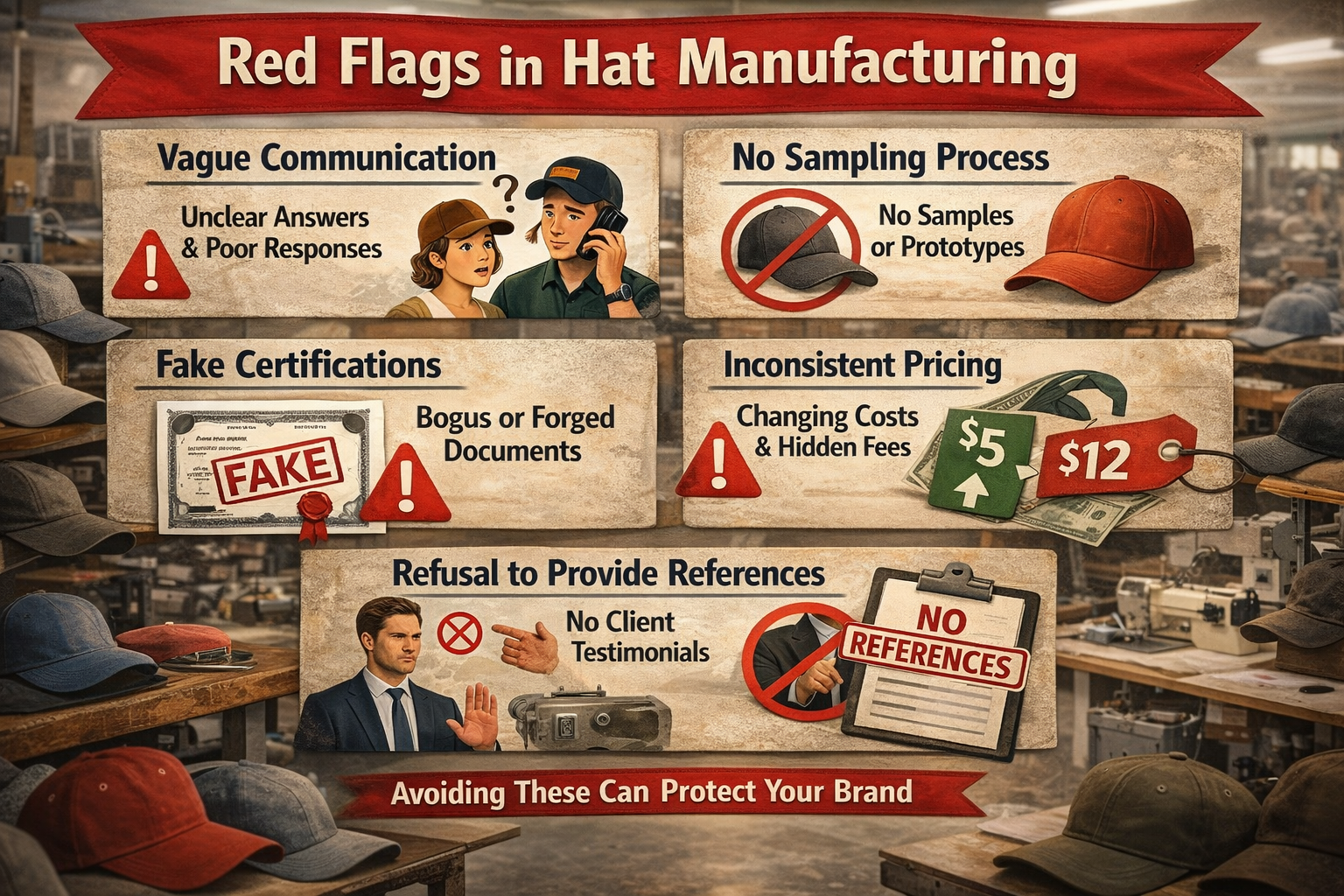
Common red flags in hat manufacturing include vague communication2, no sampling process3, fake certifications4, inconsistent pricing5, and refusal to provide references6. Avoiding these can protect your brand.
I’ve learned to walk away from any factory that makes promises without proof—or avoids the tough questions.
What Communication Red Flags Should Raise Concern?
If a manufacturer doesn’t communicate clearly before the deal, things only get worse later.
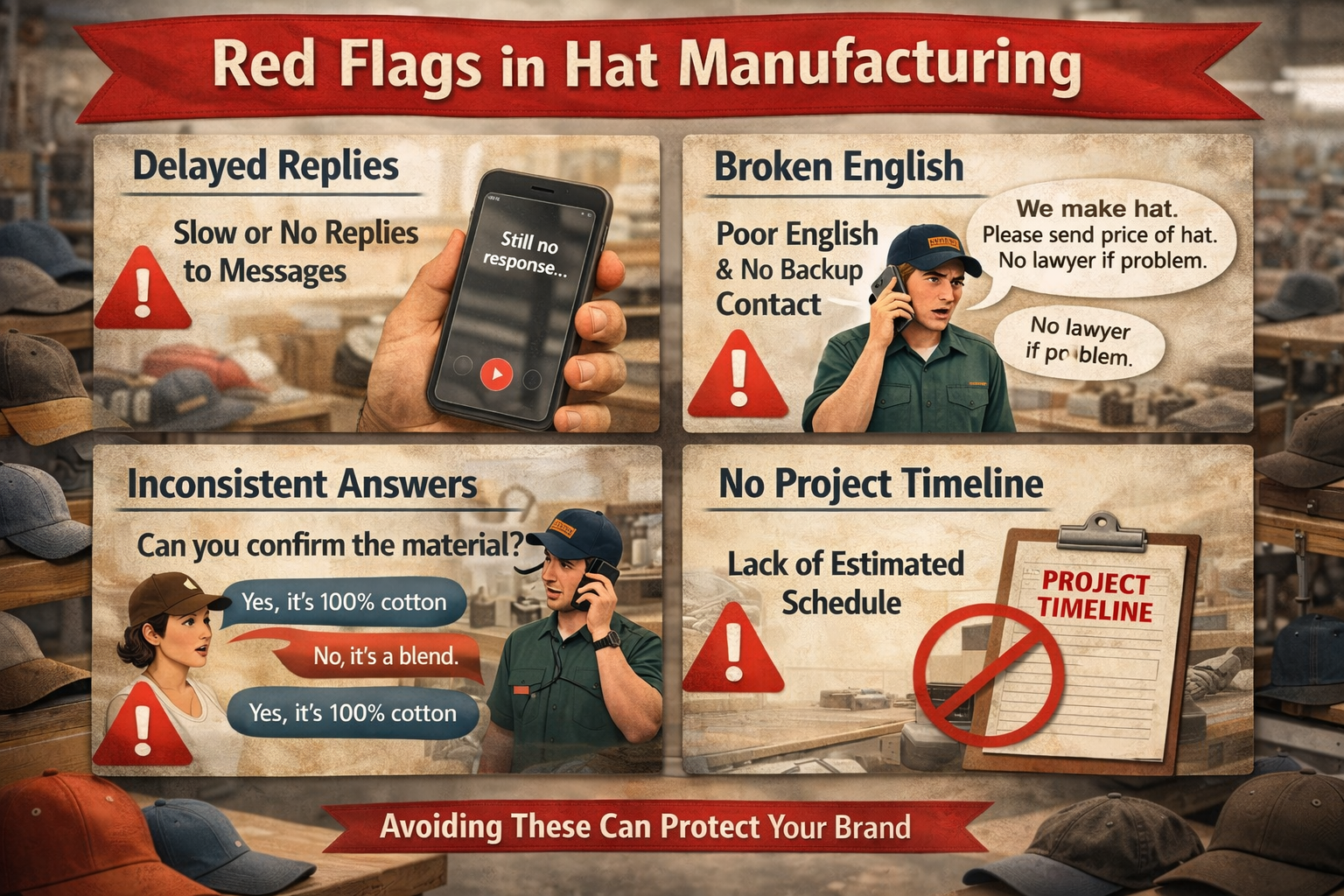
Red flags include delayed replies7, broken English with no backup contact, inconsistent answers, and no project timeline shared after inquiry.
Why Early Communication Tells Me Everything
When I first messaged a hat supplier on Alibaba, it took them three days to reply with a one-sentence answer: "Yes, we can do." No questions, no price breakdown, no timeline. That was my red flag. I moved on.
A good supplier replies within 24 hours, asks about logo placement, material preference, and your intended market. They provide a quote, estimated sampling time, and production lead time. That tells me they know their process.
Here’s what I look out for:
| Communication Behavior | What It Tells Me |
|---|---|
| Slow or inconsistent replies | They’re overwhelmed or disorganized |
| No alternate contact person | No team behind the name |
| Avoiding clear delivery estimates | Hiding production issues |
| Can’t explain their QC steps | May not have structured operations |
A supplier who communicates clearly is more likely to deliver clearly too.
What Quality Issues Signal a Risky Hat Manufacturer?
Quality problems are hard to fix after production starts. The best way to avoid them is spotting early signals.
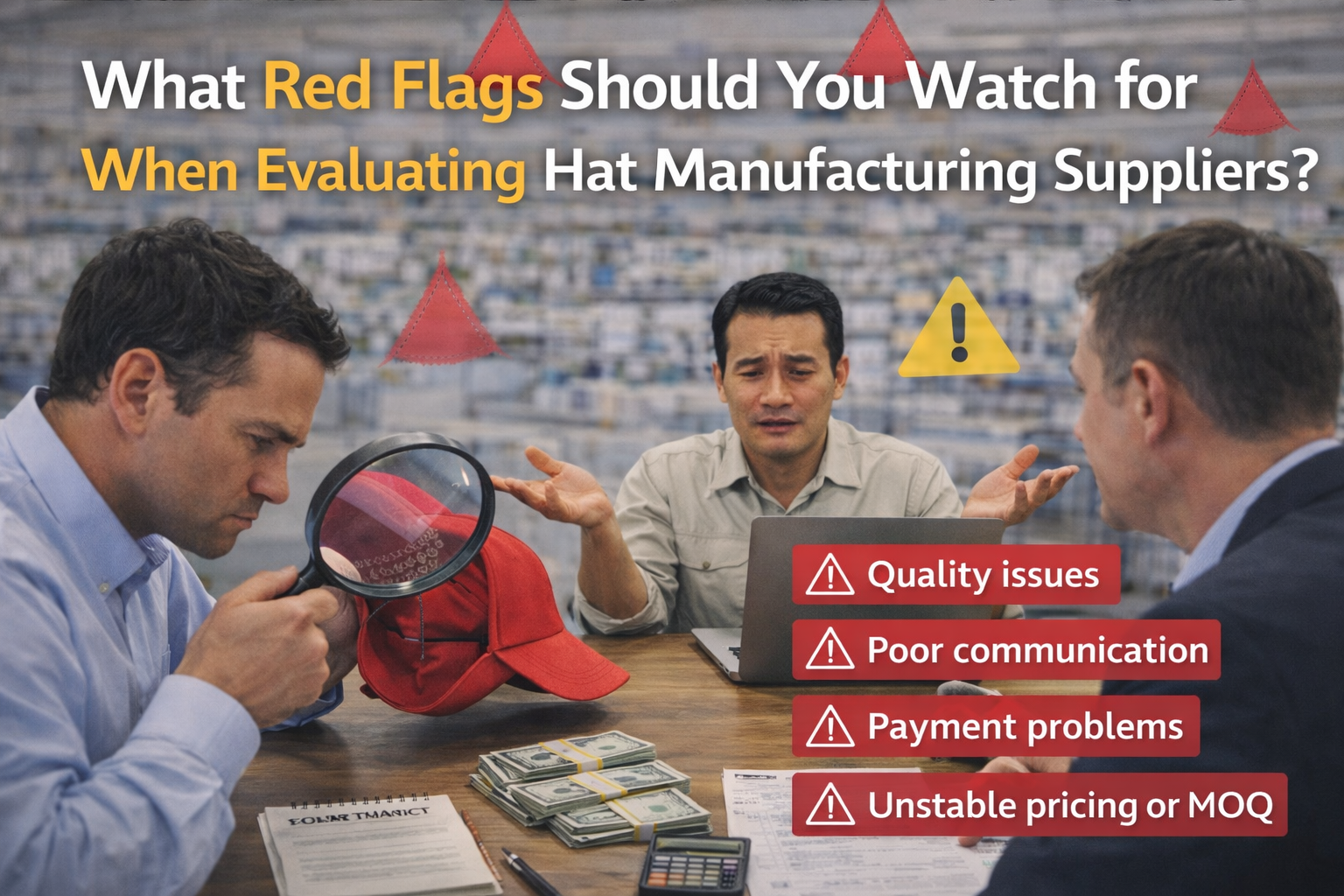
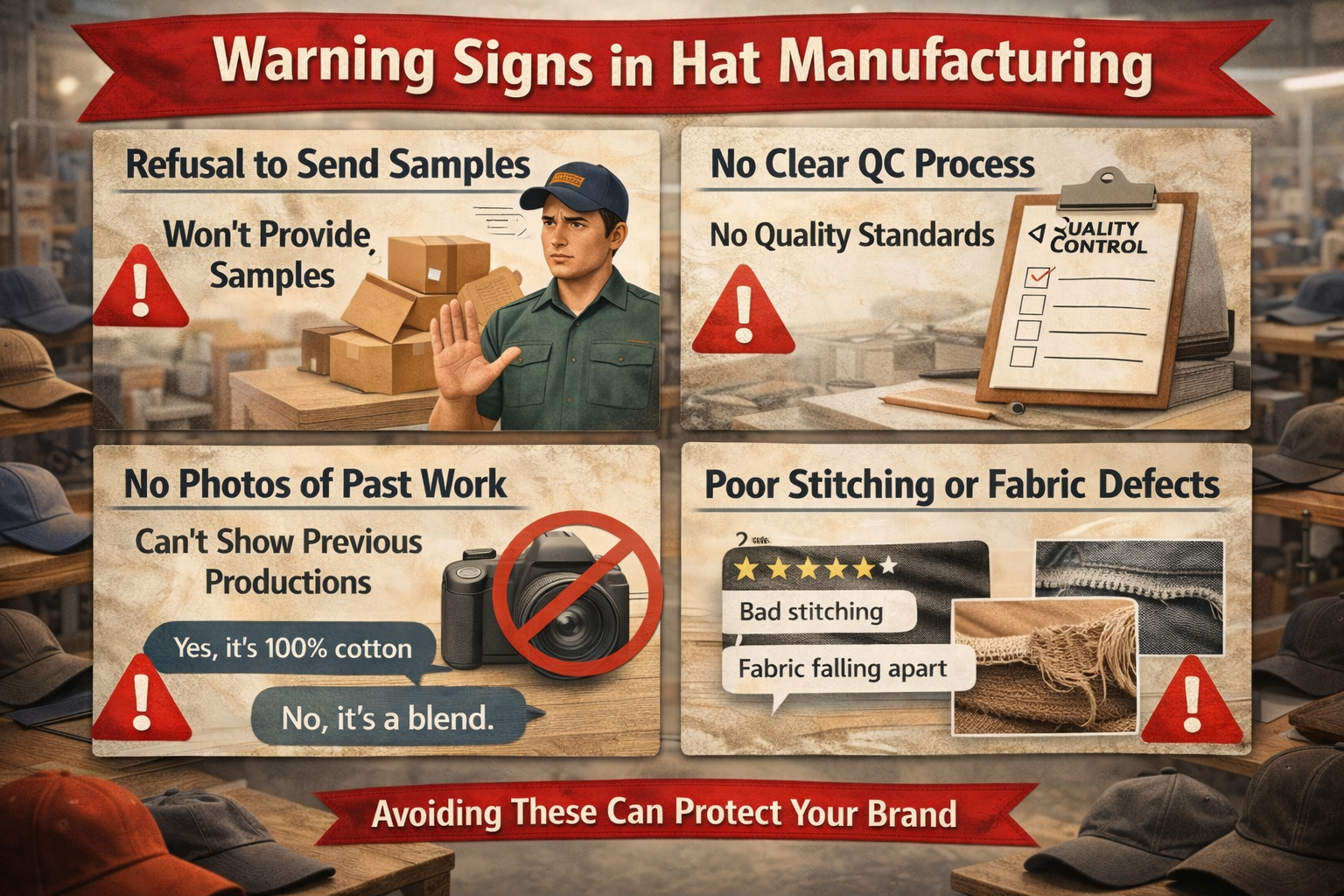
Warning signs include refusal to send samples, lack of clear QC process8, no photos of past work, and reviews mentioning poor stitching or fabric defects.
What I’ve Learned About Hidden Quality Risks
I once ordered a sample from a factory that looked great online. The pictures were amazing. The sample I received had off-center embroidery and threads poking out of every seam. They blamed the courier. That was another red flag.
Here’s how I spot quality risks before it’s too late:
- They refuse to send a sample: That often means they’re not producing anything themselves.
- They show mockups only, no real product photos: They may just be middlemen.
- They can’t show their embroidery machines or production floor: They might be outsourcing without control.
- They avoid answering questions about their QC process: Likely, they don’t have one.
| Quality Warning Sign | What You Should Ask Instead |
|---|---|
| No sample before order | “Can I see one physical sample first?” |
| All generic product photos | “Can you share past client orders?” |
| No mention of QC steps | “Who signs off on final inspection?” |
| Inconsistent material info | “What fabric specs are used?” |
Ask clear, technical questions. If they dodge them, move on.
What Financial and Legal Risks Should You Watch For?
Scam factories and unstable suppliers can disappear with your deposit or deliver unusable goods.
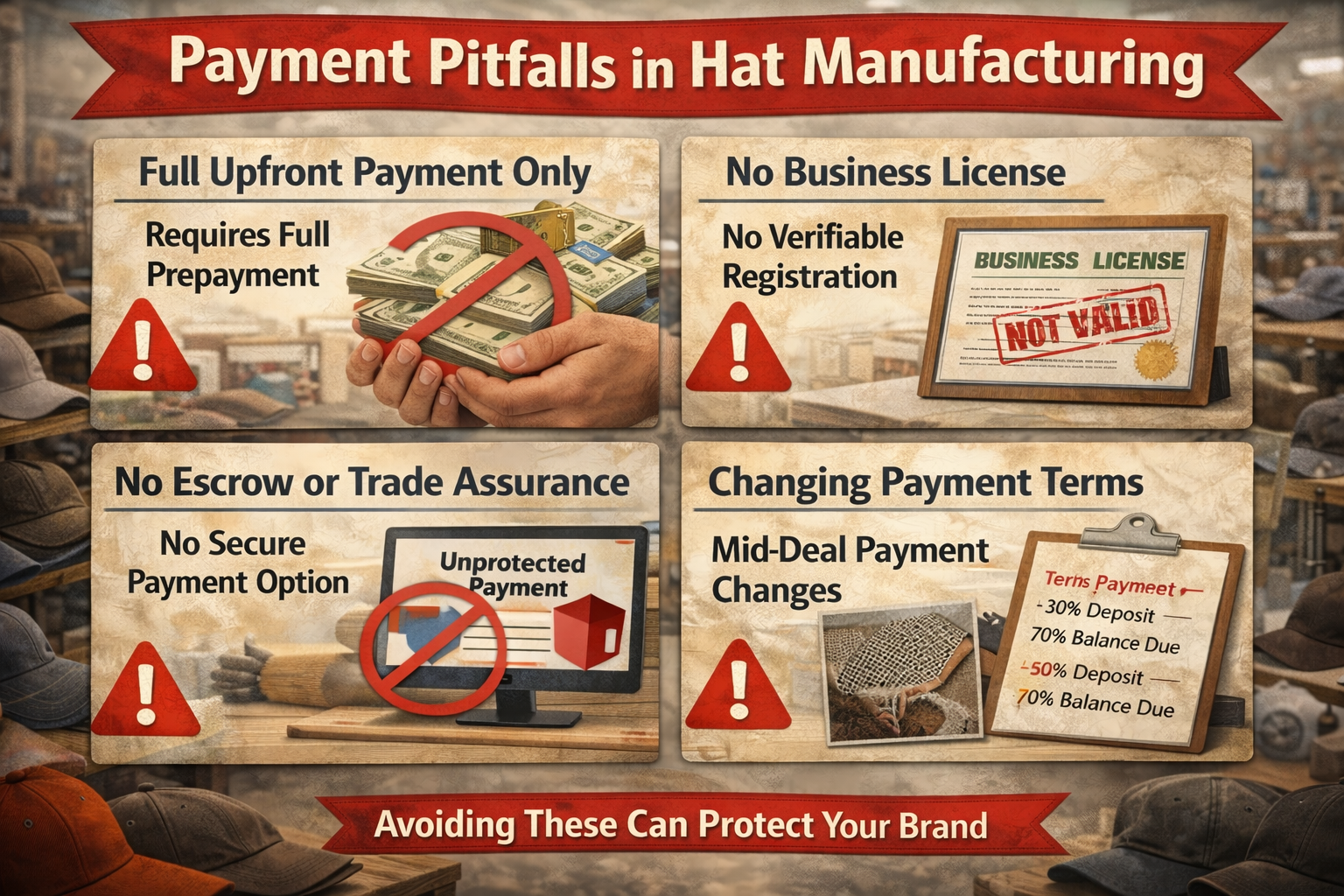
Avoid suppliers who require full upfront payment, lack a verifiable business license, don’t use escrow or trade assurance9, or change payment terms mid-negotiation.
How I Avoided a Costly Mistake with a New Supplier
A supplier once asked me to wire full payment before sampling. That’s when I did a reverse image search of their factory photos—they were taken from another website. Total scam.
I now always check these financial indicators:
- Only 30% upfront deposit: This is standard and fair.
- Escrow or secure platform (like Alibaba Trade Assurance): Adds safety.
- Clear bank account name matching the company name: No third-party accounts.
- Consistent quotes across discussions: Sudden price changes are a red flag.
- Valid business registration number: I verify it via government records or a sourcing agent.
| Financial Red Flag | What It Could Mean |
|---|---|
| Requests 100% payment upfront | Cash grab or no production commitment |
| No official invoice or contract | Avoiding accountability |
| Changes payment account mid-order | Possible scam or internal issues |
| Company can’t issue tax invoice | May be operating illegally |
Secure payment terms are a must for long-term success.
What Operational Behaviors Predict Delivery Problems?
Operational red flags often lead to late delivery, missed specs, or miscommunication mid-project.
Common signs: no production schedule10 shared, unclear workflow, “too good to be true” timelines, or unwillingness to document milestones.
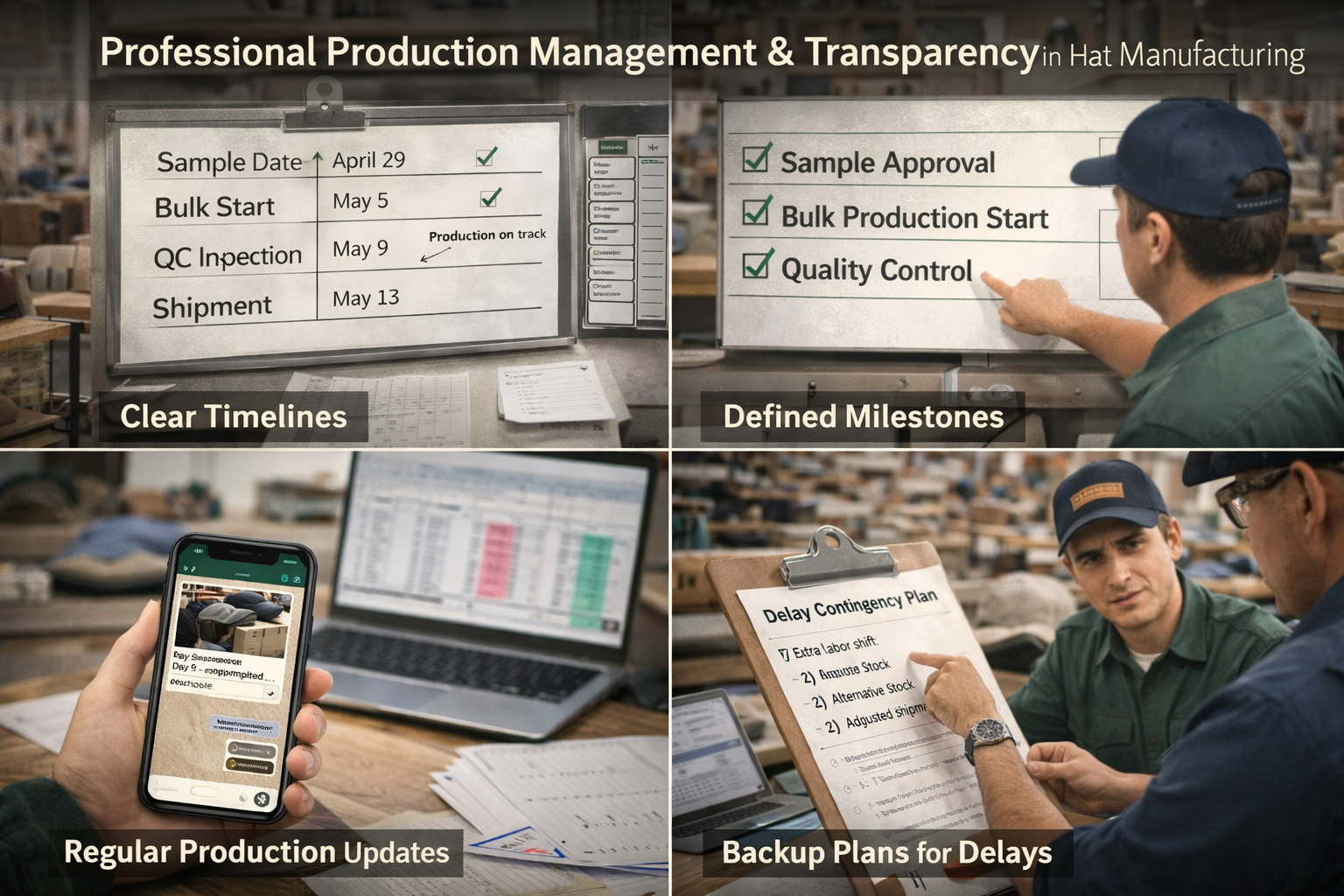
Why I Always Ask for a Production Calendar
A good factory gives me a breakdown: sampling 7 days, bulk production 14 days, quality control 2 days, shipping 5 days. That tells me they have real systems in place.
When they don’t—or give vague timelines like “maybe 2–3 weeks depending on orders”—that’s when I worry.
Here’s what I now request on every project:
- Written timeline from sample to ship
- Milestones for sampling approval, bulk start, and QC
- Daily or weekly production updates (email or WhatsApp)
- Contingency plan for delays
| Operational Concern | Likely Outcome |
|---|---|
| No timeline provided | Risk of long, unpredictable lead time |
| No sample stage included | Risk of production errors |
| No contact during production | You won’t know if delays are happening |
| Overly tight turnaround promise | Quality shortcuts or missed deadlines |
You can’t manage what you don’t measure. The best suppliers help you track every step.
Conclusion
Trust is built on transparency11. The more red flags you catch early, the fewer regrets you’ll face later.
-
Understanding shipping disasters can help you avoid costly mistakes in your supply chain. ↩
-
Explore how clear communication can enhance supplier relationships and prevent misunderstandings. ↩
-
Learn why a robust sampling process is crucial for ensuring product quality before mass production. ↩
-
Discover tips on verifying supplier certifications to ensure compliance and quality. ↩
-
Find out how inconsistent pricing can signal potential issues with a supplier’s reliability. ↩
-
Understand the significance of references in assessing a supplier’s credibility and reliability. ↩
-
Explore the implications of delayed communication and how it can affect your project. ↩
-
Discover the elements of an effective quality control process that ensures product excellence. ↩
-
Learn how escrow services can safeguard your payments and ensure supplier accountability. ↩
-
Explore the benefits of having a clear production schedule to manage timelines and expectations. ↩
-
Discover how transparency fosters trust and leads to successful long-term partnerships. ↩