You finally approved the perfect sample hat, but are you worried the bulk order will look different? This fear keeps many brand owners awake at night.
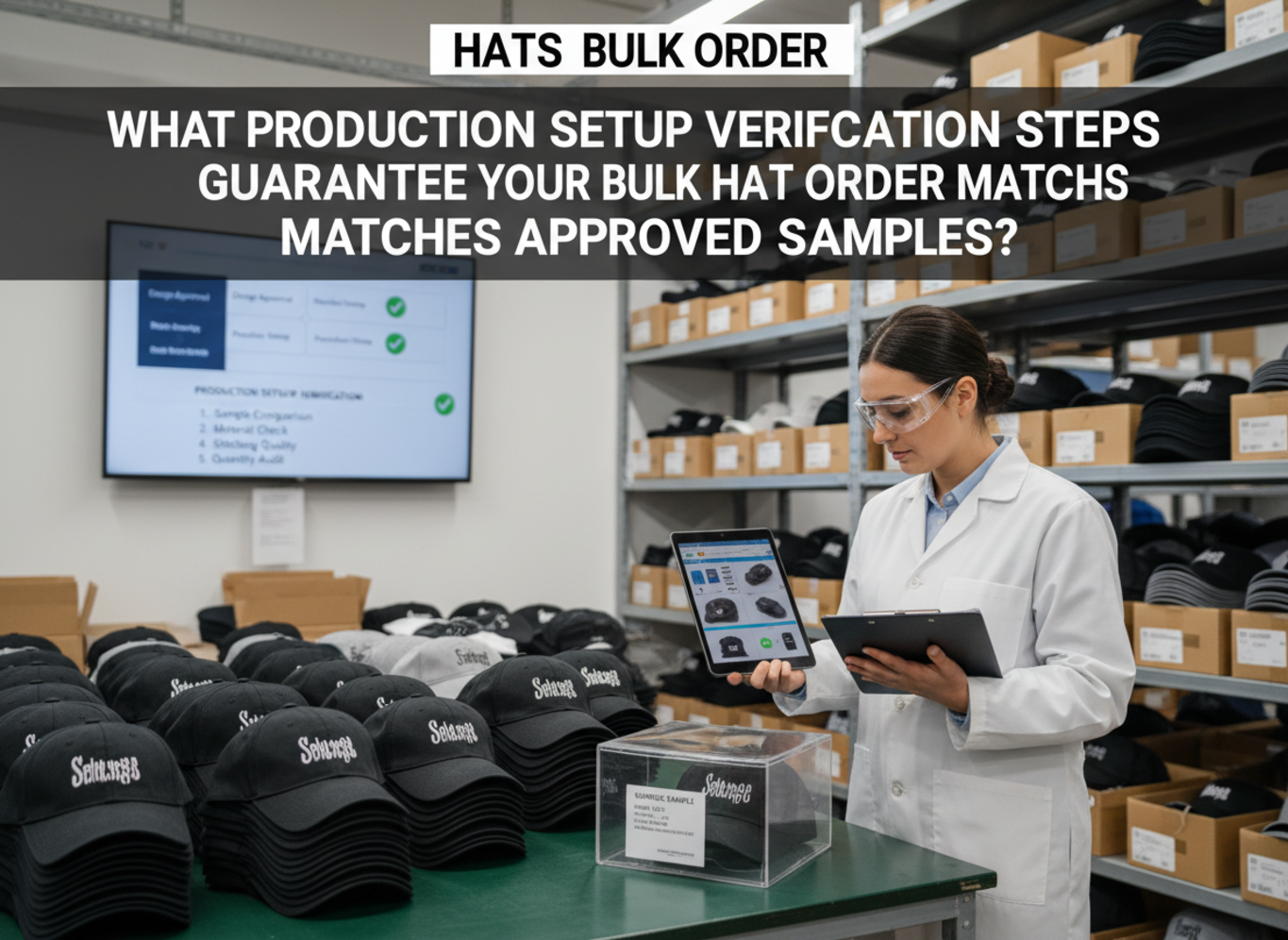
Production setup verification1 guarantees consistency by checking four key areas before mass manufacturing begins. We verify raw materials match the sample2, calibrate embroidery and sewing machines3, align cutting templates strictly to size charts4, and run a small test batch5 to catch errors early. This process ensures every hat matches your approved design.
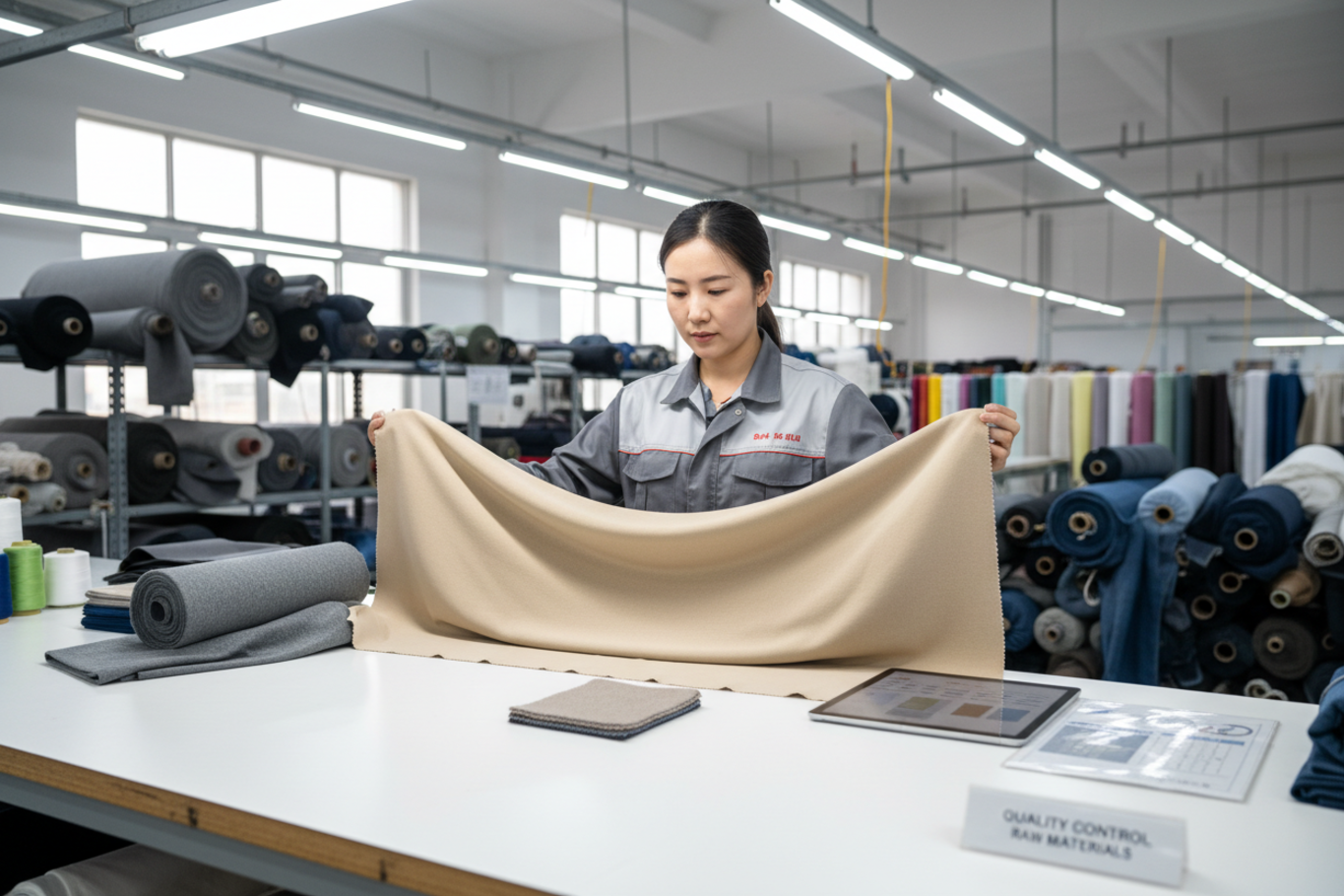
Many factories skip these steps to save time. However, skipping them leads to big mistakes. Let me explain exactly how we handle this at Anthea.
What are the key components of production setup verification?
Missing one small detail can ruin a thousand hats. You need a checklist to stay safe.
The key components include verifying material batch codes6, checking thread colors against Pantone codes7, setting strict tension levels8 on machines, and reviewing the tech pack. These steps act as a final gatekeeper before the machines start running at full speed.
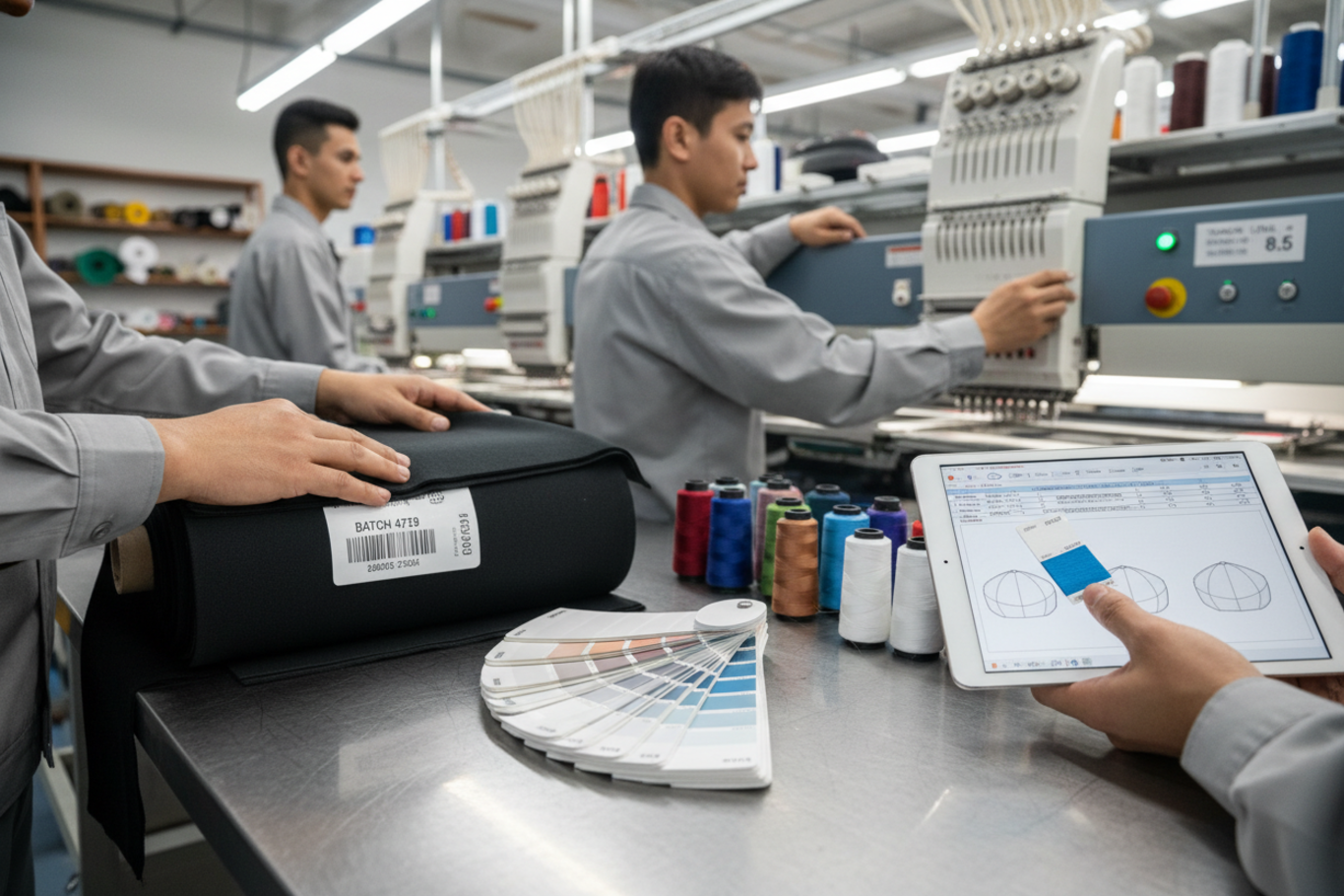
At Anthea, we treat the approved sample like a holy book. The first component is the "Tech Pack Review9." We look at the document that lists every detail. We compare the fabric roll for the bulk order against the fabric used for the sample. Sometimes, different batches of fabric have slight color changes. We call this "dye lot variation10." We must make sure they match perfectly.
Next is the accessory check11. This includes buckles, sweatbands, and inner taping. If the sample has a brass buckle, the bulk order cannot have a shiny gold one. We also check the thread. The embroidery thread must match the Pantone color12 you chose. We physically hold the thread spool against the sample to be sure.
We also verify the packaging materials13. We check the polybags and the hangtags. If the barcode on the tag is wrong, you cannot sell the product. We check all these things before we cut a single piece of fabric. This preparation saves us from stopping the line later.
Verification Checklist
| Component | What We Check | Why It Matters |
|---|---|---|
| Fabric Rolls | Color and texture | Prevents mismatched shades between hats. |
| Accessories | Buckles and snaps | Ensures hardware matches the sample quality. |
| Thread | Pantone code | Keeps logo colors accurate to your brand. |
| Tech Pack | Dimensions and notes | Guarantees the factory follows the latest instructions. |
How does machine calibration affect hat production quality?
Crooked logos make your brand look cheap. Usually, the machine is to blame, not the worker.
Machine calibration affects quality by ensuring needle tension, speed, and hoop placement14 are identical to the sample run. Proper calibration prevents loose threads, puckered fabric, and off-center logos. It ensures the machinery operates with the exact same settings used during the sampling phase.
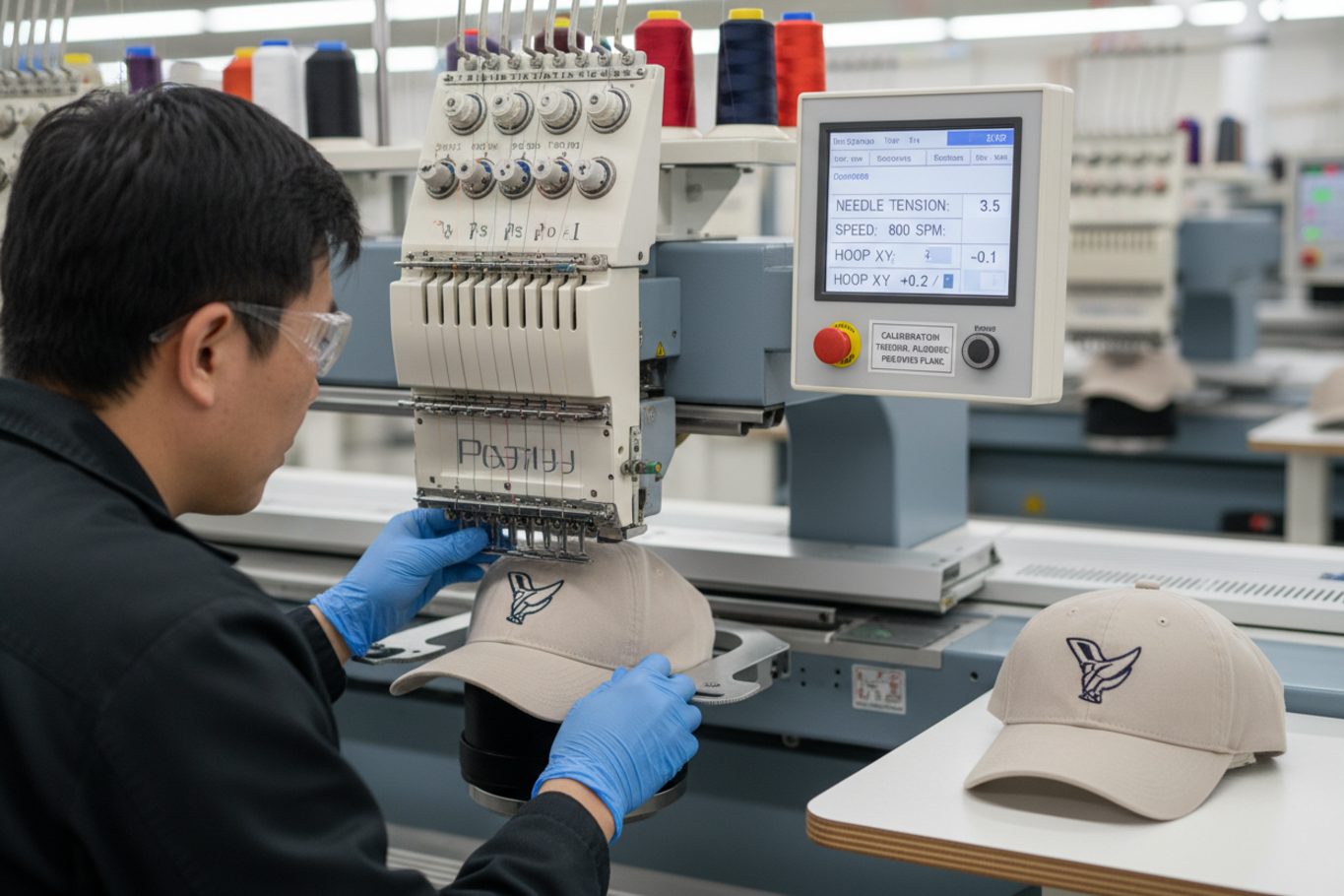
Machines are strong, but they are not smart. We have to teach them what to do every time. Calibration is about setting the machine correctly. For embroidery, we adjust the thread tension. If the tension is too tight, the fabric pulls together. This creates wrinkles around your logo. If it is too loose, the thread loops look messy. We test this on scrap fabric first.
We also check the speed. We make samples slowly to get them perfect. But for bulk orders, machines run faster. We must adjust the speed so the quality stays high. If we run the machine too fast on detailed designs, the needle might break or skip stitches.
We also check the "hooping" station. This is where we hold the hat panel tight before stitching. If the laser guide on the machine is off by even one millimeter, your logo will be crooked. We calibrate these lasers every morning. We also check the sewing machines for the brim. The lines on the brim must be parallel. If the machine foot is loose, the lines will be wavy.
Calibration Factors
- Thread Tension: Adjusted for fabric thickness to prevent pulling or looping.
- Stitch Speed: Balanced between efficiency and neatness to avoid broken needles.
- Bobbin Case: Checked for lint to ensure smooth under-stitching.
- Needle Sharpness: Old needles are replaced to prevent holes in the fabric.
Why is template and measurement verification important?
A hat that does not fit right will get returned. You cannot sell a product that is too small or too big.
Template verification15 is important because it ensures every fabric panel is cut to the exact size required for the hat’s shape. We compare the metal cutting molds against the paper patterns from the sample. This prevents size variations that happen when layers of fabric are cut simultaneously.
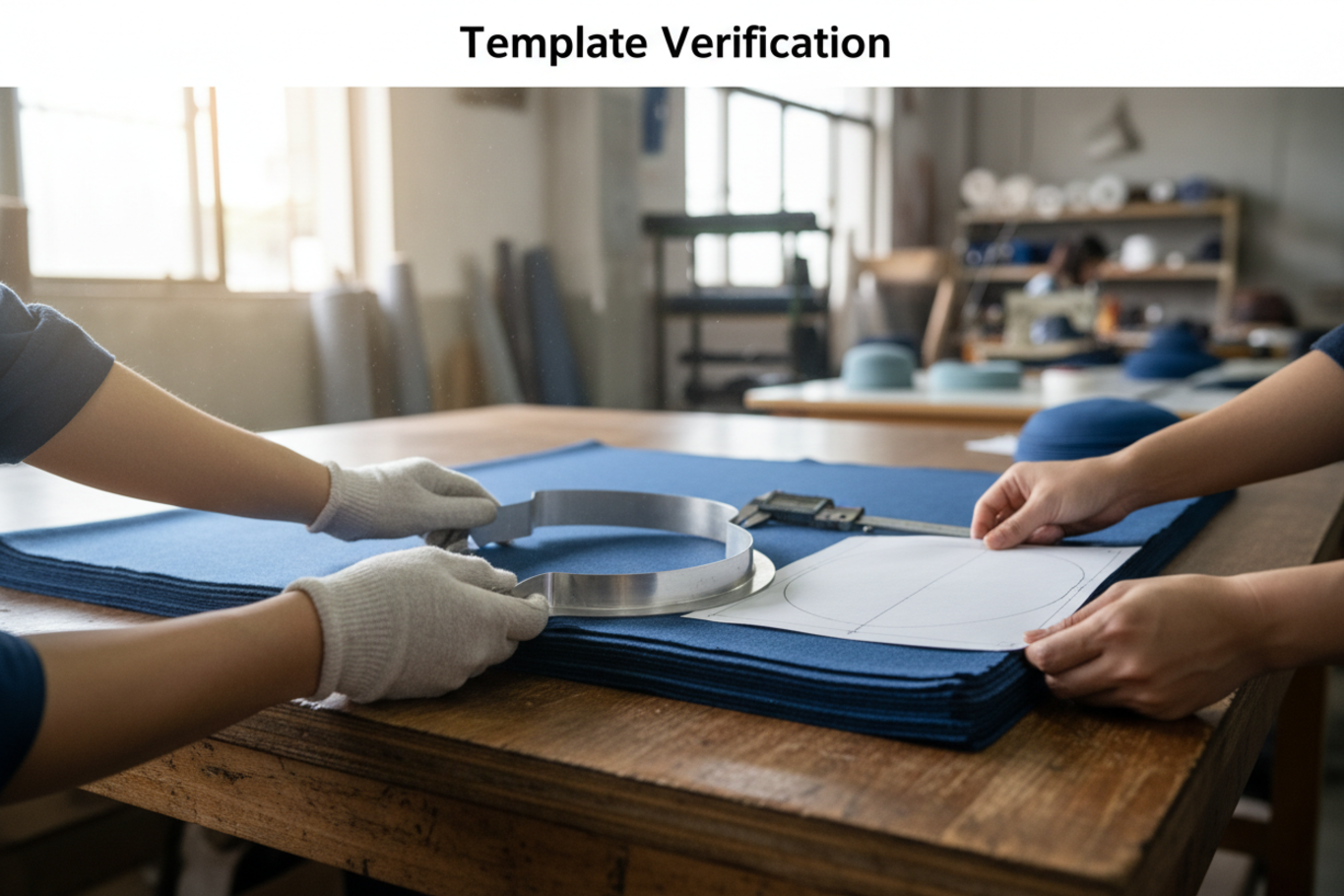
Cutting fabric is tricky. When we cut 200 layers of fabric at once, the top layer might be perfect, but the bottom layer might shift. This makes the bottom hats slightly bigger or smaller. To stop this, we use strict template verification. We check the metal molds (cutting dies) against the original paper pattern. We make sure the mold is sharp and not bent.
We measure the "seam allowance." This is the extra fabric used to stitch panels together. If the sewer takes too much fabric, the hat becomes tight. If they take too little, the hat becomes loose. We measure the crown height and the circumference. We use a specialized ruler to check the curve of the brim.
I recall a time when a client wanted a "deep fit" trucker hat. The sample was perfect. But during setup, we noticed the cutting mold was for a standard fit. We caught this before cutting the fabric. If we had not checked the template, the whole order would have been wrong. We always measure twice so we only cut once.
Measurement Points
- Crown Height: Measured from the button to the brim edge to ensure deep fit.
- Circumference: Measured around the sweatband to fit the standard head size.
- Brim Width: Measured at the widest point of the visor for the correct look.
- Panel Width: Measured across the front panel for correct logo placement.
What is the role of test production16 before full-scale manufacturing?
Starting full production immediately is a huge risk. If there is an error, you waste all your material.
The role of test production16 is to simulate the full run with a small batch, usually 5 to 10 hats. We treat these exactly like the final product to see if the calibrated machines and materials work together well. It allows us to fix issues before making the remaining hundreds.
This is the final exam. Before we tell the workers to finish all 500 hats, we make just a few. We call this the "first off the line" or a pilot run. We take these first few hats and compare them directly to the sample you approved. We look at them side by side under bright light. We check if the color matches and if the shape is the same.
We check the inside of the hat too. Is the taping smooth? Is the label in the center? Sometimes, the machine works fine for one minute but gets hot after ten minutes. The test run helps us see if the machine stays consistent. We also watch the workers. We make sure they understand the specific instructions for your order.
If we find a problem here, it is easy to fix. We only lose a little bit of time. If we do not run a test, and we find a mistake later, we have to throw away hundreds of hats. That is a disaster for us and for you. We do not take that risk. Once the test batch is approved by our production manager, we give the green light for mass production.
Test Run Benefits
| Benefit | Description |
|---|---|
| Material Behavior | See how fabric reacts to mass production speeds. |
| Workflow Check | Ensure workers understand the assembly order. |
| Risk Reduction | Limits potential waste to only a few units. |
| Final Approval | The production manager signs off before full speed. |
Conclusion
By verifying materials, calibrating machines, checking templates, and running a test batch, we guarantee your bulk order matches your approved sample perfectly every time.
-
Learn the industry-standard process that prevents bulk orders from drifting away from the approved sample. ↩
-
See proven checks to avoid unexpected fabric/color differences that can ruin consistency in production. ↩
-
Find practical calibration methods to prevent crooked logos, loose stitches, and quality drop at scale. ↩
-
Understand how template alignment protects sizing accuracy and reduces returns from poor fit. ↩
-
Learn how pilot runs catch problems early, saving time, materials, and costly rework. ↩
-
Helps you trace materials and prevent mixing batches that can cause color/quality variation. ↩
-
Ensures brand color accuracy—critical for logos and professional-looking merchandise. ↩
-
Get tension guidance that reduces defects like puckering, looping, and uneven stitching. ↩
-
A solid tech pack review prevents miscommunication and ensures the factory follows the latest specs. ↩
-
Learn how to detect and manage shade shifts so every unit matches the approved sample. ↩
-
Avoid surprise hardware swaps (buckles, sweatbands, taping) that change perceived quality. ↩
-
Understand Pantone’s role in color control so your branding stays consistent across batches. ↩
-
Packaging errors (labels, barcodes, bags) can block sales—verification prevents costly delays. ↩
-
Learn the main drivers of embroidery defects and how to set them to replicate sample results. ↩
-
Shows how verifying dies/patterns prevents inconsistent panels when cutting many layers at once. ↩
-
A clear inspection checklist for test production reduces risk before committing to hundreds of units. ↩ ↩