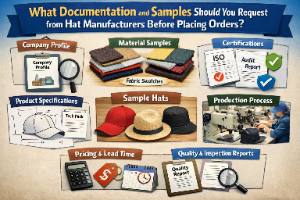
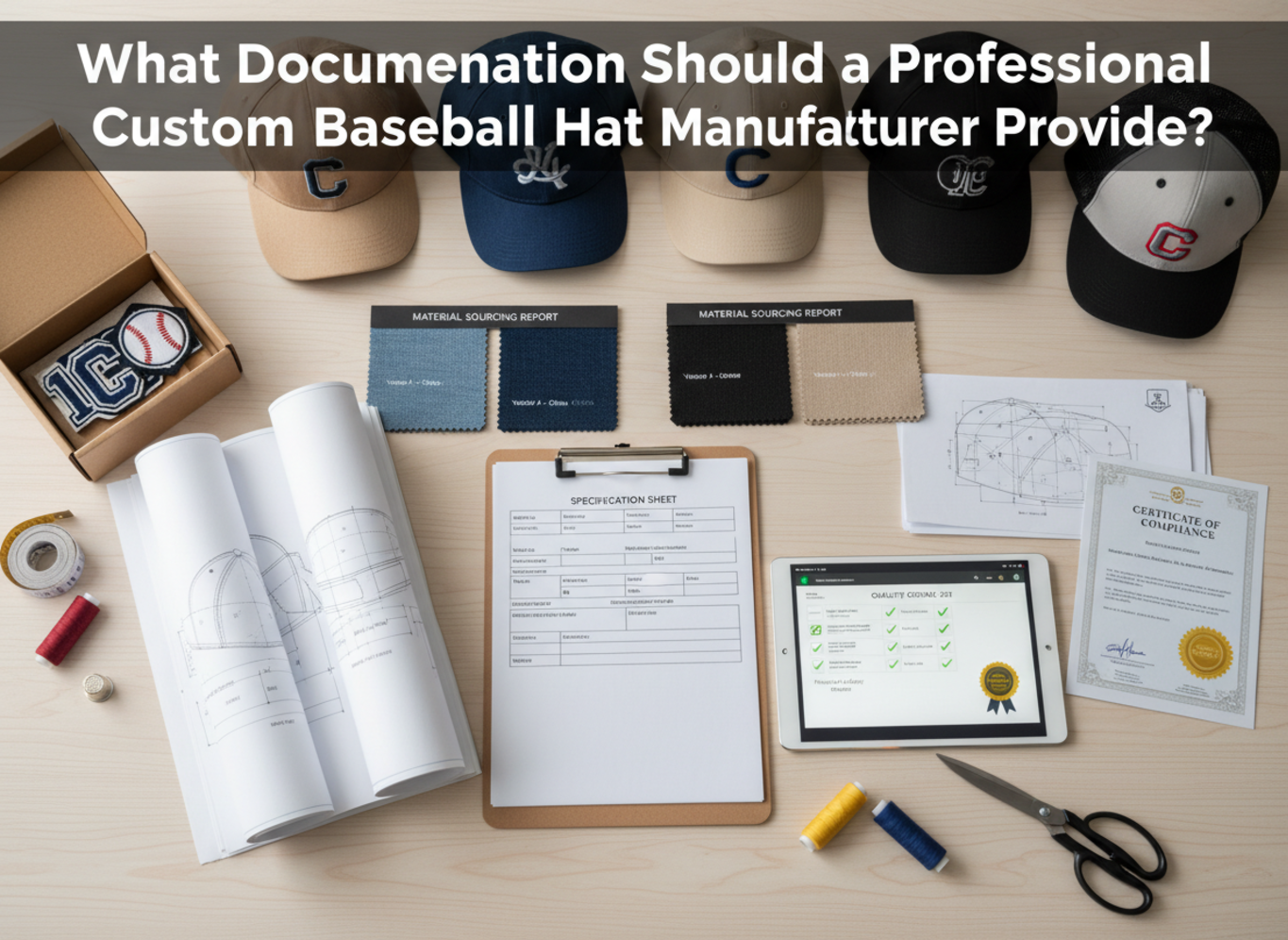
Starting a hat brand is exciting, but dealing with paperwork can feel overwhelming and confusing1. If you ignore the necessary documents, you might face customs delays2, legal issues3, or poor product quality4.
A professional custom hat manufacturer must provide a Business License, Social Compliance Certificates5 (like BSCI6 or Sedex7), and Material Safety Reports8 (like Oeko-Tex9). For shipping, they must supply a Commercial Invoice10, Packing List11, and Bill of Lading12. These documents ensure legality, safety, and smooth delivery.
Many new brand owners focus only on the design of the cap. They forget about the boring paper part. This is a mistake. I have seen shipments get stuck at the border for weeks because one paper was missing. I have also seen brands get sued because their hats contained bad chemicals. You do not want this to happen to your business. Let’s look at exactly what you need to ask for.
What certificates should a hat factory have?
It is hard to trust a factory you have never visited in person. Some factories claim they are big and ethical, but they might be tiny workshops with poor conditions.
A legitimate hat factory should hold a valid Business License to prove they exist legally. They should also have Social Compliance Certificates5 like BSCI6 or Sedex7. These prove they treat workers fairly and follow labor laws.
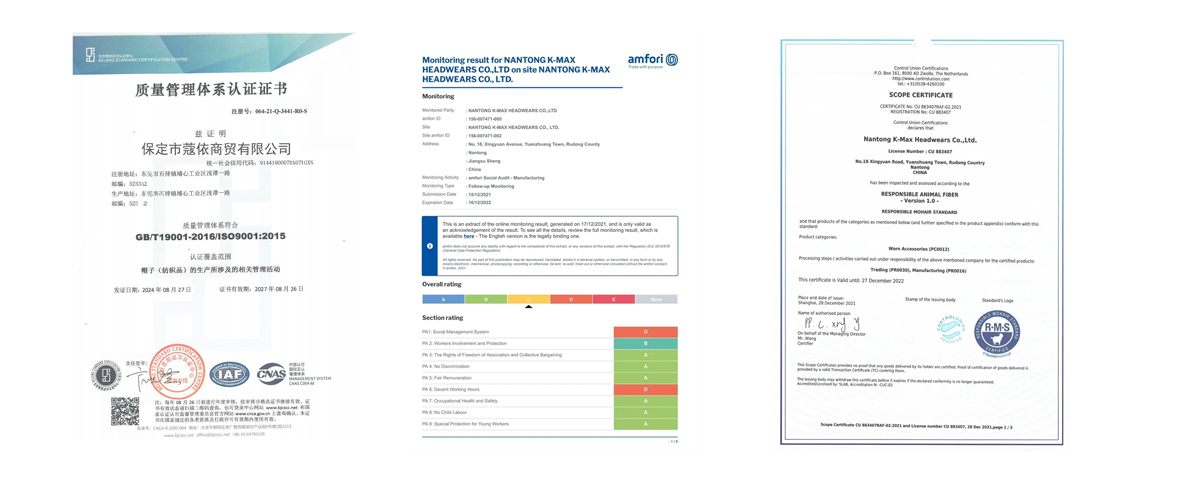
When you look for a partner to make your hats, you are choosing a teammate. You need to know this teammate is playing by the rules. We at Anthea always show our credentials to new clients. It builds trust.
Here is a breakdown of the certificates you should look for:
Business License
This is the most basic requirement. It shows the company is registered with the government. In China, this document is in Chinese. You can ask the supplier to explain it or use a translation tool. It tells you the registered capital and the scope of their business.
Social Compliance Audits
These are very important for your brand image. Your customers care about where their clothes come from.
- BSCI6 (Business Social Compliance Initiative): This is common in Europe. It checks for fair wages, safety, and no child labor.
- Sedex7 / SMETA: This is similar to BSCI6 but used more globally. It focuses on labor standards, health and safety, and business ethics.
- ISO 9001: This is about quality management. It does not check labor rights. It checks if the factory has a system to keep quality consistent.
| Certificate Name | What It Checks | Why You Need It |
|---|---|---|
| Business License | Legal Status | Proves the factory is not a scam. |
| BSCI6 / Sedex7 | Worker Treatment | Protects your brand reputation. |
| ISO 9001 | Management System | Ensures consistent product quality. |
If a manufacturer cannot show you these, be careful. It might mean they are a middleman or an unsafe workshop. Always ask to see the actual PDF file of the certificate. Check the expiration date. A certificate from ten years ago is useless today.
What documentation is needed for import/export?
Shipping goods across the ocean is scary if you have never done it before. If the paperwork is wrong, your boxes will sit at customs, and you will pay extra fines.
To clear customs, you need a Commercial Invoice10, a Packing List11, and a Bill of Lading12 (or Airway Bill13). You may also need a Certificate of Origin14 to reduce tax duties in your country.
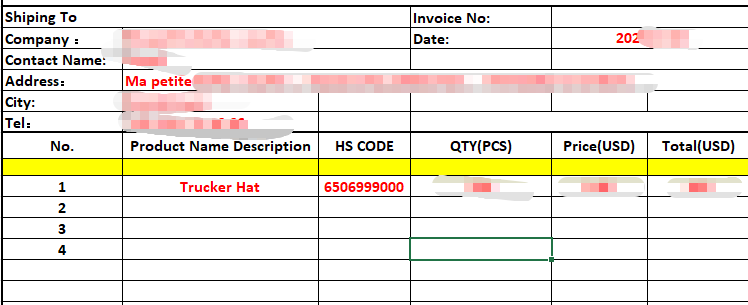
I remember a client named Ben. He tried to ship a small order with a different supplier before he met us. The supplier forgot to put the HS Code15 (a product code) on the invoice. Customs held his hats for two weeks. He missed his launch date. This is why we check these documents three times before we ship anything.
Here is what these documents do:
Commercial Invoice10 (CI)
This is not just a receipt. It is a legal document for customs. It lists the buyer (you) and the seller (us). It describes the goods in detail. It shows the value of the goods. Customs uses this to calculate how much tax you must pay. It must match the other documents perfectly.
Packing List11 (PL)
This tells the shipping company exactly what is in each box. It lists the gross weight, net weight, and carton dimensions. If customs wants to inspect one specific style, the packing list tells them which box to open. This keeps your other boxes safe.
Bill of Lading12 (BOL) or Airway Bill13
This is your "ticket" for the cargo.
- Bill of Lading12: Used for sea shipping. It is the title of the goods. You need this to pick up the boxes.
- Airway Bill13: Used for air shipping (like FedEx or DHL). It tracks the flight.
Certificate of Origin14 (CO)
This document proves where the hats were made. In many cases, like trade agreements between countries, this piece of paper can save you money on import taxes. For example, some countries have lower taxes for goods made in certain places. Always ask your manufacturer if they can provide this.
What quality and safety documents should a manufacturer provide?
You do not want your customers to get a skin rash from your hats. You also do not want to sell products that are illegal because of toxic dyes.
A professional manufacturer must provide material test reports. Common ones include MSDS (Material Safety Data Sheet)16, Oeko-Tex9 Standard 100, and REACH or CA Prop 65 compliance reports.
Safety standards are getting stricter every year. In the United States and Europe, the rules are very tough. If you sell a hat that has lead in the metal buckle or formaldehyde in the fabric, you can get into big trouble.
Understanding the Safety Standards
We test our fabrics to make sure they are safe. Here is what you need to understand about these documents:
- Oeko-Tex9 Standard 100: This is the gold standard for textiles. It tests for harmful substances. If a fabric has this label, it is safe for human skin. It is very important for selling in Europe.
- REACH (Registration, Evaluation, Authorisation and Restriction of Chemicals)17: This is a European regulation. It restricts dangerous chemicals. Your manufacturer should confirm their materials pass REACH testing.
- California Proposition 65 (Prop 65)18: This is for the USA. It requires warnings if products contain chemicals that cause cancer or birth defects. Lead in zippers or buckles is a common issue here.
Material Safety Data Sheet (MSDS)
Sometimes shipping companies ask for an MSDS. This is usually for things like glue or special inks used in printing. It tells the transporters if the material is flammable or dangerous to move.
| Region | Key Regulation | Focus |
|---|---|---|
| USA | CA Prop 65 / CPSIA | Lead, Phthalates, Safety Warnings |
| Europe | REACH / Oeko-Tex9 | Chemical Safety, Environmental Impact |
| Global | RSL (Restricted Substance List) | Banned chemicals in production |
When we source fabric for a client, we ask the fabric mill for these reports. We then pass them to you. This gives you peace of mind. It shows you that we care about the long-term health of your brand.
How do I verify a manufacturer’s compliance?
Anyone can use Photoshop to make a fake certificate. Sadly, scammers do this all the time to trick new business owners.
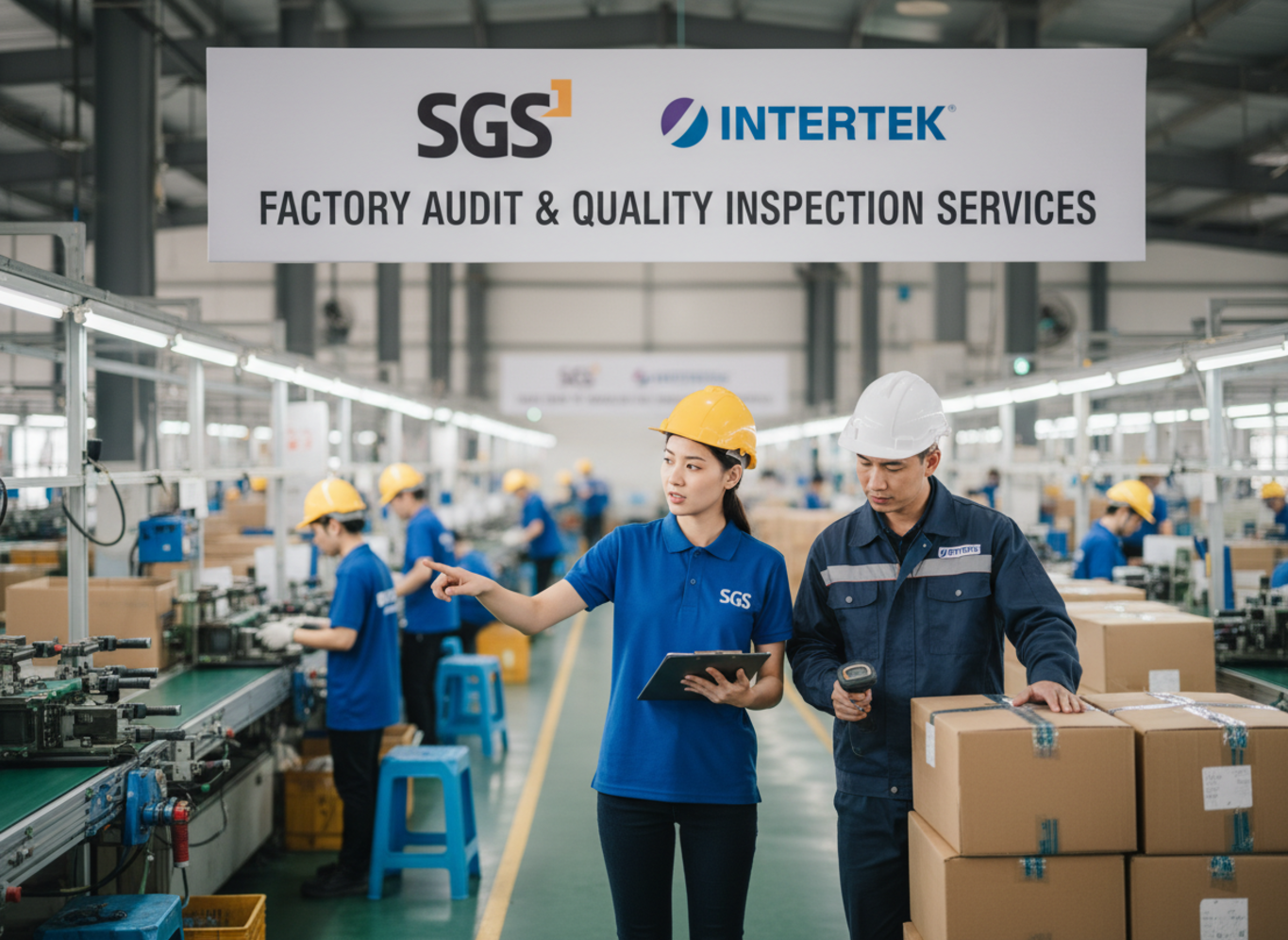
You verify compliance by checking the certificate number on the official organization’s website. You can also hire a third-party inspection agency like SGS or Intertek19 to audit the factory or inspect your specific order.
I once had a potential client ask me for our BSCI6 report. I sent it. Then, he asked for the login credentials to the BSCI6 platform to see it live. I was happy to share this. Transparency is the only way to do business. If a factory hides things, you should run away.
Steps to Verify Documents
- Check the Date: Is the certificate expired? Most audits are only good for one year.
- Check the Scope: Does the certificate cover "Headwear" or "Textiles"? If it says "Electronics," it is a fake or borrowed certificate.
- Online Verification:
- Third-Party Inspection: This is the best method. You pay a company like SGS, Intertek, or QIMA. They send a real person to the factory. They look at the machines. They count the hats. They check the quality. They send you a report with photos.
The Cost of Verification
Hiring an inspector costs money. usually a few hundred dollars. But think about the cost of a bad order. If you spend $5,000 on hats and they are all bad, you lose $5,000. An inspection costs $300. It is like insurance. We welcome inspections at Anthea because we are confident in our work.
Are tech packs considered official documentation?
Many people think a Tech Pack is just a design file. They do not realize it acts as a contract between you and the factory.
Yes, a Tech Pack is a crucial official document. It lists every detail of the product, including measurements, Pantone colors, materials, and logo placement. It serves as the standard for quality control.
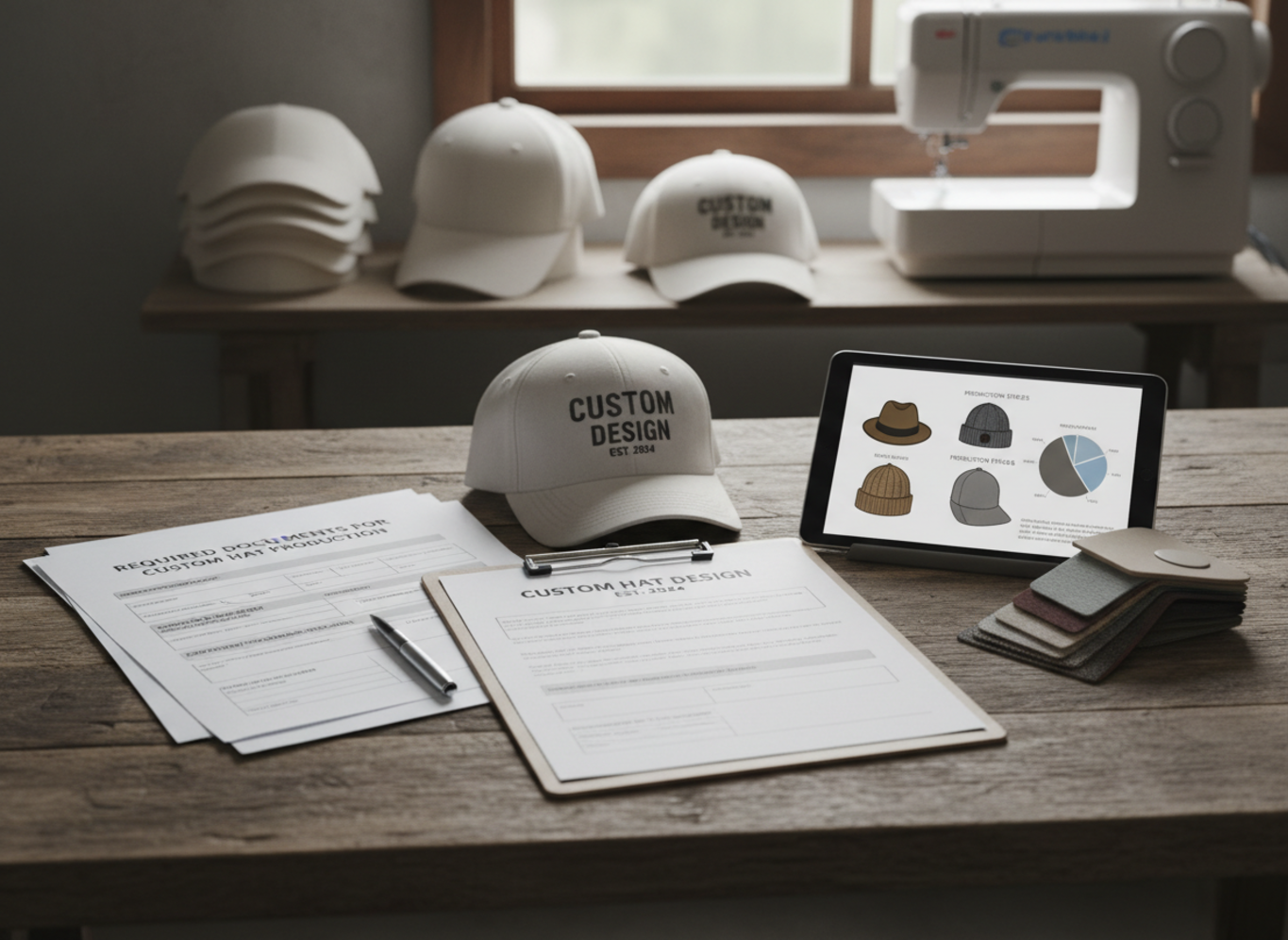
If you tell a factory, "Make it blue," and they make it dark blue, but you wanted light blue, who is wrong? Without a Tech Pack, nobody knows. With a Tech Pack, you can point to the paper and say, "I wrote Pantone 291C. You used 295C. This is your mistake."
What Must Be in a Tech Pack?
We treat the Tech Pack as the "Bible" for your production run. Every worker on the floor follows it.
- Technical Sketches: Flat drawings of the hat from the front, back, side, and inside.
- Bill of Materials (BOM): A list of every item used. Fabric, thread, sweatband, buckle, button.
- Color Codes: We need Pantone codes. Screens look different. Pantone books are standard.
- Measurement Chart: The size of the crown, the length of the brim, the circumference.
- Artwork Details: How big is the logo? Is it 3D embroidery or flat embroidery? Where is it placed exactly?
Tech Pack vs. Mockup
A mockup is a pretty picture. A Tech Pack is a blueprint. We often help our clients turn their mockups into professional Tech Packs. This ensures that the factory makes exactly what is in your head. If a dispute happens later, we look at the Tech Pack. It protects both you and us. It makes sure we are on the same page before a single needle moves.
Conclusion
To succeed in the hat business, you need more than good designs. You need the right documents: business licenses, safety certificates, accurate shipping papers, and detailed Tech Packs. These papers protect your money and your brand.
-
Gives practical frameworks to organize requirements early and avoid costly, stressful surprises later. ↩
-
Helps you understand common hold reasons and how to prepare documents to keep shipments moving. ↩
-
Shows real compliance risks so you can protect your brand before you scale sales. ↩
-
Explains proven methods manufacturers use to keep output consistent and reduce defects. ↩
-
Clarifies which audits matter for ethical sourcing and what buyers should request. ↩ ↩
-
Breaks down BSCI criteria so you can evaluate claims about wages, safety, and child labor. ↩ ↩ ↩ ↩ ↩ ↩ ↩ ↩ ↩
-
Helps you interpret Sedex/SMETA results and compare suppliers on ethical performance. ↩ ↩ ↩ ↩
-
Lists essential safety documents that reduce chemical and recall risks for your products. ↩
-
Shows you how to confirm authenticity to avoid relying on fake or expired certifications. ↩ ↩ ↩ ↩ ↩
-
Ensures your invoice has the right fields to avoid holds, rework, and unexpected fees. ↩ ↩ ↩
-
Helps you match cartons, weights, and contents so inspections don’t disrupt the whole shipment. ↩ ↩ ↩
-
Explains how ownership/release works so you can collect goods without delays. ↩ ↩ ↩ ↩
-
Improves control of air shipments and helps you resolve carrier issues faster. ↩ ↩ ↩
-
Can save money on tariffs and ensures your shipment qualifies for trade benefits. ↩ ↩
-
Prevents misclassification penalties and reduces customs clearance time and disputes. ↩
-
Helps you avoid carrier rejections and ensures safe transport compliance. ↩
-
Explains restricted chemicals and testing expectations to keep EU sales compliant. ↩
-
Avoids warning-label violations and potential lawsuits by understanding thresholds and duties. ↩
-
Shows what inspectors verify and what reports you’ll receive to reduce supplier risk. ↩