Rushing into production without documentation or samples is risky. You might face quality issues, delays, or disputes. Let’s fix that by knowing exactly what to request and why.
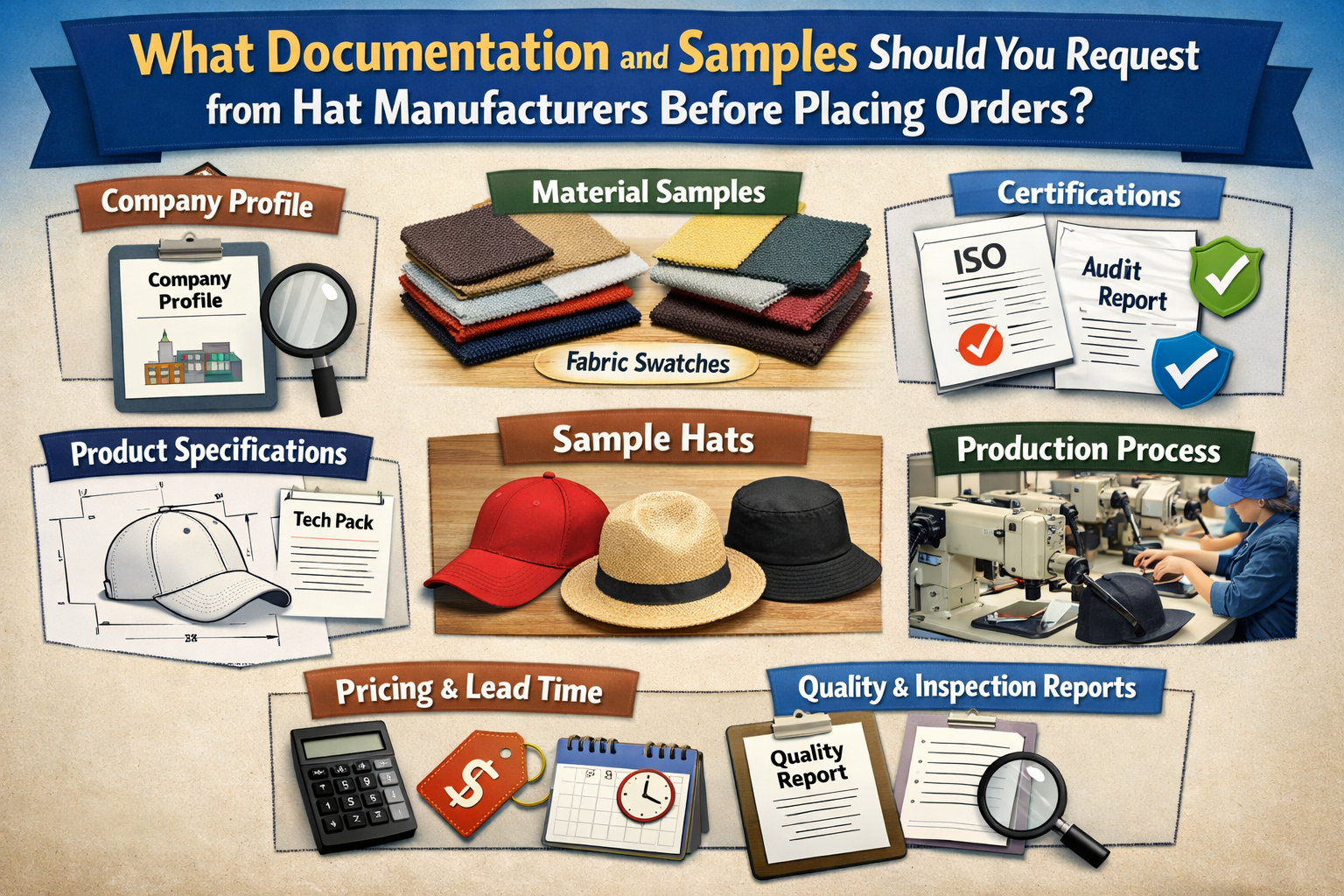
Request a complete tech pack1, material certifications, factory compliance documents, and a production-ready sample2 with final embroidery or print. These ensure product quality, clear communication, and legal readiness for smooth bulk manufacturing3 and import.
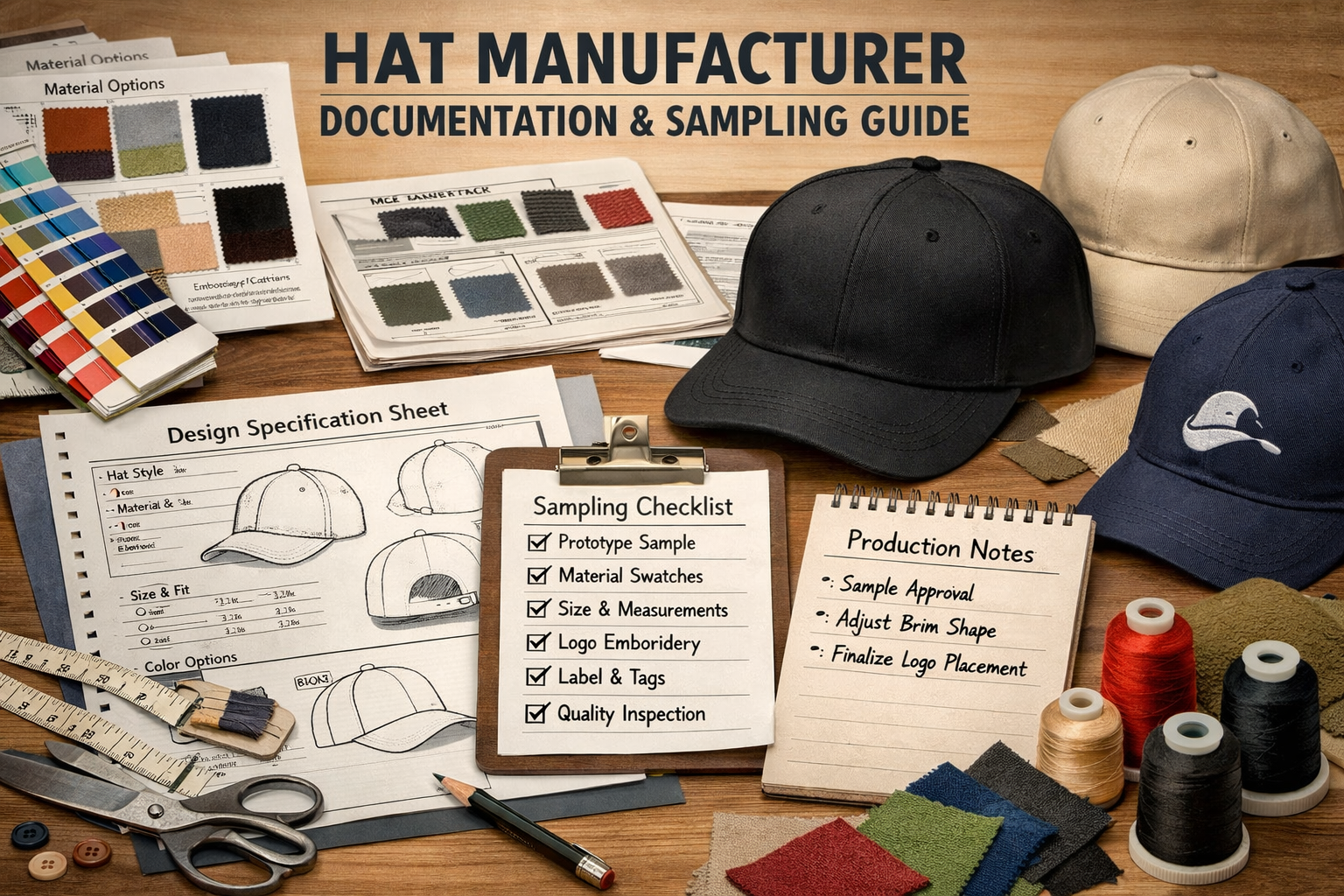
Good samples and documents protect your brand. They reduce mistakes, ensure quality, and give you control. Let’s walk through exactly what you need from a trusted hat manufacturer like Anthea.
What essential documents should a hat manufacturer provide?
Missing documents leads to production errors and customs problems4. Without proof of standards or clarity in design, your brand takes the risk.
Ask for a tech pack1, bill of materials, order confirmation sheet, and factory certifications5 like ISO or REACH compliance6. These documents protect you from miscommunication and compliance issues.
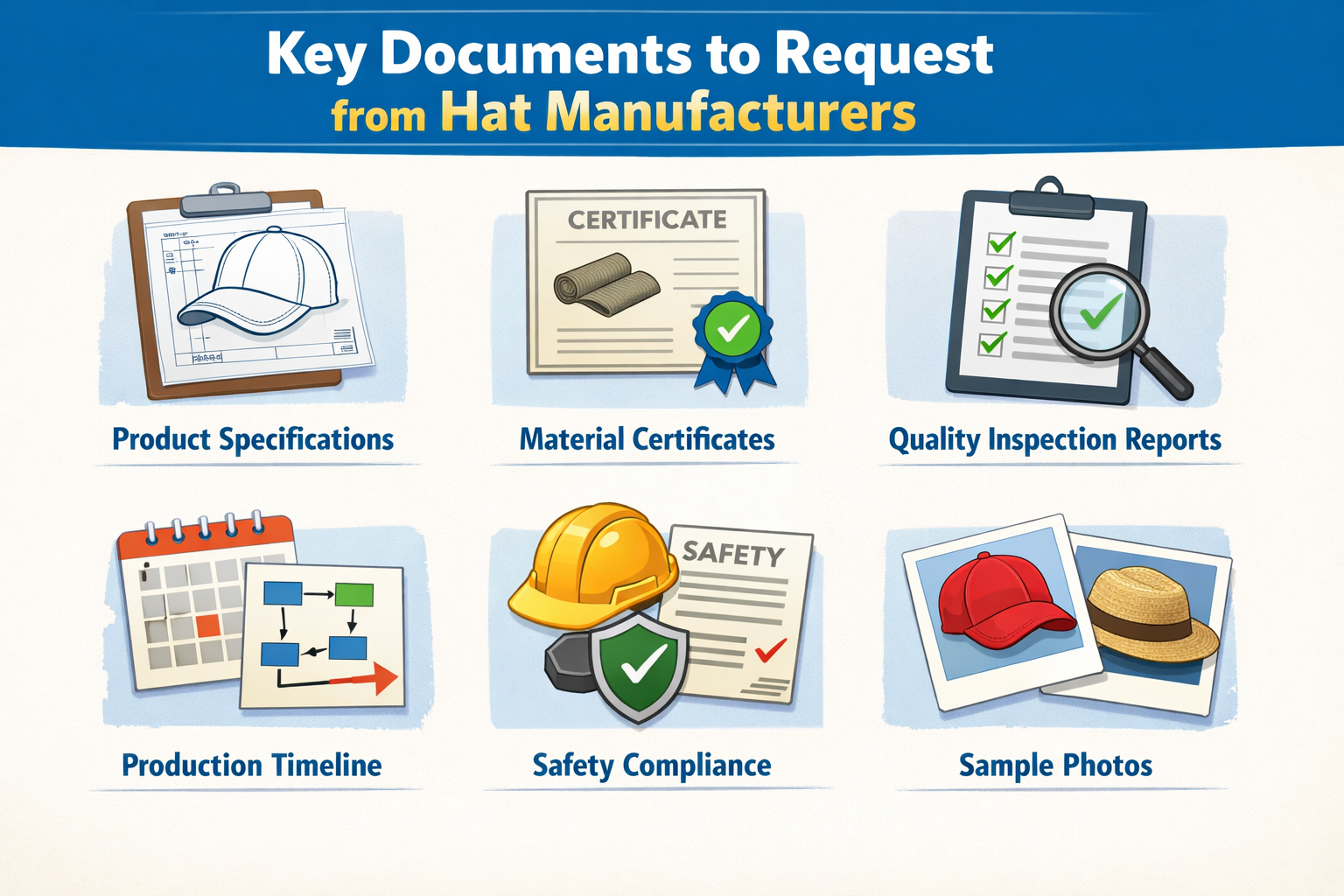
What documents actually matter — and why?
Before I place a bulk order, I always request a full tech pack1. This includes front, side, and back views of the hat, artwork placement, sizing details, fabric codes, stitching instructions, and color references. Without this, a factory may guess — and that’s a recipe for costly rework.
I also ask for a Bill of Materials (BOM)7. This outlines exactly what’s used to build the hat — fabric type, button color, thread type, sweatband material, and label info. A small change, like polyester instead of cotton, can affect feel, price, and even customs classification.
Here’s a simple checklist I follow:
| Document | Purpose |
|---|---|
| Tech Pack | Design clarity and accuracy |
| BOM | Materials breakdown |
| Order Confirmation | Agreed specs and terms |
| Factory Certifications | ISO, REACH, or safety compliance |
These documents become part of your production agreement. If there’s ever a dispute, this paperwork protects you.
What types of samples should you request before mass production?
Photos aren’t enough. If you can’t touch and test your product, you’re not ready to produce it.
Ask for a production-ready sample2 with final decoration, fabric, and sizing. Sampling ensures quality, color accuracy, and helps confirm design approval before full production.
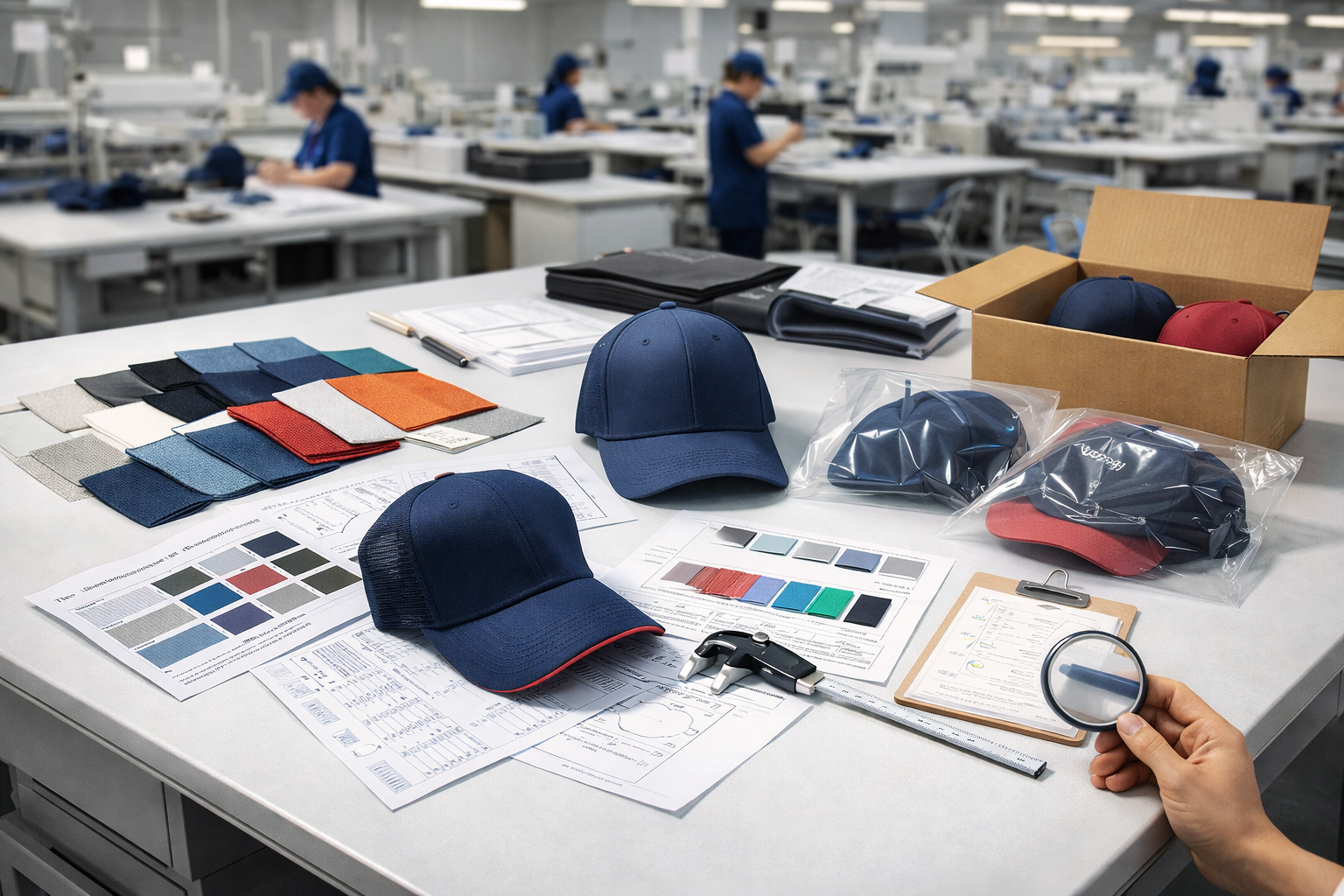
What samples should you request — and how are they different?
I’ve learned that not all samples are the same. When a supplier says “we’ll send a sample,” I always ask: what kind?
There are usually three types:
- Mock-up sample — Made quickly using available materials. Not for final approval.
- Pre-production sample — Closer to final but may still lack packaging or exact materials.
- Production-ready sample — Full, final sample with exact materials, embroidery, fit, and finishing.
You want the third one before confirming mass production. Always.
When I inspect a sample, I look for:
- Logo alignment and clarity
- Stitching quality (are threads clean and consistent?)
- Color match (Pantone-accurate if possible)
- Fit and comfort
- Label placement
- Packaging method
If it looks bad in your hands, it will look worse in your customer’s hands.
How do you evaluate samples and documents effectively?
Receiving a sample is just step one. Knowing how to check it is what saves you from problems later.
Evaluate samples against your tech pack1 and order form. Check embroidery alignment, fabric type, sizing, and packaging. Use a checklist to avoid guessing or forgetting details.
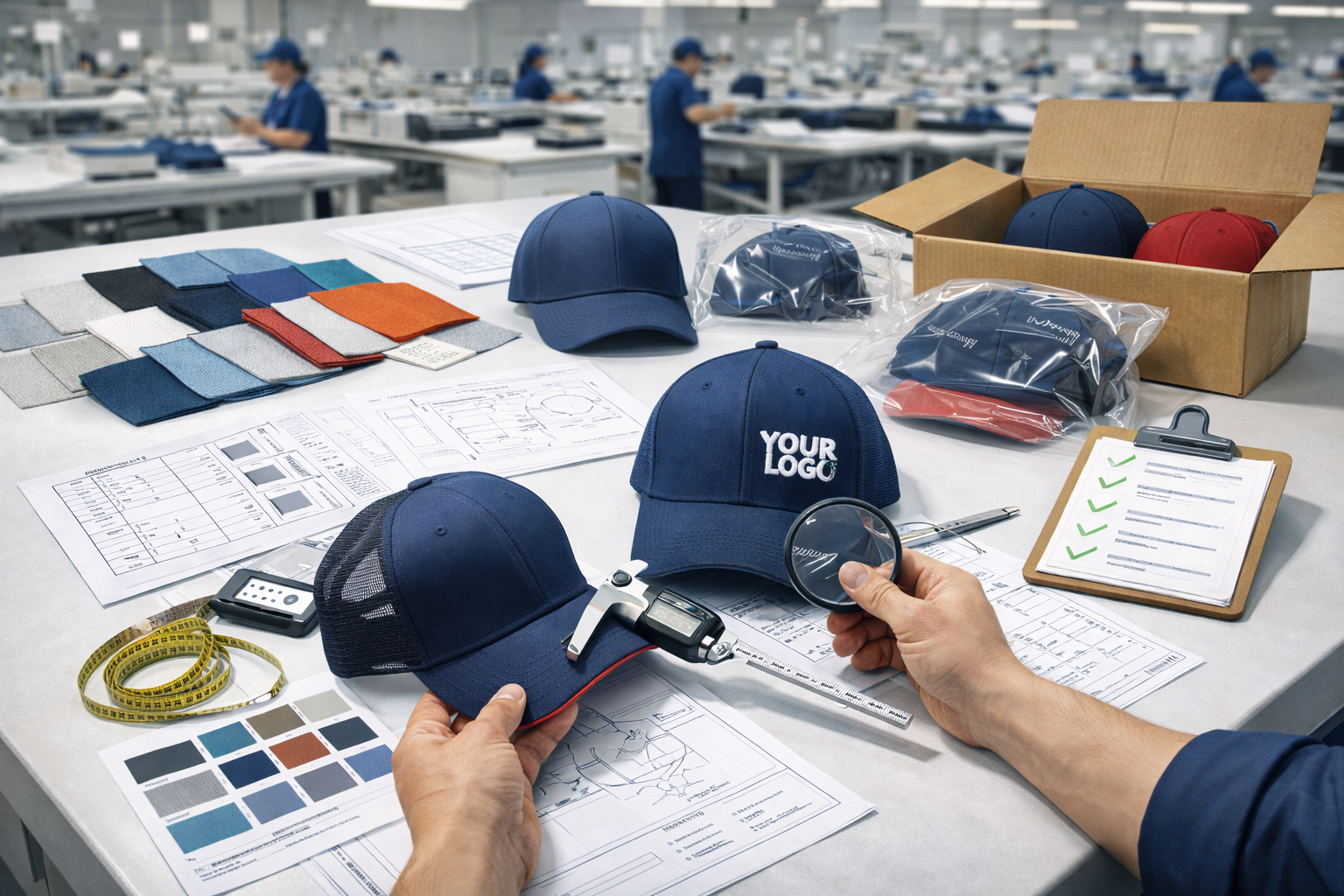
How to use a checklist to avoid mistakes
I use a sample review checklist8 every time I receive a new pre-production sample9. It helps me stay objective and catch problems early.
Here’s a version of the checklist I share with our clients:
| Category | What to Check |
|---|---|
| Embroidery / Print | Alignment, spacing, color accuracy |
| Fabric | Material matches tech pack1, feel, thickness |
| Stitching | Straight, tight, clean edges |
| Fit | Crown height, brim curve, head size |
| Labels | Inside and outside tags are correct and in place |
| Packaging | Does it protect the product? Presentable for retail? |
I take photos from multiple angles and note any changes I want. I send this back to the factory, clearly labeled. This builds trust and ensures everyone is on the same page before bulk production.
How do you use these materials to make a final decision?
Even with everything in hand, you might still hesitate. That’s normal—decision-making gets easier with the right framework.
Use a decision matrix10 that scores suppliers on sample quality, document completeness, communication, and flexibility. Choose based on the full picture, not just price.
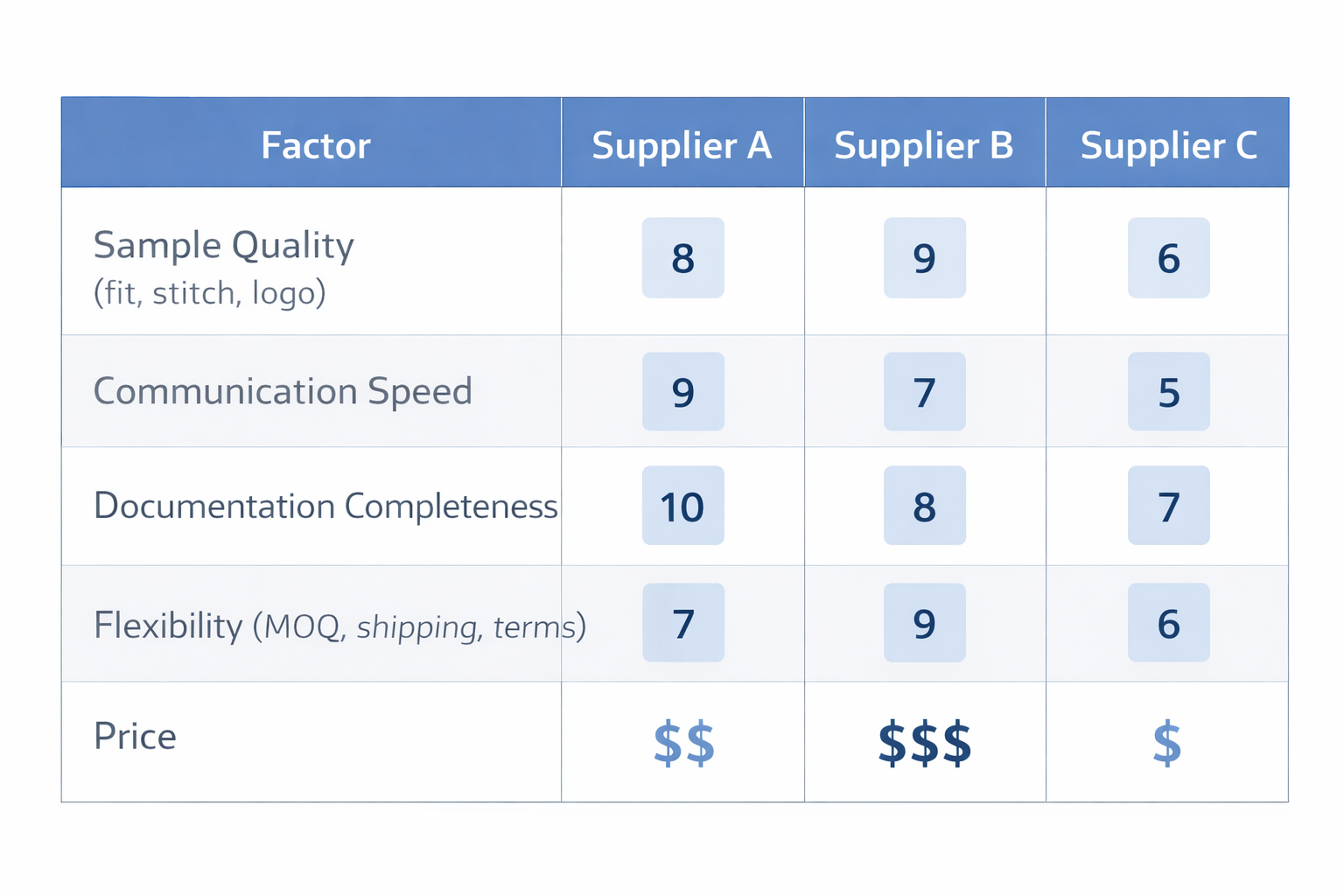
A decision framework that helps you choose wisely
After receiving samples from two or three manufacturers, I use a simple scoring table. This lets me compare them side by side, instead of relying on gut feeling or price alone.
Here’s a version of what I use:
| Factor | Supplier A | Supplier B | Supplier C |
|---|---|---|---|
| Sample Quality (fit, stitch, logo) | 8 | 9 | 6 |
| Communication Speed | 9 | 7 | 5 |
| Documentation Completeness | 10 | 8 | 7 |
| Flexibility (MOQ, shipping, terms) | 7 | 9 | 6 |
| Price | $$ | $$$ | $ |
I give each factor a weight depending on the project. For a launch campaign, sample quality and timing might matter more. For bulk restocks, price and MOQ flexibility might be top.
This structured approach makes my decisions clearer—and helps justify them to team members or clients.
Conclusion
Good documentation and great samples build trust. They prevent issues and show supplier professionalism. Always request and review both before placing your hat order.
My role:
Anthea Custom Headwear Co., Ltd.
📧 [email protected]
🌐 https://antheahats.com
📱 WhatsApp: +86 18132712127
-
Understanding a tech pack is crucial for ensuring design clarity and accuracy in production. ↩ ↩ ↩ ↩ ↩
-
A production-ready sample is essential for confirming quality and design before mass production. ↩ ↩
-
Learning best practices for bulk manufacturing can enhance efficiency and product quality. ↩
-
Understanding customs issues can help prevent delays and additional costs when importing products. ↩
-
Factory certifications ensure compliance with industry standards, protecting your brand’s reputation. ↩
-
REACH compliance ensures that chemicals used in products are safe, protecting consumers and the environment. ↩
-
A BOM outlines all materials used, helping to prevent costly mistakes in production. ↩
-
A checklist ensures thorough evaluation of samples, helping to catch potential issues early. ↩
-
Pre-production samples are closer to the final product, allowing for necessary adjustments before bulk orders. ↩
-
A decision matrix helps objectively compare suppliers based on multiple factors, leading to better choices. ↩