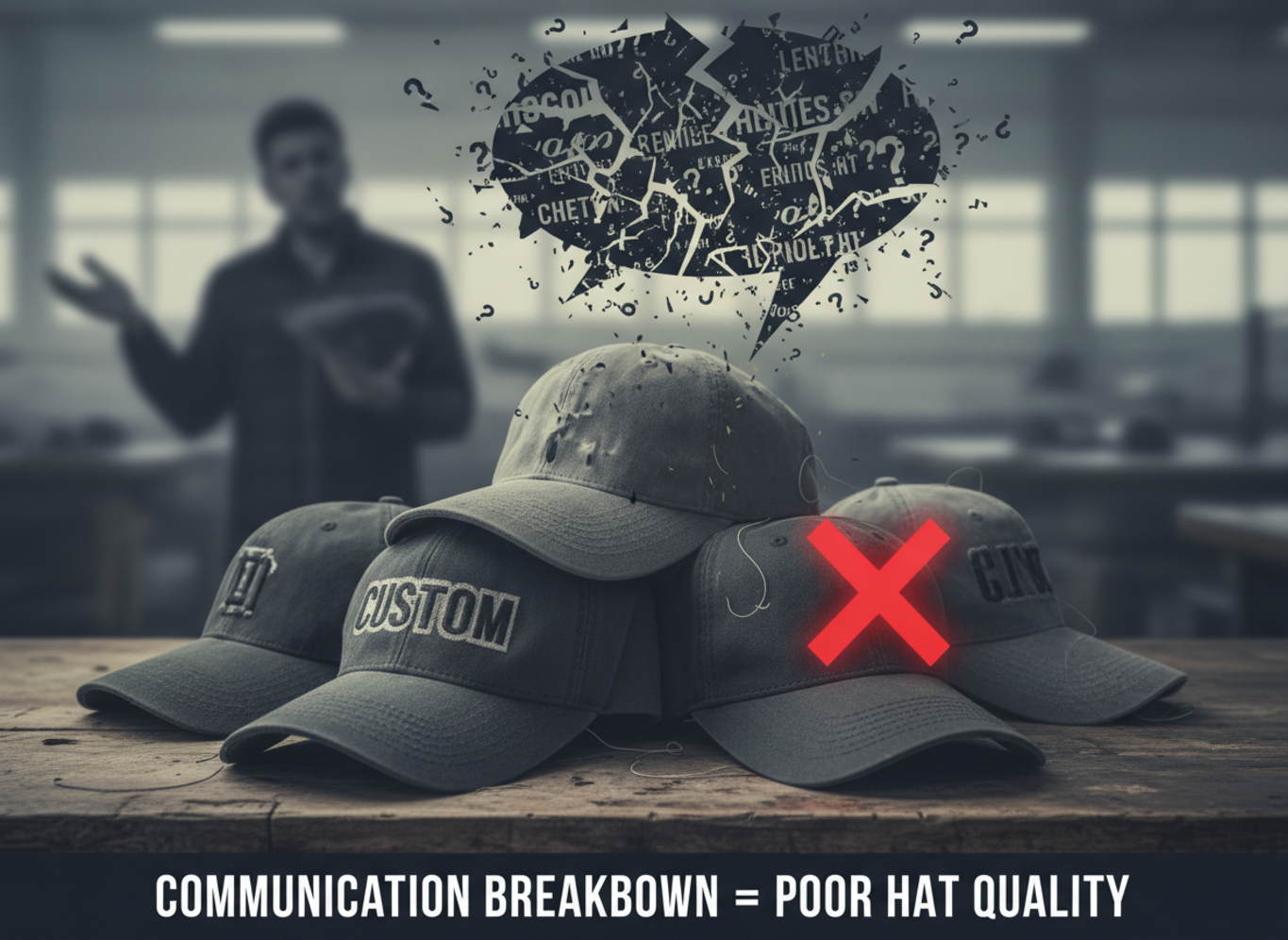
You spend months designing a custom cap, but the final product looks terrible. This nightmare ruins your brand reputation. You must identify bad suppliers before paying them a single cent.
Communication Warning Signs1 include vague answers about materials2, refusing to send photos during production3, and ignoring specific questions about stitching or sizing. If a manufacturer avoids discussing their quality control process4 or blames the shipping company for factory errors5, they likely lack professional standards.
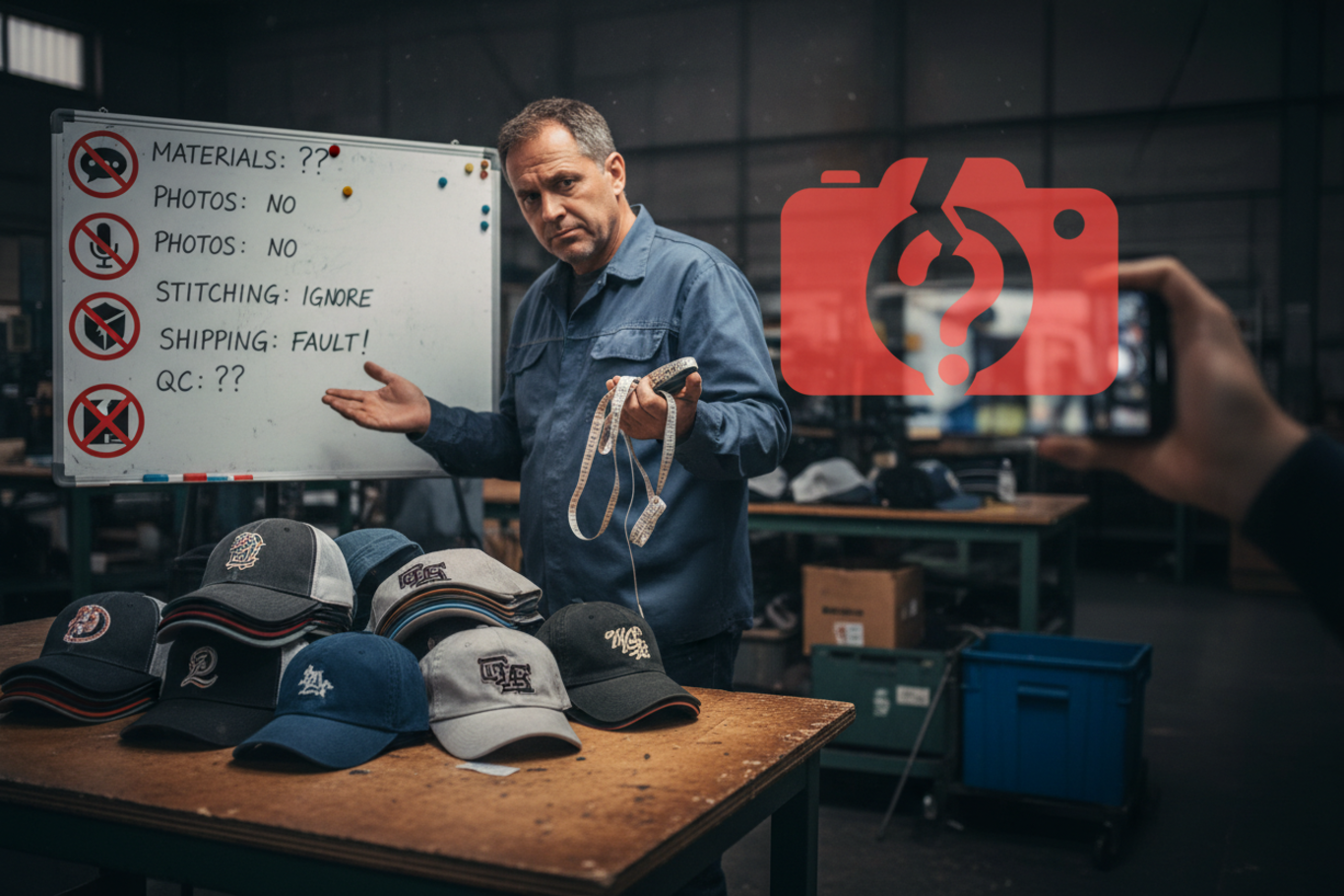
I have seen many new brands fail because they chose the wrong partner. Let’s look at the specific signs that show a factory is dangerous for your business.
What communication behaviors indicate a problematic manufacturer?
Suppliers promise high quality, but their words feel empty. You feel anxious about the result. You need to know if they are lying to get your money.
A problematic manufacturer often says "yes" to everything without asking for technical details6. They use generic phrases like "top quality"7 instead of specifying fabric weights8 or thread types9. If they get angry or defensive when you ask for clarification, this is a major warning sign.

When I talk to clients at Anthea, I often ask hard questions. If you send me a design that is impossible to embroider on a curved surface, I will tell you. A bad manufacturer will just say "yes" to get your deposit. This is the "Yes-Man" trap. They agree to everything now, but they will deliver a mess later.
You need to look for critical thinking from your supplier. If a factory cares about quality, they will spot potential problems before production starts. They should act like an expert consultant, not just a robot.
The Difference Between Good and Bad Responses
| Your Question | Bad Supplier Response | Professional Supplier Response |
|---|---|---|
| "Can you match this specific blue?" | "Yes, we can do it, no problem." | "Please provide the Pantone PMS code10 so we can match the thread exactly." |
| "Is 3D embroidery possible here?" | "Sure, we do everything." | "The logo is too detailed for 3D foam11 here; we suggest flat embroidery for clarity." |
| "What fabric is this?" | "High quality cotton." | "This is 100% cotton twill, 280gsm weight12, suitable for structured caps." |
If the supplier gets annoyed when you ask for these details, stop talking to them. Their annoyance shows they do not have a process for quality control. They view your questions as trouble, but a good partner views your questions as necessary steps for success.
How does response time affect supplier reliability?
You send an email and wait three days for a reply. Your project timeline slips away. You wonder if they will disappear with your money after the payment.
Slow response times13 usually mean the factory is disorganized or does not value small orders. If they take days to answer simple questions during the sales process, they will likely ignore you completely when production problems happen. Consistent, fast communication proves they are organized.
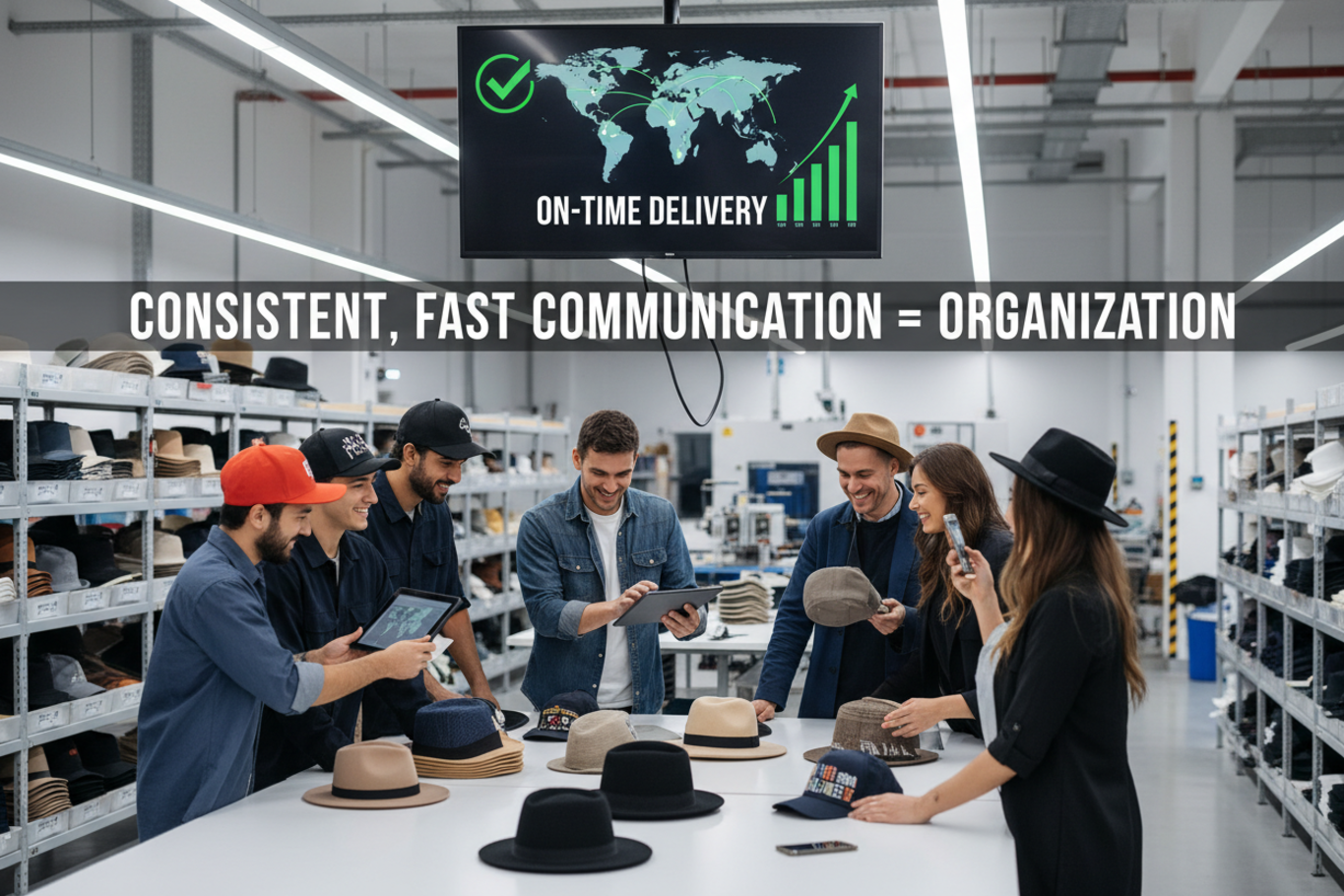
Time is money for a brand owner like you. I know that when you are building a brand, you want answers fast. Of course, there are time zone differences. I am in China, and many of my clients are in the USA. We sleep when you work. However, a professional factory has a system to handle this.
The Danger of the "Ghost" Supplier
If a supplier takes 3 or 4 days to reply to a simple email, it signals deep problems.
- Overloaded Staff: Their sales team might handle too many accounts. They will forget your specific instructions about logo placement.
- No Internal System: They might not have a CRM14 or a proper way to track orders. Your order details are written on sticky notes that get lost.
- Low Priority: They might think your order of 200 hats is too small. If they do not respect you now, they will not respect your quality standards later.
At Anthea, we try to reply within hours or at least by the next morning. Speed shows respect. It also shows that the internal team talks to each other. If I can answer your question about shipping quickly, it means I know exactly where your hats are on the production line. Slow answers equal slow production and poor quality oversight.
Why is documentation willingness important?
Verbal promises are easy to break. You receive hats with the wrong color codes. The supplier claims you never specified the exact shade, and you have no proof.
Documentation willingness ensures that every detail, from Pantone colors to brim size, is recorded and agreed upon. A reliable supplier happily provides digital mockups and invoices with full specifications. If they refuse to write down details, they are leaving room to cut corners.
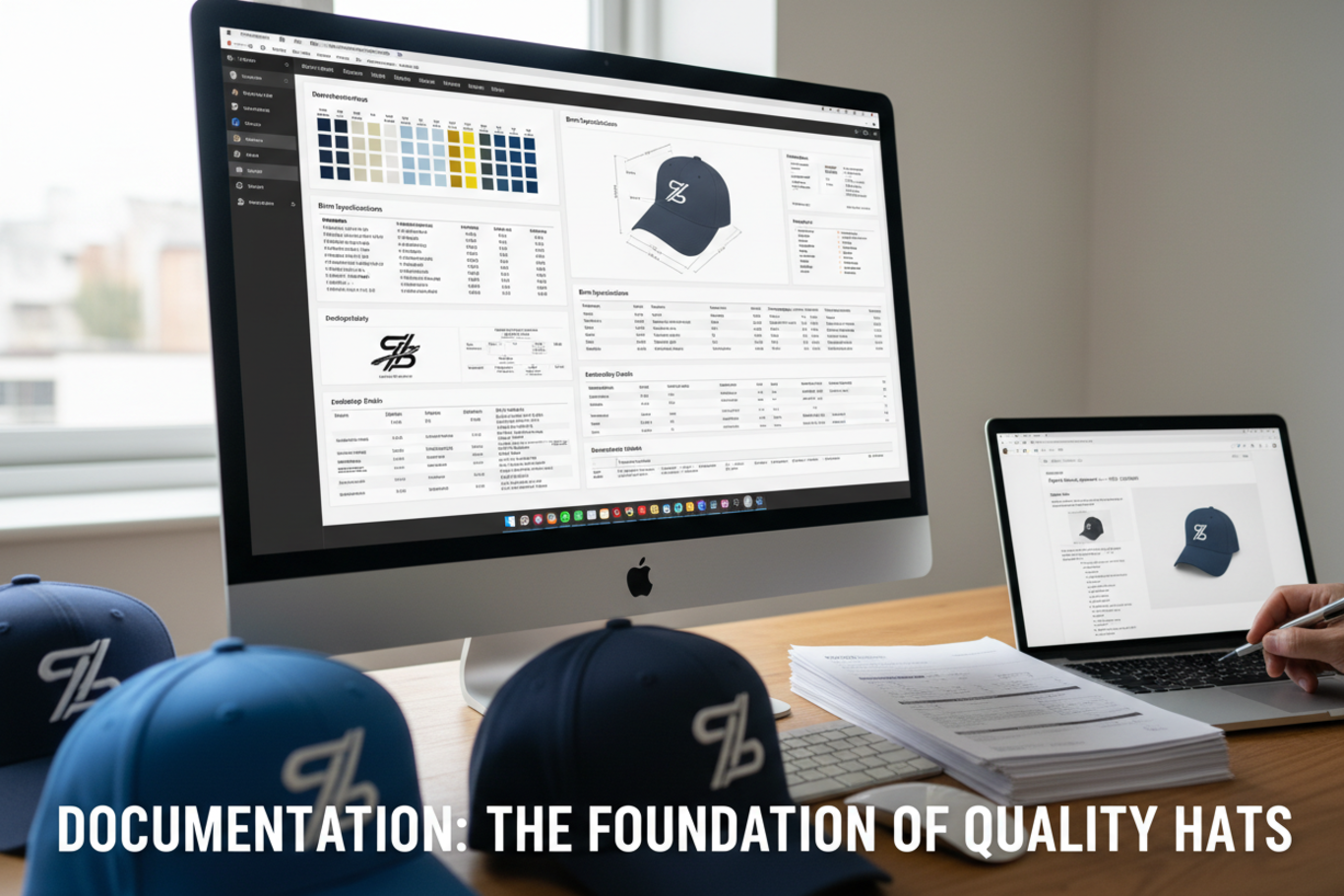
I have heard horror stories from customers who switched to us. They told me their previous factory made the hats the wrong color. When they complained, the factory said, "You said blue on the phone." This is why written documents are the law in manufacturing.
The Tech Pack15 is Your Safety Net
You must demand a "Tech Pack15" or a detailed digital mockup. This document is the blueprint for your product. It must include:
- Dimensions: The height of the crown and the length of the brim.
- Colors: Exact Pantone codes for fabric and thread.
- Placement: Measurements of where the logo sits from the bottom edge.
- Materials: Specific fabric names, not just "polyester."
Why Bad Suppliers Hate Paperwork
A supplier with poor quality control hates paperwork. Why? Because paperwork makes them accountable. If they write down "3D Embroidery" and they deliver flat embroidery, you can demand a refund. If nothing is written down, they can argue.
At Anthea, we do not start a machine until you approve the digital proof. We want that paper trail. It protects me as the manufacturer, and it protects you as the brand owner. If a supplier tries to rush you to pay without a detailed invoice or spec sheet, they are planning to be careless. Do not let them skip this step.
How can transparency in quality processes be evaluated?
You worry the hats will have crooked logos. You ask how they check quality, and they go silent. You risk receiving a box of unsellable defective products.
You can evaluate transparency by asking for photos or videos of the production line. A transparent supplier will show you their embroidery machines and inspection tables16. If they say "it is a trade secret" or refuse video calls, they are hiding poor working conditions or outsourcing.
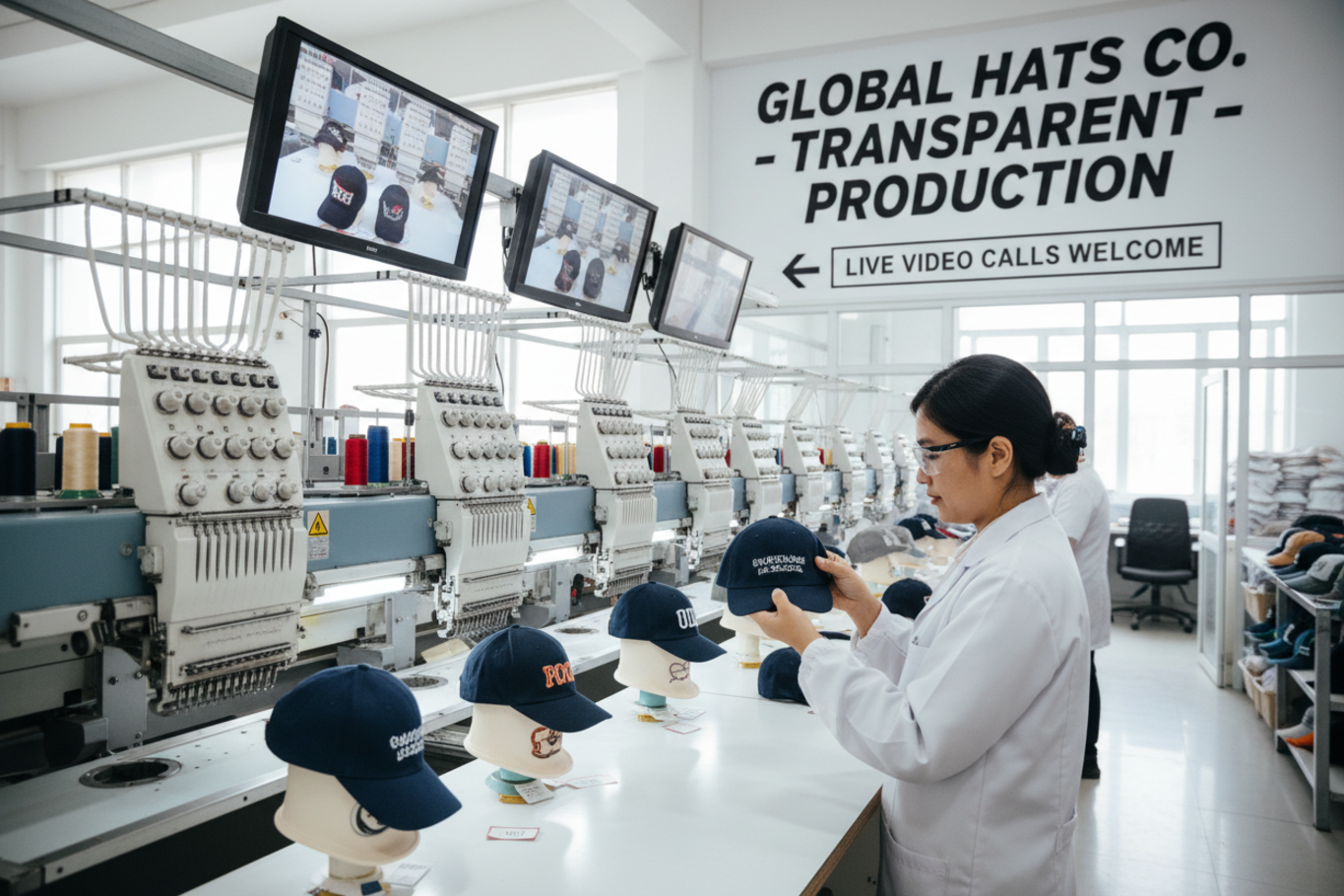
In the age of smartphones, there is no excuse for a hidden factory. Transparency is the biggest indicator of quality. If I am proud of my clean factory and my skilled workers, I want to show them to you.
The "Black Box" Warning
Many unreliable suppliers operate as a "Black Box." You put money in, and you hope a product comes out. You have no idea what happens inside. They might be outsourcing your order to a cheaper, dirtier workshop down the street. This is common in the industry. They take your order for a high price, pay a cheap factory to make it, and keep the difference. The quality suffers, and they cannot fix it because they do not control the machines.
How to Test Transparency
You can test a supplier with these requests:
- Ask for a video call: Ask to see the showroom or the floor.
- Request "Work in Progress" photos: Ask them to send a photo of the logo being stitched before they assemble the whole hat.
- Ask about the QC steps: Ask, "How do you check the hats before packing?"
A good answer is specific: "We trim loose threads, steam the shape, and check the size against your specs." A bad answer is vague: "We check everything, don’t worry."
I send my clients photos of the embroidery swatch before we cut the fabric. This is transparency. It allows us to catch errors early. If a supplier hides the process, they are hiding the mistakes.
Conclusion
Protect your brand by watching for these warning signs. Choose a partner like Anthea who communicates clearly, values details, and proves their quality every step of the way.
-
A clear checklist helps you spot risky factories early and avoid costly misunderstandings before production begins. ↩
-
Learn what details reputable suppliers provide so you can verify fabric specs and prevent bait-and-switch quality issues. ↩
-
Understand normal production transparency and how progress photos reduce the risk of surprises and defects at delivery. ↩
-
Knowing standard QC steps lets you assess professionalism and predict consistency across the full order. ↩
-
Helps you separate true logistics damage from manufacturing defects and protect your claim and leverage. ↩
-
A reputable supplier’s questions reveal competence and prevent “yes to everything” mistakes that ruin final quality. ↩
-
Teaches you which measurable specs matter so you can demand proof instead of marketing language. ↩
-
GSM guidance helps you choose the right handfeel and structure, and prevents thin or flimsy material swaps. ↩
-
Thread selection affects stitch clarity, wear resistance, and wash performance—key for premium branding. ↩
-
Accurate color matching protects brand identity and reduces disputes about “wrong shade” deliveries. ↩
-
Design-rule resources help you avoid unreadable logos and choose the right embroidery style upfront. ↩
-
Confirms whether this exact material spec fits your intended cap shape, durability, and comfort targets. ↩
-
Response-speed benchmarks help you screen disorganized suppliers before money is at risk. ↩
-
Shows why organized order tracking prevents lost details like logo placement, sizing, and color specs. ↩
-
A strong tech pack template locks specs in writing and minimizes rework, disputes, and inconsistent output. ↩ ↩
-
Understanding inspection setups helps you judge whether QC is real, systematic, and capable of catching defects. ↩