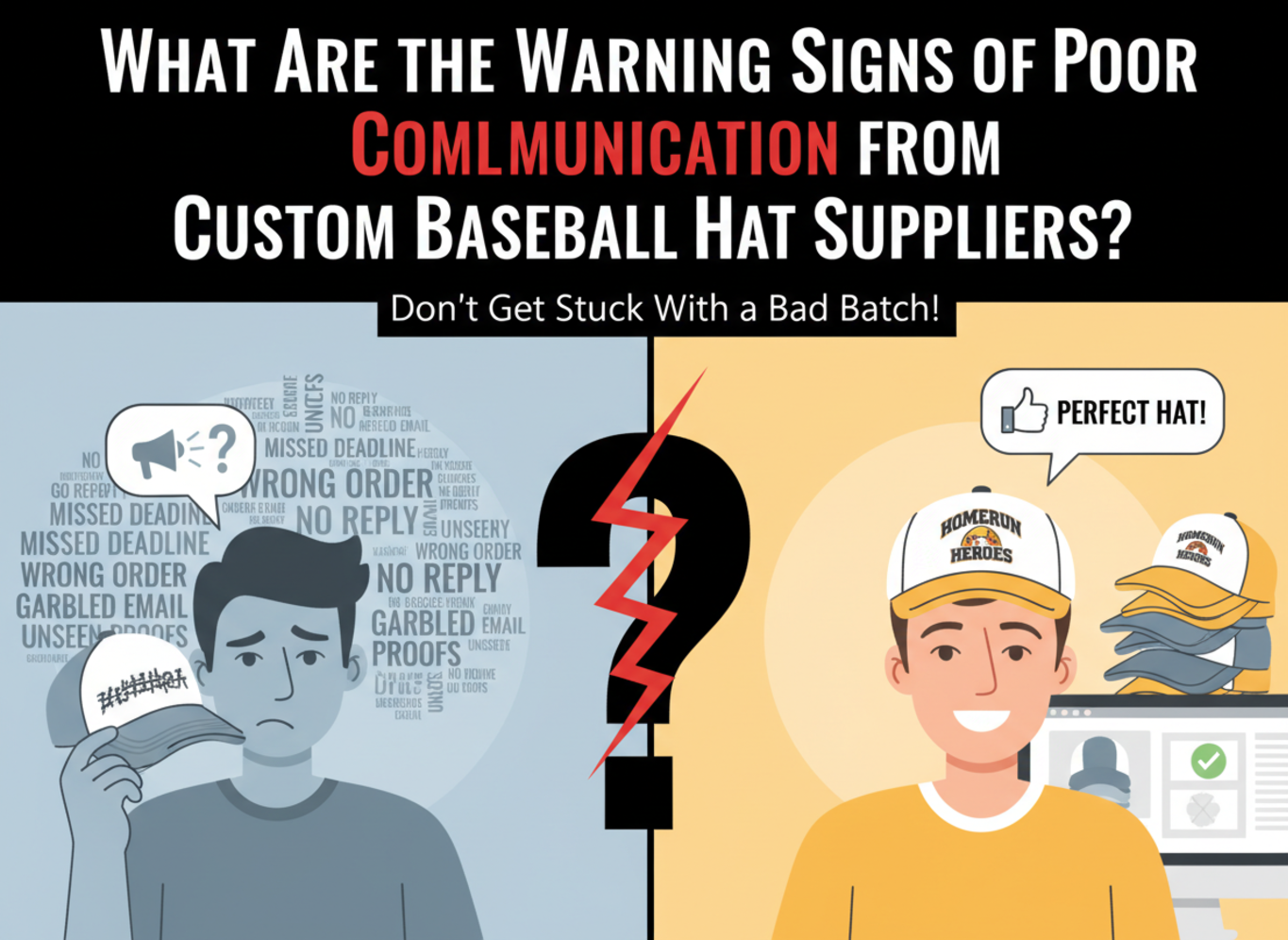
You send an email about your new custom snapback design and wait excitedly for a reply. Days pass with total silence, and you start to worry about missing your brand’s launch date. Recognizing bad communication early is the only way to save your money and your sanity.
Warning signs of poor communication include delayed responses exceeding 48 hours1 and vague answers to specific technical questions2. If a supplier ignores your design files3, fails to provide proactive updates4, or struggles with basic language barriers without using visual aids5, they are likely unreliable. A good partner provides clear timelines6 and confirms every detail before production7.
I have worked in the headwear industry for many years. I have seen many talented creators lose thousands of dollars because they trusted the wrong factory. It usually starts with small delays, but it ends with a box of hats that look nothing like your design. I want to help you identify these red flags before you sign a contract.
How can I spot a supplier with poor communication?
You ask for a detailed price quote for 200 trucker hats, but the reply completely ignores your logo placement8. If a factory cannot read your initial email correctly, they will not read your tech pack9 correctly either.
You can spot a supplier with poor communication during the very first interaction. If they ignore your specific questions, send generic copy-paste replies, or take days to acknowledge your message, they lack the attention to detail needed for custom manufacturing. A professional supplier reads your requirements and asks clarifying questions immediately.
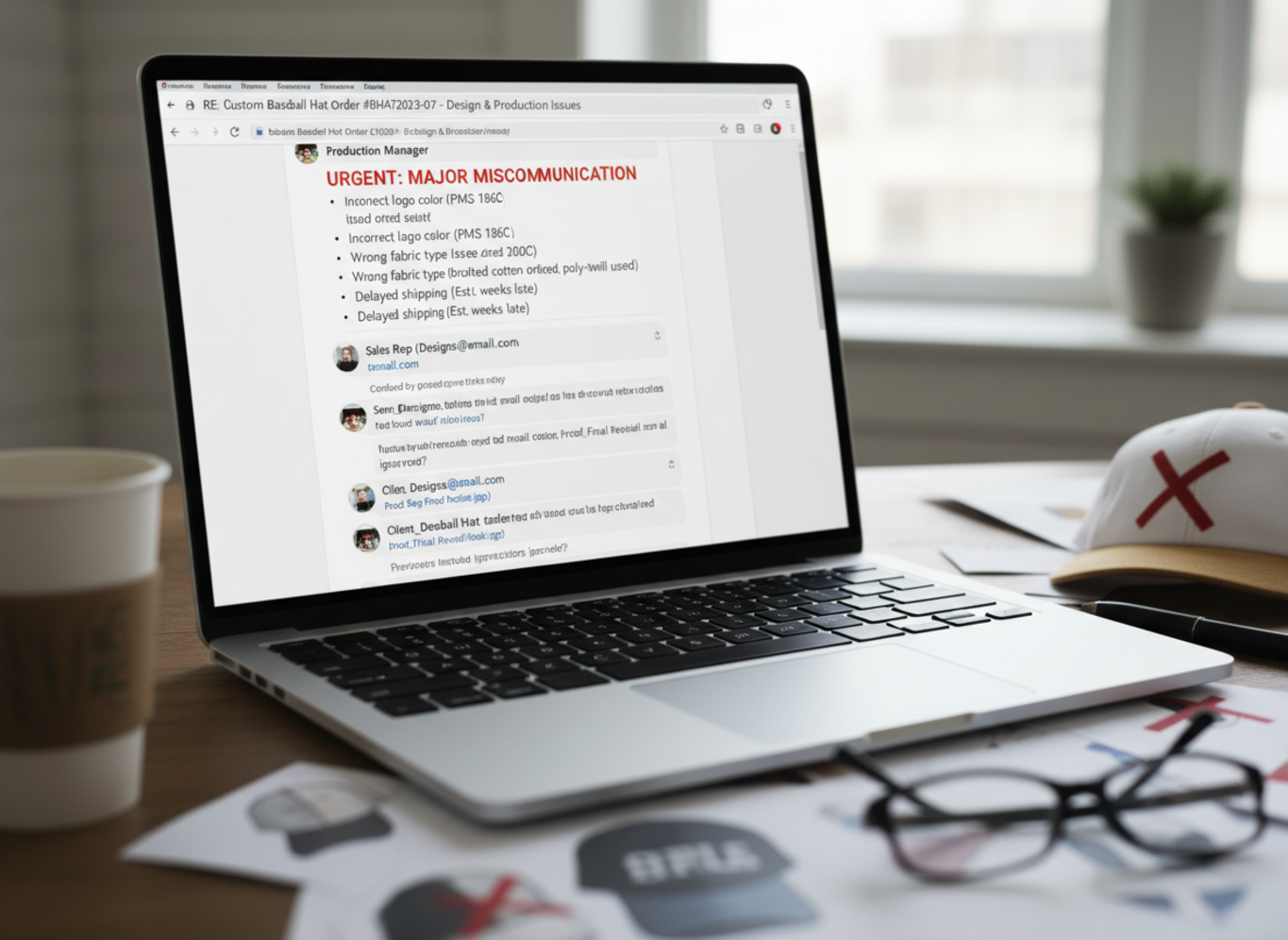
When you are looking for a custom hat manufacturer communication problems10 often show up in the very first email. I always tell new clients to test a supplier before they pay any money. You should send an inquiry with three specific questions. For example, ask about the cost of 3D embroidery11, the price for a woven label12, and the shipping time to your city13.
If the supplier replies with just a total price and ignores your specific questions, this is a bad sign. It means they did not read your email carefully. In the manufacturing world, details are everything. If they miss a question about a woven label now, they might forget to sew it on later.
Another major red flag is the "Robot Reply.14" This happens when you send a detailed paragraph about your brand vision, and they reply with "Hi dear, check our catalog." This shows they do not care about your specific needs. They just want to sell you generic stock. At Anthea, we believe in reading every line of a client’s request. We know that supplier responsiveness evaluation15 is key for you.
You should also look at the time it takes them to reply. We are based in China, so there is a time difference with the US or Europe. However, a professional team will reply within 24 hours. If you have to chase them for a simple quote, you will definitely have to chase them for production updates.
Responsiveness Checklist
| Communication Style | Good Supplier | Bad Supplier |
|---|---|---|
| Response Time | Within 24 hours (usually faster). | 3 to 5 days, or needs a reminder. |
| Attention to Detail | Answers every bullet point you wrote. | Ignores questions, gives vague answers. |
| Clarity | Asks for your logo file to check feasibility. | Says "Yes" to everything without checking. |
What are the warning signs of bad factory communication?
You ask for a specific cotton twill fabric, and they send you a blurry photo of a polyester blend. Warning signs include an inability to provide clear visual proofs or refusing to send physical samples.
Warning signs of bad factory communication include refusing to share photos during the production process16 and hiding delays until the last minute. Reliable factories share clear photos of the fabric, embroidery, and stitching voluntarily. If a supplier gets angry when you ask for updates, they are hiding something.
Once you start the sampling process, bad communication signs hat factory staff might show become more obvious. This is the most dangerous phase. You have paid for a sample, but mass production has not started yet.
One common trick is the "Blurry Photo.17" You ask to see the embroidery quality. The supplier sends a low-quality, dark photo taken from far away. You ask for a close-up, and they say they are "too busy" or the "light is bad." In my experience, a blurry photo is always hiding a mistake. Maybe the thread color is wrong, or the logo is crooked. A good partner wants you to see the quality. At Anthea, we take high-resolution photos and videos of the sample from different angles. We want you to approve it with confidence.
Another warning sign is when they change materials without asking you. Imagine you ordered a metal buckle for your strapback hats. The factory runs out of metal buckles, so they use plastic snaps instead. They do not tell you. They just ship the sample and hope you do not notice. This is a huge breach of trust. Custom cap supplier red flags communication often involves this lack of transparency.
You must also watch out for the "Yes Man" syndrome. This happens when a supplier says "Yes, no problem" to impossible requests. If you ask for a complex gradient print on a seam (which is very hard to do), and they say "Yes" instantly, be careful. A honest factory will say, "This is risky, let’s try a different method." Honest communication about limitations is better than a fake promise.
Visual Proof Standards
- Pre-Production: Digital mockups showing exact dimensions.
- During Sampling: Photos of the raw fabric, the embroidery swatch, and the finished sample.
- Mass Production: A photo of the first hat off the line before the rest are made.
How do communication issues affect production?
A small misunderstanding about the logo size ruins an entire batch of 200 hats. Communication issues directly cause production failures, leading to wasted money and missed deadlines.
Communication issues result in misinterpreted design files, wrong Pantone colors, incorrect embroidery placement, and poor stitching quality. This leads to unsellable products, missed launch dates, and angry customers who lose trust in your brand. Clear communication is the only way to ensure the final product matches your vision.
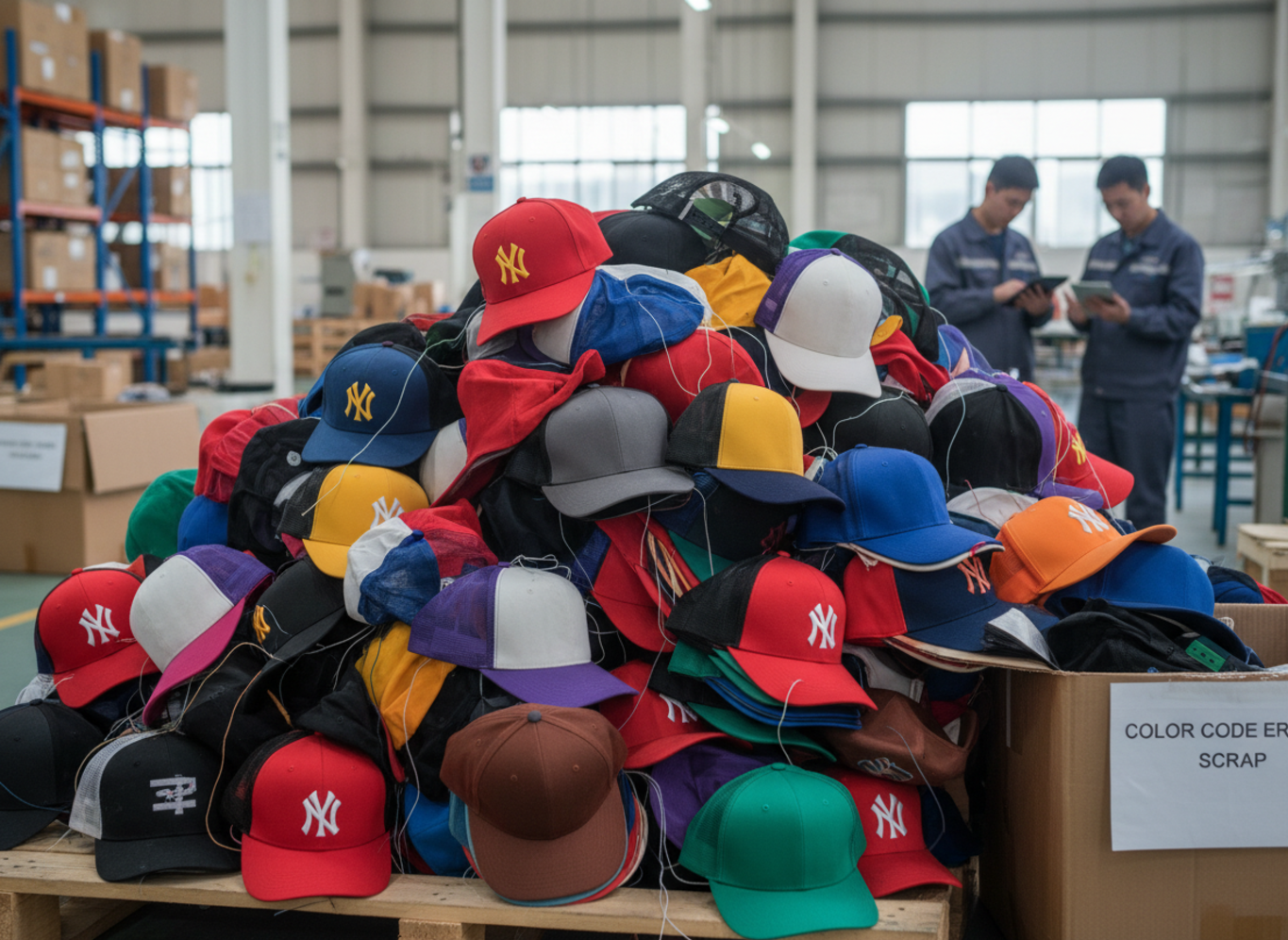
I cannot stress this enough: poor communication hat supplier issues are not just annoying; they are expensive. I have spoken to brand owners who lost their entire budget because of one email.
Let me give you an example. A customer wants a "vintage wash" look on their bucket hats. They tell the supplier "make it look old." The supplier does not ask for a reference photo. They bleach the fabric until it is almost white. The customer receives 300 hats that look ruined, not vintage. The supplier refuses a refund because they did what was asked—they made it look "old." This is why vague communication destroys businesses.
Delays are another major consequence. If communication is slow, the approval process drags on. You might miss your selling window. If you are selling summer hats, but they arrive in October because the supplier took two weeks to reply to emails, you have dead stock. You cannot sell those hats until next year. Overseas manufacturer relationship issues often stem from these timeline failures.
Quality control also suffers. If the factory does not understand your standard for "quality," they will send you defects. You might accept a few loose threads, but they might think a crooked visor is okay. Without clear communication about quality standards (AQL), you get a box of surprises.
The Cost of Silence
- Financial Loss: You pay for products you cannot sell.
- Brand Damage: You have to cancel pre-orders from your customers.
- Time Waste: You spend months fixing mistakes instead of designing new products.
How can I avoid misunderstandings with overseas suppliers?
You say "Navy Blue," but they use "Royal Blue" because of a simple translation error. To avoid misunderstandings, always use visual aids like Tech Packs and Pantone color codes.
To avoid misunderstandings, rely on universal standards like Pantone code18s and detailed Tech Packs instead of text descriptions. Request video calls to clarify complex details and insist on a pre-production sample before the full order runs. Visuals bridge the gap between languages and ensure accuracy.
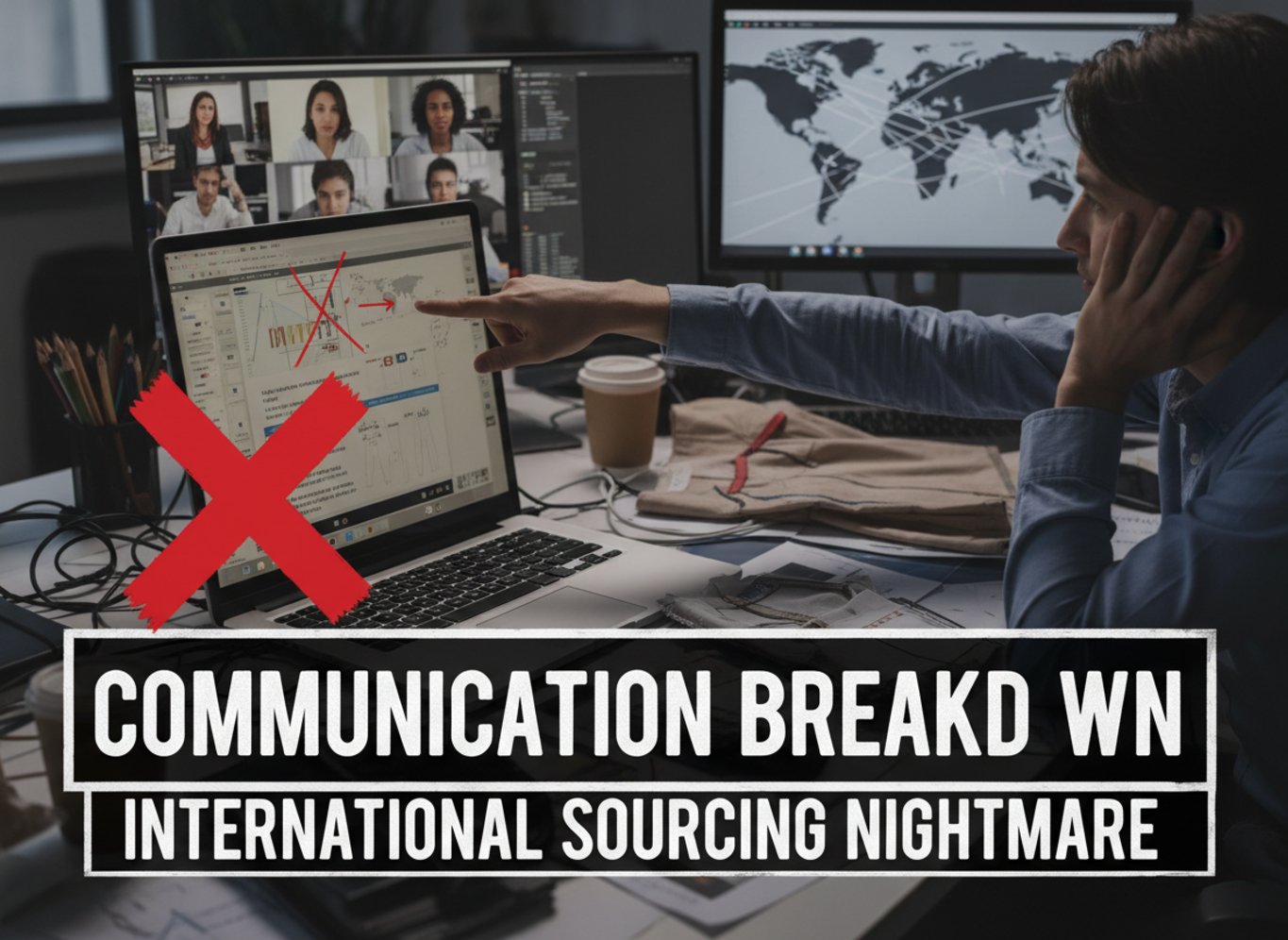
Dealing with international sourcing communication problems requires a smart approach. Since English might not be the first language of your factory contact, you must speak the "language of manufacturing." This language is visual and numerical.
First, never describe a color with words. "Dark Green" means nothing. It could be a forest green or an olive green. Always use a Pantone code18 (like Pantone 349 C). This is a universal standard. If you give me a code, I know exactly which thread to put on the machine. There is no guessing.
Second, use a Tech Pack. This is a blueprint for your hat. It shows the measurements, the fabric type, the logo placement8 (in centimeters), and the closure type. If you do not have a Tech Pack, simple drawings with arrows and notes are better than a long paragraph of text.
Third, use different channels for different things. Email is great for formal records and contracts. But for quick questions, WhatsApp or WeChat is much better. At Anthea, we use WhatsApp to send quick videos from the factory floor. It helps us solve problems in minutes instead of days.
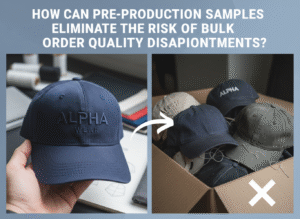
Finally, always ask for a "Pre-Production Sample19" (PPS). This is the golden rule. Never let a factory start making 500 hats until you have held one correct sample in your hands. If you are in a rush, at least ask for a video call where they measure the hat in front of the camera.
Tools for Clarity
- Pantone Formula Guide: For exact color matching.
- Tech Pack: A PDF document with all specs.
- Annotated Screenshots: Take a photo of the error and draw a red circle around it.
- Video Calls: To see the product in real-time.
What behaviors indicate a supplier is unreliable?
They promise a 10-day turnaround but stop replying the moment you pay the deposit. A supplier is unreliable if they become silent after receiving payment or blame the "busy factory" for every delay.
A supplier is unreliable if they ghost you after payment, constantly change delivery dates, or refuse to take responsibility for mistakes. Professional partners maintain consistent updates regardless of the order status. If their story changes every time you ask for an update, you need to find a new manufacturer.
There are specific behaviors that scream "stay away." These hat factory communication warning signs usually appear when money changes hands.
The "Bait and Switch" is common. They are super fast and friendly when you are asking for a price. They treat you like a king. But the second you send the wire transfer, they vanish. They take three days to reply. They say "don’t worry, my friend" but give no proof. This indicates they only care about the sale, not the relationship.
Another sign is the "External Blame Game." An unreliable supplier never admits a mistake. If the shipment is late, they blame the courier. If the embroidery is bad, they blame the machine. If the fabric is wrong, they blame the material market. A reliable partner takes ownership. At Anthea, if we make a mistake (and we are human, so it happens), we tell you immediately and we fix it at our cost. We do not make excuses.
You should also watch out for inconsistency. If you talk to a different person every time, information gets lost. A dedicated account manager is crucial. If you have to explain your brand story to five different sales reps, that factory is disorganized.
Red Flags vs. Green Flags
| Red Flags (Run Away) | Green Flags (Stay) |
|---|---|
| Silence after payment. | Updates you when payment is received and production starts. |
| "Factory is busy" excuse. | Gives a specific date for completion. |
| Blames others for errors. | Admits errors and offers a solution immediately. |
| Vague shipping info. | Provides a tracking number and courier details. |
Conclusion
Good communication is just as important as the quality of the hat itself. If you spot delayed replies, vague answers, or a lack of visual proofs, these are major warning signs. You need a partner who listens, understands your vision, and keeps you updated every step of the way.
-
Learn industry benchmarks for response time and how delays predict production risk and missed deadlines. ↩
-
Shows how to spot non-expertise early and avoid costly mis-specs in custom manufacturing. ↩
-
Get best practices to protect your specs, enforce documentation, and prevent production mistakes. ↩
-
Helps you set update expectations so you’re not surprised by delays or hidden changes. ↩
-
Actionable methods (photos, drawings, calls) to prevent translation errors and misinterpretations. ↩
-
Understand lead-time components so you can plan launches and avoid unrealistic promises. ↩
-
A pre-production confirmation checklist prevents wrong materials, placement, and costly rework. ↩
-
Proper placement specs stop crooked or misaligned logos that can ruin an entire batch. ↩ ↩
-
A solid tech pack is the fastest way to get accurate samples and consistent mass production. ↩
-
Gives screening tactics to filter unreliable factories before you spend on sampling or deposits. ↩
-
Helps you budget correctly and understand pricing drivers like stitch count and setup fees. ↩
-
Explains label types, placements, and MOQ impacts so you choose the best value option. ↩
-
Learn how courier choice, customs, and incoterms affect delivery so you can set real dates. ↩
-
Teaches you to spot copy-paste sales behavior that usually leads to poor attention to detail. ↩
-
A simple evaluation framework helps you predict reliability and communication quality upfront. ↩
-
Shows how to insist on transparency and reduce the risk of hidden defects or delays. ↩
-
Helps you demand high-quality evidence so mistakes aren’t concealed until it’s too late. ↩
-
Using Pantone standards eliminates guesswork and reduces costly color disputes with factories. ↩ ↩
-
Explains how PPS prevents mass-producing errors and gives you leverage before full production. ↩