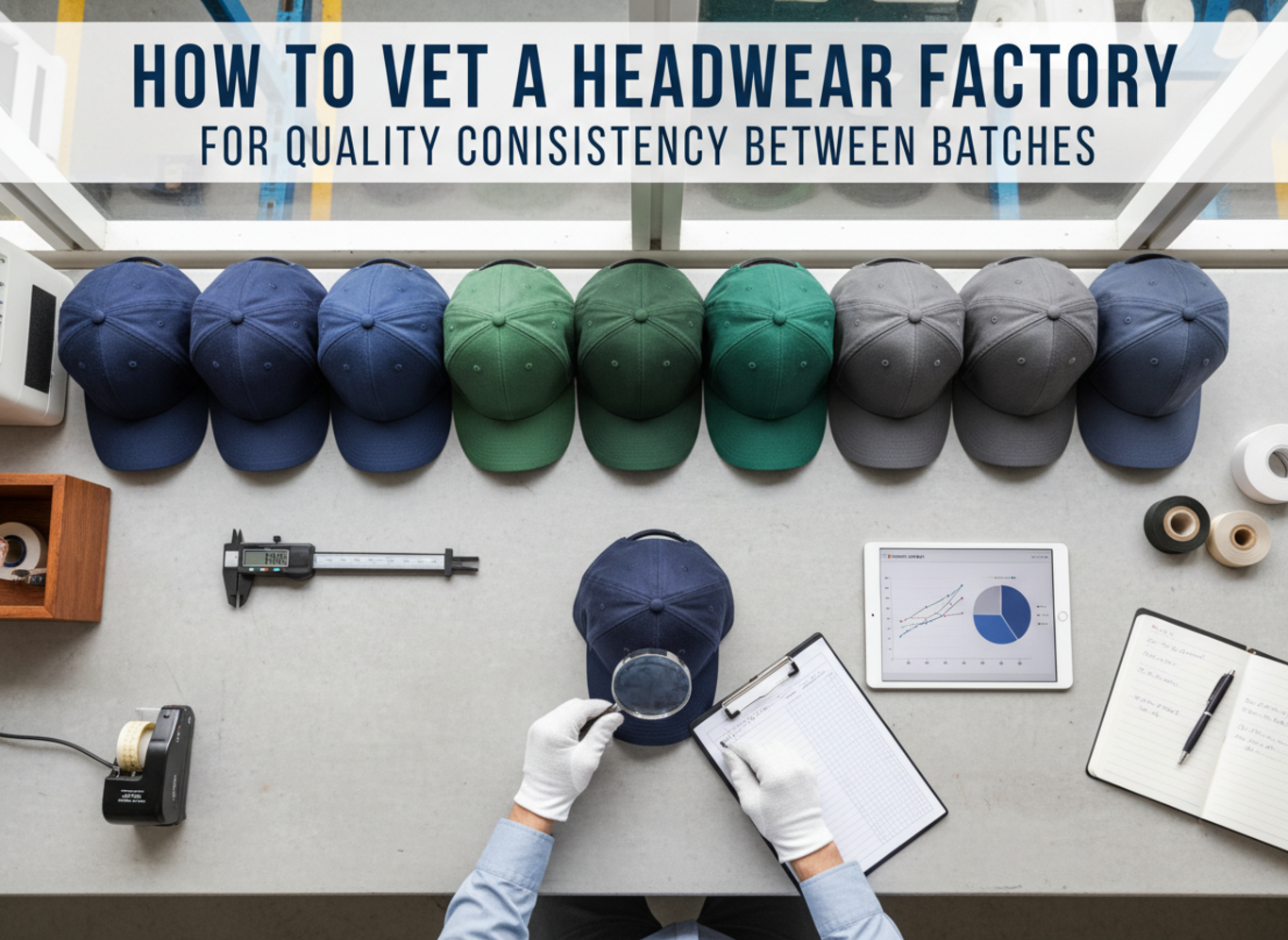
You just received your second batch of caps, but the color looks different from the first. This nightmare scenario kills brand reputation and wastes your hard-earned money.
To vet a headwear factory for quality consistency, request their Standard Operating Procedures (SOPs)1 for color matching2 and fabric sourcing3. Ask for pre-shipment samples4 for every batch, not just the first. Verify they use digital pattern cutting5 and have a dedicated QC team6 checking each production stage.
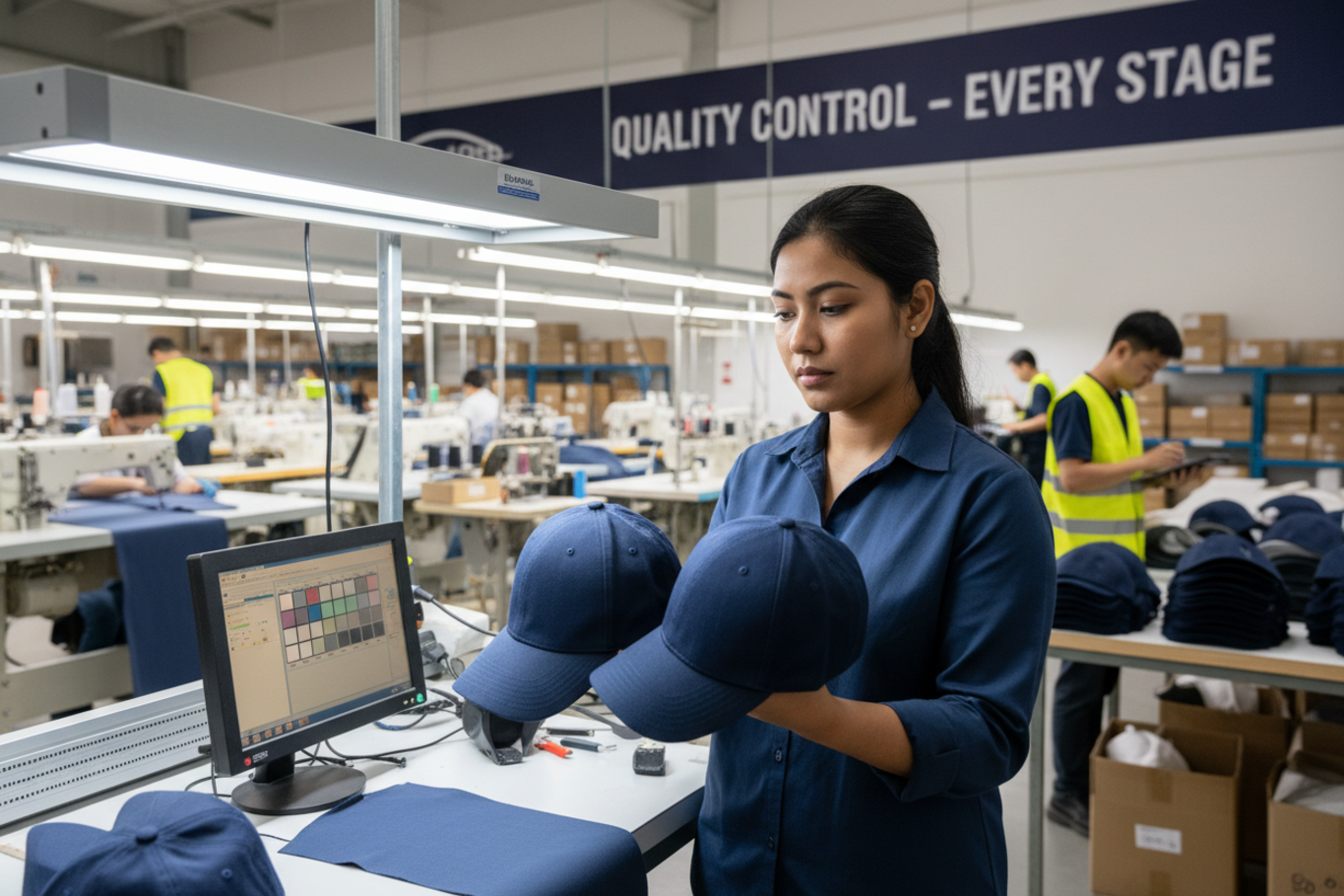
I have seen many brands fail because their supplier changed materials without asking. Here is how you can stop this from happening to you.
How do you ensure consistent quality in manufacturing?
Many factories promise high quality, but few explain how they actually achieve it daily. You need to know the specific steps they take to keep standards high.
To ensure consistent quality, a factory must use the same raw material suppliers7 and fixed production files8. They should document every detail, from thread color codes9 to brim stiffness10, creating a "Golden Sample11" that all future batches must match exactly.
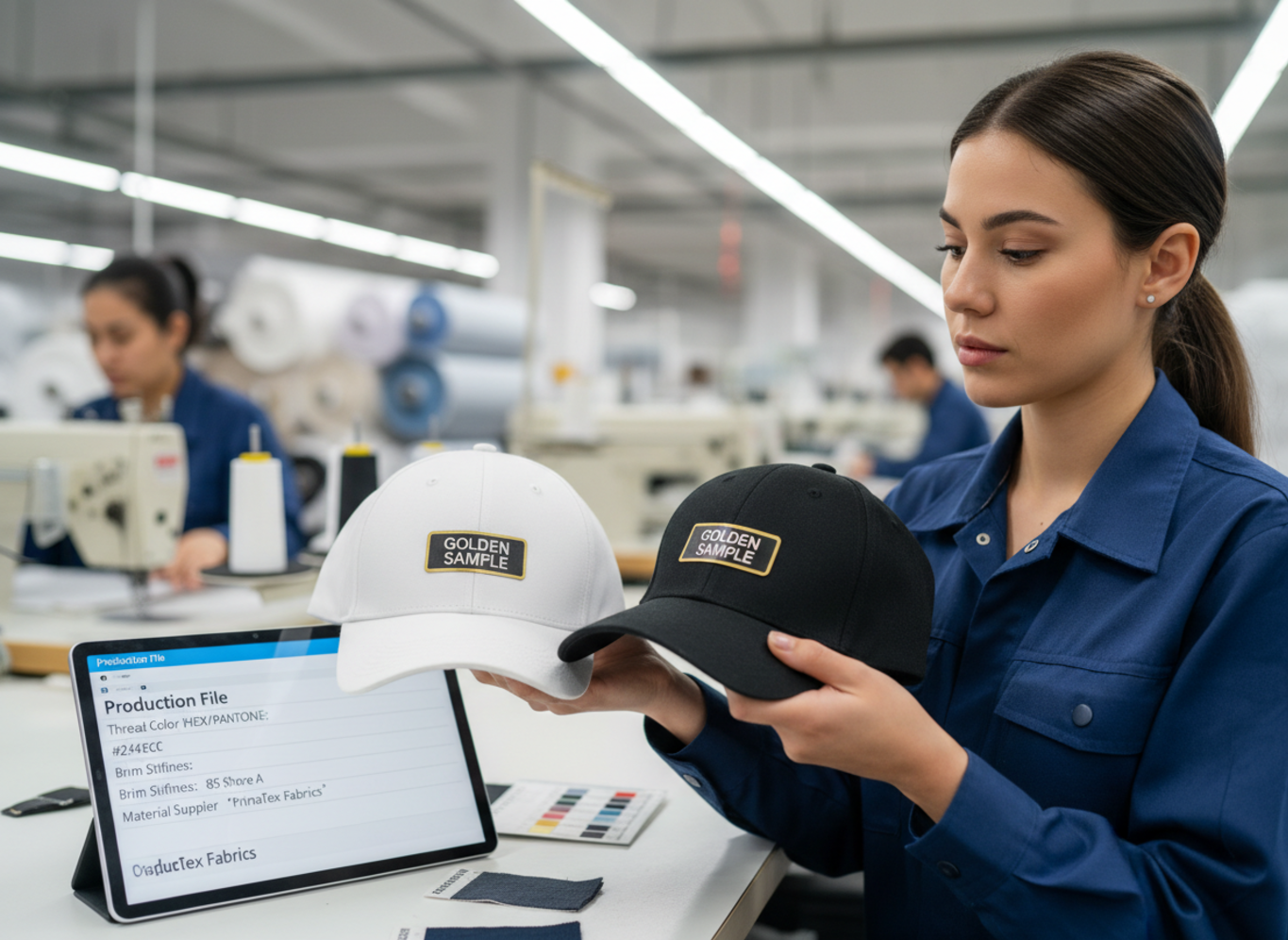
At Anthea, we believe that headwear factory quality consistency does not happen by accident. It happens because we follow a strict plan. The most important tool we use is the "Golden Sample11." When we make your first order, we keep one perfect hat in our sample room. We put it in a sealed bag to stop light from fading the color. When you order again three months later, we take that hat out. We compare the new fabric to that original hat.
Another key factor is the "Tech Pack12." This is the blueprint for your hat. Some factories just look at a photo and guess. That is dangerous. We create a detailed file that lists everything.
Essential Data for Consistency
| Item | What We Record | Why It Matters |
|---|---|---|
| Pantone Color13 | Specific TCX/TPX codes | "Navy Blue" looks different to everyone. Codes are exact. |
| Stitch Count14 | Number of stitches in the logo | Ensures the logo looks thick and 3D every time. |
| Fabric Weight15 | Grams per square meter (GSM) | Ensures the hat feels the same on the customer’s head. |
| Brim Curve | Radius of the curve | Keeps the style consistent (flat vs. curved). |
If a factory cannot show you their record-keeping system, they are guessing. Consistent custom cap production requires data, not guesses. We also stick to the same fabric mills. We do not switch suppliers just to save a few cents. If we must change a material, we tell you first. We send you a swatch to approve. Transparency is the only way to build trust.
What causes batch-to-batch variation in apparel production?
Understanding why mistakes happen is the first step to preventing them in your orders. Most variation comes from cutting corners or lack of communication.
Variation usually happens because of unstable fabric dying, manual cutting errors, or changing workers. If a factory switches fabric suppliers to save money, the texture and color will change. Poor file management also leads to using old logo files on new orders.
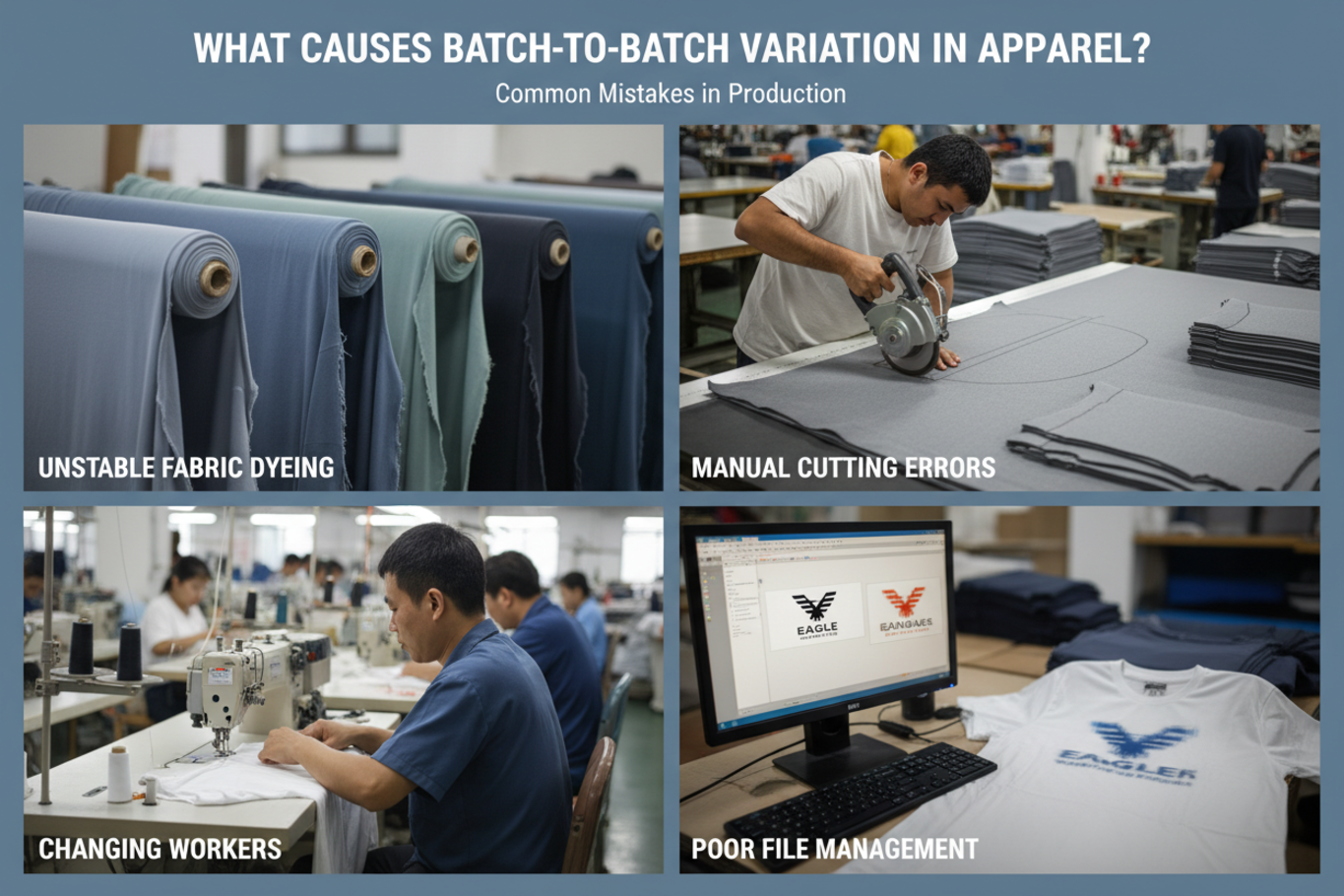
I want to be honest about the challenges in our industry. Even the best factories face issues. The difference is how we handle them. The biggest enemy of batch quality control hats is the "dye lot16." Fabric is dyed in huge rolls. Sometimes, the temperature in the dye vat changes slightly. This can make one roll of black fabric look slightly redder than another. A good factory checks this before cutting. If the variance is too high, we reject the fabric.
The Human Element vs. Machines
Another cause is manual work. Making a hat involves a lot of sewing. It is not fully automated like making a plastic bottle.
- Cutting: If a worker cuts fabric by hand, the panels might be slightly different sizes. This makes the hat shape crooked. We use laser cutting machines17 at Anthea. The laser follows a digital file. It never gets tired. It never shakes.
- Sewing Tension: If a worker sets the machine tension too tight, the fabric puckers. If it is too loose, the seams open up.
- Embroidery Hooping: If the worker does not place the hat panel straight in the hoop, your logo will be tilted.
We also see issues with file management. A client might update their logo slightly. If the factory uses the old file from last year, the order is wrong. We use a cloud-based system18 to ensure we always use the latest version. Hat manufacturing standards rely on controlling these variables. We train our workers to spot these issues immediately. We do not wait until the hat is finished to fix it.
What quality control systems should a hat factory have?
You cannot be at the factory yourself, so you need to trust their internal systems. A good system catches errors before the hats leave the floor.
A robust system includes Incoming Quality Control (IQC)19 for materials, In-Process Quality Control (IPQC) during embroidery and stitching, and Final Quality Control (FQC) before packing. They should also perform needle detection20 and shape checks to meet strict custom cap production standards.
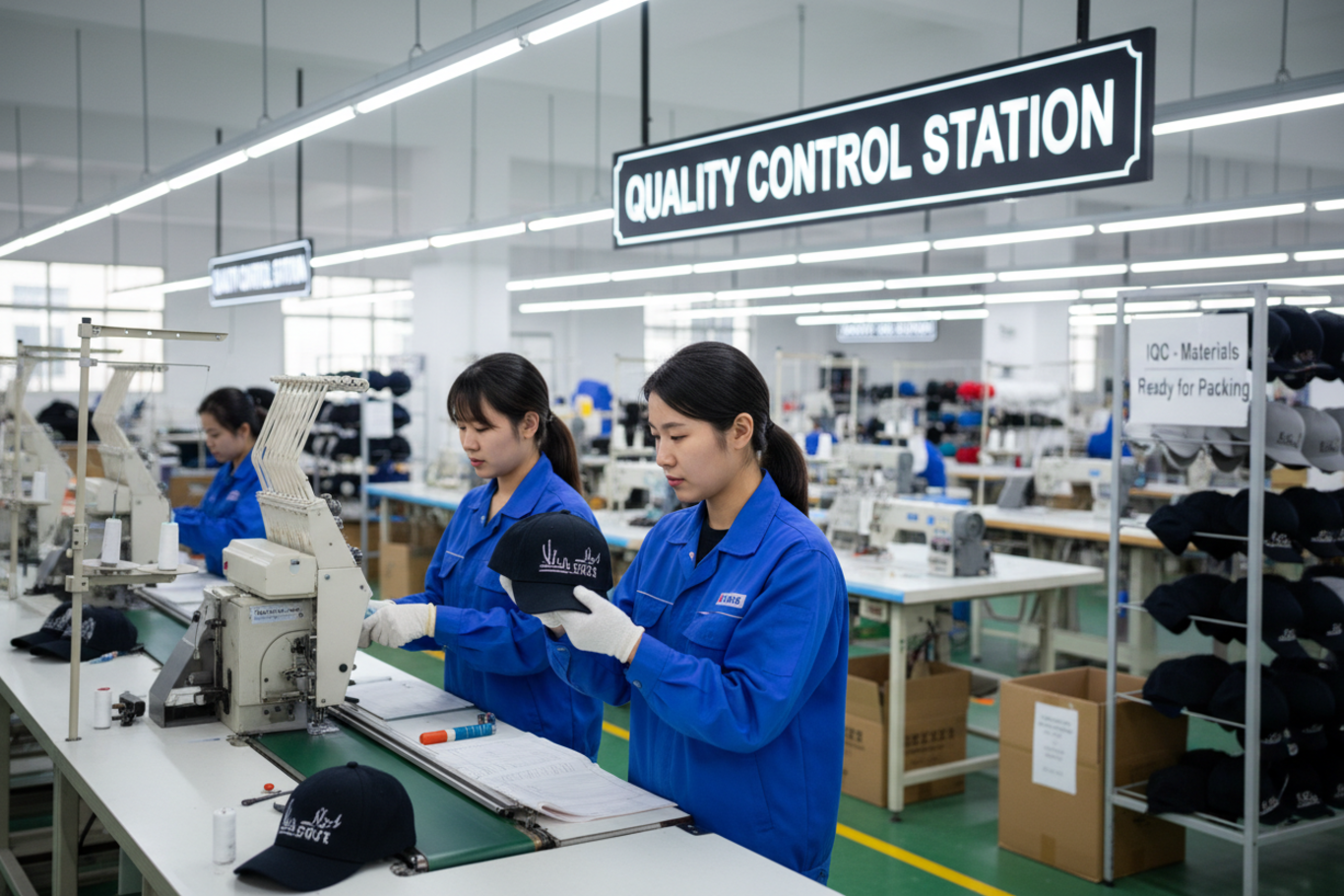
When you ask a supplier about their QC, do not settle for "we check everything." You need to know when they check. At Anthea, we break it down into three stages. This is the industry standard for custom cap production standards.
Stage 1: IQC (Incoming Quality Control)
This happens before we start making your hats. We check the raw materials.
- Fabric: Is the color correct? Is there any damage or holes?
- Accessories: Do the buckles work? Are the sweatbands soft?
- Thread: Is it the right strength?
Stage 2: IPQC (In-Process Quality Control)
This is the most critical step. We check while the work is happening.
- Panel Inspection: After cutting, we measure the panels.
- Logo Check: After embroidery, we trim loose threads. We check the position. If a logo is crooked, we discard that panel immediately. We do not sew it into a hat.
- Sweatband Sewing: We check that the label is centered and the stitching is straight.
Stage 3: FQC (Final Quality Control)
This is the last gate.
- Shaping: We steam the hats on a mold to give them a perfect shape.
- Cleaning: We remove any dust or lint.
- Needle Detection: This is vital for safety. A broken needle tip can hide inside a hat. We pass every hat through a metal detector machine.
How to ensure consistent hat quality across orders depends on these three gates. If a factory skips IPQC, they will find mistakes too late. Then, they might try to ship the bad hats because they do not want to lose money. We catch mistakes early so we can fix them without delaying your shipment.
How can you test a supplier’s reliability before large orders?
Placing a huge order with a new partner is a big risk for your business. You need a low-risk way to test their skills and honesty first.
Start with a sample order to test communication speed and product quality. Then, place a small trial run (like 50 pieces) to test batch consistency. Deliberately ask for a complex design or a specific Pantone color to see how they handle difficult requests.
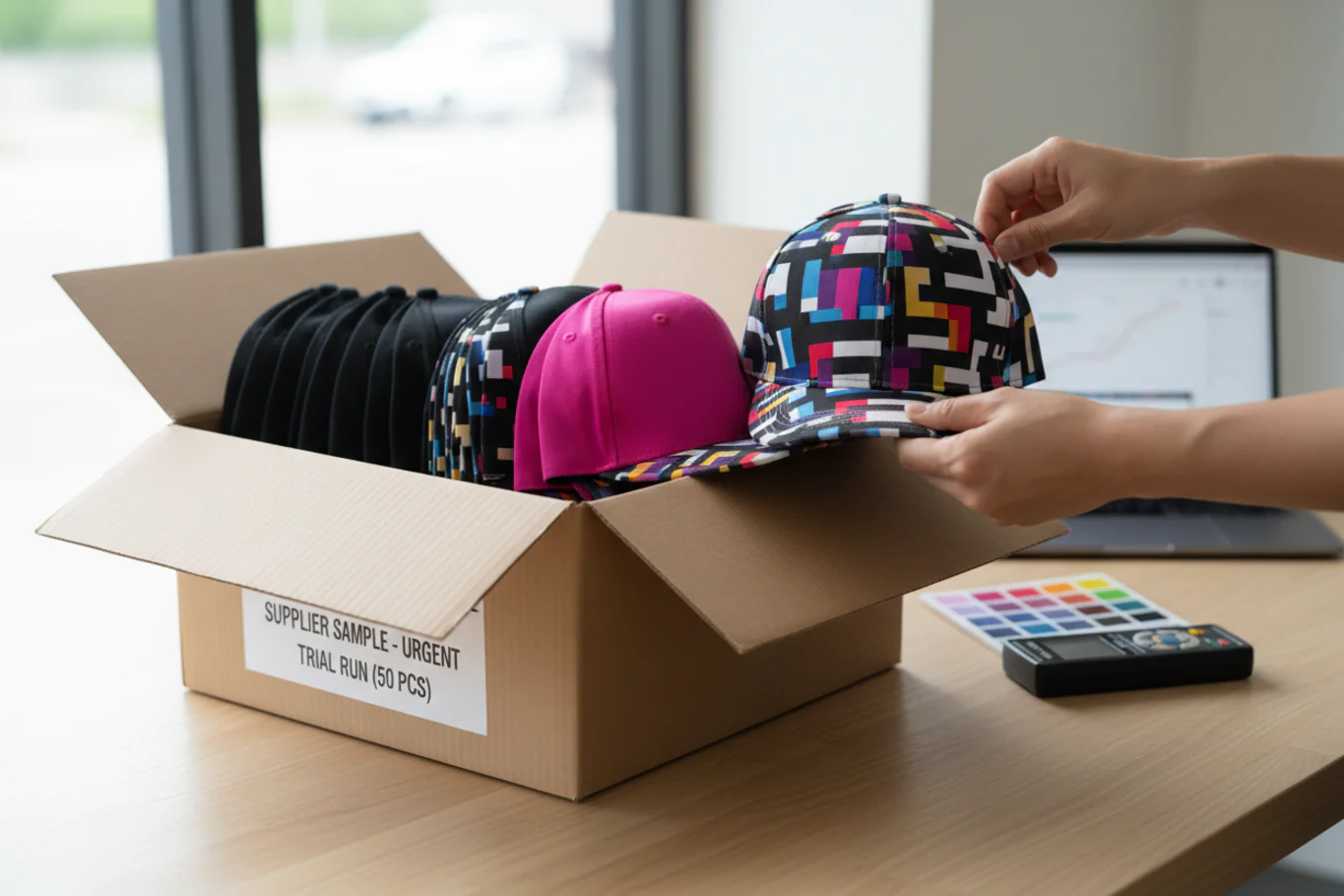
I always tell new clients to start small. Testing headwear factory reliability is like dating. You do not get married on the first date. First, order a sample. This usually costs between $50 and $100. Watch how they treat you. Do they reply fast? do they ask good questions? If they ignore you because the order is small, they will ignore you later when you have a problem.
The "Stress Test" Strategy
Once you like the sample, do not order 5,000 hats. Order the Minimum Order Quantity (MOQ). At Anthea, our MOQ is 200 pieces. This is a safe number. It is enough to test our production line, but not enough to bankrupt you if something goes wrong.
During this test, pay attention to these things:
- Lead Time: Did they finish when they promised?
- Packaging: Did the boxes arrive crushed? Did they use strong cardboard?
- Consistency: Open five boxes randomly. Do the hats look the same?
You can also try a factory audit hat manufacturer approach remotely. Ask for a video call. Ask them to walk onto the production floor. If they refuse, they might be a trading company, not a factory. Real factories like us are proud to show our machines. We want you to see the workers sewing your caps.
Another trick is to make a small change. Ask to change the thread color on the back logo halfway through the discussion. See if they remember. A reliable supplier updates the file immediately. An unreliable one forgets and uses the old color. This tells you if they are organized.
Do ISO certifications guarantee consistent production?
Many buyers look for certificates like ISO 9001 and think their job is done. However, a piece of paper does not always equal a perfect product.
ISO certifications show that a factory has a management system, but they do not guarantee that every single hat will be perfect. You still need to verify their specific experience with headwear. Real-world samples and customer reviews are often more valuable than a certificate on the wall.
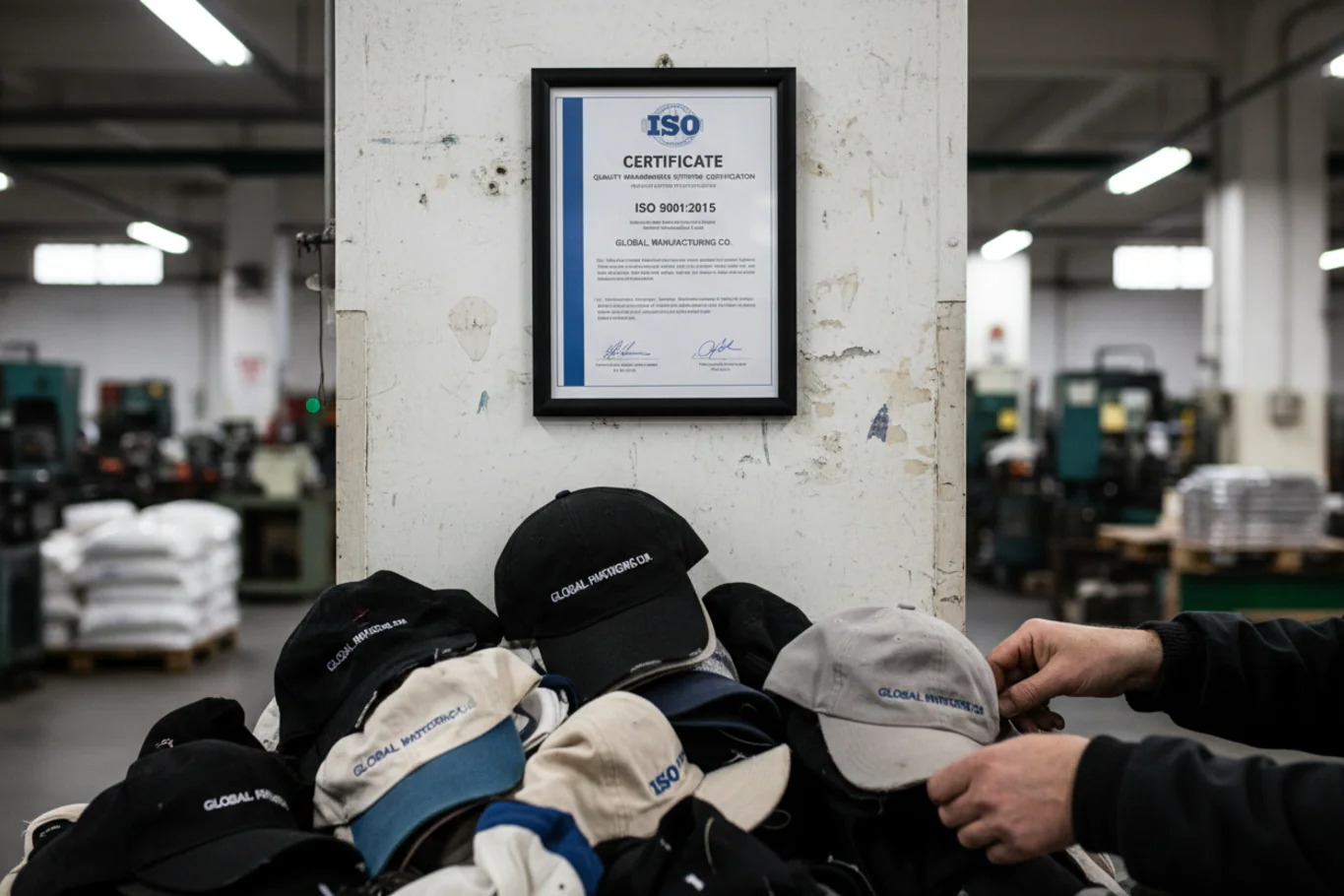
I respect the ISO 9001 hat factory standard. It is a good sign. It means the management cares about rules. But, I have seen factories with ISO certificates produce bad quality. Why? Because ISO certifies the process, not the product.
Documentation vs. Craftsmanship
ISO says: "You must have a written procedure for cutting fabric." It does not say: "You must cut the fabric well." A factory can write down a bad procedure and still get certified.
What matters more is craftsmanship and specific experience. A factory that makes cheap promotional hats for election campaigns operates differently than a factory making high-end streetwear.
- Promo Factories: Focus on speed and low price. Quality is secondary.
- Brand Factories (Like Anthea): Focus on details, fit, and durability.
When you look for headwear factory quality consistency, look at their past work. Ask for photos of hats they made for other brands. Look at the stitching on the inside. Is it messy? Are there loose threads? The inside of the hat tells you the truth.
Also, ask about their claim policy. An ISO certificate does not help you if the factory refuses to refund you for bad products. Ask them: "What happens if I find 10 defective hats in my order?" A good partner will say: "We will replace them or refund you." A bad partner will say: "It is a small number, do not worry about it."
Trust your eyes and your hands. The certificate is just a piece of paper. The hat is the reality.
Conclusion
Consistency comes from strict systems, not luck. Vet your supplier by checking their QC steps, testing small batches, and ensuring they value long-term partnerships over quick profits.
-
See SOP benchmarks to compare factories and spot gaps that lead to inconsistent caps. ↩
-
Learn proven color-control methods so repeat orders don’t arrive in different shades. ↩
-
Understand how stable sourcing prevents surprise fabric changes and quality drift. ↩
-
Shows how samples catch errors before shipping, saving rework costs and reputation damage. ↩
-
Explains how automation reduces size variance and keeps panels uniform across runs. ↩
-
Clarifies QC roles and checkpoints so you can verify the factory isn’t relying on luck. ↩
-
Learn supplier-control systems that prevent silent substitutions and batch variation. ↩
-
Helps you confirm file/version discipline so designs don’t change between orders. ↩
-
Avoids mismatched thread tones by understanding coding systems and documentation. ↩
-
Learn measurable specs/tests so the hat feel and structure stay consistent. ↩
-
Shows the industry method for locking a reference standard for every future batch. ↩ ↩
-
A strong Tech Pack eliminates guessing—this helps you demand the right details. ↩
-
Learn how Pantone coding prevents “navy” from changing between suppliers and lots. ↩
-
Understanding stitch specs helps ensure logos look equally dense and premium each run. ↩
-
Know how GSM checks keep hand-feel and durability consistent across batches. ↩
-
Explains the #1 reason colors shift, and what controls prevent mixed-shade production. ↩
-
See why laser cutting reduces human error and improves repeatability at scale. ↩
-
Shows how modern file control stops factories from using outdated logos or specs. ↩
-
Helps you verify material inspections happen before production mistakes get baked in. ↩
-
Learn the safety standard that protects customers and reduces liability for brands. ↩