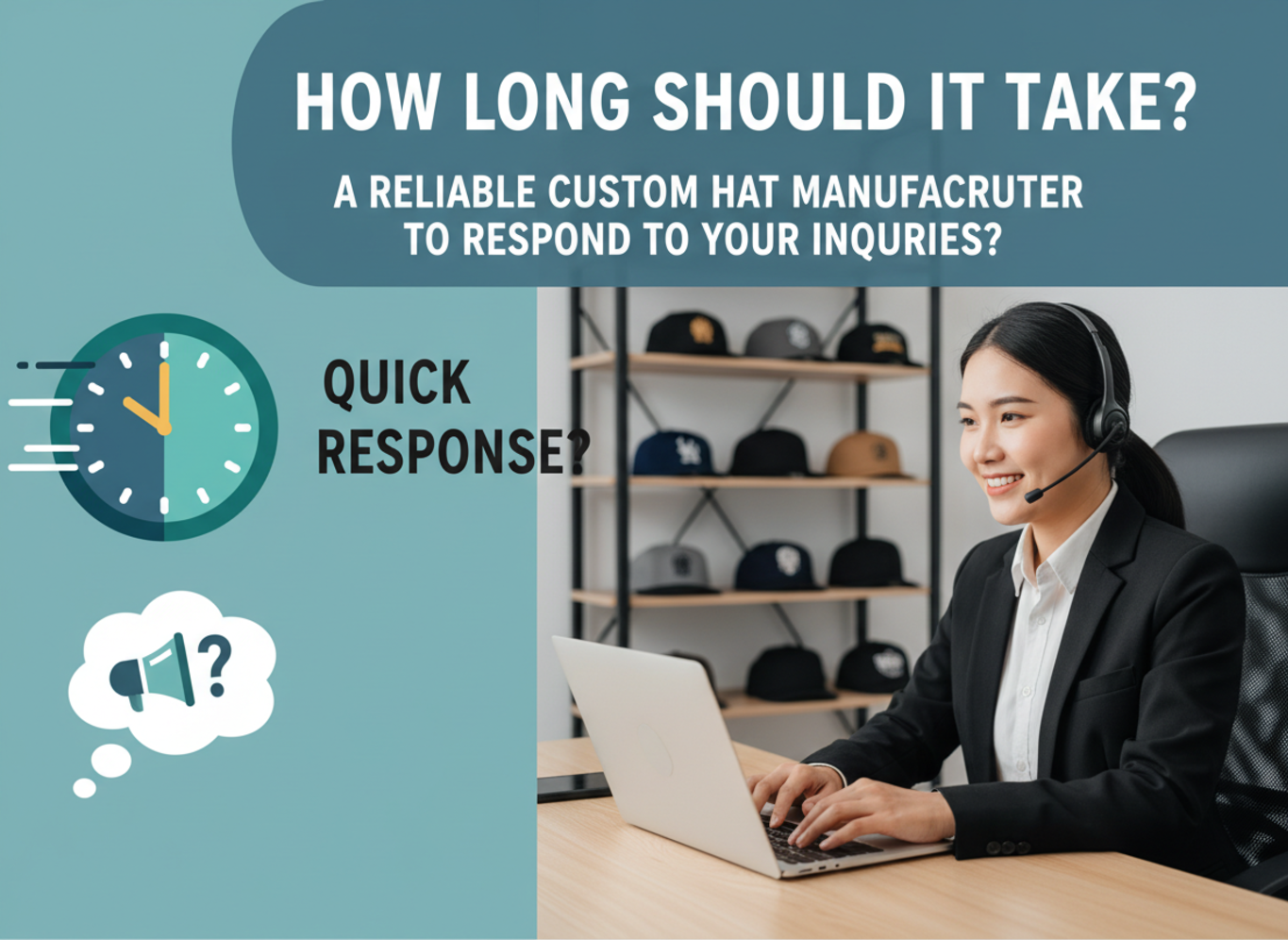
You send a design file to a factory, but your inbox stays empty. The silence kills your excitement and delays your brand launch. You need to know: how long is too long to wait?
A reliable custom hat manufacturer should respond to your initial inquiry within 24 hours on business days1. For ongoing projects, replies should come within 12 hours2. Consistently slow responses3 often indicate poor internal management4 or a lack of interest in your order size5.
I have seen many brands fail because they picked the wrong partner. Communication speed is the first test a factory must pass. If they fail this, they will likely fail production too. Here is exactly what you should expect from a professional supplier.
How fast should a hat factory respond to inquiries?
You have a great idea for a snapback. You want a quote now. Waiting days for a simple "hello" makes you feel unimportant and wastes your valuable time.
Expect a confirmation or a full reply within 24 hours. Professional factories like Anthea use CRM systems6 to track emails. If you do not hear back in one day, they are likely too busy or disorganized to handle your custom headwear needs7.

When I started in this industry, I realized that speed is everything. Fashion moves fast. If a factory takes three days to reply to a "Hi, I need hats" email, imagine how long they will take to fix a production error. The standard is 24 hours. This accounts for the time difference8. If you email us from New York at 2 PM, it is the middle of the night in China. But when our team arrives at 9 AM, your email is the first thing we see. You should wake up to a reply. This shows the factory is organized.
You can categorize responses into three types to judge a supplier:
| Response Time | What It Means | Action to Take |
|---|---|---|
| Under 12 Hours | Excellent. They have a dedicated sales team. | Keep them on your shortlist.9 |
| 24 Hours | Standard. They follow normal business hours. | Acceptable, proceed with caution. |
| 48+ Hours | Poor. They are overloaded or do not care.10 | Move on to the next supplier. |
A factory that ignores new leads usually ignores quality control11 too. If they cannot manage an inbox, they cannot manage complex embroidery schedules12. Do not make excuses for them. If they are slow now, they will be slower later.
What is an acceptable response time for overseas suppliers?
Working with overseas suppliers feels risky. You worry about the time difference8. You fear your message will get lost across the ocean and delay your drop.
An acceptable response time for overseas suppliers is one business day. Top-tier manufacturers adjust their hours to overlap with Western markets13. They often reply immediately on WhatsApp14 or within hours via email, bridging the gap between China and the US.
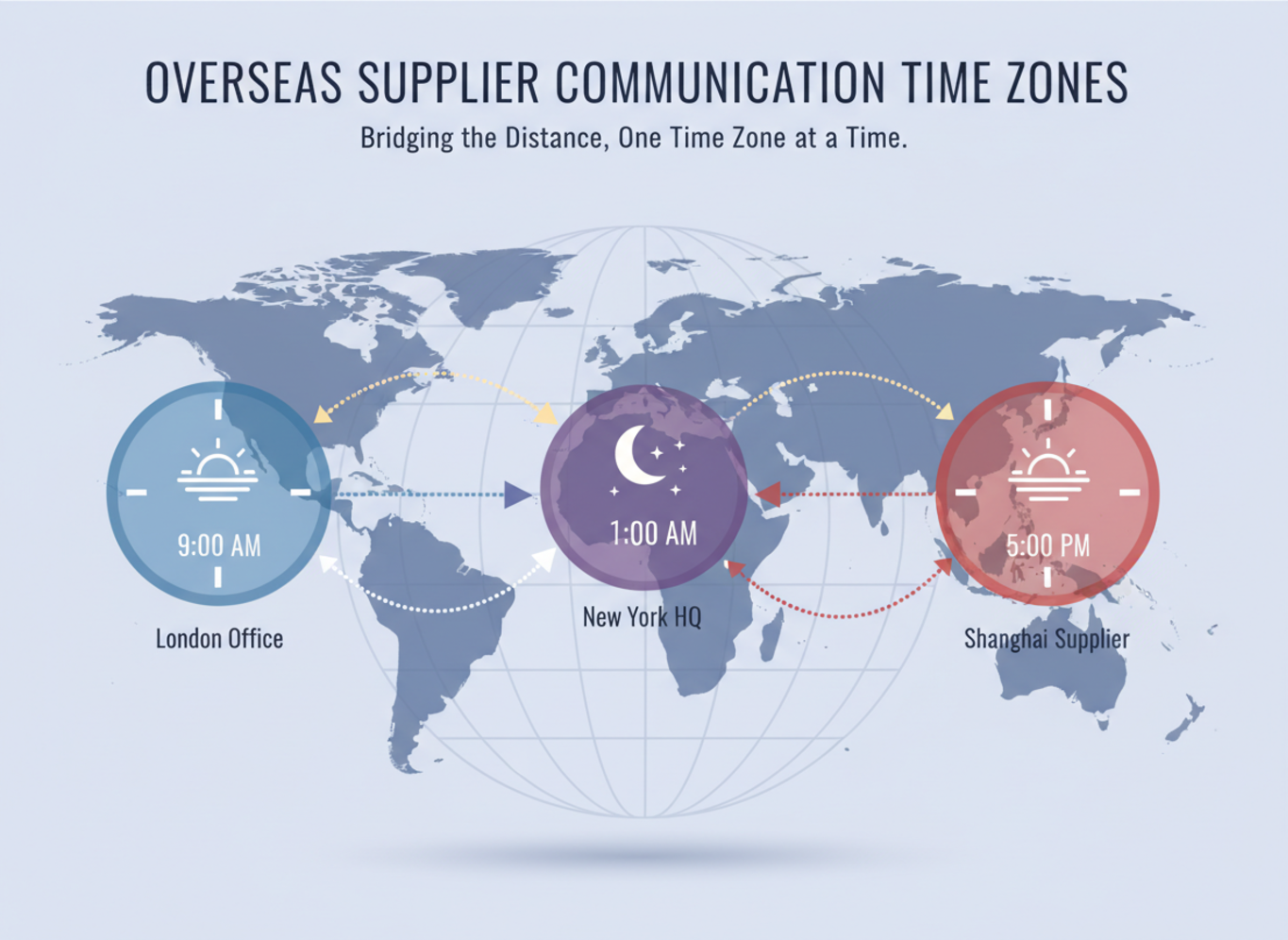
Distance does not excuse silence. In the age of smartphones, the ocean between us does not matter. I often chat with clients on WhatsApp14 late at night because I know they need answers. For a factory in China, we know our clients are in the US or Europe. If we only work 9-to-5 Beijing time, we miss you. Good suppliers have sales reps who check messages in the evening. We use WhatsApp14 for quick questions and email for official records.
Here is a breakdown of how the time difference8 affects communication:
- Email Communication: This is asynchronous. You send it while we sleep; we reply while you sleep. This creates a 24-hour cycle. This is fine for formal quotes or invoices.
- Instant Messaging (WhatsApp14): This should happen in real-time or close to it. A good rep will check their phone before bed or early in the morning. This allows for a few hours of overlap.
If a supplier blames the time zone for a 3-day delay, they are making excuses. You need a partner who works when you work, or at least creates a system to answer fast. We know that your customers will not wait for you, so you cannot wait for us.
How does response time reflect supplier reliability?
Slow replies make you nervous. You wonder if they will disappear after you pay the deposit. This anxiety kills your confidence in the manufacturing process.
Response time is a direct indicator of factory organization.15 Fast replies mean they have dedicated sales teams and systems. Slow replies suggest they are understaffed, overwhelmed, or do not value small to medium-sized orders.
Think of the sales team as the face of the factory. If the face is tired and slow, the hands—the production line—are usually the same. I have seen this pattern many times. A client comes to me complaining about their old supplier. They say the old supplier took a week to reply to a design change. Guess what happened? The caps arrived with the wrong logo size. Why? Because the message never got to the production floor.
Responsiveness proves that information flows smoothly inside the company. If I reply to you quickly, it means I have checked with my production manager quickly. It connects the dots. A slow reply breaks the chain of information. Here is the connection between speed and quality:
- Fast Sales Reply: Indicates a staffed office and organized data.
- Fast Sample Update: Indicates the material warehouse is efficient.
- Fast Shipping Info: Indicates the logistics department is on top of things.
If one of these is slow, the whole chain breaks. You are trusting us with your money and your brand reputation. We must earn that trust with speed. If you have to chase a supplier for a reply, you are doing their job for them. That is not a partnership; that is a burden.
Are fast responses always a good sign?
You get a reply in five minutes. You feel great. But then you realize the answer is vague and feels like a copy-paste robot.
Speed is good, but accuracy is better. If a factory replies instantly but ignores your specific questions, it is a red flag. A good response addresses your specific design details, not just a generic "Yes, we can do it."

I must be honest with you. Sometimes, too fast is bad. You might encounter a "Yes Man." This is a salesperson who replies "Yes, sure, no problem" to everything instantly. You ask for a complex 3D embroidery on a mesh seam. They say "Yes." You ask for a 2-day sample. They say "Yes." They want your money. They are not checking if it is actually possible.
A truly reliable partner might take 2 hours to reply instead of 2 minutes. Why? Because we are checking with the master technician. We are measuring the hat panel. We are calculating the stitch count16. I would rather wait a few hours for a correct answer than get a wrong answer instantly. Look for details in the reply, not just speed.
Here is how to spot a "Fake Fast" response:
- The Generic Template: "Dear Sir/Madam, we can do your order. Best price." This ignores your specific questions.
- The Impossible Promise: "We can make 500 hats in 3 days." This is a lie to get the deposit.
- The Missing Details: You asked about fabric weight, but they only talked about price.
You need critical thinking here. Compare the timestamp of your email with their reply. Did they have enough time to actually read your tech pack? If not, they are just skimming. Real customization requires real thought.
What are communication standards for custom hat manufacturers?
You do not know the rules. You send emails and hope for the best. Without standards, you cannot hold your supplier accountable for bad service.
Standard communication includes clear timelines, visual proofs (mockups)17, and proactive updates. You should receive a tracking number for samples, photos of the fabric before cutting, and weekly status updates during mass production18.

Let’s set the bar high. You deserve professional service. At Anthea, and at any good factory, there is a standard workflow. You should not have to guess where your order is. We follow a strict communication protocol to keep you safe.
The Standard Workflow Checklist:
- Inquiry Phase: Detailed quote including mold fees, shipping, and unit cost within 24 hours.
- Design Phase: Digital mockup (visual proof) sent for approval before any physical work starts.
- Sampling Phase: Photos of the raw materials. Then, high-resolution photos of the finished sample from four angles. We do not ship the sample until you approve the photos. This saves shipping money.
- Production Phase: Weekly updates. "We have cut the fabric." "We are embroidering the logos." "We are packing."
- Shipping Phase: Tracking number provided within 24 hours of dispatch.
During mass production, silence is scary. You should never have to chase the factory for this info. We provide these updates so you can tell your customers when the drop is coming. If your current supplier only talks to you when they want money, they are failing the standard. Good communication is proactive, not reactive. We tell you the news before you ask for it.
Conclusion
Your brand moves fast, and your supplier must keep up. If they take days to reply, find a new partner. At Anthea, we value your time as much as our quality.
-
Confirms industry benchmarks so you can quickly spot suppliers who are below professional standards. ↩
-
Helps you set clear expectations for active orders and avoid delays from slow communication. ↩
-
Explains common root causes and risks so you can decide whether to keep or replace a vendor. ↩
-
Shows how management issues translate into missed deadlines, errors, and costly rework. ↩
-
Teaches warning signs and how to qualify suppliers who will prioritize your production. ↩
-
Helps you understand what good suppliers use to prevent missed emails and lost details. ↩
-
Gives a checklist to confirm capabilities (materials, decoration, QC) before you commit. ↩
-
Offers practical communication setups so time zones don’t become an excuse for delays. ↩ ↩ ↩
-
Provides a structured way to compare vendors beyond price—speed, clarity, process, and proof. ↩
-
Helps you identify capacity and priority issues early, before sampling or deposits. ↩
-
Connects responsiveness to QC outcomes so you can predict production risks sooner. ↩
-
Explains planning constraints that affect turnaround time, pricing, and feasibility. ↩
-
Shows best-practice staffing and coverage models that reduce turnaround time. ↩
-
Clarifies when to use messaging vs email so decisions are fast but still documented. ↩ ↩ ↩ ↩
-
Backs up your decision-making with operational logic, not just gut feelings. ↩
-
Helps you verify quotes and timelines by understanding a key driver of embroidery pricing. ↩
-
Ensures you approve the right details before production, reducing errors and disputes. ↩
-
Shows what to demand (photos, milestones, risks) so you’re never surprised near ship date. ↩