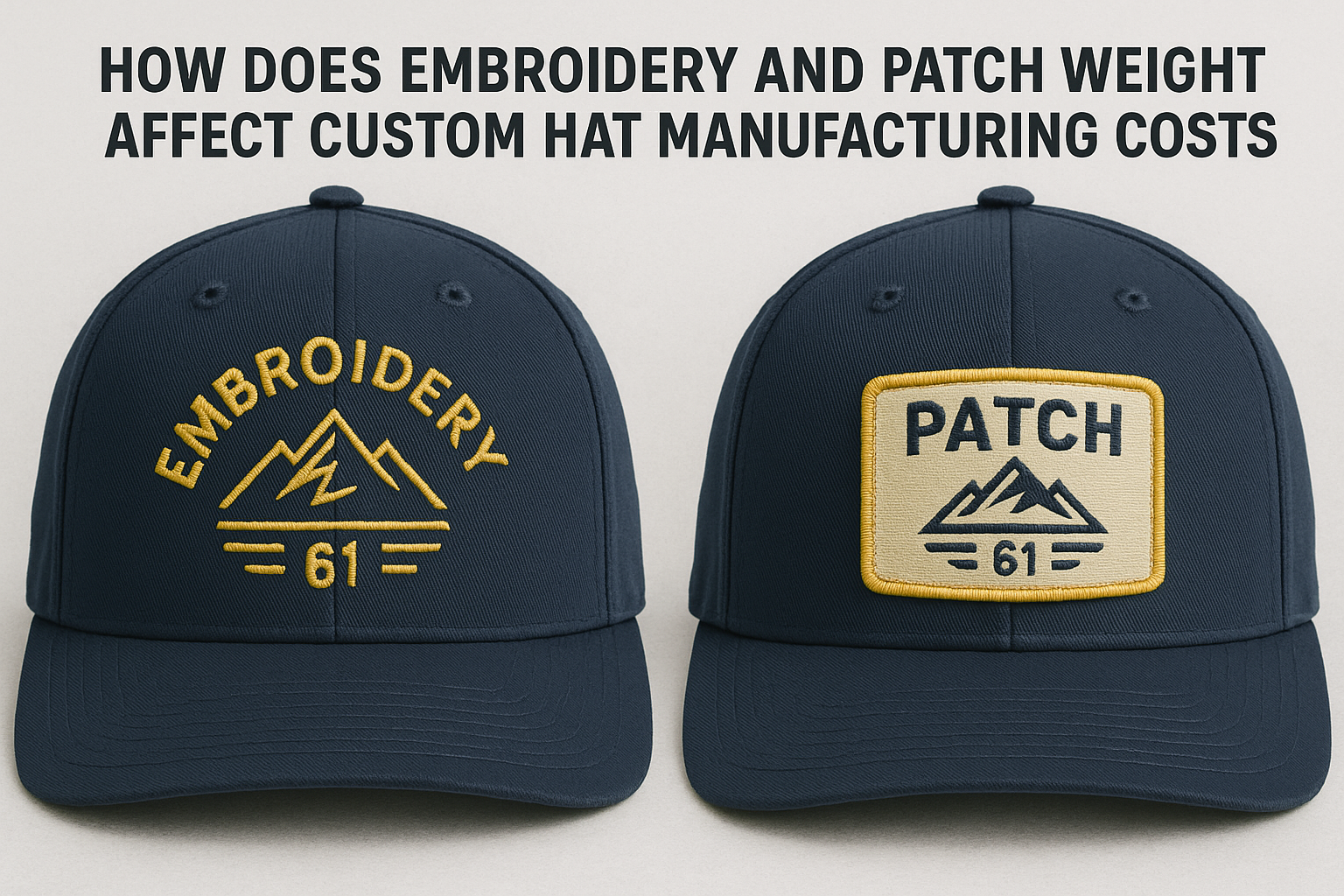
Custom caps aren’t just about looks — they’re about logistics. If you’re planning a large merch drop or outfitting a team, the extra weight from embroidery or patches adds up fast — and it can impact both your budget and your shipping strategy.
Embroidery can add 10–25g (0.35–0.88 oz) to a cap. Patches add 5–15g (0.17–0.53 oz), depending on the material. These small increases stack up across large orders — and they directly influence your costs and delivery timeline.
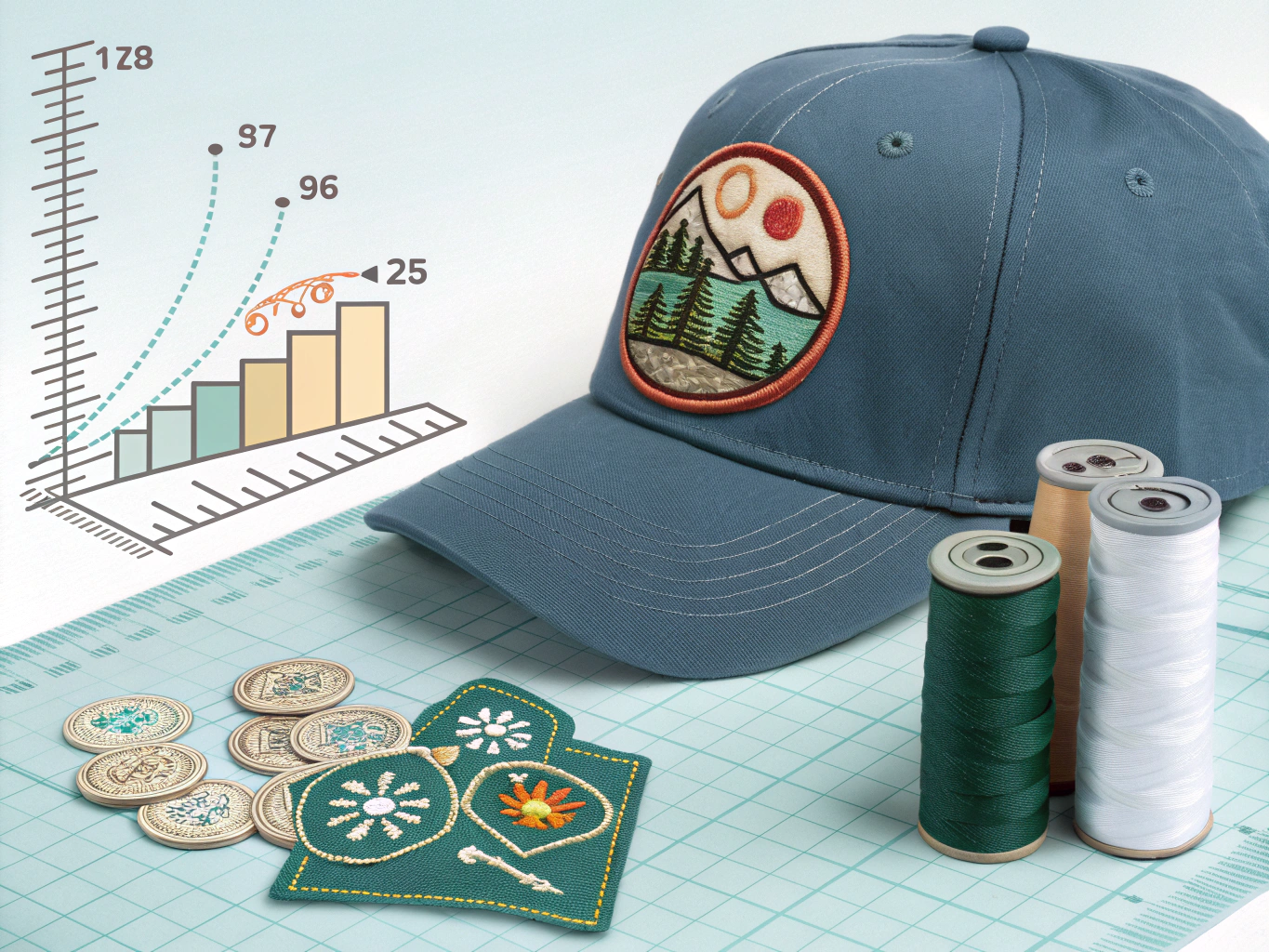
Let’s break down how decorative weight affects manufacturing and shipping — and how to plan smarter.
How much weight do embroidery and patches add to custom hats?
Thread isn’t weightless. And a patch — even a small one — makes a difference when you’re ordering 500, 1,000, or more units.
Embroidery adds up to 25g (0.88 oz) per cap. Patches typically add 5–15g (0.17–0.53 oz), depending on the type and backing.
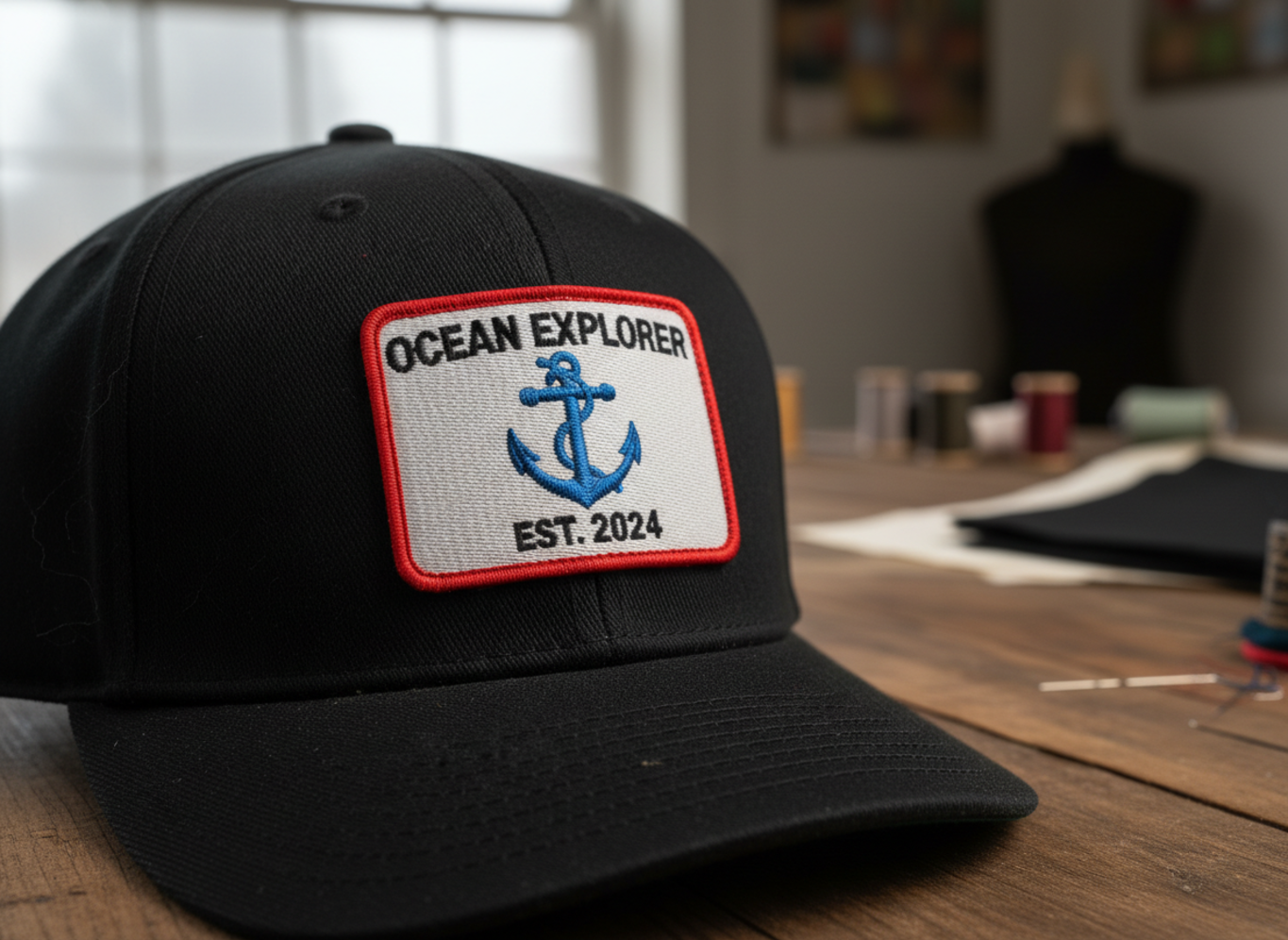
Stitch count and material matter
Embroidery weight is closely tied to stitch count1. A simple logo with 3,000 stitches might add 10g. A large, multi-colored design with over 10,000 stitches can exceed 20g, especially when it includes heavy backing or is placed on multiple areas of the cap.
Patch weight depends on type:
- Woven patches2: ~5–8g
- Embroidered patches: ~7–10g
- Rubber (PVC) or chenille patches3: 12–15g+
These numbers may seem small — but multiply them by your order quantity and you’ll start seeing real shipping weight shifts.
What’s the cost of extra decoration weight in shipping?
Shipping companies — whether it’s FedEx, UPS, or DHL — charge by total shipment weight or dimensional weight4, whichever is higher. The extra grams from decoration can bump you into a new price bracket.
Just 15g (0.53 oz) of added weight per cap on a 1,000-unit order equals 15kg (33 lbs) — which can mean hundreds more in freight charges.
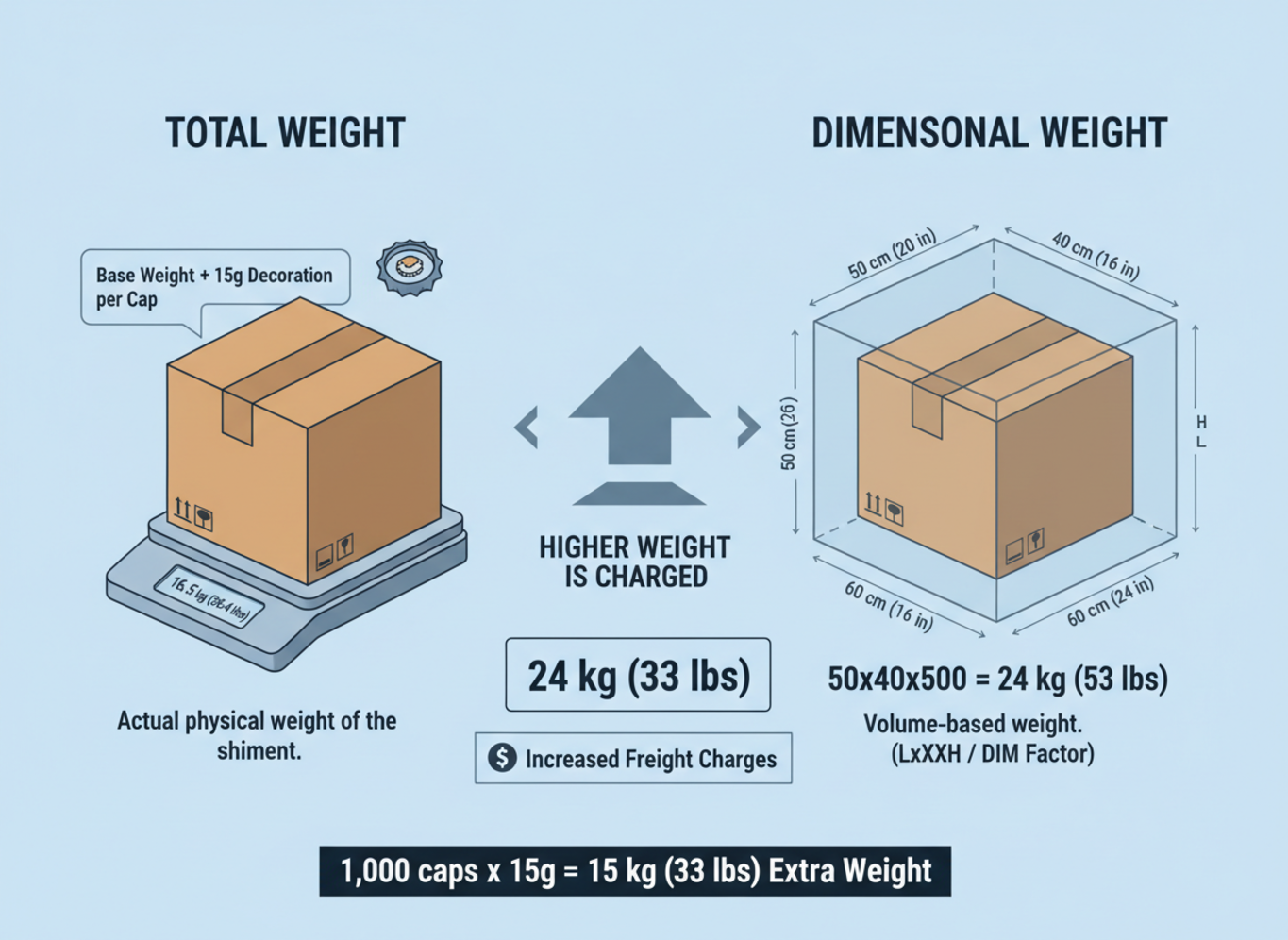
Real-world impact on bulk shipping
Let’s say your blank caps weigh around 95g (3.35 oz). After embroidery, they weigh 110g (3.88 oz). That’s a 15% increase. On a 500-cap order:
- Without embroidery: 47.5 kg / 105 lbs
- With embroidery: 55 kg / 121 lbs
This difference may trigger a higher shipping class in the US or raise freight thresholds within the EU — especially when using air express5.
In Europe, where customs declarations and per-pallet logistics matter, gross weight can also affect your import duties6, especially for third-party warehousing or Amazon FBA shipments7. In the US, exceeding weight thresholds can lead to rate hikes with FedEx Ground or UPS.
Anthea provides pre-production weight estimates with and without decoration, helping clients choose the right decoration strategy for their logistics plan.
How can you reduce weight without losing visual impact?
There’s no need to strip your brand identity to cut weight. The key is strategic design.
Smarter logo sizing, alternate materials, and design simplification can reduce embroidery or patch weight without sacrificing style.
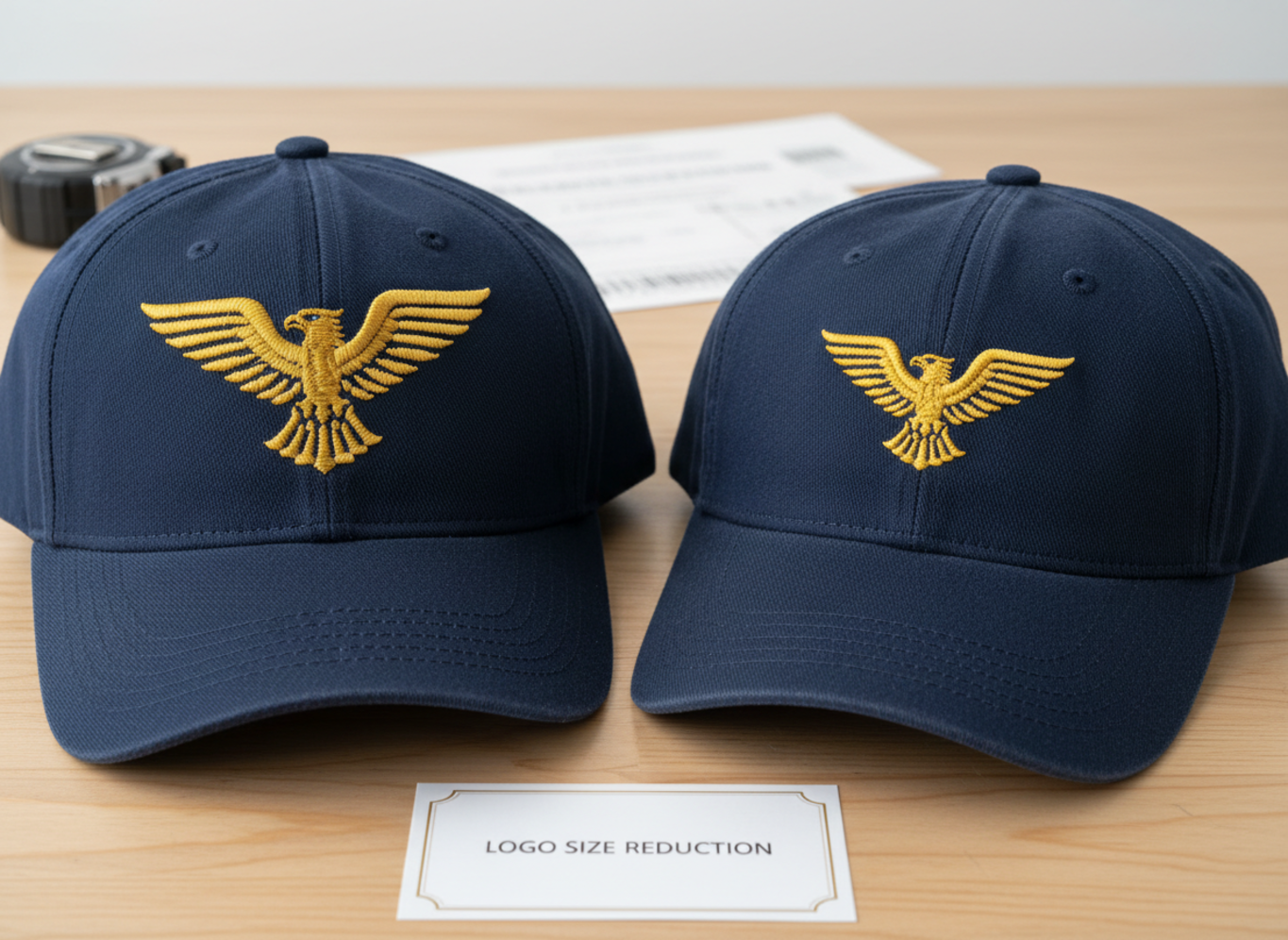
Design tweaks that lighten the load
Here’s what we recommend for EU and US clients placing bulk orders:
- Shrink large logos slightly — reducing coverage can cut weight by 20–30% without a major visual change.
- Use woven patches instead of heavy chenille or rubber for a lighter but still high-quality effect.
- Avoid unnecessary back or side embroidery unless it’s essential to your branding.
- Use outline embroidery or negative space instead of full fill.
We also offer digital mockups and sample stitching8 so you can preview the design before committing to production. That saves time, money, and unexpected shipping costs.
What should bulk buyers confirm before placing large orders?
Decoration weight affects more than aesthetics. For US and EU buyers, it influences your cost per unit, shipping fees, and profit margin.
Before you confirm production, ask for sample weights, freight estimates, and carton specs — especially if you’re importing.
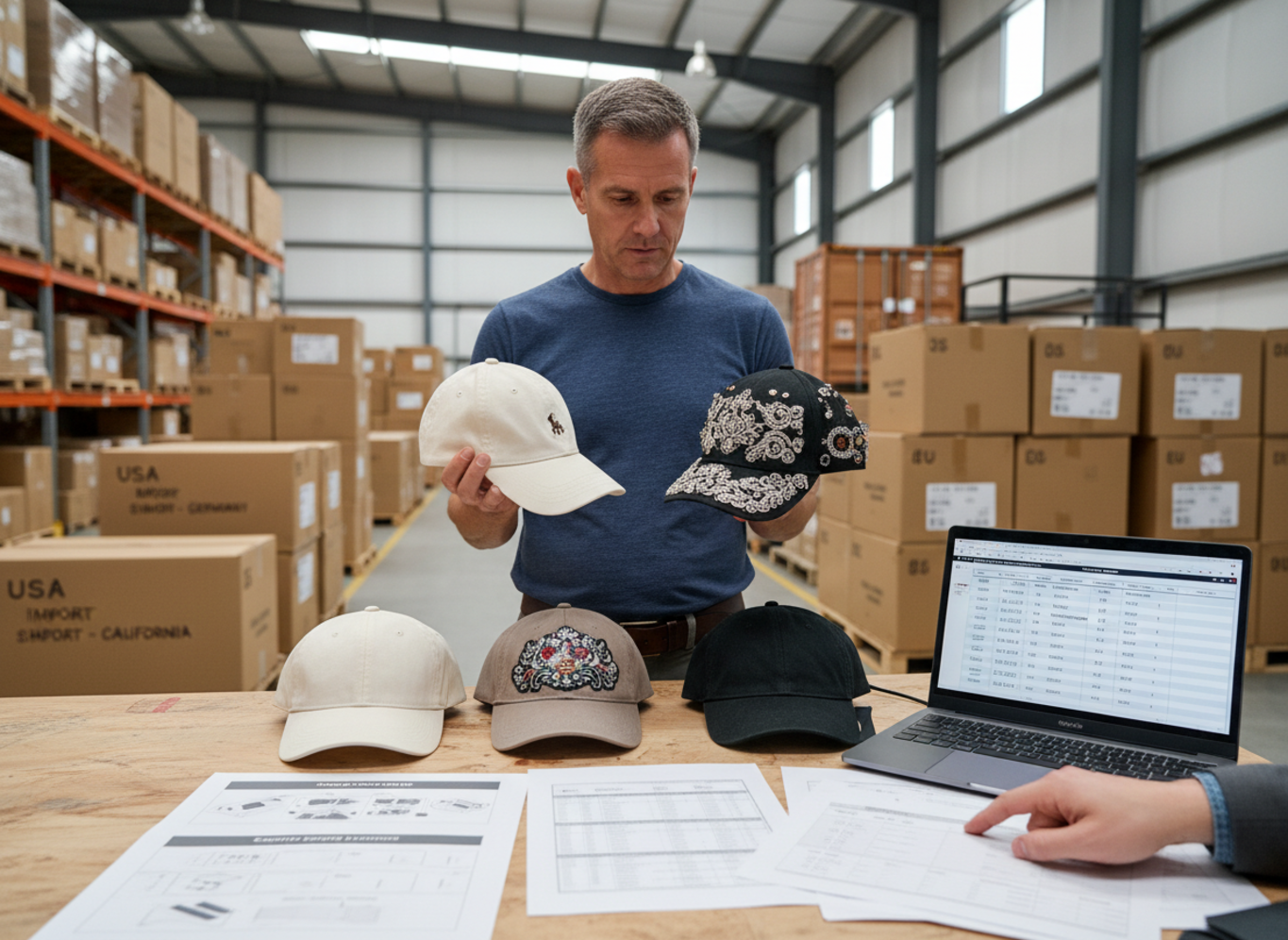
A checklist for your next large hat order
Whether you’re running a merch drop, outfitting a sports team, or managing corporate gifts, here’s what to request from your manufacturer:
- ✅ Stitch count estimates (and how it affects weight)
- ✅ Patch material options (including lighter alternatives)
- ✅ Sample approval with full decoration applied
- ✅ Final gross weight per carton
- ✅ Customs-friendly invoices with accurate HTS codes9 and country-of-origin labels10
- ✅ Packaging weight included in totals (important for EU importers)
At Anthea, we routinely help brands across North America and Europe optimize their cap designs for both visual impact and logistic efficiency.
We support freight planning from factory floor to final delivery — whether that’s a US 3PL warehouse, a UK event site, or an Amazon FBA center in Germany.
Conclusion
Decorating a cap isn’t just a branding decision — it’s a shipping decision. When you factor in weight, materials, and cost per gram, you unlock smarter manufacturing and better margins.
Contact
Anthea Custom Headwear Co., Ltd.
🌐 Visit Website
📧 [email protected]
📱 WhatsApp: +86 18132712127
-
Price embroidery with confidence. See how stitch count drives thread usage, run time, and weight so you can balance design detail and budget. ↩
-
Compare weight, detail, and durability vs. embroidered or chenille. Find when woven patches deliver the best look with the least grams. ↩
-
Know the trade-offs: bold texture and durability vs. added grams and cost. Get guidance on use cases, care, and shipping implications. ↩
-
Avoid surprise surcharges by understanding how carriers price boxes by size vs. weight. Learn formulas, thresholds, and ways to optimize packaging. ↩
-
Decide if speed justifies cost. Understand rate structures, volumetric rules, and when heavier decorations tip you into pricier service tiers. ↩
-
Estimate landed costs accurately. Learn duty rates, valuation rules, and how decoration materials or gross weight can change what you pay at the border. ↩
-
Prevent check-in delays and extra fees. See FBA limits for cartons and pallets, required labels, and how added grams can trigger chargebacks. ↩
-
Catch issues before production. Learn best practices for proofs, sew-outs, and approvals to avoid costly rework and overweight shipments. ↩
-
Classify your hats correctly to reduce risk of fines or delays. Use official tools and notes to pick the right tariff code for decorated headwear. ↩
-
Stay compliant in the US and EU. See labeling rules, placement, and penalties so your cartons clear customs without relabeling or delays. ↩