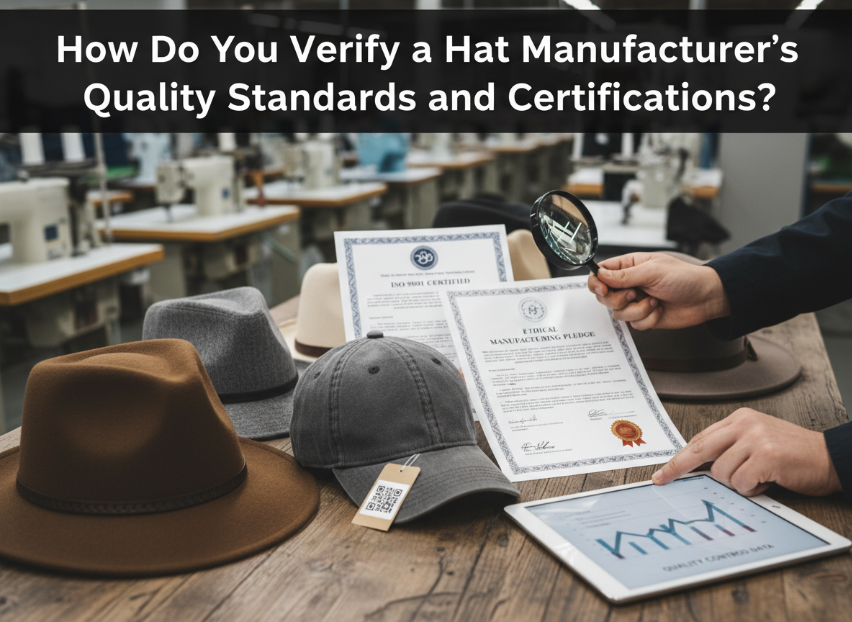
Many factories claim high quality. But when the goods arrive, the reality is very different. That’s why real verification matters.
You verify a hat manufacturer’s quality1 by checking their certifications2, reviewing their quality control processes3, and confirming test reports from trusted labs or audit services.
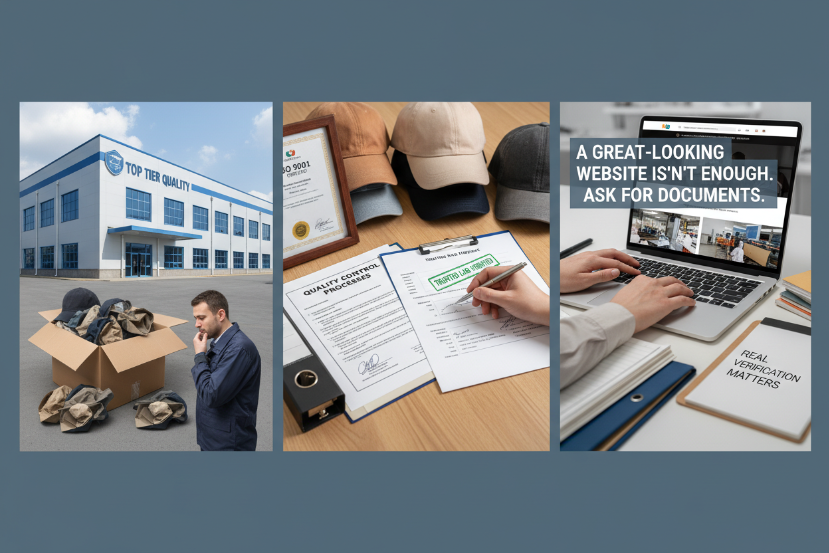
A great-looking website isn’t enough. I’ve learned to ask for documents, reports, and proof before placing any serious order.
How Can You Verify a Manufacturer’s Certifications?
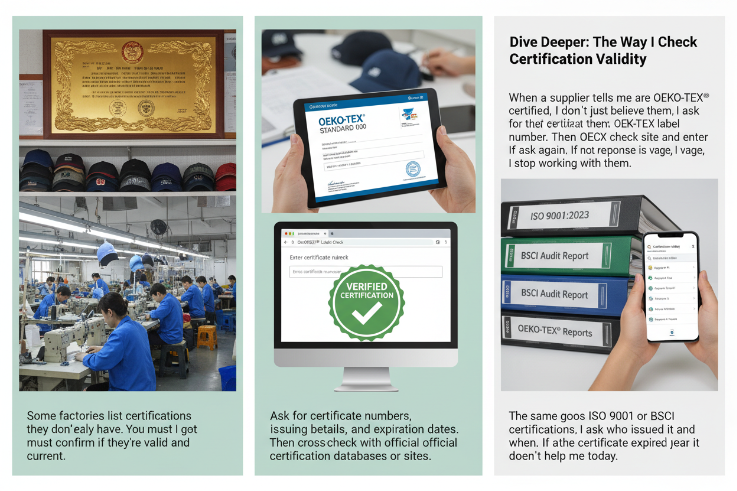
Some factories list certifications2 they don’t really have. You must confirm if they’re valid and current.
Ask for certificate numbers, issuing body details, and expiration dates. Then cross-check with official certification databases or sites.
The Way I Check Certification Validity
When a supplier tells me they are OEKO-TEX® certified4, I don’t just believe them. I ask for the exact certificate number. Then I go to the OEKO-TEX label check site and enter it. If nothing comes up, I ask again. If the response is vague, I stop working with them.
The same goes for ISO 90015 or BSCI certifications2. I ask who issued it and when. If the certificate expired last year, it doesn’t help me today. Some suppliers send documents in another brand’s name. That’s a red flag.
Here’s my standard list of things I check:
| Certification | What to Ask For | Where to Check |
|---|---|---|
| OEKO-TEX® | Label number, expiry date | oeko-tex.com |
| ISO 90015 | Audit year, issuing body | Supplier’s own QC or registrar’s site |
| BSCI or SEDEX6 | Facility report, scoring | ask for PDF or platform access |
| GRS (if using RPET) | Chain of custody certificate | Global Recycled Standard site |
If they can’t provide real evidence, I don’t trust their process.
What Quality Control Processes Should You Expect?
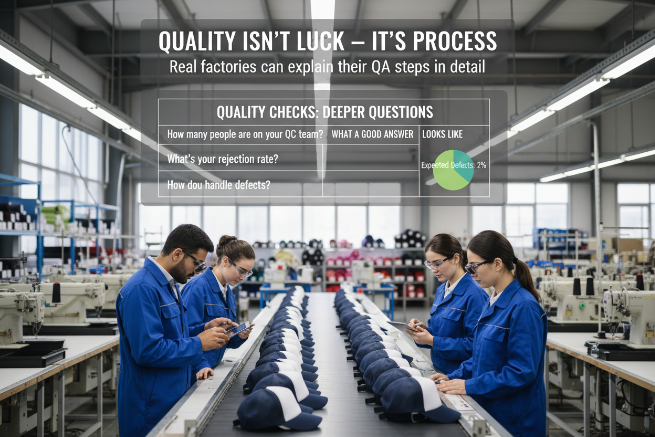
Quality isn’t luck — it’s process. You need to know what checks your supplier follows before and after production.
Ask how they inspect materials, track defects, and ensure consistency across bulk orders. Real factories can explain their QA steps in detail.
Questions I Ask About Quality Checks
Every good hat I’ve received came from a factory that had clear internal checks. I don’t just ask, “Do you have quality control?” I ask, “How many people are on your QC team?” and “What’s your rejection rate?”
A serious factory can tell me how many defects they expect, and what they do when something goes wrong.
My go-to questions look like this:
| Question | What a Good Answer Looks Like |
|---|---|
| Do you check materials before cutting? | “Yes, we inspect all fabric rolls.” |
| How many QC checks happen per order? | “At least 3 – before, during, after.” |
| What happens to rejected items? | “We fix or remake at our cost.” |
| Do you have a final checklist for packing? | “Yes, we send it if you need it.” |
Bonus: I always ask for a QC checklist document. If they say no, that usually means they don’t have one.
How Do You Confirm the Quality of Samples and Bulk Orders?
One good sample doesn’t guarantee a good bulk order. You must check how the factory controls quality across the whole run.
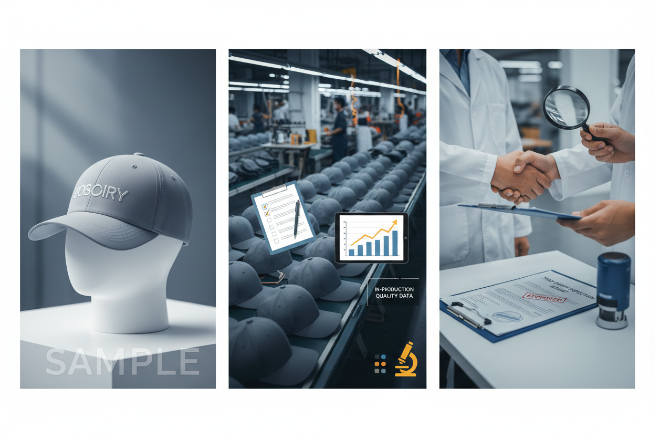
Ask for sample logs7, in-production photos, and random inspection reports. Third-party labs or inspection agents can add extra trust.
My Steps for Verifying Bulk Quality
Before confirming a bulk order, I always request detailed photos of the sample — close-ups of embroidery, inner seams, tags, and brim shape. I keep these images as reference.
During bulk production, I ask the factory to send photos of random pieces from the line. I compare them to the sample. If I see big differences, I stop and ask for fixes before shipping.
For larger orders, I also hire a third-party inspector. There are many in China, like AQI Service or AsiaInspection. They go to the factory, check 80–100 random pieces, and give me a report the next day.
Here’s a snapshot of what I usually do:
| Step | What I Check |
|---|---|
| Pre-production Sample | Matches color, fit, and embroidery specs |
| Production Photos | Consistency in shape, stitching, details |
| Final QC Images | Labeling, folding, packaging |
| Third-Party Inspection Report | Defect rate under 2%, no major flaws |
This process adds $100–$150 to my cost but saves me from much bigger losses later.
What Compliance Standards Should Premium Brands Look For?
If you’re selling in the US, EU, or Australia, you need more than good stitching. You need product safety and social compliance too.
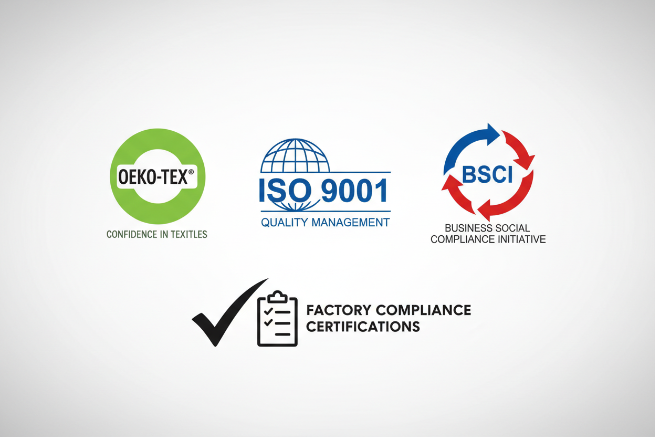
Check if the factory follows OEKO-TEX®, ISO 90015, or BSCI standards. Confirm that they meet safety and ethical guidelines for your markets.
Certifications That Protect My Brand
It’s not just about looking good. Some buyers in the EU ask for REACH compliance8. In the US, CPSIA testing9 is sometimes required. If I want my hats sold in big stores, I must show that they’re made safely and ethically.
These are the certifications2 I usually ask for based on region:
| Market | Key Standards / Requirements |
|---|---|
| United States | CPSIA, Prop 65, GRS (for recycled content) |
| European Union | OEKO-TEX®, REACH, BSCI, ISO 90015 |
| Australia | Ethical sourcing and chemical safety certificates |
If a supplier can’t meet these, it tells me they aren’t ready for premium-level clients. For my brand, quality means more than just “nice hats.” It means safe, verified, and responsibly made.
Conclusion
Trust is built on proof. Verified documents and clear processes help you avoid bad suppliers and protect your brand.
-
Understanding how to verify a hat manufacturer’s quality can save you from costly mistakes. ↩
-
Exploring key certifications helps ensure your suppliers meet industry standards. ↩ ↩ ↩ ↩
-
Learning about quality control processes can help you assess supplier reliability. ↩
-
Verifying OEKO-TEX® certification ensures your products meet safety and environmental standards. ↩
-
Understanding ISO 9001 can help you choose suppliers with effective quality management systems. ↩ ↩ ↩ ↩
-
Exploring BSCI and SEDEX certifications can help ensure ethical labor practices in your supply chain. ↩
-
Sample logs are crucial for tracking quality; understanding them can enhance your supplier evaluation. ↩
-
REACH compliance ensures your products are safe for consumers in the EU; it’s vital for market access. ↩
-
CPSIA testing is essential for product safety in the US; understanding it protects your brand. ↩