Most buyers choose the lowest price. Later, they find out it was not the best deal. Quality problems or extra charges cost more in the end.
You should compare hat manufacturing quotes1 by evaluating total cost2, not just unit price. Look at MOQs, setup fees3, customization limits, and delivery terms before choosing a supplier.

The numbers in a quote only tell part of the story. I always dig deeper. That’s the only way to avoid surprises and protect my budget.
What Are the Key Components in a Hat Manufacturing Quote?
Many quotes look similar at first. But the details can be very different. If I don’t break them down, I can’t compare them fairly.
A complete hat manufacturing quote includes unit price, minimum order quantity4, customization options5, setup fees3, sampling cost6, and shipping terms7.
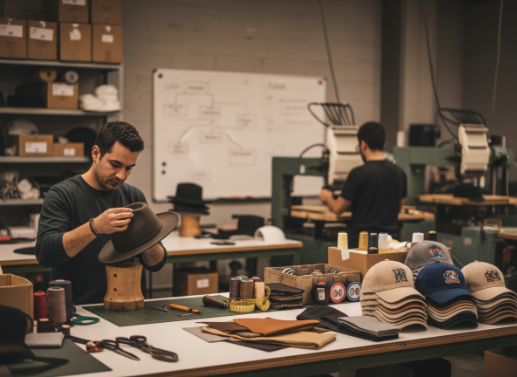
What I Look for in a Hat Production Quote
Every time I get a quote from a supplier, I break it down into smaller parts. The first number they give is the unit price. But that’s only part of the full cost. I need to check what’s included in that price and what’s not.
Some factories include embroidery in the base price. Others charge extra per logo or color. Some include packaging and labels. Others charge for that later. That’s why I ask for a clear breakdown with every quote.
Here’s the list I always go through:
| Quote Item | What to Check |
|---|---|
| Unit Price | Is this with or without embroidery? |
| MOQ | Is the price based on 100 or 500 pieces? |
| Setup Fee | Is there a one-time logo setup cost? |
| Sampling Fee | Is the sample cost refundable? |
| Packaging | Are polybags, labels, or boxes included? |
| Delivery Terms | Is shipping included or separate? |
Without this breakdown, I can’t tell which supplier is truly cheaper. I don’t want to guess. I want to see the numbers.
How Do You Identify Hidden Costs in a Quote?
A low quote may look great at first. But if it has hidden charges, I end up paying more later. I’ve learned to ask the right questions.
Look for setup fees3, embroidery limitations8, extra sampling cost6s, packaging upgrades9, and shipping exclusions. These are often not shown in the main quote line.

Common Hidden Costs I Always Check
I’ve had suppliers quote me $4.50 per hat. But when I added it all up, the real cost was closer to $7. Why? Because they didn’t tell me about setup fees3, embroidery limits, or shipping costs until later.
Here are some of the hidden charges I watch for:
- Setup Fees – Some suppliers charge $30–$100 to digitize your logo.
- Embroidery Limits – The price may only include 5,000 stitches. Extra stitches cost more.
- Sampling – A sample may cost $50 or more and not be refundable.
- Color Limitations – Some prices are for basic colors only. Custom colors cost extra.
- Packaging Upgrades – A simple polybag may be free. But if I want boxes or custom tags, that adds cost.
- Shipping – Some quotes are FOB (I handle shipping). Others are DDP (they do it). That makes a big price difference.
Here’s a quick chart I use when reviewing supplier quotes:
| Hidden Cost Type | Typical Range | Notes |
|---|---|---|
| Logo Setup Fee | $30–$100 | One-time, often not included |
| Extra Stitch Charges | $0.50–$1.50 per logo | Over 5K–10K stitches |
| Sample Cost | $40–$80 | Ask if it’s refundable |
| Custom Packaging | $0.30–$2.00 per piece | Depends on material |
| Shipping (DDP vs. FOB) | Varies by country | Confirm incoterms |
I always ask for “all-in” pricing. I don’t want surprises.
How Do You Judge a Manufacturer’s Value Beyond Price?
Price matters. But I’ve learned it’s not everything. A hat that looks cheap on paper might cost me more in customer returns10, delays, or brand damage.
You compare value by looking at what you get per dollar — including quality control11, sampling speed, flexibility, and brand experience.
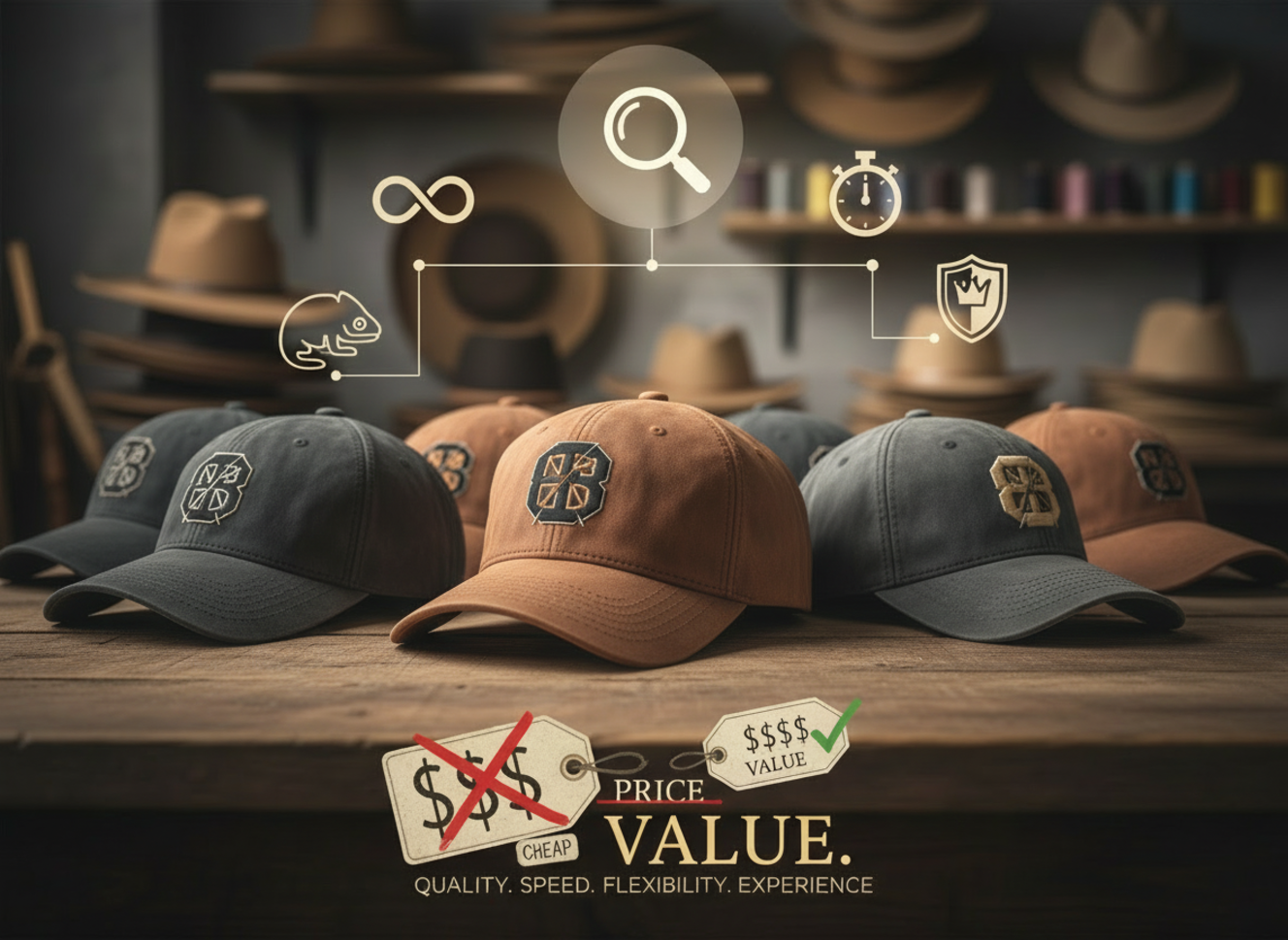
What I Measure When Judging Value
I always ask myself: “What am I really getting for this price?” For example, if one supplier offers $1 less per hat but takes 30 days longer or gives poor embroidery, I may lose more money than I save.
That’s why I also compare these things:
- Sample Time – I need fast samples to test new ideas and keep campaigns moving.
- Customization Options – I want freedom: rope, patch, puff embroidery, print.
- Communication – I want quick replies and clear answers.
- Consistency – The 100th hat should look like the first.
Some suppliers send me blurry mockups or delay sampling. Others like Anthea give me clean visuals, fast revisions, and deliver in 7–10 days. That’s value I can count on.
Here’s how I rank suppliers:
| Factor | High Value Supplier | Low Value Supplier |
|---|---|---|
| Sampling Speed | 7–10 days | 14–30 days |
| MOQ Flexibility | 200 pieces or less | 500+ pieces |
| Communication | Replies in 24 hrs or less | Slow or unclear replies |
| Design Support | Offers mockups, edits | Limited or no design help |
| Quality Consistency | Same quality in bulk | Samples look better than bulk |
Value is about trust. I don’t just buy hats. I buy peace of mind.
How Do You Use Negotiation to Optimize Your Quote?
Sometimes, the quote I get isn’t the final price. Many suppliers are open to adjust it. But I’ve learned to ask the right way.
Ask about discounts for larger orders, combining designs under one MOQ, waiving setup fees3, or adjusting sampling cost6s. Many factories are flexible.
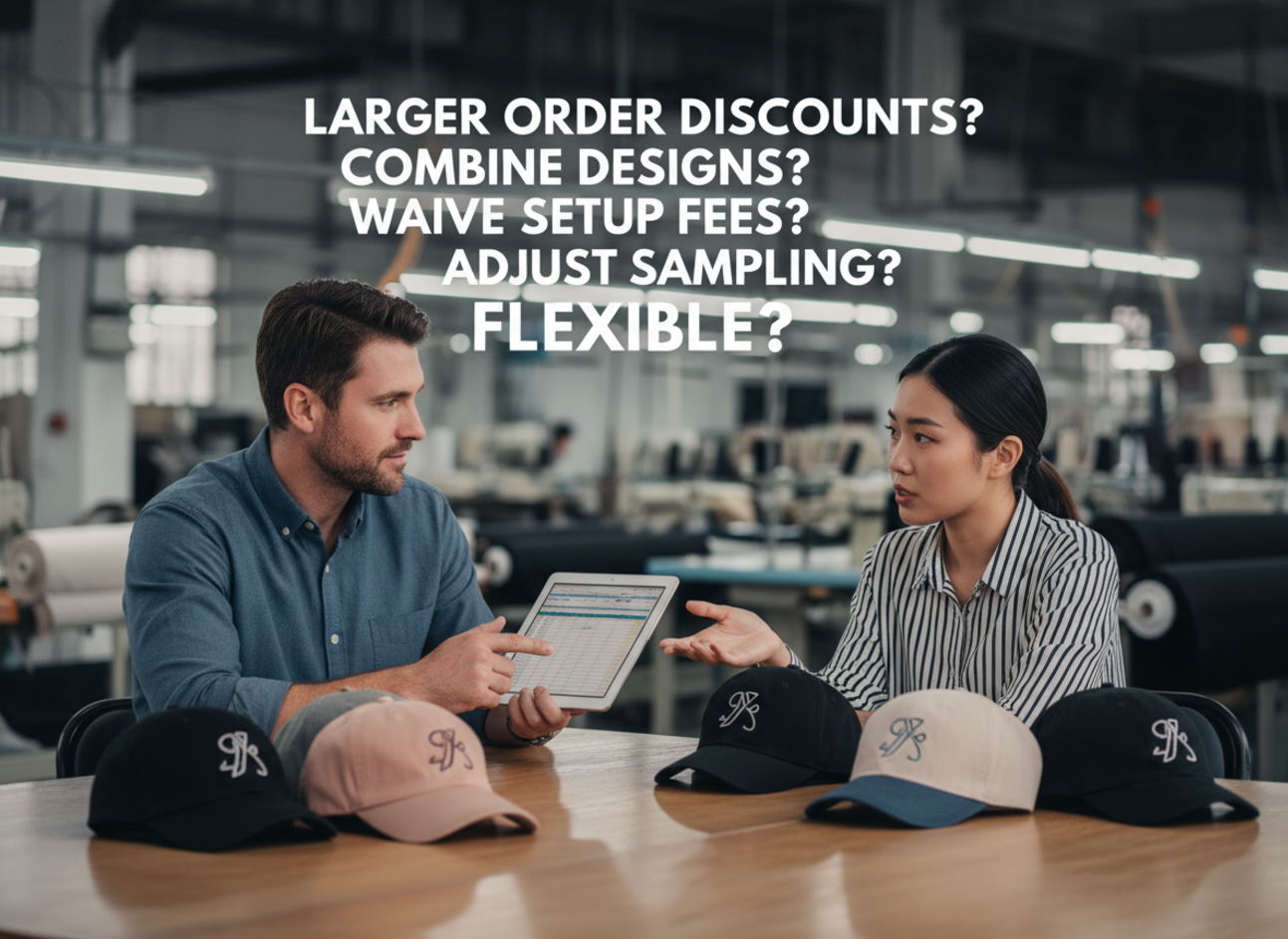
My Strategy When Negotiating Pricing
I don’t just say, “Can you lower the price?” That rarely works. Instead, I offer something in return. For example:
- I ask, “Can you waive the setup fee if I order 300 pieces?”
- I ask, “Can we combine these 2 designs under one MOQ?”
- I ask, “If I place a reorder in 30 days, can you give a discount now?”
Most suppliers will try to meet me halfway. They know I’m serious, and they want long-term business.
I also stay polite and clear. I ask for written confirmation of any changes. That avoids confusion later.
Here’s what I usually negotiate:
| Item | How I Negotiate |
|---|---|
| Setup Fees | Ask to waive after sample approval |
| MOQs | Ask to combine designs |
| Unit Price | Ask for tiered pricing |
| Sample Fee | Ask if refundable after bulk order |
| Payment Terms | Ask for 50/50 split (deposit/balance) |
A small change in pricing or MOQ can make my whole launch more profitable. I always try. And most of the time, I get it.
Conclusion
Smart pricing comparison looks beyond the unit price. I want to understand every cost and choose a partner — not just a price.
-
Understanding how to evaluate quotes can save you money and ensure quality in your hat production. ↩
-
Calculating total cost helps you avoid hidden fees and make informed decisions when choosing suppliers. ↩
-
Setup fees can significantly impact your overall costs; understanding them is crucial for budgeting. ↩ ↩ ↩ ↩ ↩
-
Knowing about MOQs can help you negotiate better deals and manage your inventory effectively. ↩
-
Exploring customization options can enhance your product’s appeal and meet customer demands. ↩
-
Understanding sampling costs can help you budget for product testing and ensure quality. ↩ ↩ ↩
-
Familiarizing yourself with shipping terms can prevent unexpected costs and delays. ↩
-
Understanding embroidery limitations can help you plan your designs and avoid extra costs. ↩
-
Upgraded packaging can enhance your product’s presentation and customer experience. ↩
-
Managing customer returns is crucial for maintaining profitability and brand reputation. ↩
-
Quality control is vital for maintaining product standards and customer satisfaction. ↩