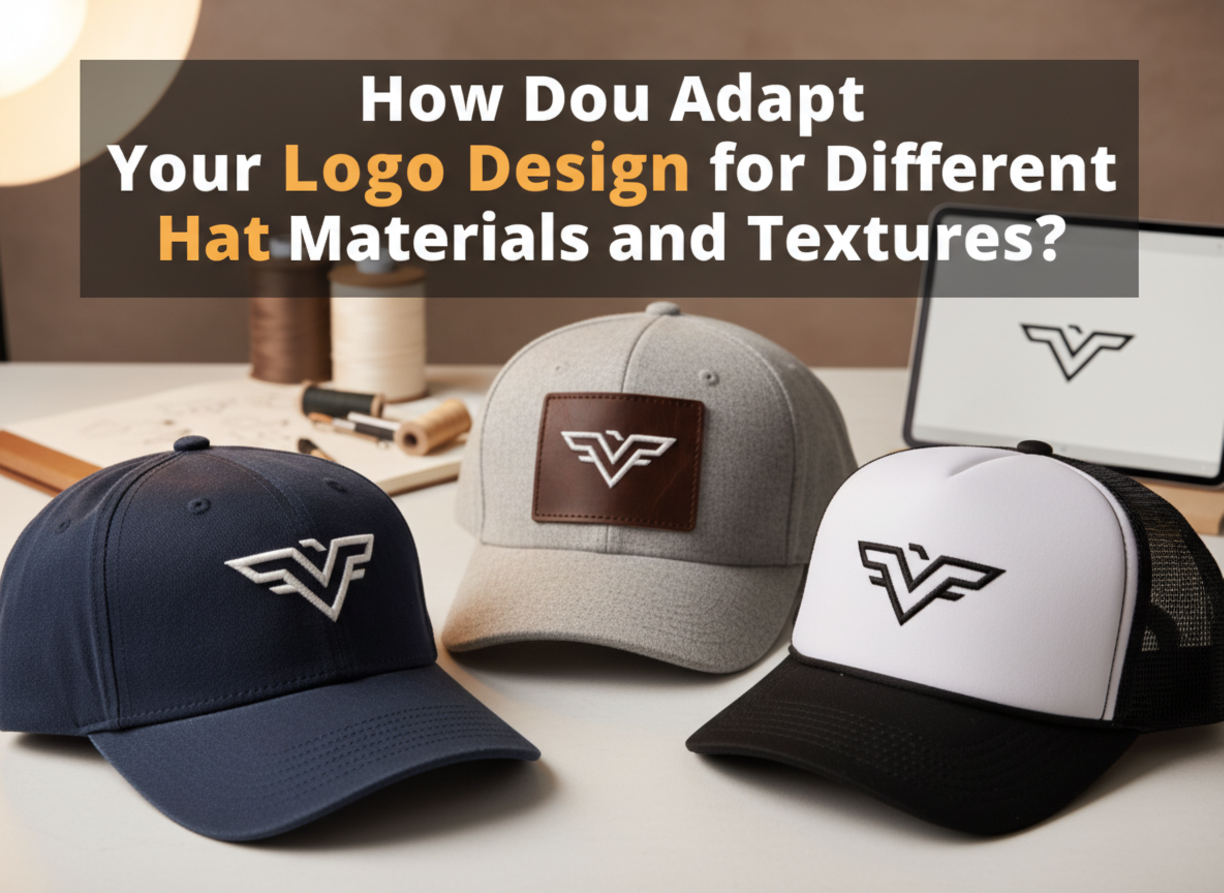
Many brands design one logo and expect it to look identical on every hat. But materials behave differently. Mesh stretches, fleece absorbs, and canvas1 resists fine detail. Understanding logo design hat materials2 ensures your logo remains clear, durable, and consistent across all fabric types.
Adapting logo design for different hat materials requires adjusting stitch density3, size, and technique based on fabric type. Canvas and cotton work well with flat embroidery4; mesh and performance fabrics5 need patches or heat transfer6 for clean detail. Soft or textured materials like fleece benefit from simplified designs and bold contrast for visibility.
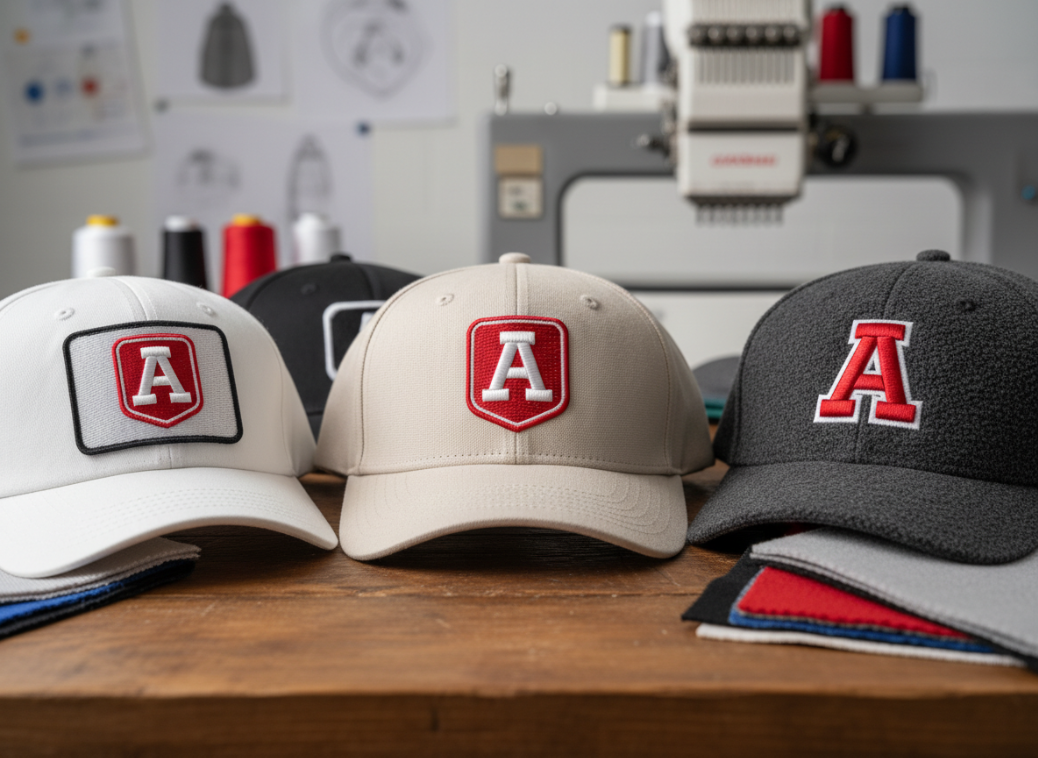
When I first started working with custom headwear, I assumed one logo setup could work across every style. I quickly learned that each material has its own “rules.” Let’s explore how texture, density, and flexibility affect your final design.
Why material matters in hat logo design?
I once helped a brand embroider their logo on both cotton and mesh hats7. The cotton sample looked crisp, but the mesh one had gaps and frayed edges. The material made the difference.
Every hat material interacts differently with thread and ink. Textures, thickness, and elasticity affect stitch behavior, ink absorption, and color visibility8.
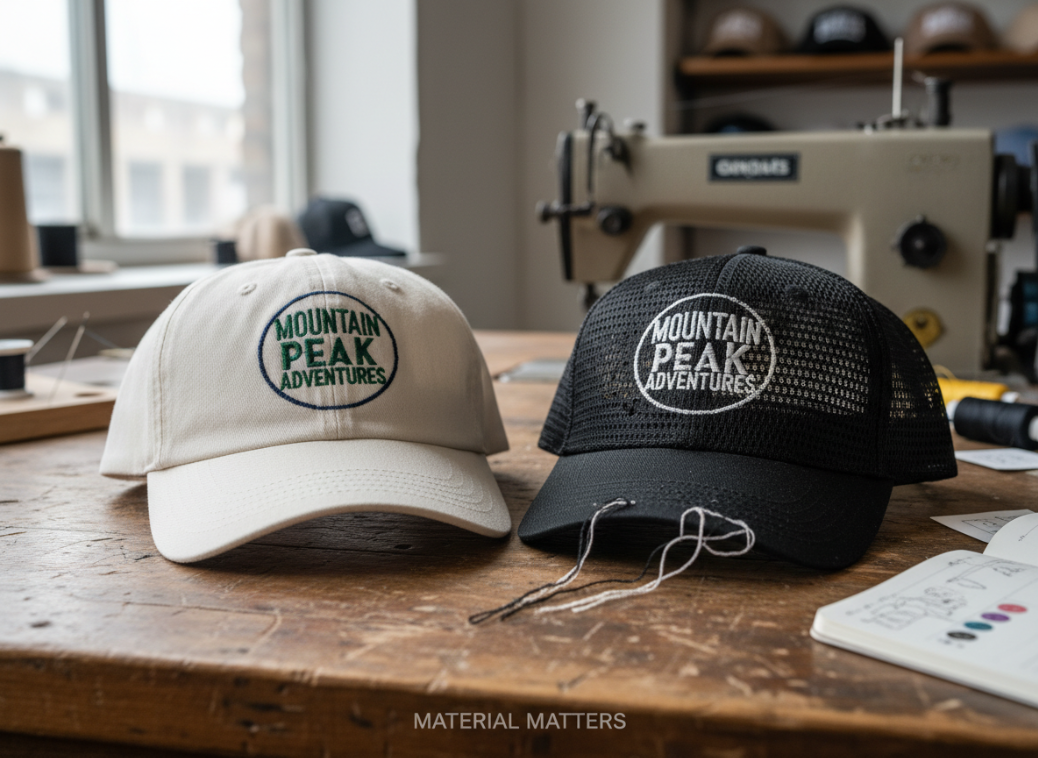
Cotton and canvas1 are dense, stable surfaces — perfect for embroidery. Mesh and performance fabrics5, however, stretch or shift during stitching, distorting thin lines. Understanding how your logo reacts to each surface ensures both quality and brand consistency9.
Material Characteristics Overview
| Material | Texture | Design Compatibility | Best Decoration Method |
|---|---|---|---|
| Cotton | Smooth, firm | High detail possible | Flat embroidery |
| Canvas | Coarse, thick | Bold lines, minimal gradients | Embroidery or patch |
| Mesh | Open weave | Limited detail | Patch, print, or foam embroidery |
| Fleece | Soft, absorbent | Simplified shapes | Woven label or applique |
| Polyester | Slick, stretchy | Moderate detail | Heat transfer or silicone logo10 |
Different fabrics call for different design strategies. Let’s look at how to optimize your logo for each.
How to design for cotton and canvas1 hats?
Cotton and canvas1 are durable, structured, and predictable. I love working with them because they provide a stable base for embroidery.
For cotton and canvas1 hats, use standard or flat embroidery4 with medium stitch density3. Avoid overly fine details — thread thickness and fabric weave may blur them slightly.
[^1]-are-durable-s.png "custom cap material logo considerations")
These fabrics handle heat, thread, and pressure well, which makes them ideal for embroidery or sewn-on patches. However, because they’re thicker, the needle must penetrate evenly to prevent puckering.
Cotton & Canvas Design Tips
| Factor | Recommendation | Reason |
|---|---|---|
| Stitch Density | 0.4–0.45mm | Prevents stiffness |
| Line Thickness | ≥1mm | Keeps lines readable |
| Thread Type | Polyester or cotton | Matches texture and durability11 |
| Design Style | Bold, simple shapes | Clean results across surfaces |
Cotton and canvas1 give logos a timeless, premium feel — perfect for outdoor and lifestyle brands.
How to design for mesh and trucker hats?
Mesh hats are tricky. I’ve seen designers apply flat embroidery4 only to find half the stitches falling through the gaps.
Mesh and trucker hats need reinforcement under the embroidery area or use of patches and foam embroidery for cleaner detail. Avoid small lettering or thin shapes.
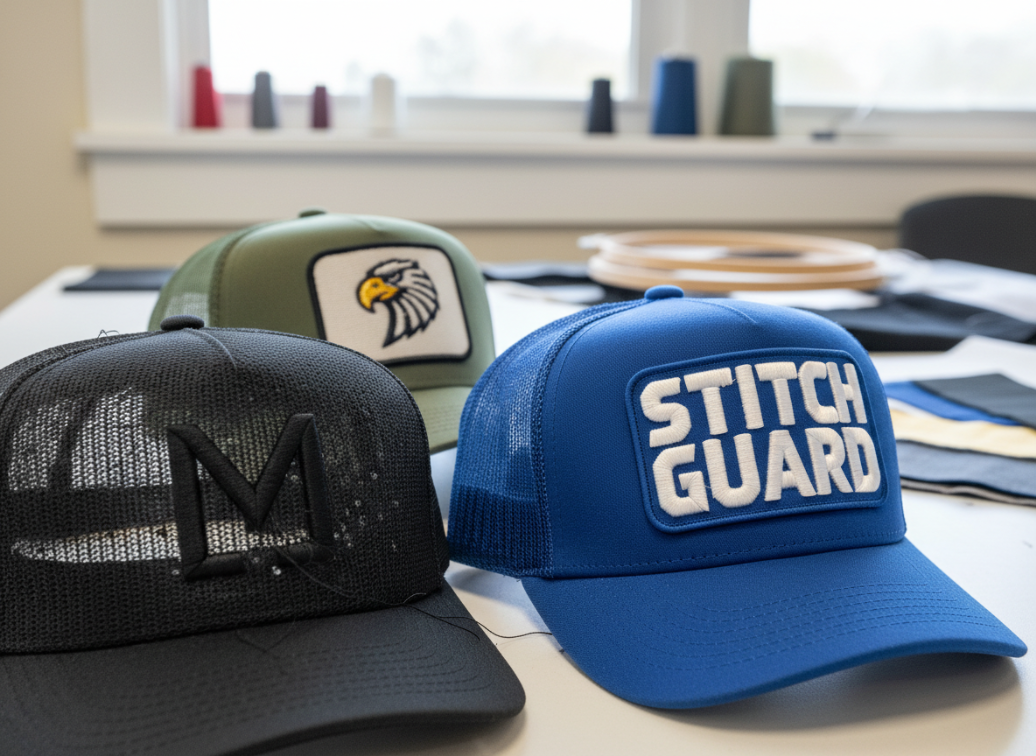
The open weave structure can’t hold dense stitches. Instead, add a backing fabric or opt for a 3D puff logo that covers gaps. Silicone or rubber patches also maintain clarity on mesh.
Mesh Hat Logo Options
| Decoration Type | Best Use | Visual Effect |
|---|---|---|
| 3D Puff Embroidery12 | Simple, bold logos | Raised, structured look |
| Woven or Rubber Patch | Detailed designs | Clean edges, modern feel |
| Heat Transfer Print | Promotional hats | Flat and smooth finish |
Mesh hats perform best with bold, minimal designs that stand out even from a distance.
How to design for fleece and wool hats?
Fleece and wool are cozy, textured materials — but not embroidery-friendly. Threads sink and fine details vanish quickly.
For fleece and wool hats, avoid small text or intricate artwork. Use woven labels13, patches, or thick satin embroidery for contrast and durability11.
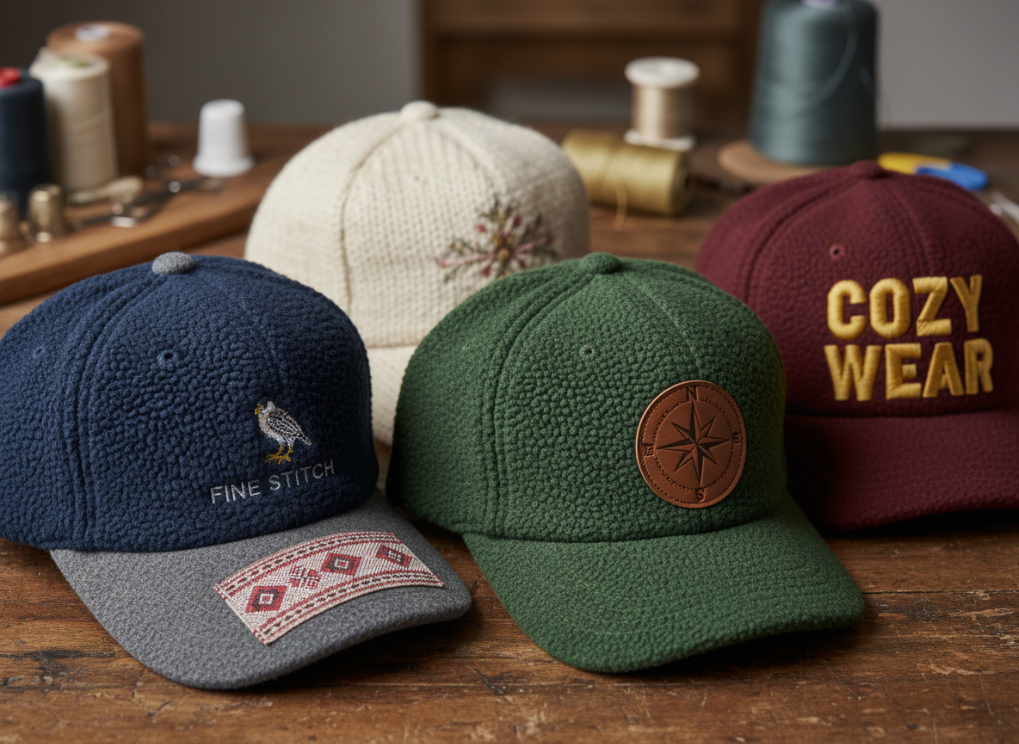
I once saw a client’s detailed mountain logo turn into a fuzzy blur on fleece. We switched to a woven patch, and the clarity returned immediately. Raised textures need bold, simple designs.
Fleece & Wool Logo Strategies
| Issue | Fix | Outcome |
|---|---|---|
| Thread absorption | Use patch or thick satin stitch | Maintains definition |
| Low contrast | Choose lighter thread colors | Improves visibility |
| Shape distortion | Simplify the design | Consistent appearance |
For winter hats and premium collections, subtle contrast and durable stitching create a polished, high-end look.
How to design for performance and synthetic fabrics?
Performance hats made from polyester or nylon are light, stretchy, and moisture-resistant — great for outdoor gear but challenging for embroidery.
For synthetic and performance fabrics5, heat transfer6 or silicone logo10s work best. Avoid dense embroidery that may damage or warp the fabric.
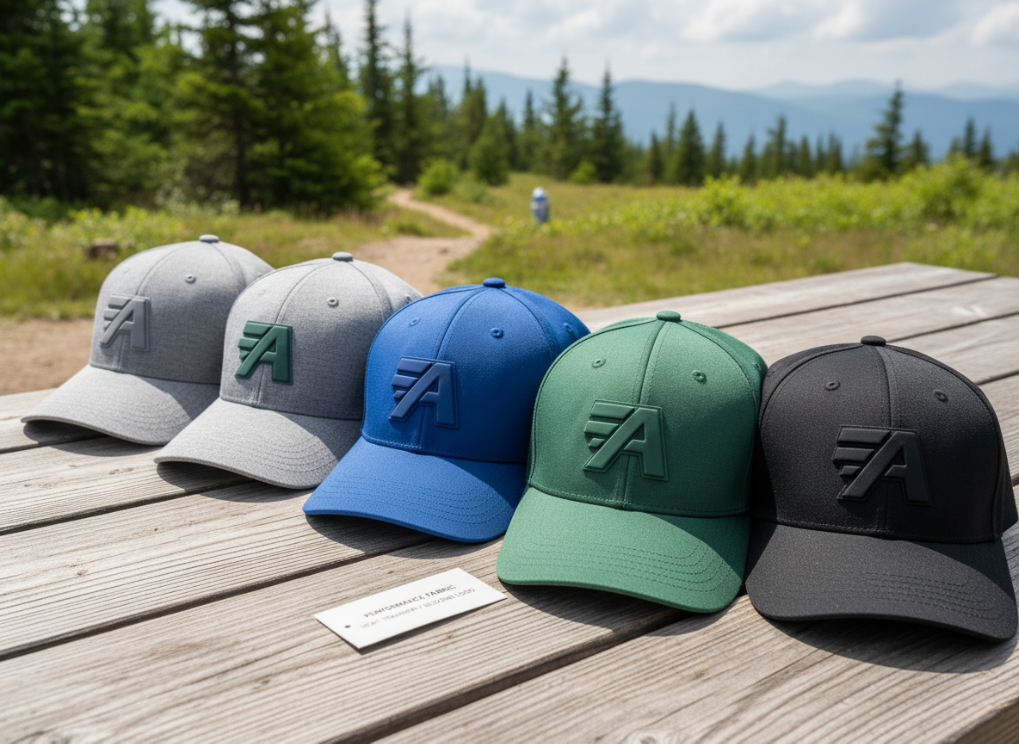
Embroidery can distort lightweight materials and cause puckering. Heat transfer and silicone techniques keep the logo flexible, lightweight, and weather-resistant. These are ideal for sports and technical apparel brands.
Performance Fabric Design Tips
| Factor | Recommendation | Reason |
|---|---|---|
| Decoration Type | Heat transfer or silicone logo10 | Prevents fabric stress |
| Stitch Type | Low-density if embroidered | Maintains shape |
| Logo Style | Flat, minimal | Clean modern look |
| Durability | Test under washing/UV exposure | Ensures longevity |
Combining modern materials with the right technique keeps your logo looking fresh even after extended outdoor use.
Durability and aesthetic considerations
Not all designs age the same. I’ve seen embroidery fade or fray early simply because the wrong thread was used.
Choose threads and techniques that match the hat’s fabric behavior, ensuring both aesthetic consistency and long-term durability11.
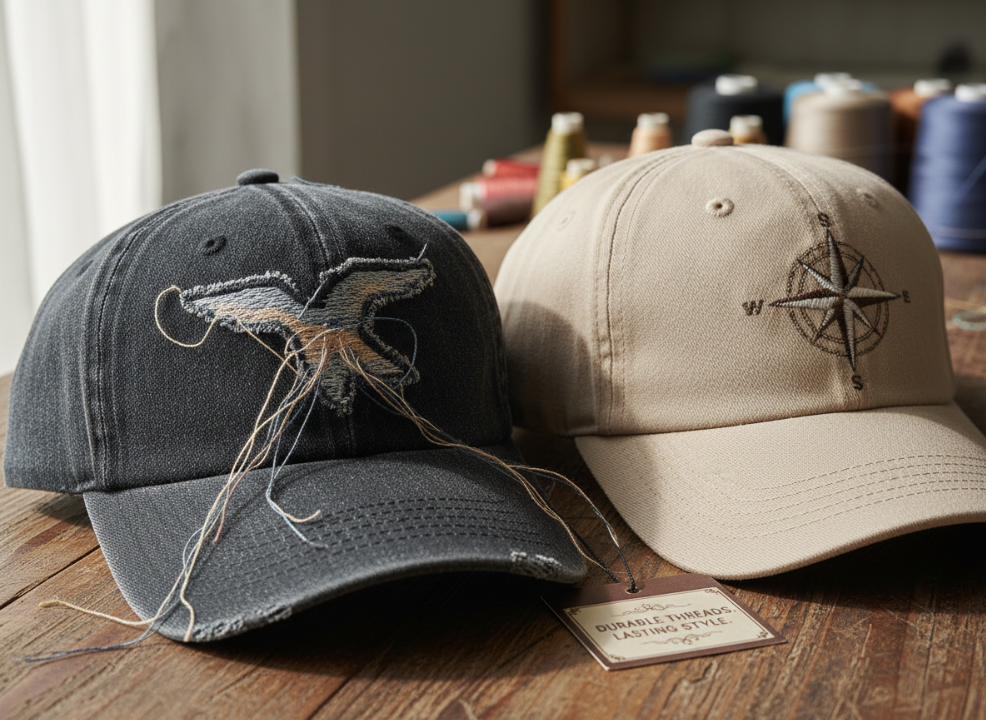
For heavy-use hats, polyester threads resist sun and washing better than rayon. For premium styles14, matte finishes complement soft fabrics like wool. Always test under real-world conditions — moisture, sweat, and sunlight reveal weaknesses faster than any mockup.
Durability Guide by Fabric
| Material | Ideal Thread | Durability Level | Notes |
|---|---|---|---|
| Cotton | Rayon or polyester | High | Great wash resistance |
| Canvas | Polyester | Very high | Perfect for outdoor use |
| Mesh | Polyester or silicone | Moderate | Needs reinforcement |
| Fleece | Nylon or patch | High | Works best with labels |
| Polyester | Heat transfer or silicone | Very high | Weatherproof |
Balancing performance with appearance ensures your logo lasts as long as the hat itself.
How Anthea helps brands test and optimize designs across materials?
I’ve seen many brands discover logo flaws only after production. That’s why at Anthea, we test every logo across multiple fabrics before final approval.
Anthea’s sampling and material testing15 process helps brands adapt designs for each fabric, ensuring consistent color, texture, and durability11 across hat collections.
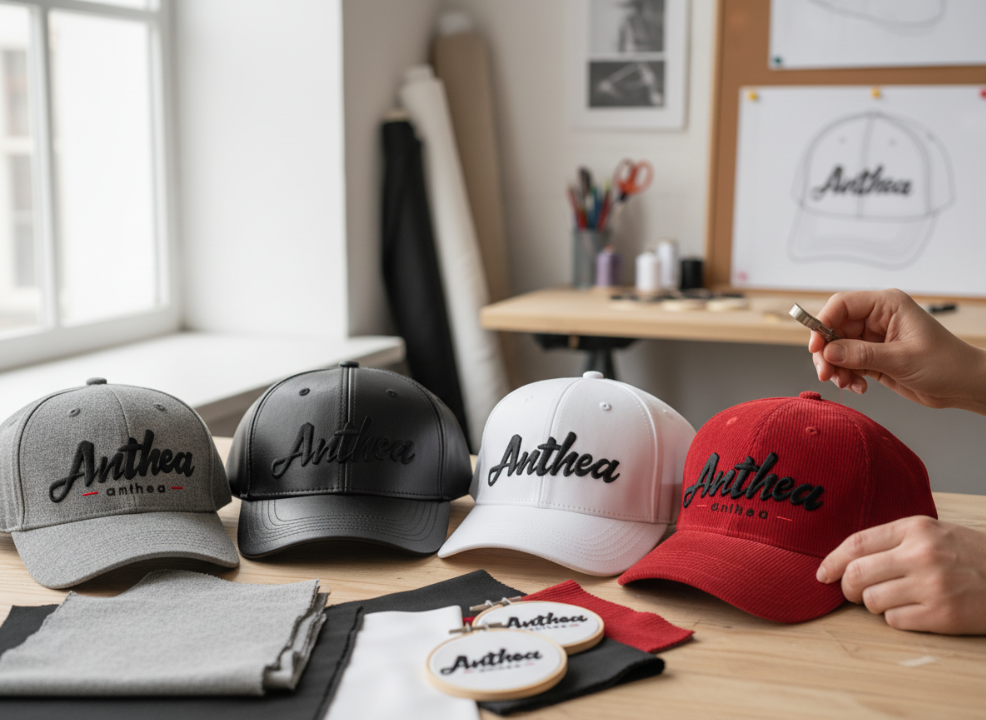
We help clients choose compatible threads, optimize stitch density3, and preview embroidery on actual materials. This ensures logos look identical on canvas1, mesh, or fleece.
Our Material Optimization Process
| Step | What We Do | Why It Matters |
|---|---|---|
| Fabric Evaluation | Test how materials react to stitching or heat | Prevents production issues |
| Logo Adjustment | Modify stitch density3 and scale | Maintains design clarity |
| Sample Production | Produce test hats on multiple fabrics | Confirms visual consistency |
| Final Approval | Confirm durability11 and finish | Guarantees professional results |
This extra testing step transforms potential problems into polished, production-ready results.
Conclusion
Different materials demand different design strategies. By adjusting your logo for hat materials and textures, you protect brand consistency9, enhance durability11, and elevate the final product. With expert testing and support from Anthea, your logo will look perfect — on any hat, in any fabric.
-
Learn about the unique properties of canvas and how to optimize your logo for this material. ↩ ↩ ↩ ↩ ↩ ↩ ↩
-
Explore this resource to understand how to adapt your logo for various hat fabrics, ensuring clarity and durability. ↩
-
Learn about the importance of stitch density in achieving high-quality embroidery on different hat materials. ↩ ↩ ↩ ↩
-
Discover the benefits of flat embroidery for cotton and canvas hats to achieve a clean and professional look. ↩ ↩ ↩
-
Understand the ideal techniques for applying logos on performance fabrics to maintain flexibility and durability. ↩ ↩ ↩
-
Discover how heat transfer can be an effective method for applying logos on synthetic fabrics. ↩ ↩
-
Find out how to effectively design logos for mesh hats to avoid common pitfalls and ensure clarity. ↩
-
Explore how different materials affect color visibility and what to consider in your design. ↩
-
Discover strategies to ensure your logo remains consistent and recognizable across all hat types. ↩ ↩
-
Learn how silicone logos can provide a modern and durable option for hat branding. ↩ ↩ ↩
-
Learn tips and techniques to enhance the longevity of your logo on various hat fabrics. ↩ ↩ ↩ ↩ ↩ ↩
-
Discover how 3D puff embroidery can enhance the visual appeal of logos on hats. ↩
-
Explore the advantages of using woven labels for logos on textured materials like fleece. ↩
-
Learn how to elevate your hat designs to premium styles with the right materials and techniques. ↩
-
Understand the significance of material testing in ensuring logo quality and consistency. ↩