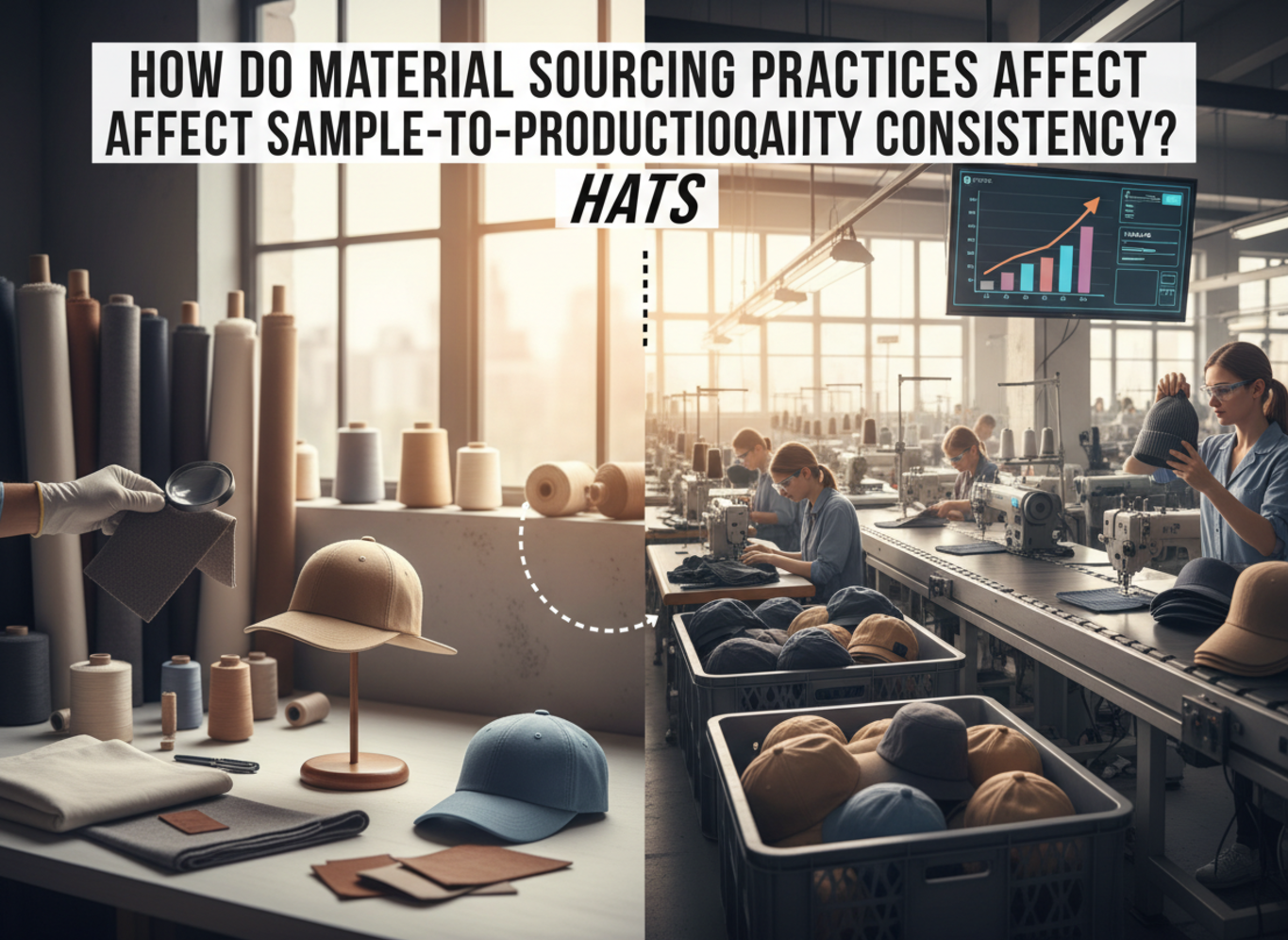
You loved the sample hat, but the bulk order feels different. It is frustrating when production quality drops. Here is how material sourcing changes everything.
Material sourcing dictates the texture, color, and durability of your hats.1 Consistent sourcing ensures the fabric used in your sample matches the final production run. Without strict supply chain control2, factories might swap materials, leading to mismatched colors or cheaper feelings in your final bulk order.
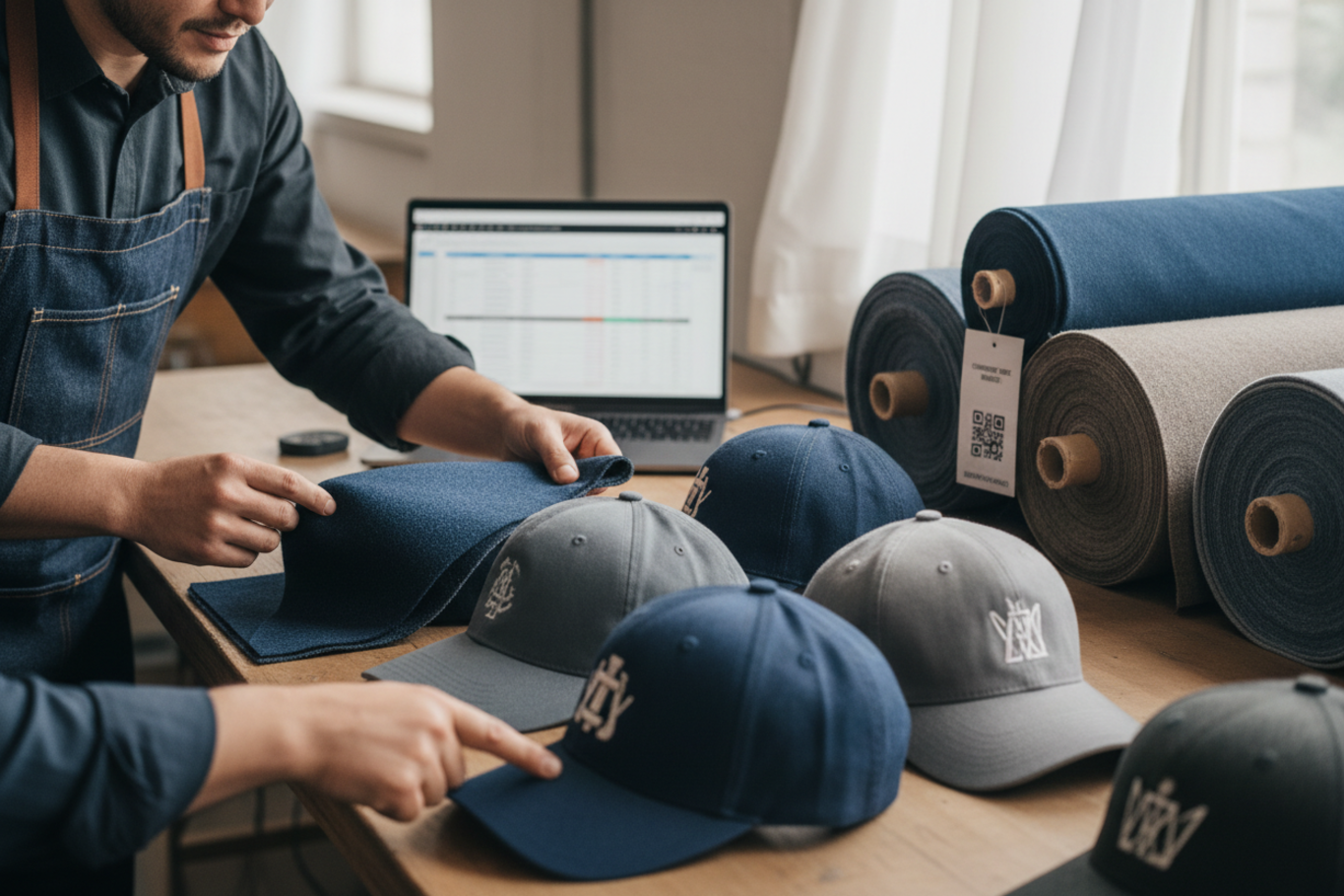
Many brand owners think manufacturing is just about sewing. However, the real work starts long before the needles move. If the fabric roll changes, the hat changes. I want to show you exactly how we handle this at Anthea so you know what to look for.
How does material sourcing affect custom hat quality?
Cheap fabric ruins a great design. You notice the difference immediately when the structure feels weak. Sourcing is the root cause of quality issues.
Sourcing determines the "hand feel3" and longevity of the hat. If a factory buys fabric from different batches, the dye lots4 will vary. This means your black hats might look dark gray, or the cotton might shrink differently after washing, ruining the fit.
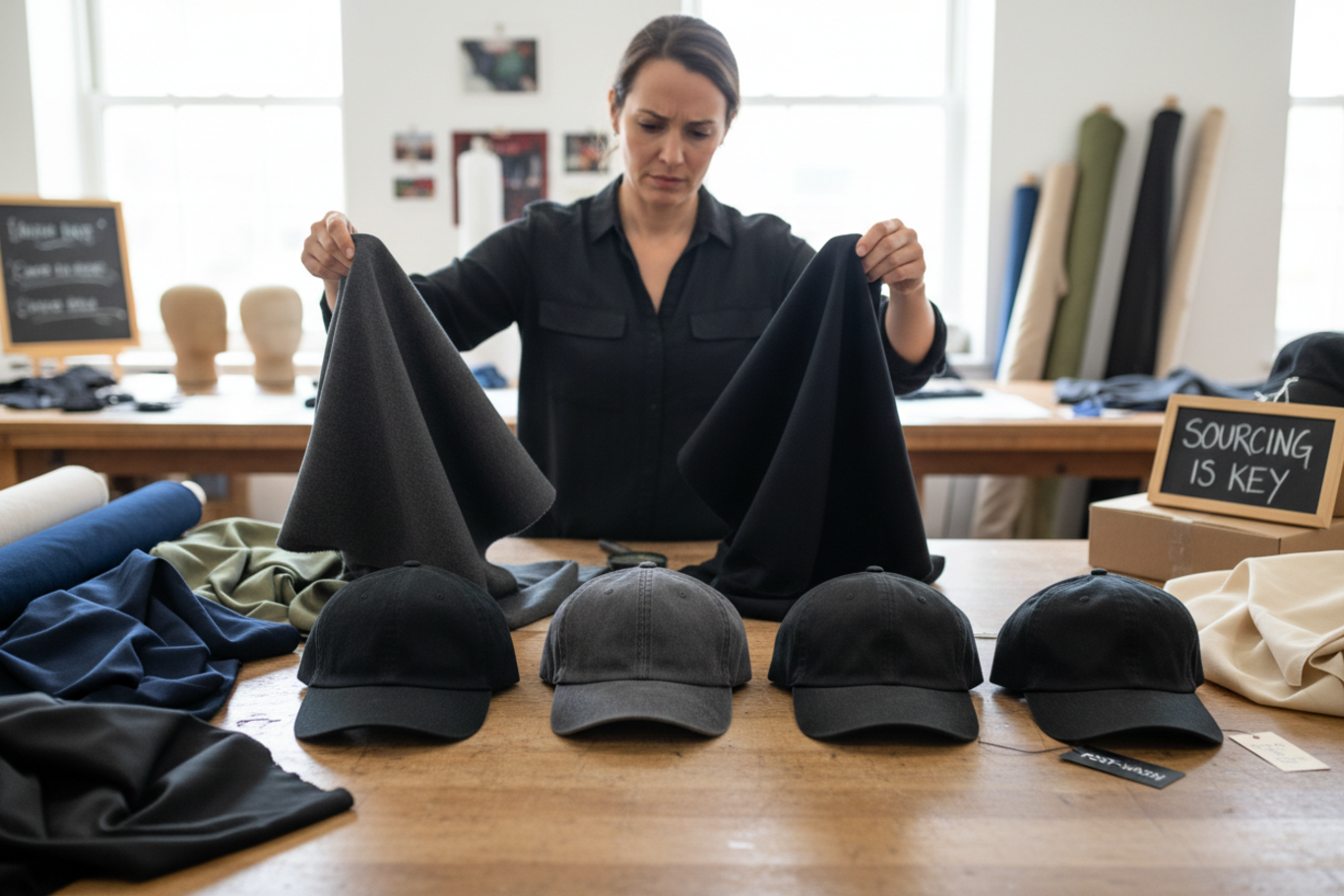
At Anthea, I see this happen often with clients who switch to us from other suppliers. A client sends me a sample from another factory to copy. The sample is heavy, stiff, and premium. But they tell me the bulk order they received previously was soft and floppy. This happens because the factory bought "stock fabric5" from a market instead of ordering a fresh batch from a reliable mill6. The source of the material dictates the physical properties of the hat.
The Impact of Fabric Weight
Fabric weight is measured in GSM (grams per square meter).7 If the sample is made from 280 GSM cotton, but the bulk production uses 240 GSM cotton, the hat loses its shape. It will not stand up straight on your head. This is a common way for factories to cut costs without telling you.
Dye Lot Variations8
Fabric dyeing is a chemical process. Even if the color code is the same, different production times create slight differences. If we source the visor fabric one month and the crown fabric the next month, they might not match.
| Sourcing Issue | Result on Hat |
|---|---|
| Different Dye Lot | Color mismatch between panel and visor |
| Lower GSM | Hat looks wrinkly and unstructured |
| Cheap Interlining9 | Front panel collapses easily |
We must buy fabric from the same mill every time to stop this. Understanding these technical details helps you see why the price is not the only thing that matters.
What methods ensure material consistency from sample to production?
You fear opening the shipping box and finding mistakes. It is scary to trust a factory overseas. We use specific methods to guarantee the results.
We reserve the specific fabric roll used for the sample for the mass production.10 We also use "master samples11" and "swatch cards12." This means we cut a piece of the approved fabric and keep it in our file to compare against the incoming bulk material.
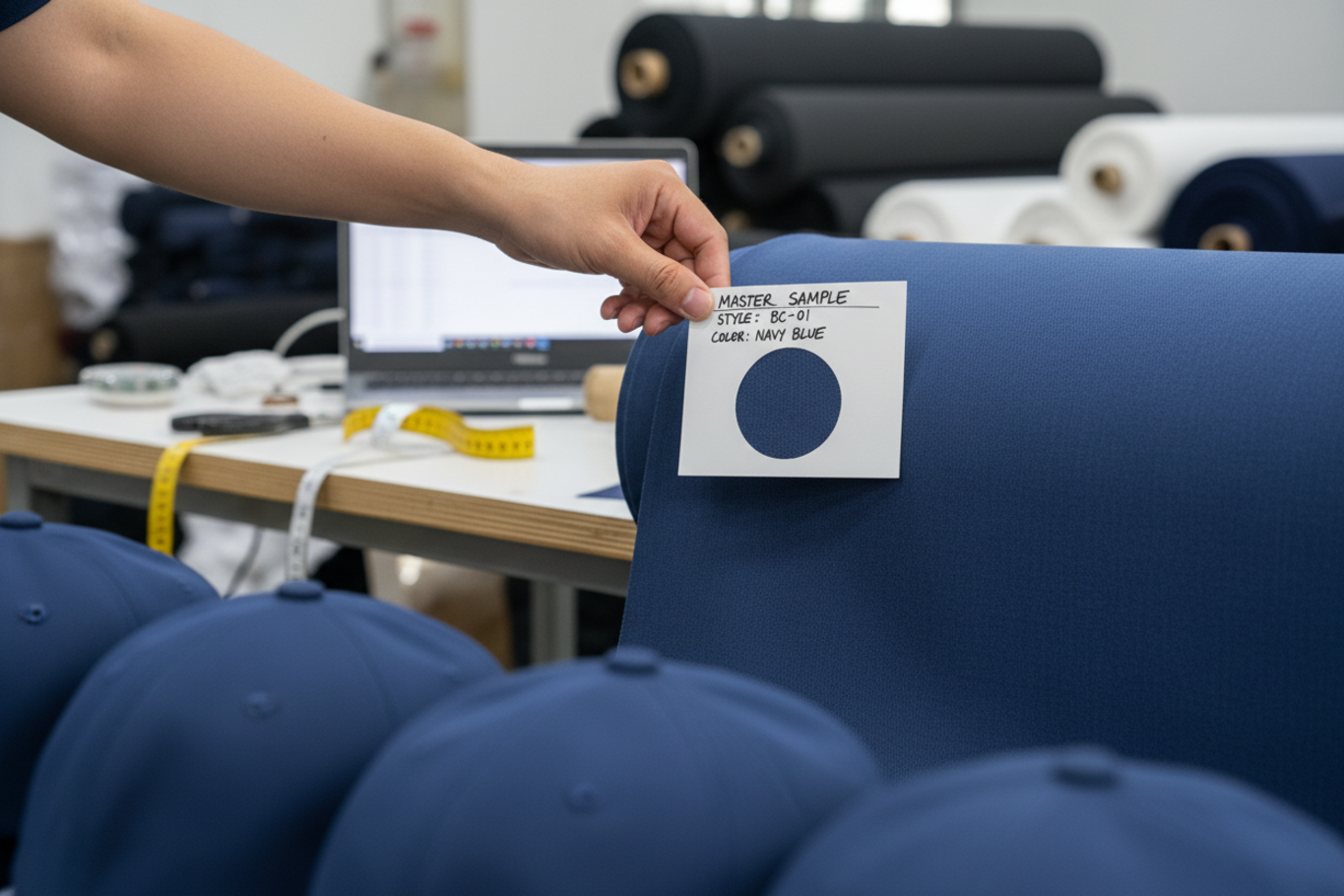
Consistency is not magic. It is a strict process. When I make a sample for a client like Ben, I do not just buy enough fabric for one hat. I check the stock at the mill to ensure there is enough for the full order later. If we do not plan ahead, the sample is useless. We use a few key tools to make sure the materials never change between the first step and the last step.
Locking the Raw Material
If the order is confirmed quickly, I ask the mill to hold that specific roll of fabric. This is the only way to be 100% sure. If too much time passes, the mill might sell it.
The Swatch Card System
We create a physical record for every project. We staple a piece of the sample fabric to a card. This card contains vital information:
- Date: When the sample was made.
- Supplier Code: Exactly where we bought it.
- Batch Number13: The production run of the fabric.
When the bulk fabric arrives at our factory, my team places the new fabric next to the swatch card under standard light. If it does not match, we reject it immediately. This prevents the "bait and switch" problem where the bulk material looks slightly different. We do not rely on memory; we rely on physical evidence.
How can manufacturers prevent material substitution problems?
Some factories switch materials to save money. This dishonest practice hurts your brand reputation. You need a partner who values long-term trust over quick profit.
Manufacturers prevent substitution by building strong relationships with raw material suppliers. We sign contracts that forbid changing the material composition without notice. We also perform internal lab tests14 to check the fiber content, ensuring 100% cotton is actually 100% cotton.

Substitution is the nightmare of the manufacturing world. Sometimes it is malicious, but sometimes it is just laziness or poor planning. A factory might run out of the good buckram (the stiff mesh inside the hat) and use a cheaper one they have on the shelf. They hope you will not notice. But you will notice when the hat loses its shape after one week. Preventing this requires a mix of strict rules and good relationships.
Incoming Quality Control (IQC)15
At Anthea, we have a strict rule: "Trust but verify." Every roll of fabric goes through IQC before it hits the cutting table. We check the thickness, the weave pattern, and the color.
Supplier Agreements
We do not buy from random market stalls. We work with established mills that we have known for years.
- Fixed Specs: We define the thread count and density in writing.
- Penalty Clauses: If they send the wrong stuff, they pay for it.
Transparency with Clients
Sometimes, a specific fabric really is out of stock. In this case, I tell the client immediately. I send a video or a physical swatch of the new option for approval. I never swap it secretly. This builds trust. A surprise in manufacturing is never a good surprise. You need to know exactly what your hat is made of, down to the inner sweatband.
Why is material verification important for bulk orders?
A small error in one hat is fine, but 500 bad hats is a disaster. You cannot sell defective products to your customers. Verification saves your money.
Verification acts as the final safety net before mass cutting begins. It confirms that the bulk material meets all safety and aesthetic standards. This process avoids expensive rework, shipping delays, and the high cost of refunding angry customers due to poor quality.
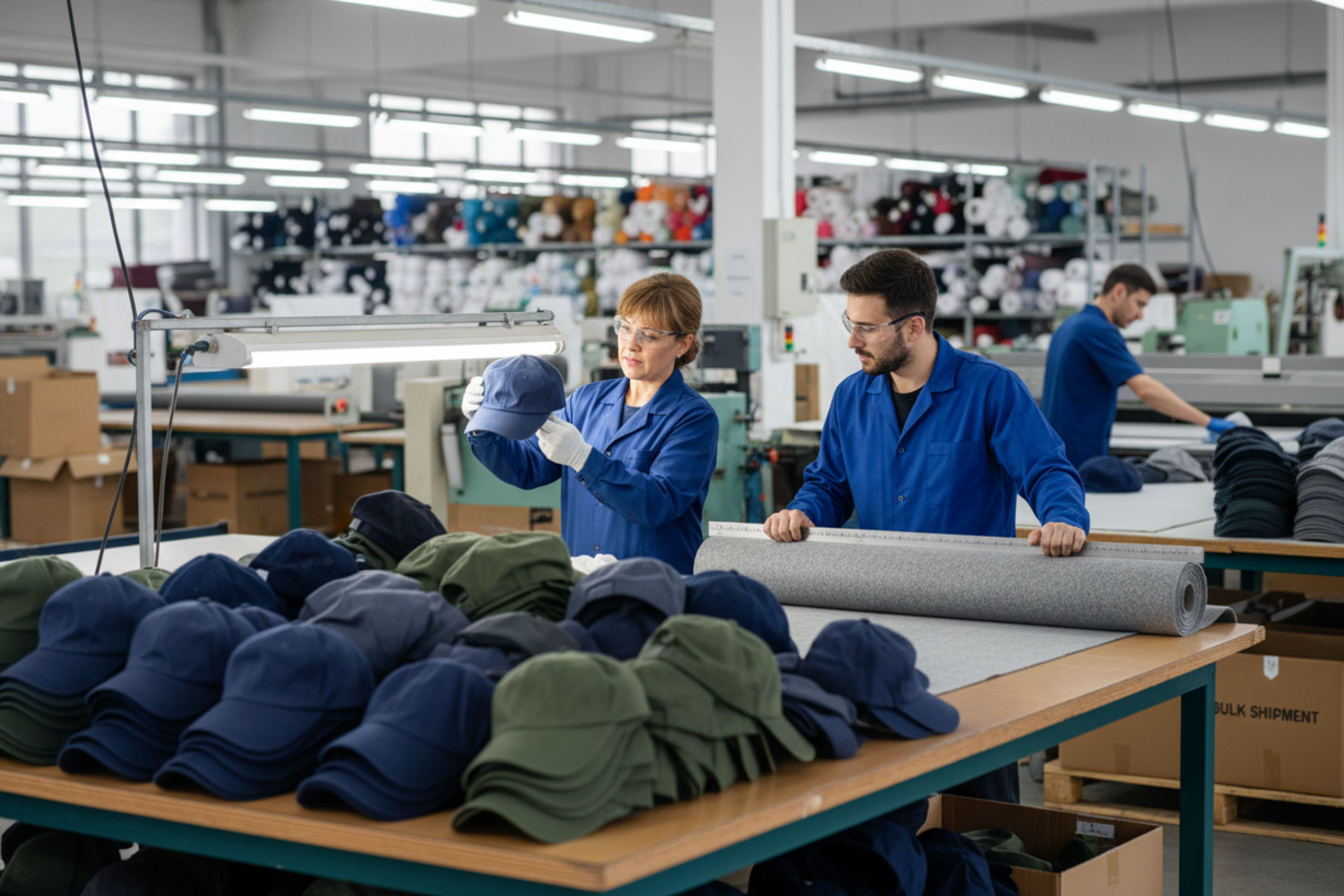
Imagine you are Ben, our typical customer. You sold 300 hats on pre-order. You send them out. Two weeks later, customers complain that the hats faded in the sun or the color rubbed off on their forehead. This kills a brand instantly. Verification is the step that stops this from happening. It is cheaper to throw away bad fabric than to throw away finished hats.
Protecting Brand Reputation
Verification is not just about the hat; it is about your business life. If the material fails, your brand fails.
The Pre-Production Meeting (PPM)
Before we cut the bulk fabric, we hold a meeting. We look at the "Gold Sample" (the approved sample) and the bulk fabric side by side. We check for several specific things:
| Verification Check | Why It Matters |
|---|---|
| Color Fastness16 | Ensures dye does not bleed on sweatbands or skin |
| Shrinkage Test | Ensures size stays true after use and washing |
| Defect Scanning | Finds holes, knots, or oil stains in the fabric roll |
We unroll the fabric and inspect it against a specialized light box. We mark any defects with chalk so the cutting machine avoids them. This attention to detail is essential. We treat your 500 hats as if we were making just one perfect hat.
Conclusion
Material sourcing is the foundation of quality. By controlling the supply chain, using swatch cards12, and verifying bulk fabric, we ensure your production hats match your samples perfectly.
-
Gives clear, technical guidance on why sourcing decisions change the look/feel and lifespan—so you can prevent quality surprises. ↩
-
Helps you learn practical controls that stop factories from quietly changing inputs and causing inconsistent bulk production. ↩
-
Explains how pros assess fabric touch and structure—useful for setting specs and approving samples confidently. ↩
-
Shows why “same color code” can still mismatch, and how to manage lot control to keep colors consistent. ↩
-
Clarifies the tradeoffs of market/stock fabric versus mill-order fabric—key to avoiding cheaper-feeling bulk goods. ↩
-
Provides criteria and vetting steps so you can select mills that maintain repeatable quality run after run. ↩
-
Helps you connect GSM numbers to real-world stiffness, shape retention, and perceived quality. ↩
-
Offers prevention methods (buying together, lot tracking) to avoid panel/visor mismatches. ↩
-
Explains a hidden component that often causes collapsing fronts—so you can specify and inspect it. ↩
-
Teaches a concrete process that directly prevents sample-to-bulk differences in texture and color. ↩
-
Shows how master samples become a production benchmark, reducing disputes and approval confusion. ↩
-
Gives a simple, audit-friendly tool you can request from suppliers to verify incoming materials. ↩ ↩
-
Improves traceability—so if issues appear, you can pinpoint the exact batch and stop repeat failures. ↩
-
Helps you confirm materials aren’t substituted, protecting claims, compliance, and customer trust. ↩
-
Lists standard checks (color, weave, defects) that catch problems before cutting—saving time and money. ↩
-
Prevents bleeding/fading complaints by pointing you to recognized tests and pass/fail benchmarks. ↩