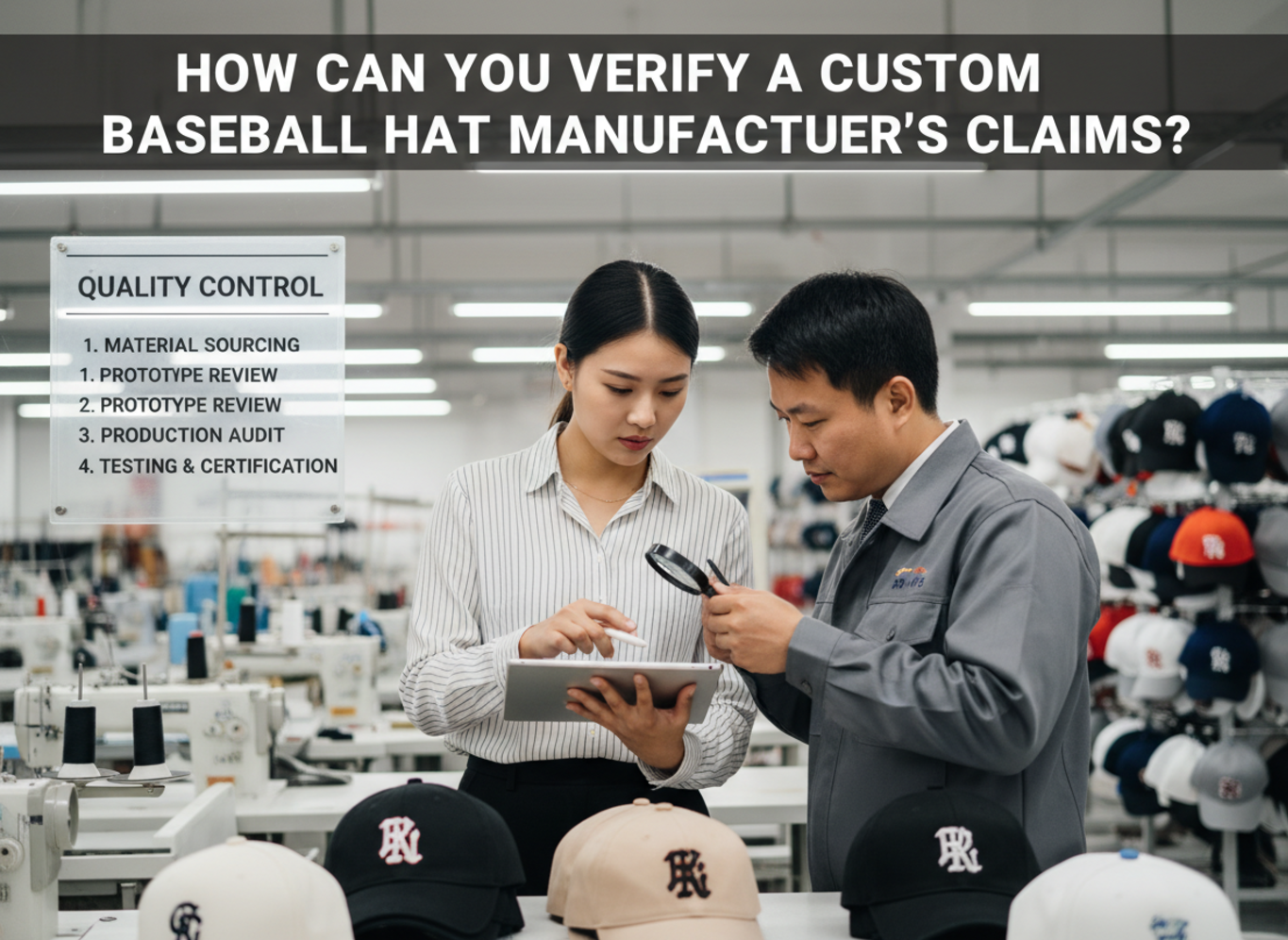
Every factory claims to be the best, but poor quality ruins your brand reputation. You need a proven way to check if their words match their actual production skills.
To verify a custom hat manufacturer, start by requesting specific samples that match your design complexity1. Check their business licenses2 and certifications like BSCI or ISO3. Ask for client references4 and conduct a video walkthrough of the factory floor5 to see their machinery and workforce in action.
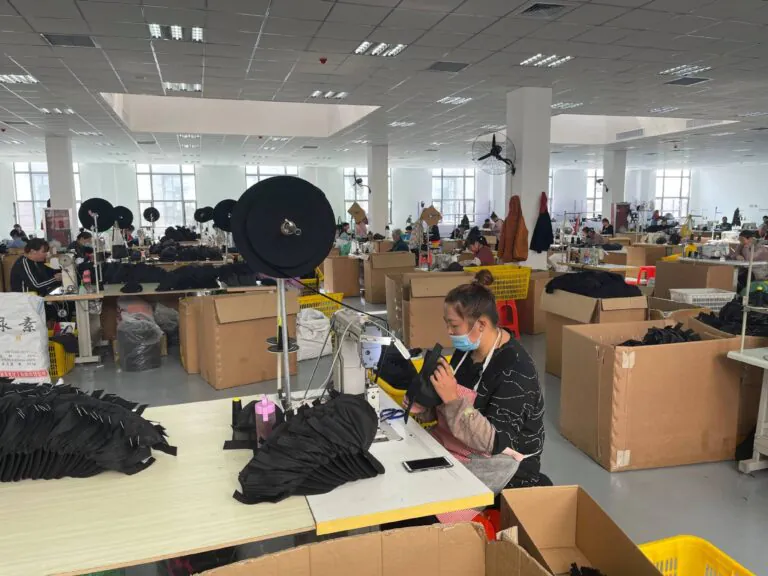
I remember when I first started Anthea, I saw many brands struggle with suppliers who overpromised. It is painful to see good designs fail because of bad production. I want to show you exactly how to avoid this. Let us look at the specific steps you must take to protect your business.
How do you verify a manufacturer’s claimed capabilities?
You see a beautiful portfolio, but did they actually make those hats? It is easy to steal photos from the internet, so you must dig deeper to find the truth.
Verify capabilities by asking for "process photos" or raw video footage6 of your specific sample being made. Request a live video call during production hours. Real manufacturers will happily show you their embroidery machines, cutting tables, and fabric stock7 in real-time.
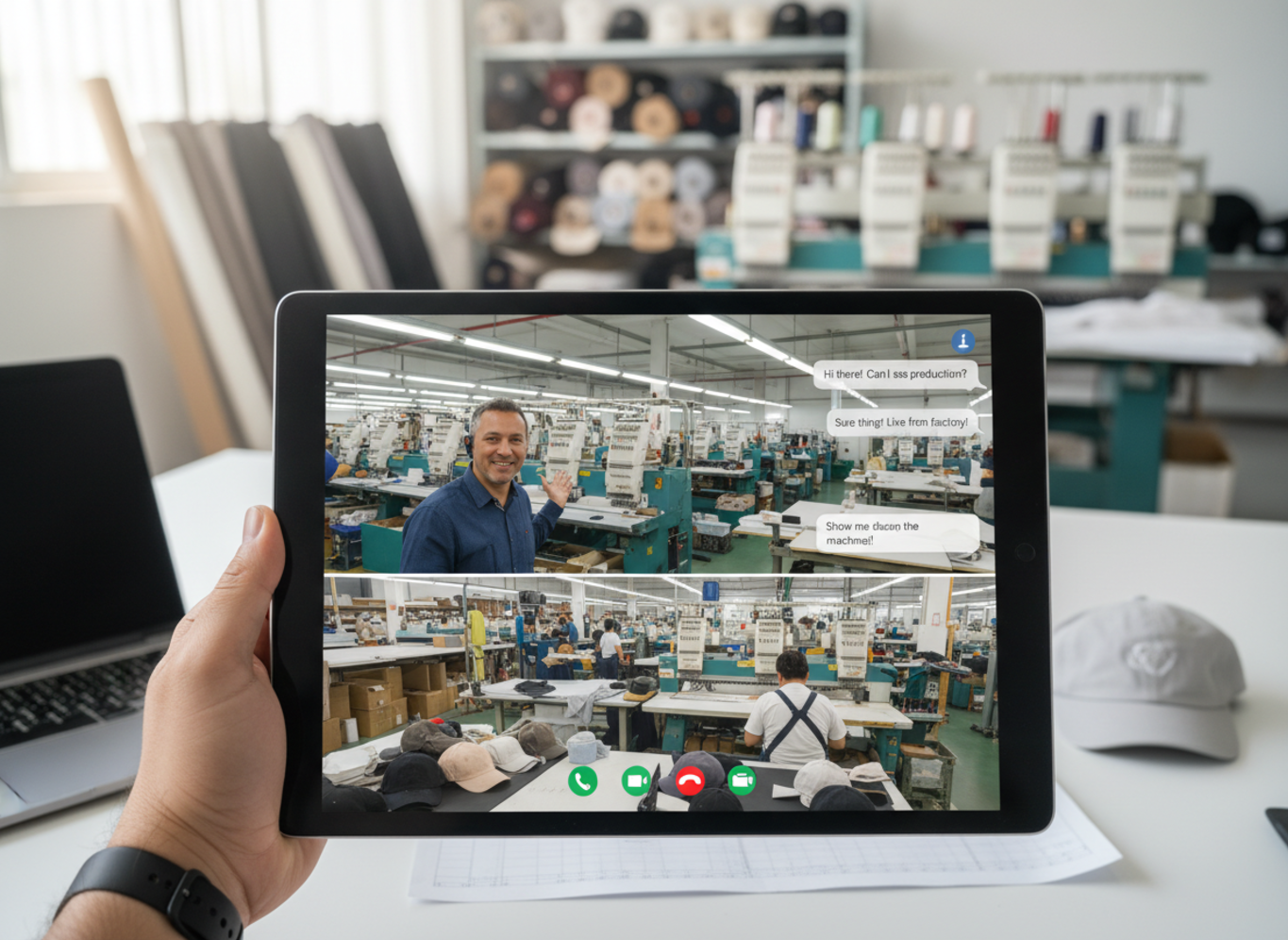
Many suppliers on Alibaba or Google8 are actually trading companies9, not factories. They buy from us and sell to you at a higher price. This adds a layer of risk to your communication. You need to know who is actually cutting the fabric. At Anthea, we invite clients to see the floor because we own the machines.
To verify a manufacturer, you must ask technical questions. Do not just ask "can you make this?" Ask "what machine brand do you use for embroidery?" A top factory often uses Japanese machines like Tajima or Barudan10. Ask about their daily output capacity11. If they say they can make 50,000 hats a day but they only have 10 workers in the video, they are lying.
You should also look at their specialization. Some factories only do cheap promotional caps12. Others, like us, focus on high-quality streetwear13. The equipment is different. A factory set up for cheap quantity cannot handle complex 3D embroidery or 7-panel camp caps14.
Verification Checklist
| Verification Method | Trading Company | Real Factory |
|---|---|---|
| Video Call | Shows a showroom or office only. | Shows production lines and loud machines. |
| Custom Sample | Takes a long time (must send to factory). | Fast turnaround (7-10 days). |
| Technical Answers | Vague answers, needs to "check with engineer." | Immediate, specific answers about stitching. |
| Pricing | Higher (includes their margin). | Lower (factory direct price). |
What methods confirm a hat factory is reliable?
A factory might make good hats once, but can they do it every time? Inconsistency kills growing fashion brands, so you need a partner who delivers results repeatedly.
Confirm reliability by starting with a small trial order15 before committing to bulk production. Monitor their communication speed and transparency during this phase. Check if they meet the agreed timeline for the sample. Consistent updates and meeting deadlines are the strongest indicators of long-term reliability.
Reliability is about more than just the product. It is about the service. I have seen clients lose their minds because a supplier stopped replying for three days. In the custom headwear business, time is money. You need to test the supplier’s communication flow before you pay a large deposit.
Send an email with five specific questions. See how many they answer. A bad supplier will answer one and ignore the rest. A reliable partner will answer all five. This shows attention to detail. If they miss details in an email, they will miss details in your embroidery.
You should also look for formal certifications. These documents prove that the factory follows international standards. Common certifications in our industry include ISO 900116 for quality management or BSCI for social compliance. These show that the management system is stable.
Key Reliability Indicators
| Indicator | Green Flag (Good) | Red Flag (Bad) |
|---|---|---|
| Response Time | Replies within 24 hours. | Takes days to reply or ghosts you. |
| Problem Solving | Offers solutions when issues arise. | Blames the shipping company or material. |
| Updates | Sends photos during production voluntarily. | You have to chase them for info. |
| Payment Terms | Clear, standard terms (e.g., T/T, PayPal). | Asks for personal bank transfers. |
How do you check supplier references effectively?
Reviews on websites can be fake or bought. You need the truth from real humans who have worked with the supplier to understand their true performance.
Ask the manufacturer for contact information of past clients in your country. Contact these brands directly via Instagram or email. Ask specific questions about delay handling and quality issues. A confident manufacturer will have happy clients willing to vouch for their work.
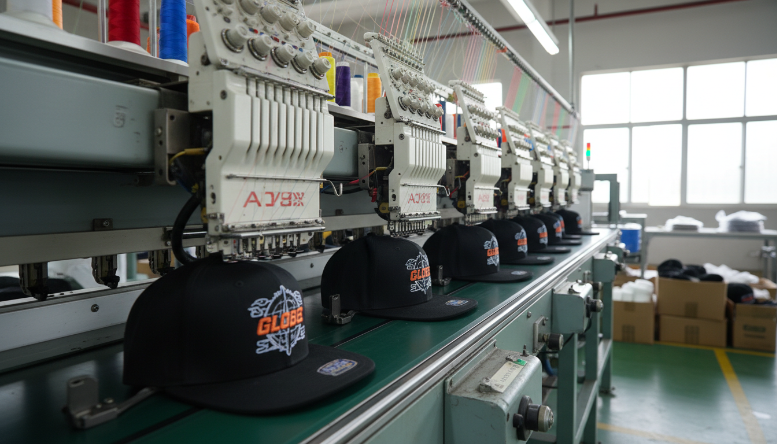
I always tell new clients to look at who we work with. A manufacturer should be proud of their clients. If a factory refuses to share any past work due to "privacy," be careful. While we sign NDAs (Non-Disclosure Agreements) with big brands, we always have smaller brands that are happy to be references.
Go to the supplier’s social media pages. Look at the "tagged" photos. These are real customers posting the products. Message those customers. Ask them honest questions. Do not just ask "are they good?" Ask "did they deliver on time?" or "how did they handle mistakes?"
You can also check customs data. Tools like ImportYeti allow you to see the shipping records of a supplier. You can see who they ship to in the United States or Europe. If they claim to supply big brands, the shipping records will prove it. This data does not lie.
Questions to Ask References
- Timeline Accuracy: Did the hats arrive on the date they promised?
- Quality Consistency: Was the bulk order the same quality as the sample?
- Communication: Did they speak English well enough to understand complex designs?
- Conflict Resolution: If there was a defect, did they refund or replace it?
Should I inspect the factory in person?
You are likely thousands of miles away from the factory. Flying to China is expensive and takes time you might not have as a busy business owner.
While in-person inspection is the gold standard, it is often too costly for small orders. Instead, hire a third-party inspection agency like SGS or Intertek17 for a one-day audit. Alternatively, schedule a detailed Zoom tour where you direct the camera operator to specific areas.

For a small order of 200 hats, flying to China does not make financial sense. The flight ticket costs more than the profit. But you still need eyes on the ground. This is where third-party inspection helps.
You can hire an agent for a few hundred dollars. They go to the factory. They count the boxes. They check the stitching. They send you a report. This is very common for our larger clients. At Anthea, we welcome these inspectors because we have nothing to hide.
If you have a low budget, use technology. We do video calls where the client directs us. You can say, "Open that box," or "Show me the label on that shirt." This is a "virtual audit." It is free and gives you peace of mind. It builds trust between us and you.
Inspection Options Comparison
| Method | Cost | Pros | Cons |
|---|---|---|---|
| Personal Visit | High ($2000+) | You see everything yourself. | Takes 1-2 weeks of travel. |
| Third-Party Agent | Medium ($300-$500) | Professional report, unbiased. | Adds cost to small orders. |
| Virtual Tour | Free | Fast, easy, no travel needed. | You cannot touch the fabric. |
What tests prove a manufacturer can meet specifications?
The hat looks good in a photo, but does it fit right? Does the color fade? Visual checks are not enough to ensure the product meets your high standards.
Prove specifications by requesting a pre-production sample for physical testing18. Measure the crown height and brim width against your tech pack. Perform a wash test to check for color bleeding and shrinkage. Check the embroidery backing to ensure it is clean and comfortable against the skin.
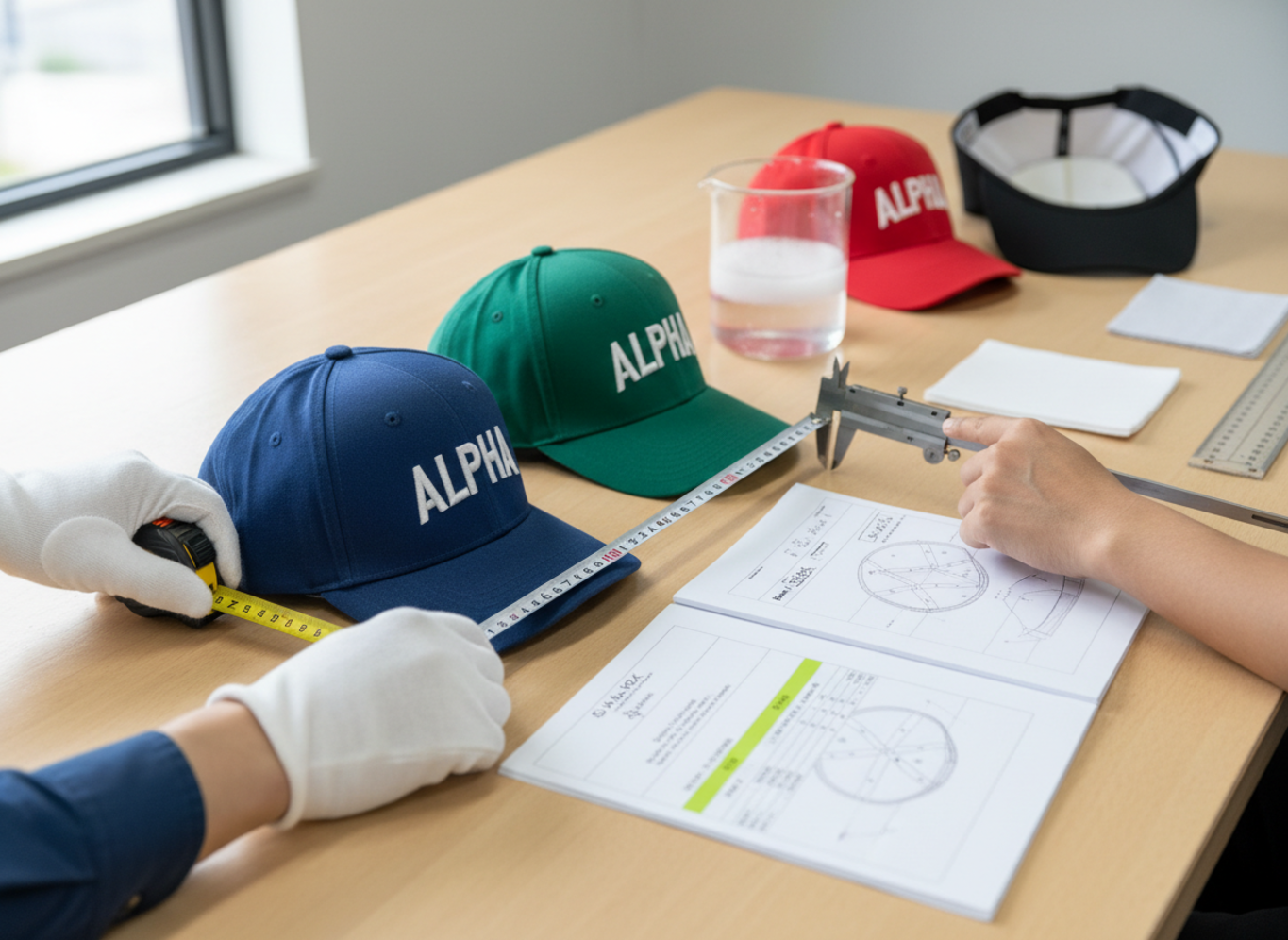
A "Tech Pack" is your contract. It lists every measurement. When you get the sample, you must measure it. If the brim is 7cm in the file, it must be 7cm in your hand. A variance of 0.5cm is normal, but 2cm is a failure.
You must also test the materials. Custom headwear takes a beating. People wear hats in the sun and rain. Do a "rub test." Rub a white cloth on the colored fabric. If the color transfers, the dye is bad. We use high-grade dyes to prevent this.
Check the structure. A structured trucker hat needs stiff buckram behind the front panel. Squeeze it. If it collapses too easily, the material is cheap. Check the sweatband. It should be soft and absorbent. These small details define your brand quality.
Essential Quality Tests
- Dimensional Stability: Measure circumference, depth, and brim size.
- Color Fastness: Wash the hat to see if colors bleed or fade.
- Embroidery Tension: Check for loose threads or puckering fabric.
- Hardware Check: Ensure snaps and buckles are secure and do not rust.
- Fit Test: Wear the hat to check for comfort and balance.
Conclusion
Verifying your partner takes effort, but it saves your brand. Check samples, talk to references, and test small orders first to ensure your custom headwear succeeds.
-
Shows exactly how to validate real production skill before paying—especially for detailed or difficult hat builds. ↩
-
Helps you confirm the supplier is a real legal entity, reducing fraud risk before you place deposits. ↩
-
Explains what these certifications truly prove and how to spot fake certificates or expired audits. ↩
-
Gives a proven script to uncover hidden issues like delays, defects, and poor after-sales support. ↩
-
A checklist for spotting trading companies vs real factories by machinery, workflow, and production signals. ↩
-
Shows how to confirm authenticity and prevent stolen portfolio photos from misleading your sourcing. ↩
-
Helps you judge capability quickly by matching your product needs to visible equipment and materials. ↩
-
Practical tactics to avoid middlemen markups and communication risk that can derail production. ↩
-
Clarifies cost, control, and quality risks so you can decide when a trader is acceptable—or not. ↩
-
Compares top-tier machines so you can evaluate a factory’s equipment claims with confidence. ↩
-
Helps you spot inflated capacity claims by comparing staffing, machines, and realistic throughput. ↩
-
Explains why “cheap cap” setups often can’t meet premium specs—saving you costly misalignment. ↩
-
Gives quality benchmarks you can use to assess suppliers beyond photos and marketing claims. ↩
-
Details the specialized skills and tooling required so you can pre-qualify factories accurately. ↩
-
A low-risk way to verify quality, communication, and timelines before committing major budget. ↩
-
Shows how ISO 9001 impacts process consistency—useful for predicting repeatable bulk quality. ↩
-
Explains audit scope and typical fees so you can buy trustworthy verification without traveling. ↩
-
Provides a test plan to catch fit, measurement, and durability issues before mass production starts. ↩