
You launched a women’s trucker hat line, and it is selling fast. But now, stock is low, and customers are angry. How do you grow without crashing?
To scale women’s trucker hat production, transition from small batches to a low-MOQ factory model1. Standardize your material choices2, secure backup suppliers3, and implement strict quality control protocols4. Planning inventory 3-4 months ahead5 ensures you meet demand without sacrificing the high-quality custom trucker hats your brand is known for.
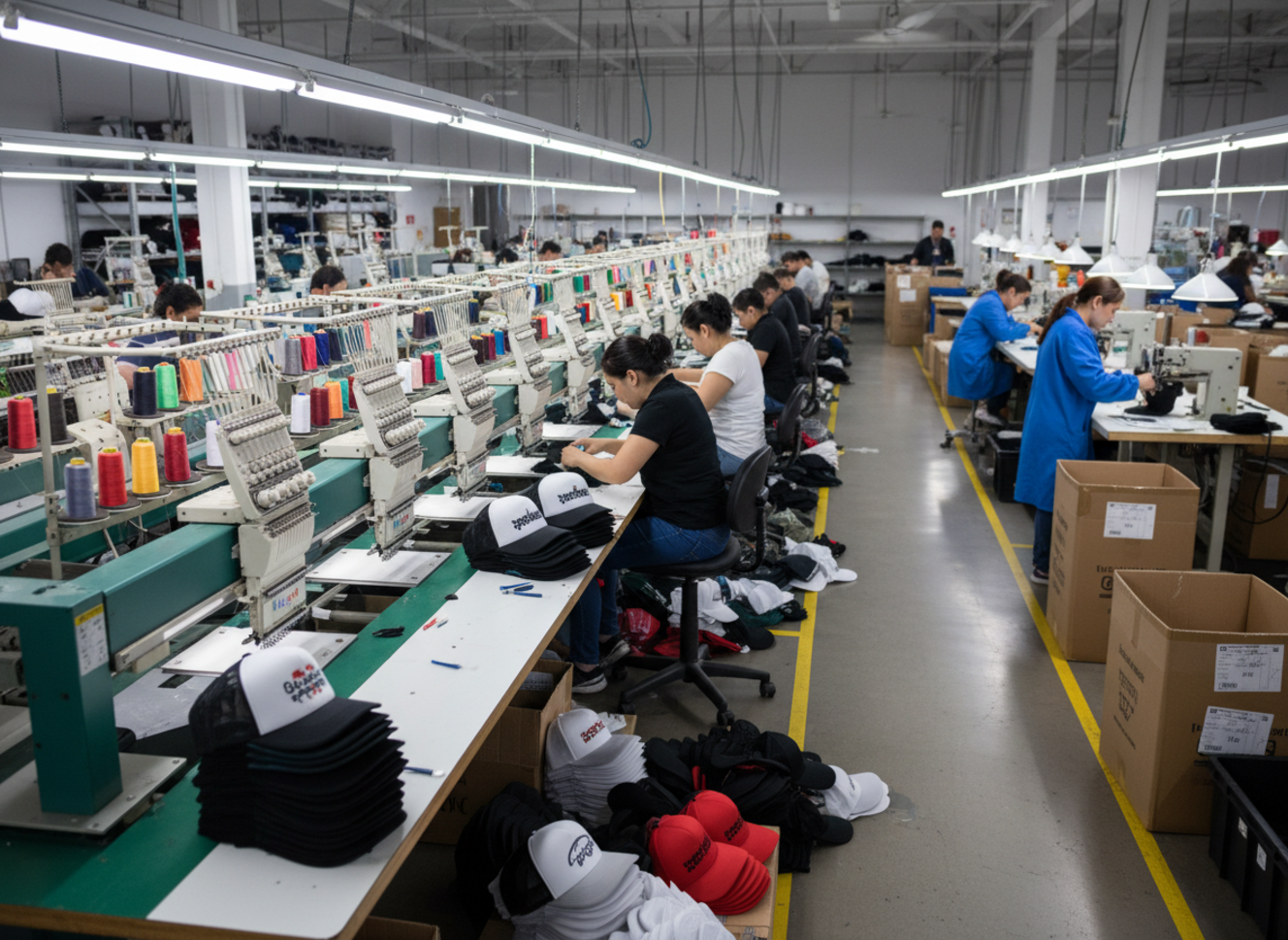
Scaling is exciting, but it is also scary. Many brands fail because they cannot handle big orders. I will show you the exact steps to grow safely.
What Are the Most Common Production Scaling Challenges?
Do you fear late shipments or bad stitching? Growing pains can kill a young fashion brand quickly if you are not careful with your supply chain.
The most common challenges in scaling include inconsistent fabric quality6, delayed shipping times7, and communication breakdowns with suppliers8. Additionally, sudden cost increases for custom scale women’s trucker hat production can eat into your profit margins if you do not lock in prices early9.
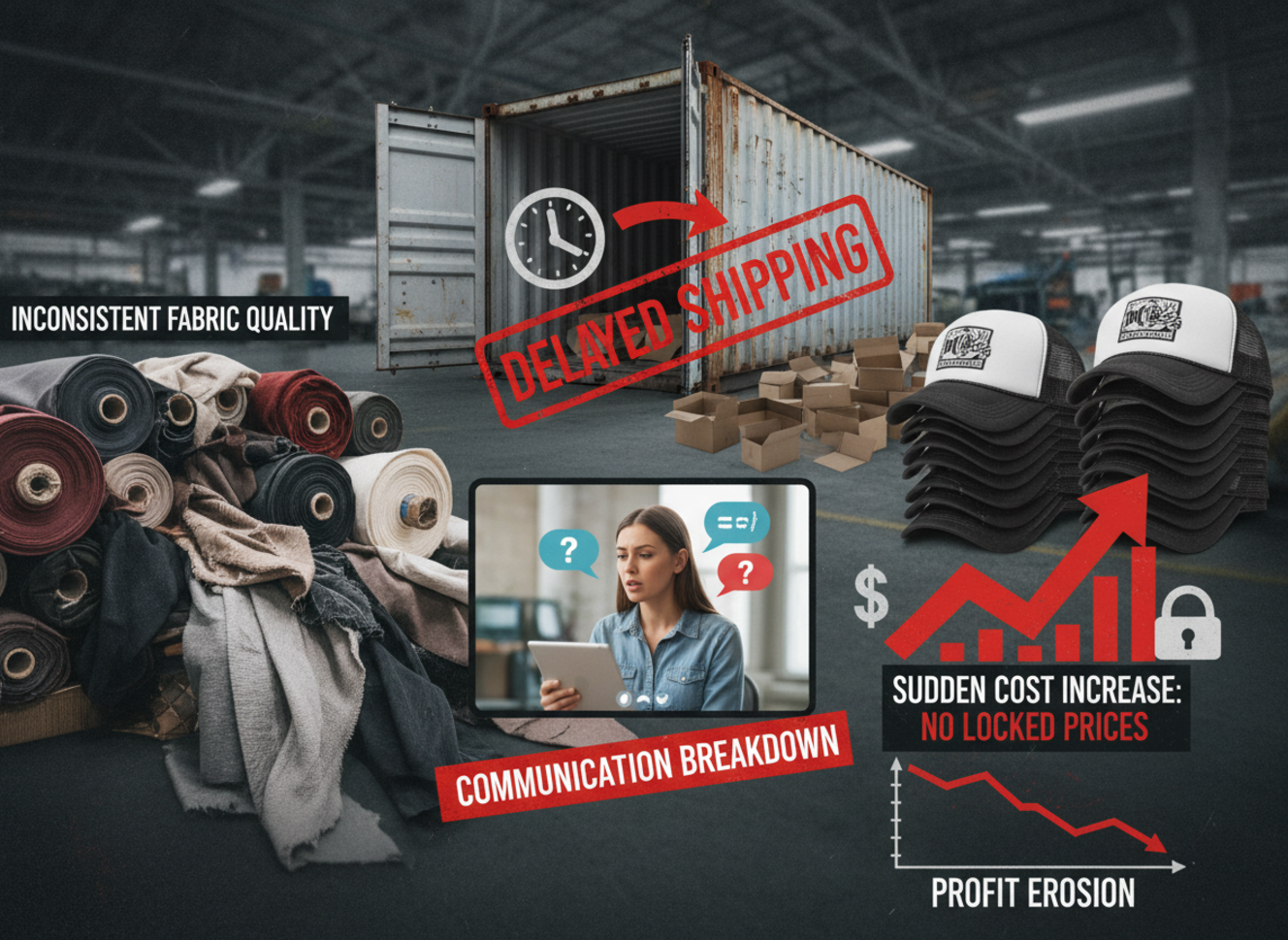
I have seen many promising brands hit a wall. The first big problem is usually material consistency. When you order 50 hats, the mesh and foam match perfectly. When you order 5,000, the dye lots might change10. This ruins the look of your collection. You need your pink trucker hats to look exactly the same in June as they did in January.
Another issue is the timeline. Small shops can turn around orders fast. Big factories work on schedules. If you miss your slot, you wait weeks. This is deadly for seasonal women’s fashion11. If you miss the summer trend, you are stuck with dead stock.
Here is a breakdown of the risks you face when growing:
| Challenge | Impact | Solution |
|---|---|---|
| Material Shortage | Delays production by weeks | Pre-book fabrics early12 |
| Quality Drop | Returns increase, brand hurts | Third-party inspection13 |
| Cash Flow | Money tied up in stock | Negotiate payment terms14 |
| Communication | Wrong details on product | Use visual mockups15 |
You must anticipate these issues. A "best scale women’s trucker hat production" strategy plans for errors before they happen. You cannot rely on luck. You need a system that catches mistakes early.
How to Plan Manufacturing Capacity for Growth?
Are you guessing how many hats to order? Guessing leads to dead stock or sold-out signs. You need a real plan to manage your growth.
Planning capacity means aligning your sales forecasts with factory lead times. Start by analyzing your sales velocity16 and adding a 20% safety buffer. Communicate these numbers to your manufacturer three months in advance so they can reserve production lines for your custom trucker hat embroidery orders.
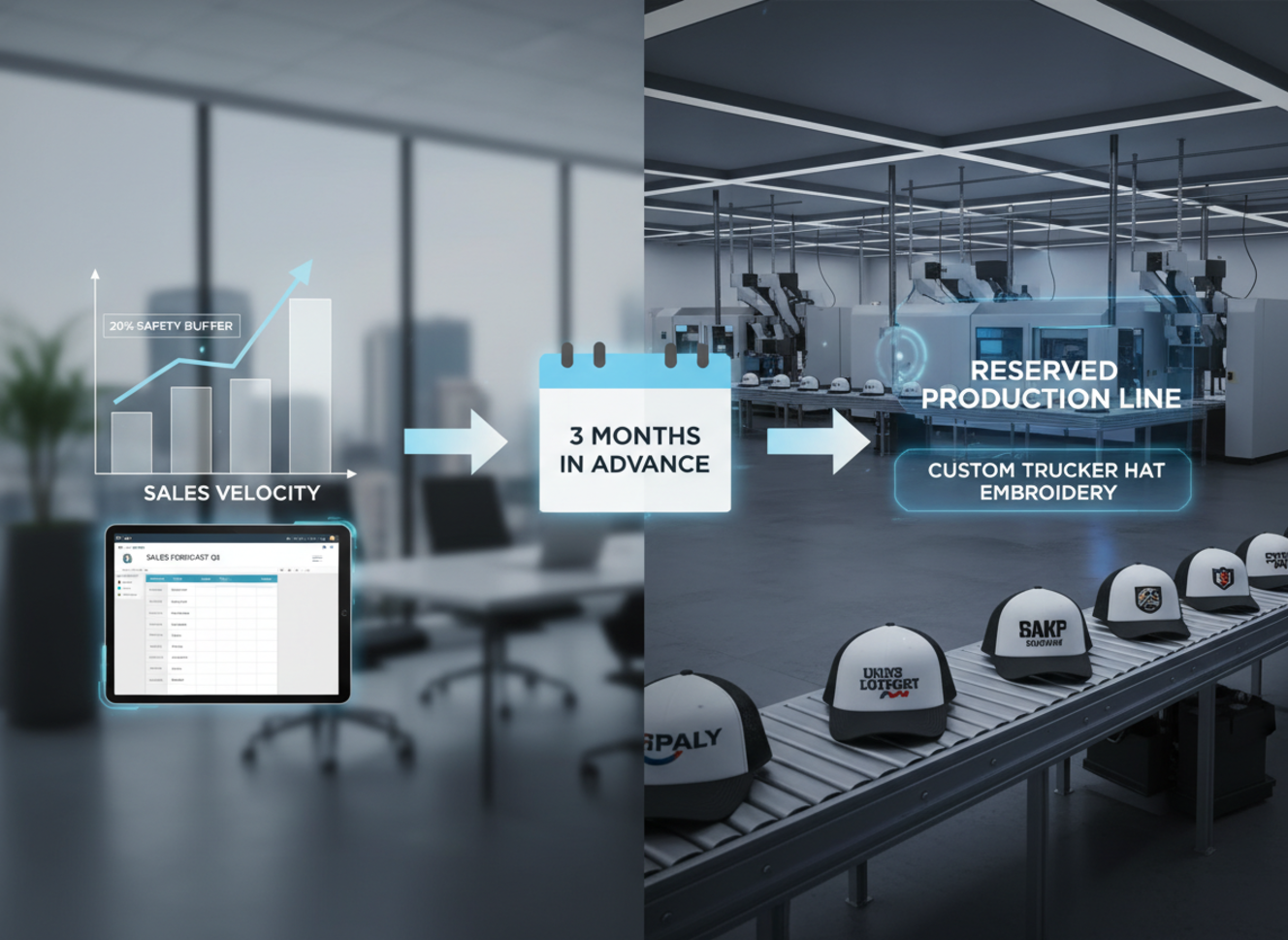
Capacity planning is a math game. You cannot just call a factory and expect 1,000 hats next week. Factories have other clients. You need to book their time. I always tell my clients to look at their "sales velocity16." This is how many hats you sell per day.
If you sell 10 hats a day now, plan for 20 a day next season. Then, calculate the production time. If it takes 30 days to make and 15 days to ship, you need stock for 45 days plus a buffer. If you do not plan this, you will go out of stock. When you go out of stock, your customers go to your competitor.
Steps for Capacity Planning:
- Analyze Past Sales: Look at last year’s data. Did you spike in July?
- Factor in Marketing: Are you running ads? Increase the order size.
- Talk to the Factory: Ask about their peak seasons. Chinese New Year shuts everything down.
- Split Orders: Do not order everything at once. Stagger shipments to manage cash.
This helps you avoid the "out of stock" nightmare. It keeps your cash flow healthy too. You stay in control of your business.
What Systems Ensure Quality Consistency at Higher Volumes?
Does the thought of 500 bad hats keep you up at night? Poor quality destroys trust. You need systems to keep every hat perfect.
To ensure consistency, create a detailed "Tech Pack17" that specifies thread colors, stitch counts, and material weights. Implement a pre-production sample approval process and require a final inspection report before shipping. This is crucial for maintaining high-quality custom trucker hats as your volume increases.
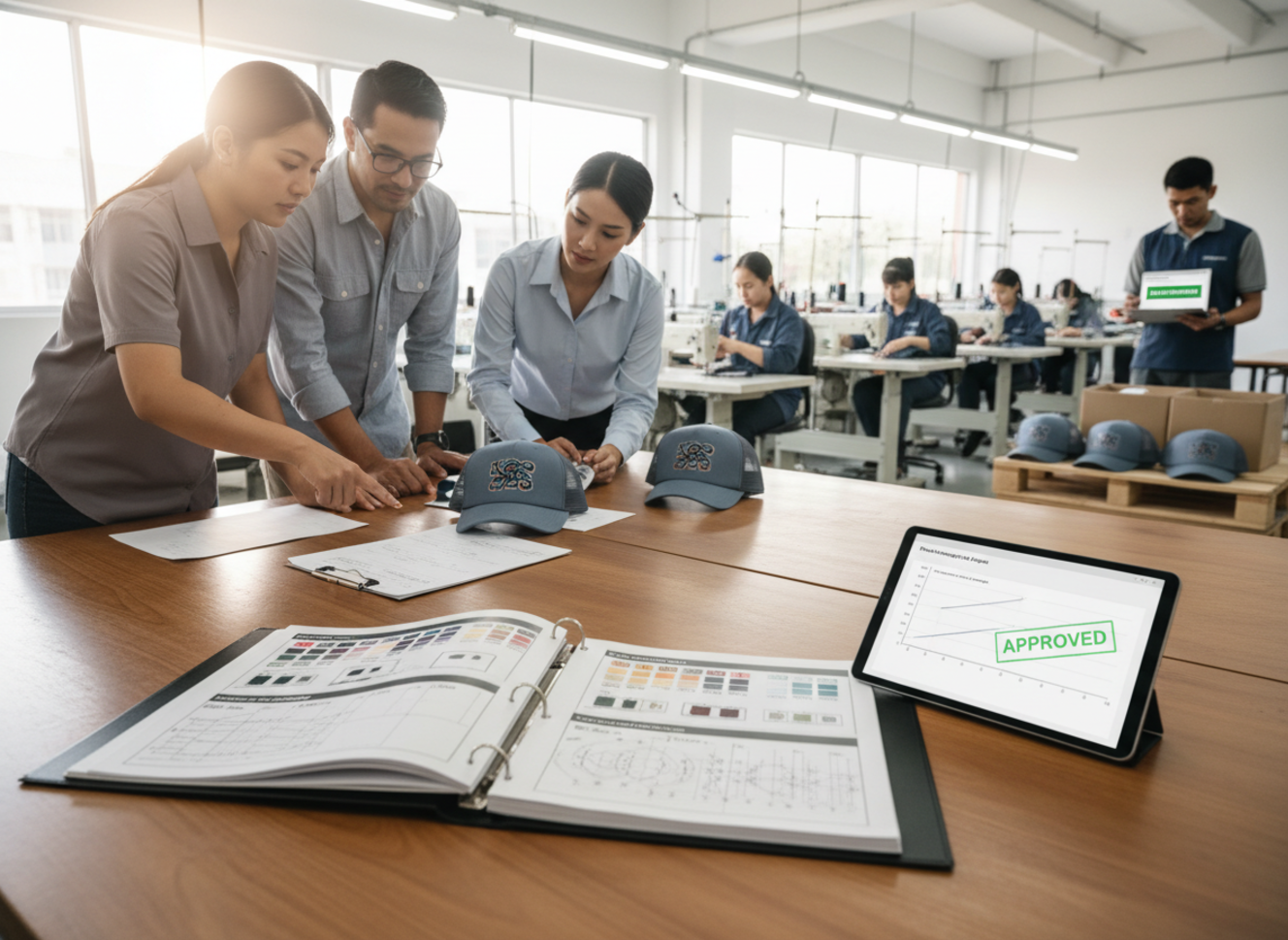
Quality control is not magic. It is a process. When you make one hat, you look at it. When you make 1,000, you cannot look at every single one. You need a system.
First, you need a Tech Pack17. This is the blueprint. It lists the exact Pantone color code for the pink mesh. It lists the size of the logo in millimeters. Without this, the factory guesses. You do not want them to guess.
Second, use the "Golden Sample18" rule. I send a perfect sample to the factory. They must match all production to that one hat. If the production does not match, I do not pay. This keeps the factory alert.
QC Checklist for Trucker Hats:
- Bill Curvature: Is it consistent on every piece?
- Snapback Closure: Does it snap tight and hold firm?
- Embroidery: Are there loose threads or messy edges?
- Inner Sweatband: Is the label centered and stitched straight?
- Shape: does the foam front stand up correctly?
Finding "custom embroidered Trucker hats no minimum" is easy. Finding consistent quality at scale is hard. You must be strict. Your brand reputation depends on it.
How to Choose a Manufacturer That Can Scale with You?
Is your current supplier ignoring your emails? Small shops cannot handle big growth. You need a partner who understands real manufacturing and business scale.
Choose a manufacturer that owns their factory rather than a middleman. Look for partners offering flexible MOQs, clear communication channels like WhatsApp, and experience with export markets. A factory that offers "scale women’s trucker hat production near me" or reliable overseas shipping is essential for long-term growth.
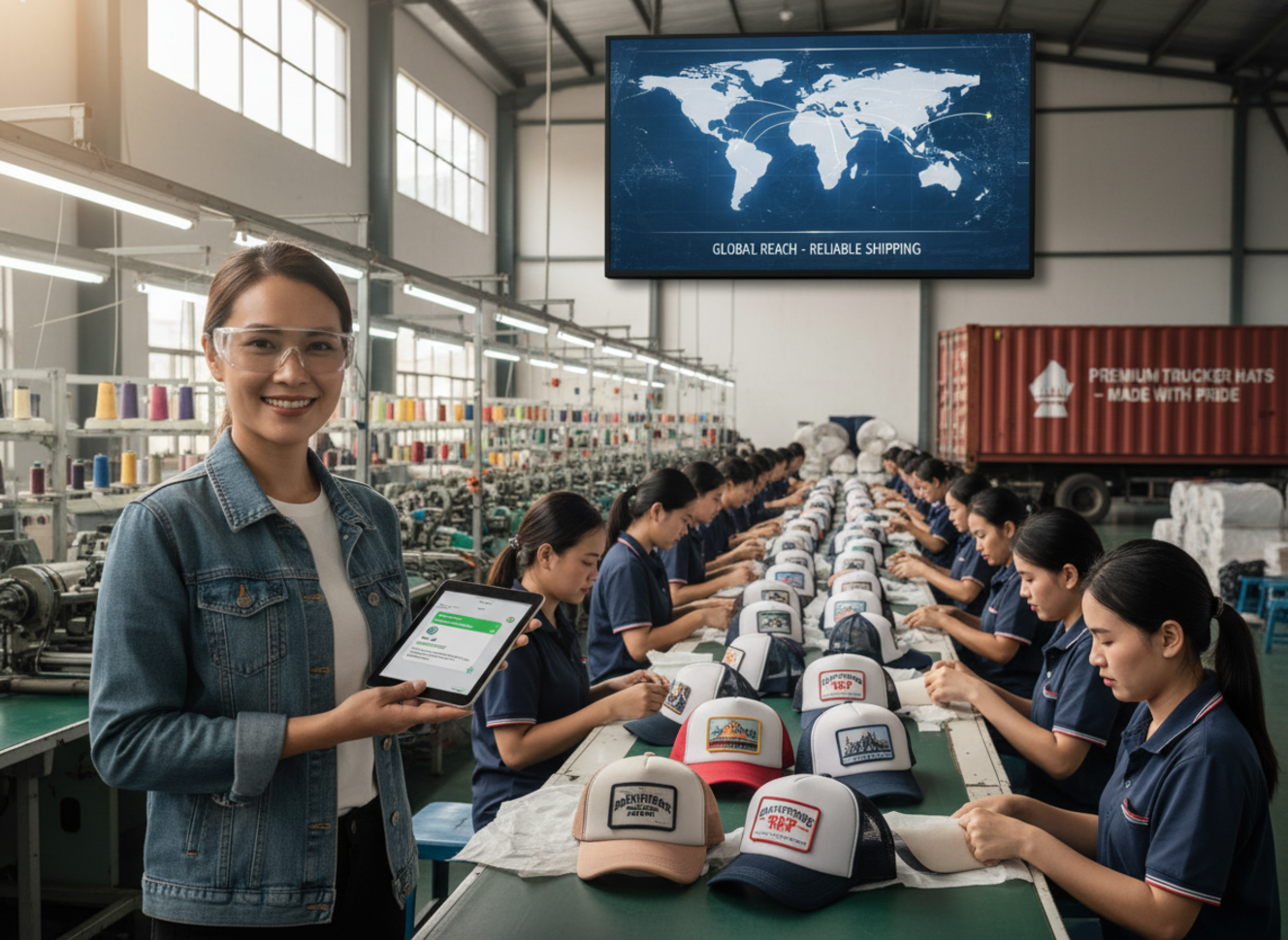
I have worked with many suppliers. The wrong one will hold you back. You might start with a local print shop. That is fine for 10 hats. It is too expensive for 1,000. You need a real factory like Anthea.
But be careful. Some big factories do not care about small brands. They only want orders of 10,000. You need the "Goldilocks" factory. Not too big, not too small. You need attention and speed.
Look for these traits in a partner:
- Direct Communication: Can you talk to the sales rep easily? Do they speak English well?
- Scalability: Can they make 200 today and 2,000 tomorrow?
- Sample Speed: Do they take weeks or days? At Anthea, we do samples in 7-10 days.
- Problem Solving: When things go wrong, do they fix it or blame you?
You want a partner, not just a vendor. You need someone who cares about your brand’s success. This is how you find the best scale women’s trucker hat production cost and quality balance. A good partner grows with you.
What Supply Chain Tactics Support Scalable Hat Production?
Are shipping costs eating all your profit? Logistics can be a mess. Smart supply chain tactics save you money and keep your inventory stocked.
Diversify your logistics by using a mix of express air freight for urgent restocks and sea freight for bulk orders19. Consolidate materials at the factory source to reduce waste. This approach optimizes the scale women’s trucker hat production cost and ensures steady product availability.
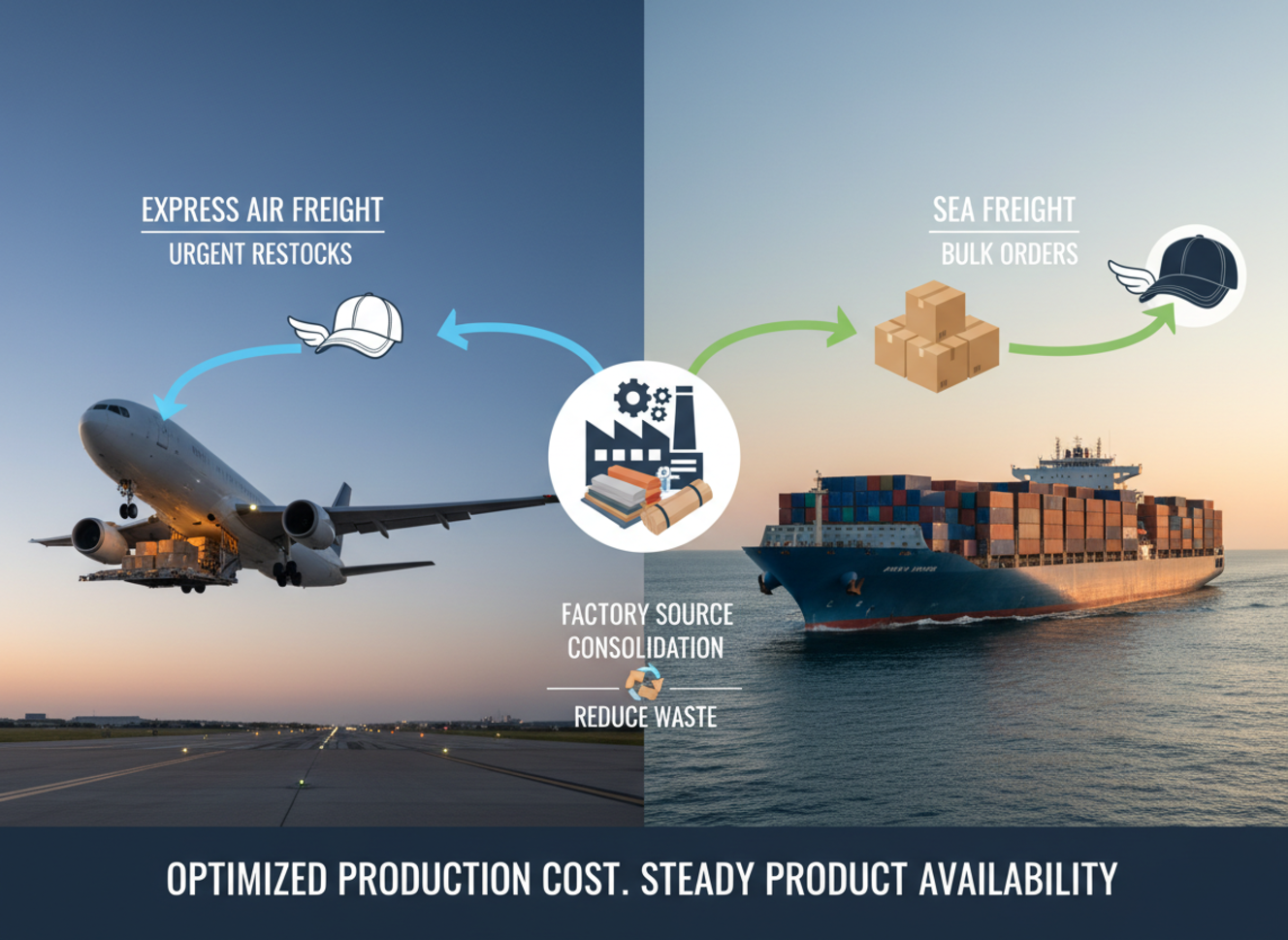
Supply chain sounds boring. But it is where you make money. If you ship everything by DHL Air Express, you lose margin. If you ship everything by sea, you might run out of stock. You need balance.
I use a hybrid strategy. I call it the "Fast and Slow" method.
- Launch Order: Ship 20% by Air. This gets the product on your site fast. You can start selling immediately.
- Bulk Order: Ship 80% by Sea. This takes longer but is much cheaper. This stock arrives just as the air shipment runs out.
You should also think about raw materials. If you use a special foam for the front panel, buy it in bulk. Keep it at the factory. This cuts down the lead time for your next order.
| Transport Mode | Speed | Cost | Best Use |
|---|---|---|---|
| Express (DHL/FedEx) | 3-5 Days | High | Samples & Rush Orders |
| Air Freight | 7-10 Days | Medium | Restocking Best Sellers |
| Sea Freight | 25-40 Days | Low | Main Bulk Inventory |
Mastering this mix is key to scaling. It keeps your customers happy and your wallet full.
How Can You Forecast Demand and Schedule Production Efficiently?
Do you have boxes of unsold hats collecting dust? Overstocking kills cash flow. Accurate forecasting helps you order exactly what you will sell.
Forecast demand by tracking sales trends, seasonal spikes, and marketing calendar events. Schedule production in waves rather than one massive lump sum. This allows you to adjust designs based on real-time feedback while maintaining a steady flow of high-quality custom trucker hats.
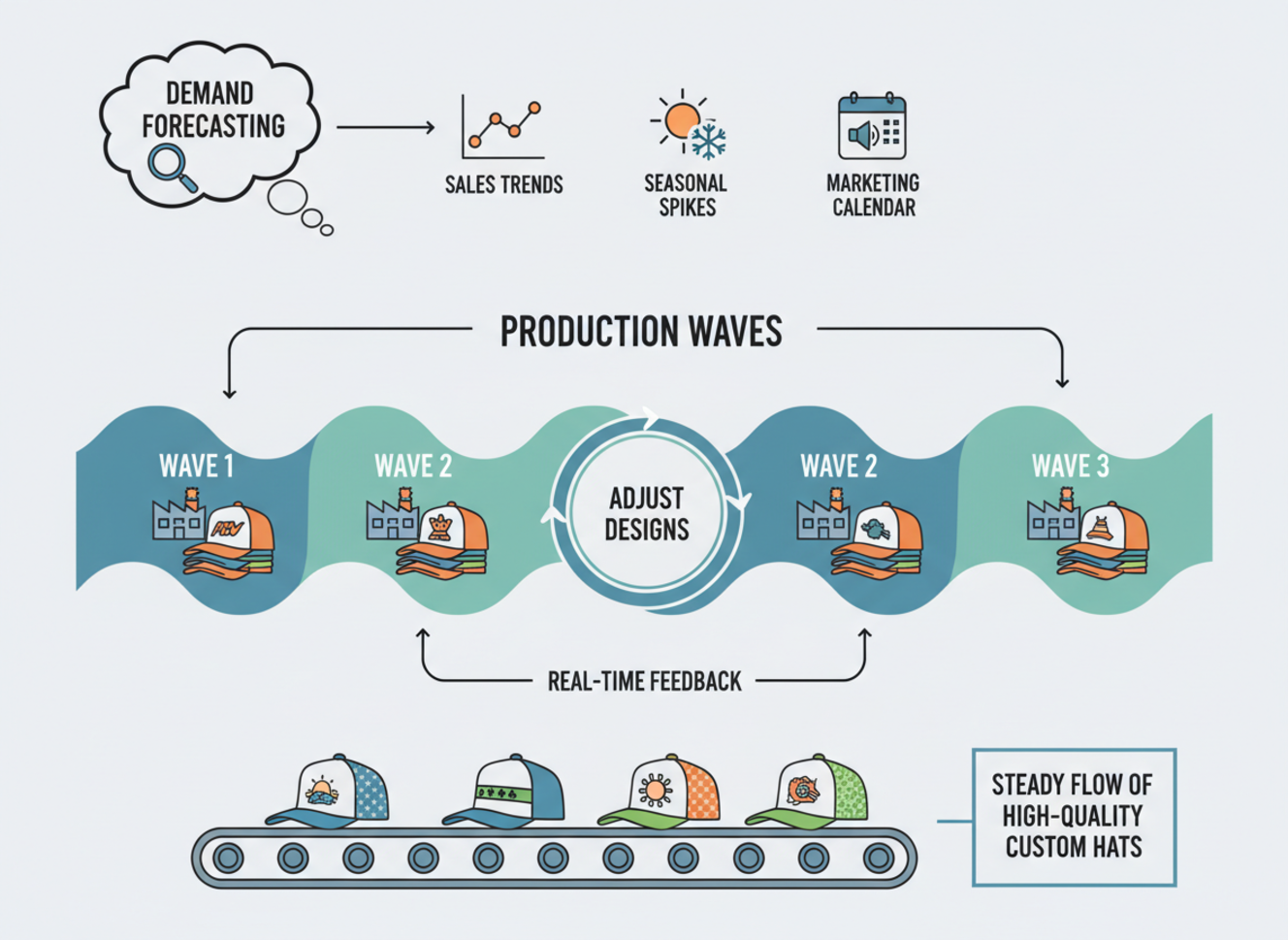
Predicting the future is hard. But you can make educated guesses. Look at your marketing calendar. Are you paying an influencer to wear your hat next month? If yes, you need more stock.
Seasonality is huge for women’s trucker hats. Summer is the peak. You must order in winter to be ready for spring. If you order in spring, you are too late.
I use "Rolling Forecasts." Every month, I look at the next three months. I adjust my orders based on what happened last week.
- Scenario A: The pink hat is viral. I immediately place a rush order for that color.
- Scenario B: The blue hat is slow. I delay the next batch of blue.
This flexibility requires a factory that allows low MOQs. If you are locked into 5,000 pieces, you cannot pivot. This agility is how small brands beat big brands. You react faster. You stay relevant.
Tools and Resources for Managing Scalable Trucker Hat Operations?
Are you still using spreadsheets and sticky notes? Chaos leads to mistakes. Modern tools help you manage orders, inventory, and suppliers without the stress.
Use inventory management software like Shopify or specialized ERP systems to track stock levels automatically. Communication tools like Slack or WhatsApp keep you connected with your manufacturer. These resources streamline the process to custom scale women’s trucker hat production efficiently.

You cannot scale with just a notebook. You need digital tools. They save time and reduce human error. When you have 50 SKUs, you cannot remember everything.
Here are the tools I recommend for hat brands:
- Shopify: It is not just a store. It tracks your inventory. It tells you when to reorder. It gives you the data you need.
- Trello or Asana: Use this for product development. Create a card for "Summer Collection." Move it from "Design" to "Sample" to "Production." Everyone knows the status.
- WhatsApp: This is how you talk to Chinese factories. Email is too slow. We use WhatsApp at Anthea to send photos of embroidery instantly. We fix problems in minutes, not days.
- Pantone Connect: Ensure your colors are correct. Do not trust your computer screen. Use the digital codes to speak the same language as the factory.
Using these tools makes you look professional. It helps your factory understand you better. It turns chaos into a system.
Conclusion
Scaling requires planning, the right partners, and strict quality control. By anticipating challenges and managing your supply chain, you can grow your women’s trucker hat line successfully.
-
Learn proven steps, pitfalls, and supplier expectations so you can scale output without losing flexibility or cash. ↩
-
Shows how standardization reduces defects, speeds reorders, and prevents costly variation across large runs. ↩
-
Helps you avoid stockouts when a vendor slips—plus templates and criteria for qualifying second sources. ↩
-
Get QC frameworks that reduce returns and protect brand reputation when volumes jump fast. ↩
-
Teaches practical inventory planning tied to lead times so you don’t miss seasons or tie up too much cash. ↩
-
Explains dye lots, material variance, and control methods so your products look identical across reorders. ↩
-
Offers logistics best practices to keep delivery dates reliable and customers satisfied during scale-ups. ↩
-
Learn documentation and communication routines that prevent errors, rework, and missed deadlines. ↩
-
Shows negotiation tactics and contract terms that stabilize margins as orders and material costs change. ↩
-
Helps you understand dye-lot risk and the controls needed to keep color consistent across large orders. ↩
-
Provides seasonality planning so inventory lands before trends peak—reducing dead stock risk. ↩
-
Learn how pre-booking works, when to commit, and how it protects your production schedule. ↩
-
Independent inspections catch defects before shipment—saving you from refunds, chargebacks, and bad reviews. ↩
-
Shows common term structures (deposit/balance/net terms) so you can scale without cash crunches. ↩
-
Clear mockups reduce misinterpretation of details, cutting sampling cycles and production errors. ↩
-
Gives a simple metric to forecast demand and set reorder points based on real sell-through. ↩ ↩
-
A strong tech pack prevents factory guessing—improving consistency, speed, and first-pass approval rates. ↩ ↩
-
Learn how golden samples set the quality standard and how to use them for leverage during inspections. ↩
-
Shows a hybrid shipping strategy to keep best-sellers in stock while protecting profit margins. ↩