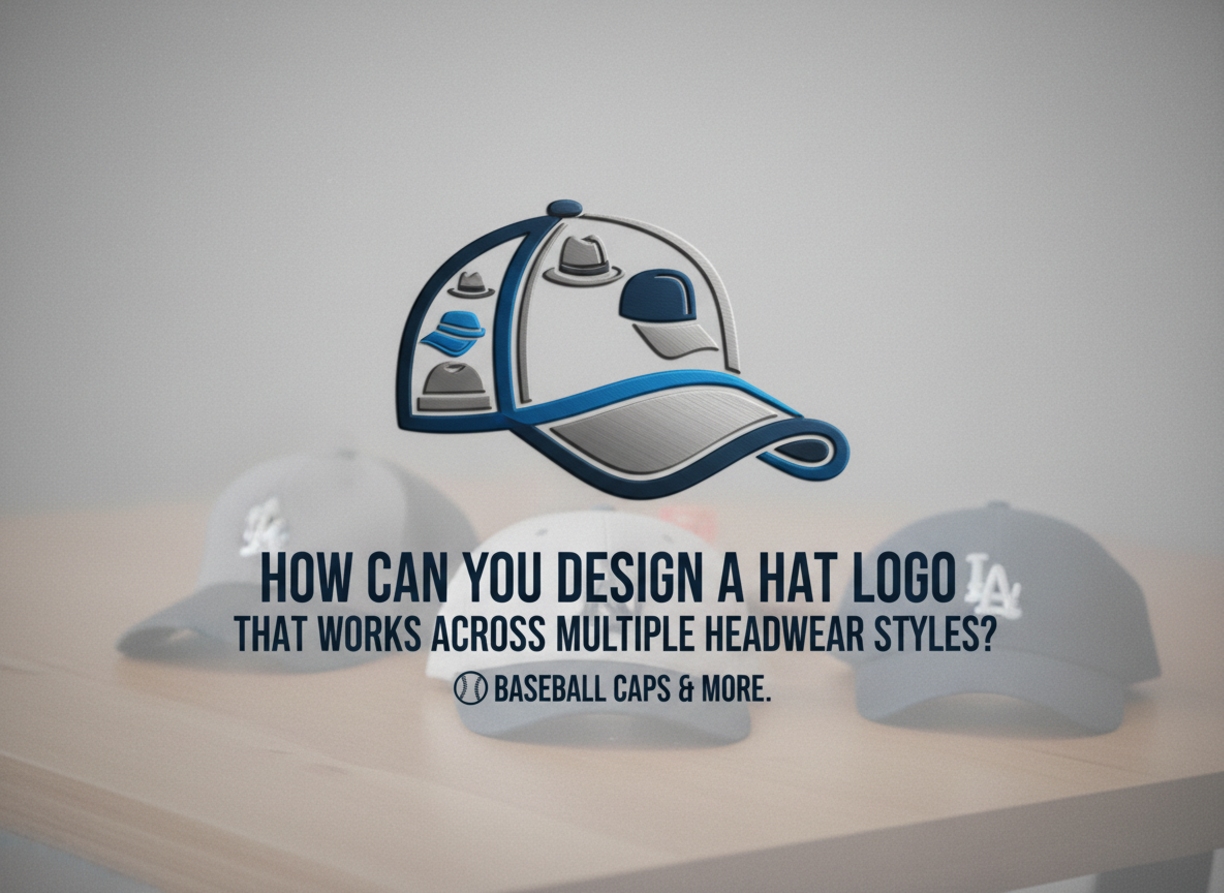
Many brands create a logo that looks perfect on one hat but falls short on another. A design that shines on a structured snapback might lose detail on a soft beanie or look uneven on a bucket hat. Understanding versatile hat logo design1 ensures your logo stays consistent and striking across every style.
To design a hat logo that works across multiple headwear styles, focus on simplicity, scalability, and contrast2. Use bold shapes, minimal details, and flexible proportions that maintain legibility on curved and flat surfaces. Adapt logo placement and decoration methods—like embroidery3, patches, or print—to suit each material while preserving consistent brand identity.
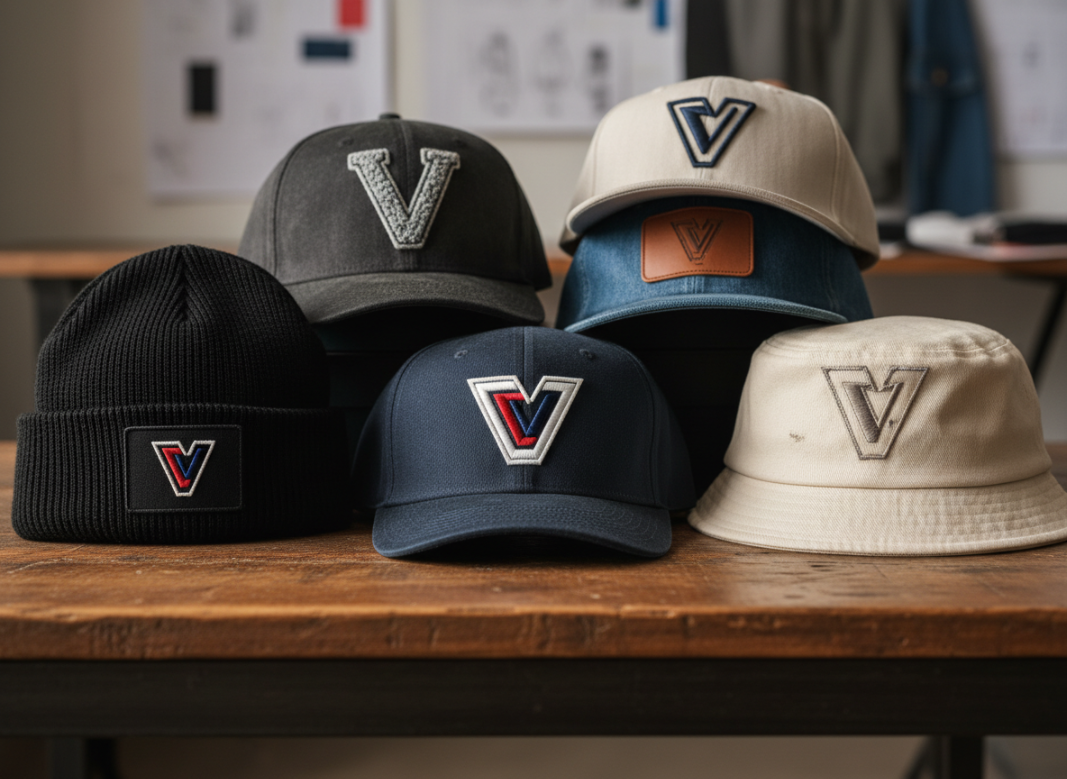
When I first worked with a client developing a full headwear line, I learned that consistency doesn’t mean identical design—it means coherent identity. The right approach ensures your logo performs beautifully across every fabric and shape.
Why versatility matters in hat logo design?
A brand is rarely defined by one hat. From structured caps to cozy beanies, each style serves a different audience and occasion. Yet, every hat must still feel unmistakably “you.”
Versatile logos allow brands to maintain recognition across all styles and contexts, from sports fields to retail displays. They ensure adaptability without sacrificing brand personality.
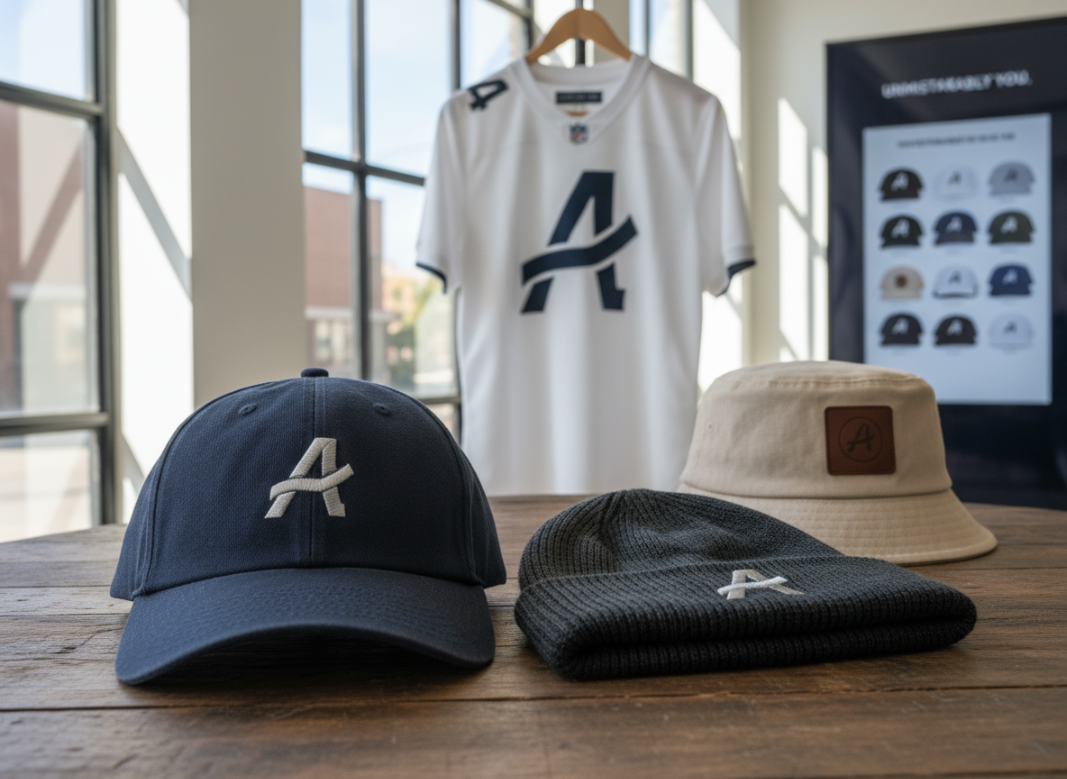
When logos aren’t designed for versatility, issues emerge fast—misaligned embroidery3 on truckers, unreadable stitching on fleece, or distorted scaling on curved crowns.
A unified visual identity strengthens brand recall, boosts merchandising cohesion, and simplifies production across global collections.
Benefits of a Versatile Logo
| Advantage | Description | Impact |
|---|---|---|
| Brand Consistency | Looks cohesive across all styles | Builds recognition and trust |
| Production Flexibility | Easier adaptation for embroidery3, print, or patch | Reduces costs and errors |
| Scalable Design | Maintains clarity at any size | Works on both beanies and caps |
| Market Adaptability | Fits multiple demographics | Expands audience reach |
Versatility isn’t a compromise—it’s a competitive edge.
Core principles of a versatile hat logo
When I review client designs, the best logos always share three traits: simplicity, scalability, and adaptability. These principles guide every successful scalable cap logo4.
A versatile logo relies on clean shapes, strong contrast2, and balanced proportions. Avoid intricate details, long text, or thin lines that may disappear on certain hat fabrics.
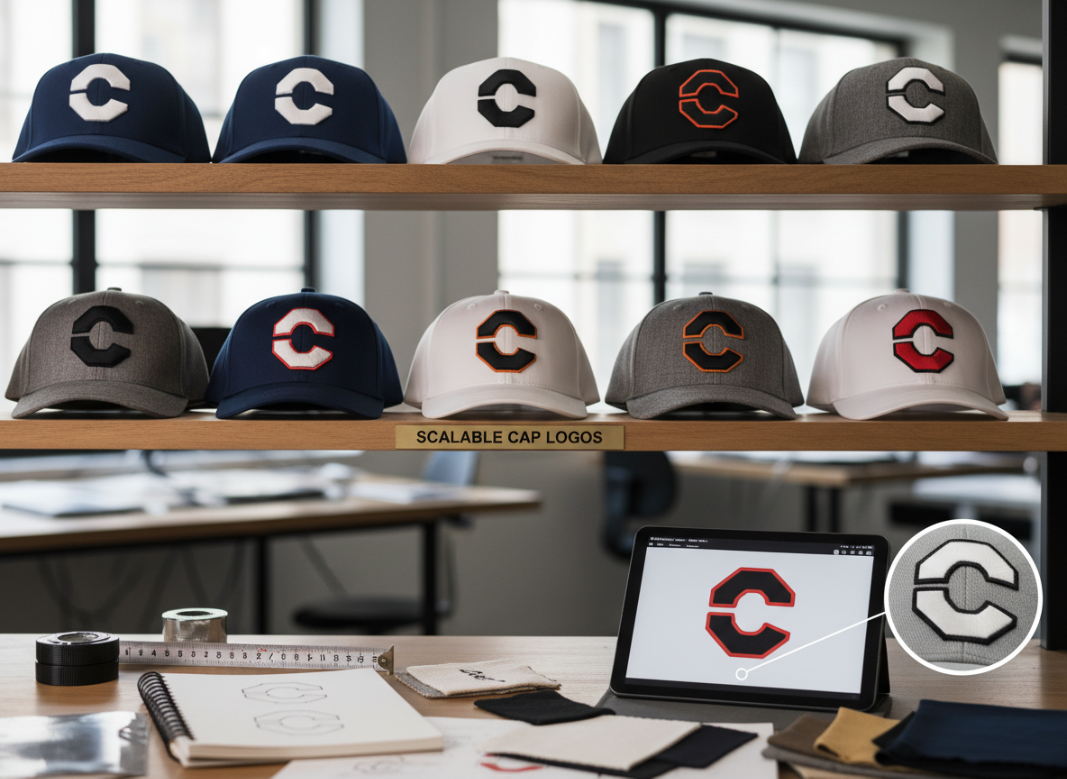
Simplify your design to its essential visual form. Use minimal text and rely on strong silhouettes or icons. Your logo should be instantly recognizable, even when embroidered at 2 inches tall.
Key Design Principles
| Principle | Focus | Application |
|---|---|---|
| Simplicity | Remove unnecessary detail | Keep clear under embroidery3 |
| Scalability | Retain clarity at any size | Test at 1" and 4" widths |
| Adaptability | Flexible for materials and textures | Works on canvas, mesh, fleece |
| Contrast | High thread-to-fabric difference | Enhances visibility |
| Balance | Centered visual weight | Ensures symmetry on curved panels |
These rules keep your design sharp whether printed, stitched, or embossed.
Adapting designs for different hat styles
I once worked on a brand rollout where the same logo had to appear on a baseball cap, a bucket hat, and a beanie. Each hat required a slightly modified approach to maintain visibility and proportion.
Adapt your logo layout, size, and decoration style for each hat type. A design that fits a flat-brim snapback won’t necessarily work on a curved bucket hat or flexible knit.
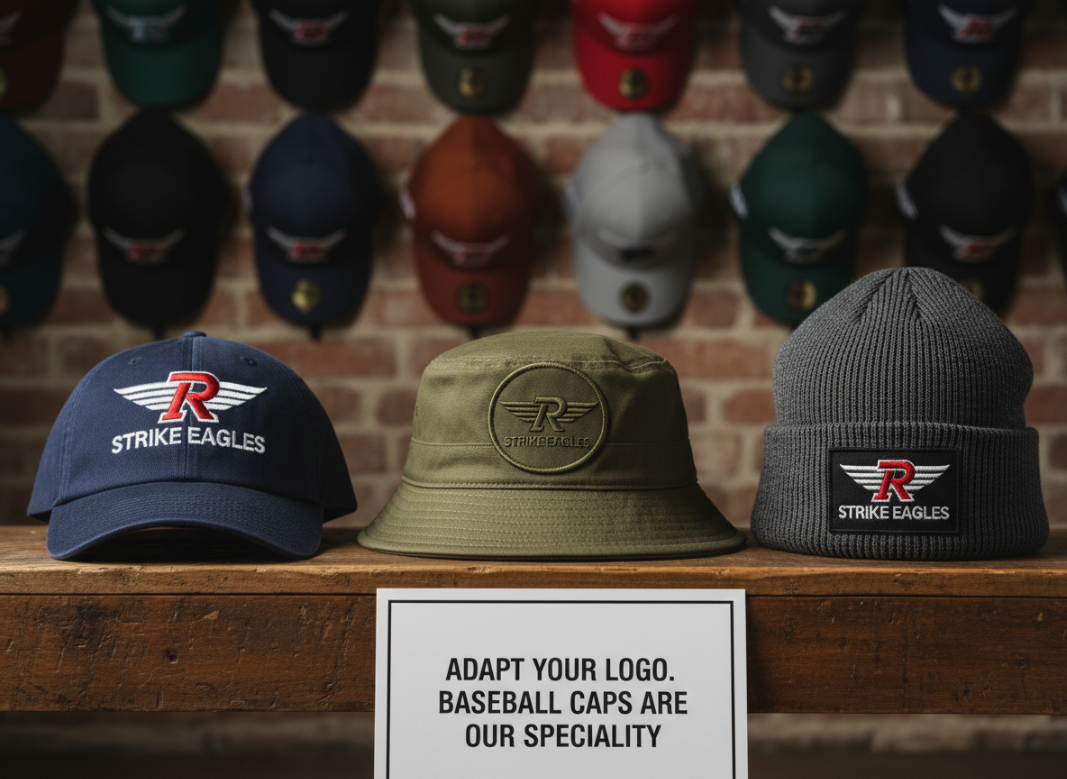
Different hats demand unique placements and scaling. Structured crowns suit larger, centered logos, while soft hats like beanies favor smaller or front-label applications.
Logo Adaptation by Hat Style
| Hat Type | Recommended Logo Type | Ideal Placement |
|---|---|---|
| Baseball Cap | Flat embroidery3 | Front center |
| Snapback | 3D puff or patch | Front or side |
| Trucker Hat | Silicone patch | Front foam panel |
| Bucket Hat | Woven label or small embroidery3 | Side or front |
| Beanie | Embroidered patch | Cuff front |
The goal is harmony—each version looks unique yet clearly belongs to the same brand family.
Balancing style and production techniques
Even a perfect logo can lose impact if applied with the wrong production method. Thread density, patch thickness, or print ink all change how a logo feels.
Match your logo design with the right technique—embroidery3, patch, print, or silicone—based on each hat’s material and intended use.
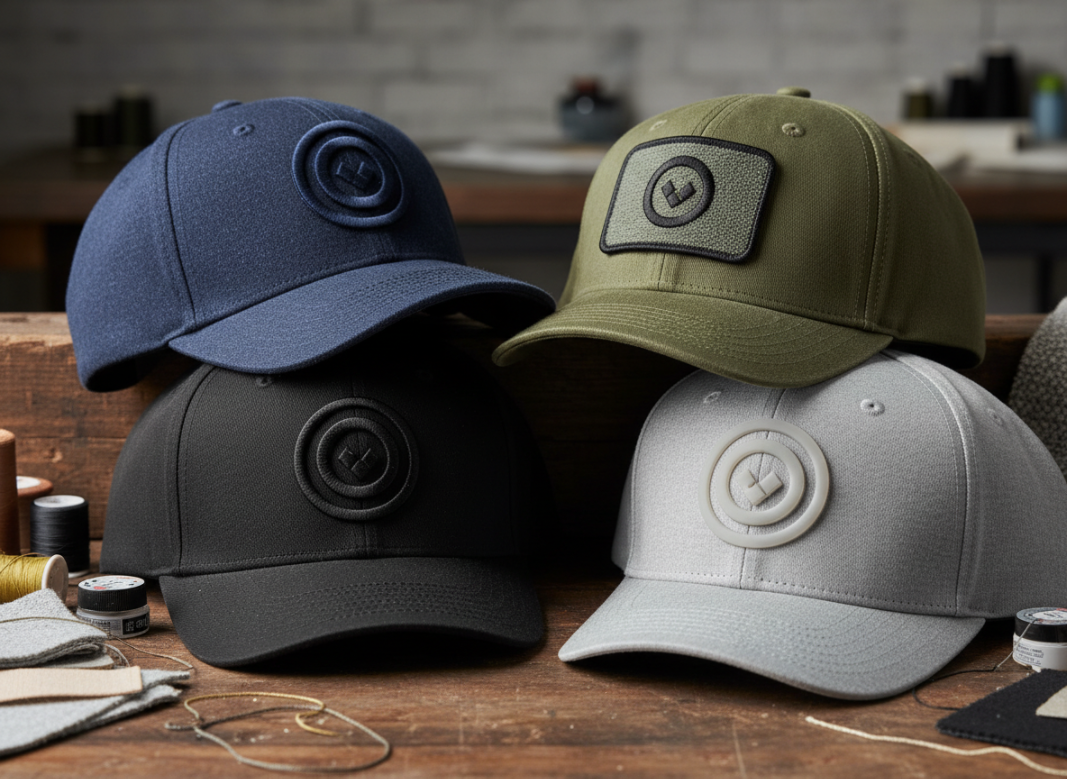
For example, detailed logos perform better with woven patches or silicone transfers. Textured fabrics like fleece benefit from raised embroidery3 or bold woven labels for better contrast2 and readability.
Production Method Comparison
| Technique | Best For | Texture | Durability |
|---|---|---|---|
| Embroidery | Cotton, canvas | Textured, premium | High |
| Patch (Woven or Rubber) | Mesh, fleece | Clean, modern | Very High |
| Heat Transfer | Polyester, nylon | Smooth and flat | High |
| Silicone Print | Performance hats | Flexible, sporty | Very High |
Choosing the right decoration method keeps your logo crisp and professional, no matter the material.
Maintaining consistency across materials and textures
I’ve seen brands struggle with color inconsistency when switching fabrics. A navy thread that looks deep on cotton may appear lighter on polyester.
Consistency across materials requires controlled color palettes, stitch adjustments, and sampling to ensure the same visual impact across every fabric.
%(alt with keywords)adaptive hat logo design
Each material interacts differently with light and thread. Mesh creates gaps; fleece absorbs light; canvas reflects texture.
That’s why visual testing5 across all materials is crucial before large-scale production.
Color & Material Coordination
| Material | Recommended Thread Type | Design Tip |
|---|---|---|
| Canvas | Polyester thread | Use medium density |
| Mesh | Silicone or patch logo6 | Avoid small lettering |
| Fleece | Woven label | Keep design bold |
| Nylon / Polyester | Heat transfer | Maintain flat surface |
| Wool | Embroidery | Limit detail to avoid fray |
Maintaining visual harmony across materials reinforces brand strength and product quality.
How Anthea helps brands test multi-style logos
When clients plan a full hat collection, my team at Anthea helps them visualize the logo across all styles before production. We sample multiple techniques and compare results side by side.
Anthea’s multi-style logo sampling7 process allows brands to test logo performance across materials, ensuring consistent size, color, and quality across every hat type.
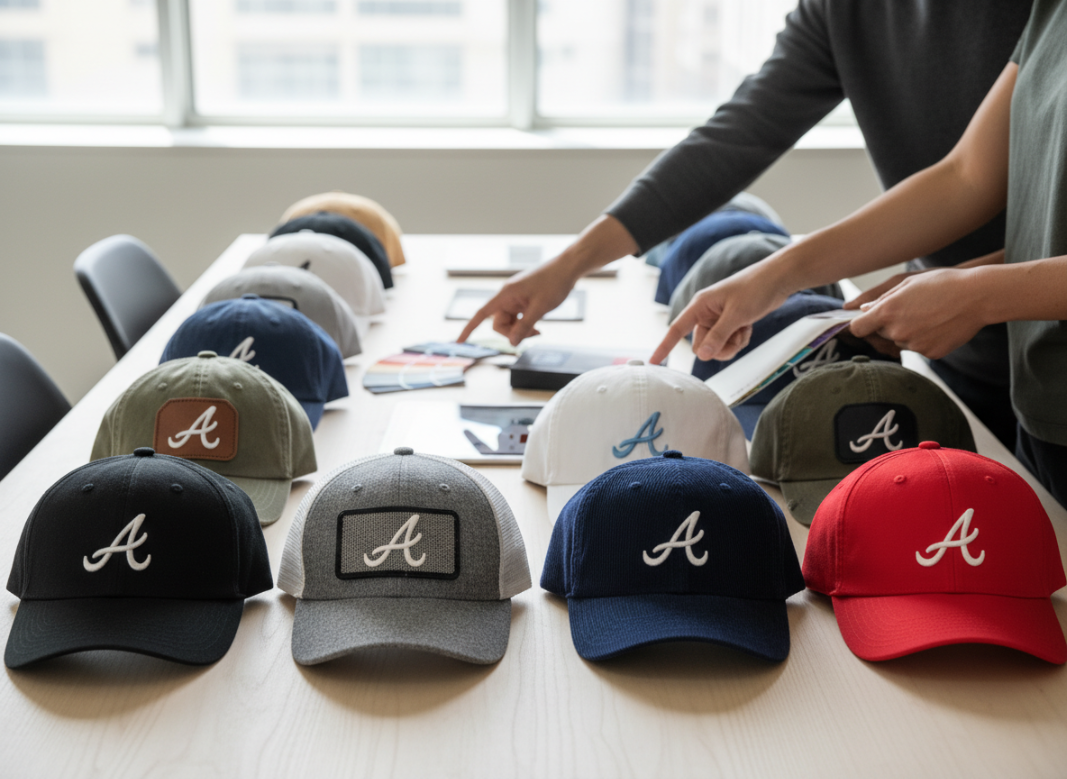
We review logo scale, stitch count, and visual alignment for each style, making sure the branding remains unified from the first cap to the last beanie.
Our Multi-Style Testing Process
| Step | What We Do | Outcome |
|---|---|---|
| Logo Review | Assess scalability and simplicity | Identify design risks |
| Sampling | Apply logo on multiple hat types | Visual comparison |
| Feedback | Refine stitch and placement | Improve consistency |
| Approval | Finalize unified design specs | Ready for production |
Testing early prevents inconsistencies and guarantees premium, collection-ready results.
Conclusion
Designing a versatile hat logo means thinking ahead—planning for structure, material, and production. Keep your design simple, scalable, and adaptable across styles. With Anthea’s expertise and testing support, your logo will deliver consistent, powerful impact—no matter which hat your customer wears.
-
Explore this resource to learn how to create logos that maintain their impact across various hat styles. ↩
-
Explore the importance of contrast in logo design to enhance visibility and brand recognition. ↩ ↩ ↩
-
Learn about embroidery techniques that can enhance the quality and appearance of your hat logos. ↩ ↩ ↩ ↩ ↩ ↩ ↩ ↩
-
This link provides insights on designing logos that retain clarity and recognition on various cap types. ↩
-
Understand the significance of visual testing to ensure your logo performs well across all materials. ↩
-
Discover the benefits of patch logos and how they can improve your branding on headwear. ↩
-
Explore how multi-style logo sampling can help brands ensure consistency and quality in their designs. ↩