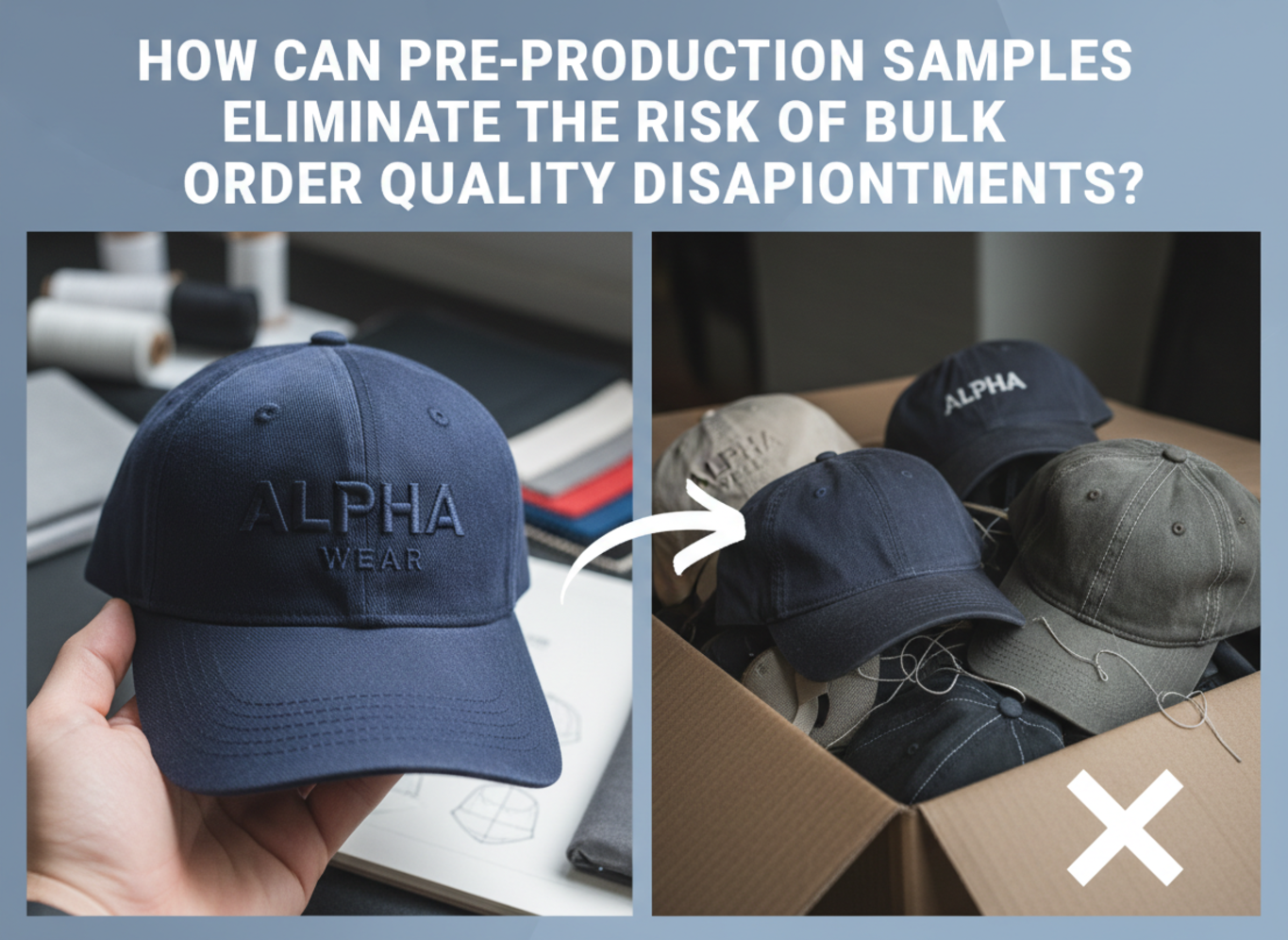
Imagine waiting weeks for your bulk order1, only to open the box and find the logo is crooked. This nightmare destroys budgets and angers customers. Thankfully, pre-production samples2 stop this disaster.
A pre-production sample is a single prototype3 made before full manufacturing begins. It allows you to check materials, stitching, and fit4 physically. Approving this sample5 ensures the factory matches your exact vision, eliminating the risk of costly mistakes in the final bulk shipment.
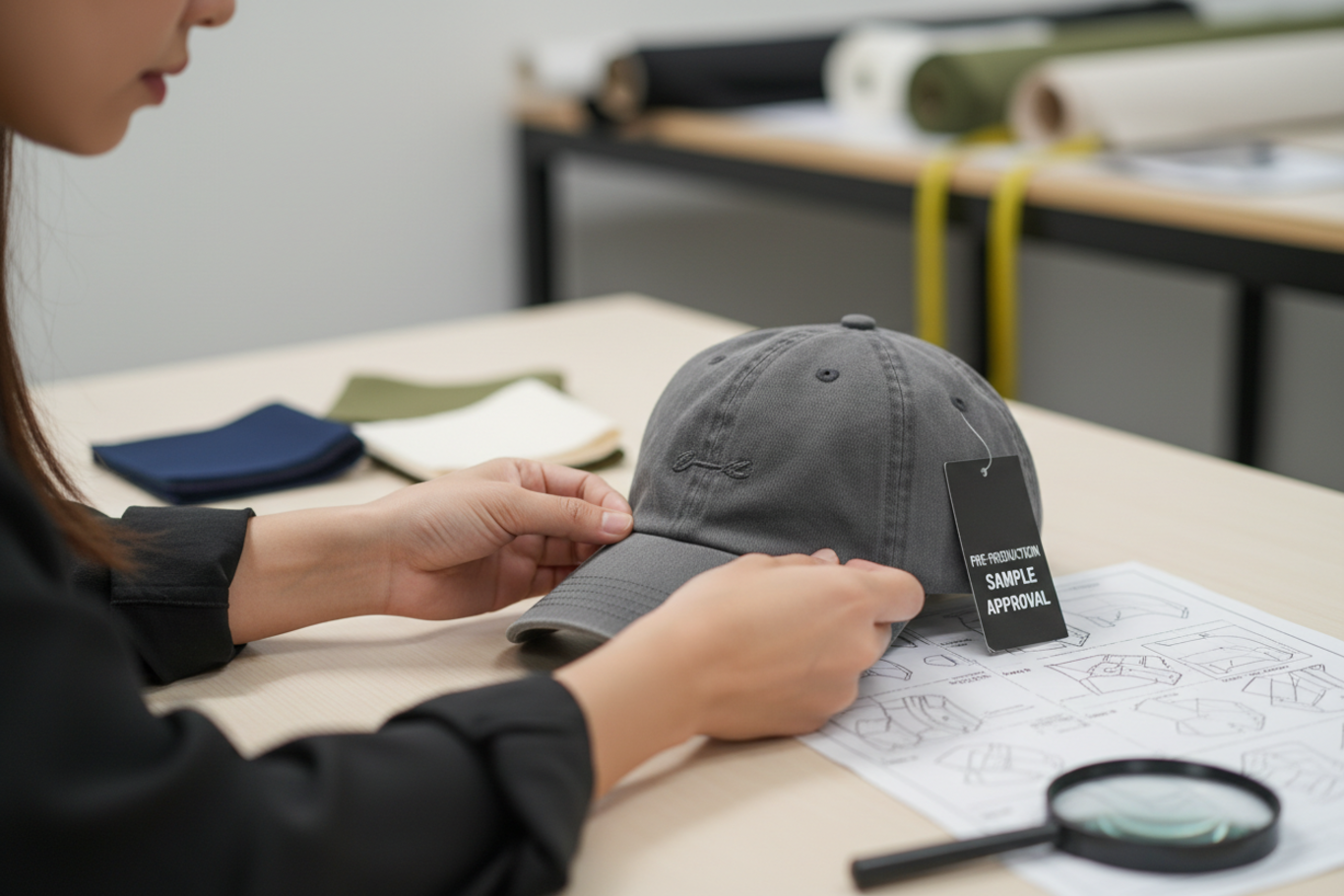
I have seen many new brand owners skip this step to save time. They usually regret it later. Let me explain why this step is vital for your business.
Why should I order a pre-production sample?
You might think photos are enough, or you want to save fifty dollars. But skipping the physical check is gambling with your entire brand reputation.
You should order a pre-production sample to physically verify the fabric feel, color accuracy, and embroidery quality6. Digital mockups7 cannot show how a hat fits on a head or how the thread shines in light. It is your insurance policy against manufacturing errors.
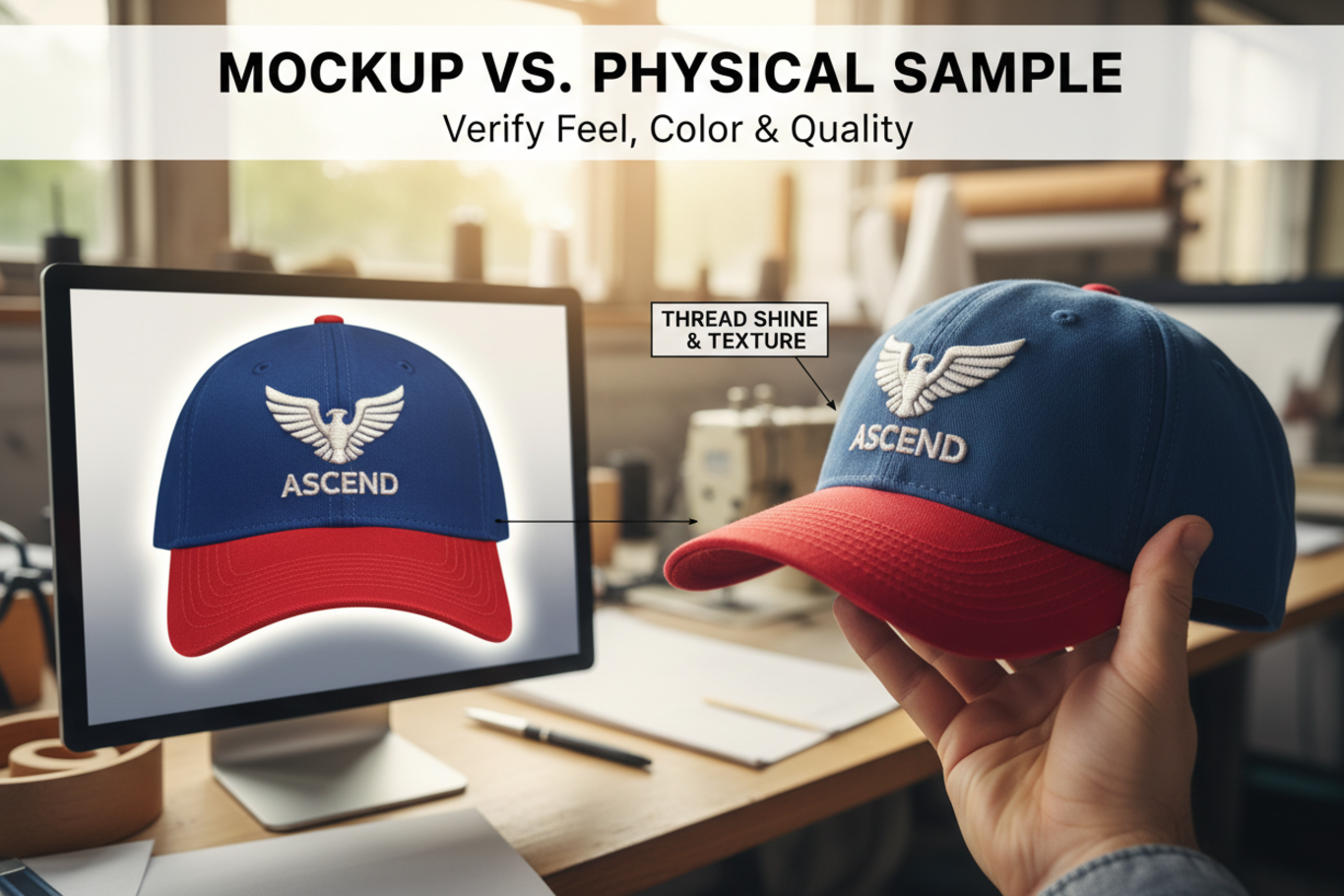
At Anthea, I often see clients trust a computer screen too much. A Pantone color8 on a screen looks different than dyed cotton twill9 in sunlight. If you are running a brand like UrbanMark, you cannot afford to ship 300 caps with the wrong shade of navy blue. A physical sample reveals the truth about the product.
The Limits of Digital Proofs
We provide high-quality mockups, but they are just drawings. They cannot show you the weight of the fabric. They cannot show you if the brim is too hard or too soft. When you hold the sample, you can pull the stitching to test the strength. You can wear it to test the fit.
Critical Differences Table
Here is a breakdown of what you can check with a physical sample versus a digital file:
| Feature | Digital Mockup | Physical Sample |
|---|---|---|
| Color | Depends on screen settings | Real-life lighting accuracy |
| Texture | Looks flat and smooth | Can feel roughness or softness |
| Fit | Standard shape drawing | Actual size on a human head |
| Logo Depth | 2D graphic | 3D embroidery height and feel |
When you order a sample, you buy certainty. You remove the guessing game from your business. This small cost protects your large investment in the bulk order1.
How does a pre-production sample work in hat manufacturing?
The process might seem slow, but it is actually very simple. It connects your design file to the factory floor before the machines start running fast.
The process begins when you pay the sample fee10 and submit your tech pack11. The factory sources materials, cuts the fabric, and creates the logo. We send you photos first, then ship the physical hat. You give feedback, and we only start bulk production after you say "yes."
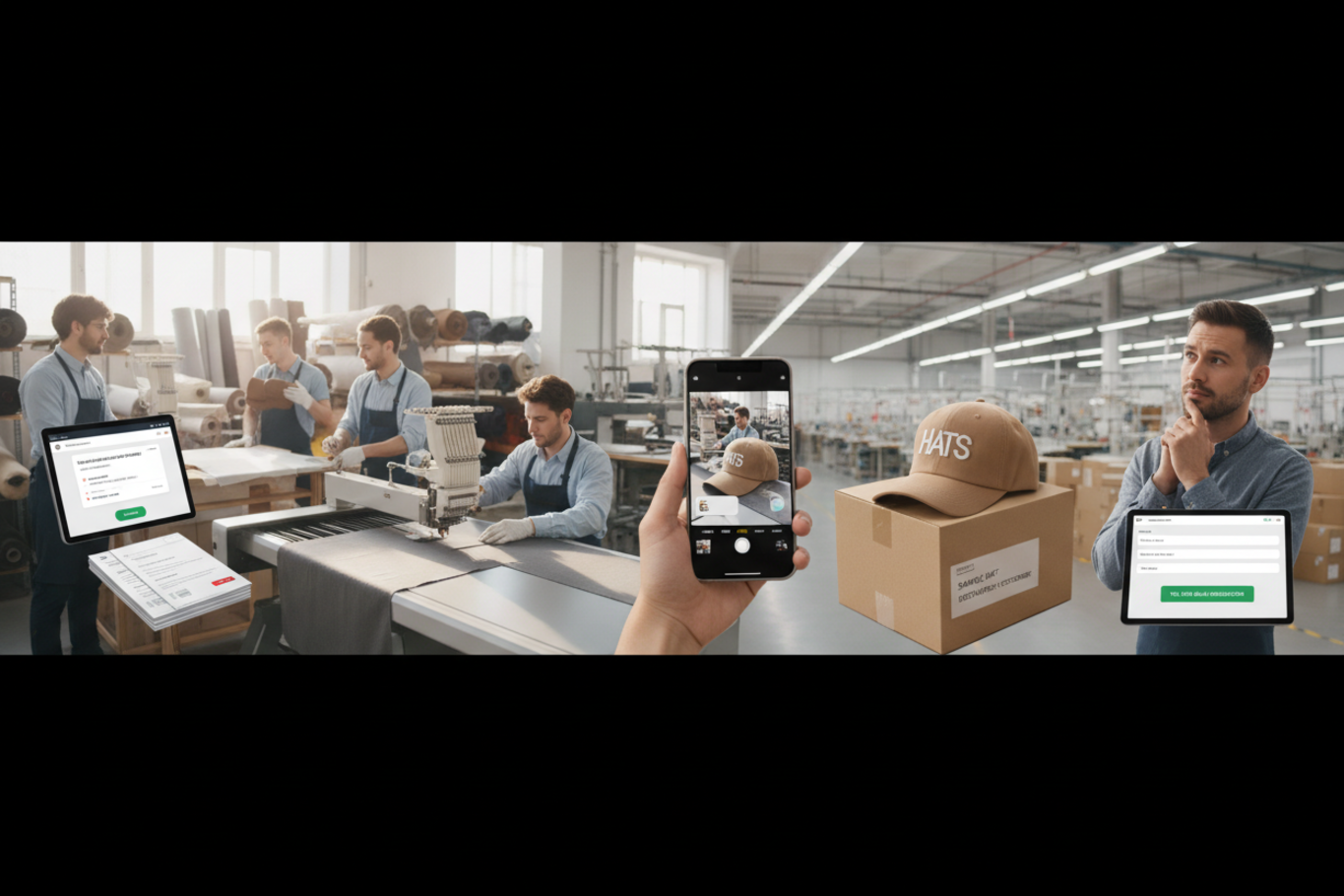
I want to walk you through exactly how we handle this at our factory. It is a structured timeline designed to catch errors early. We do not want to rush this part because it sets the standard for everything else.
Step 1: Material Sourcing and Setup
Once you pay for the sample, we go to the fabric market. We find the exact color and material you asked for. We also set up the digitizing for your embroidery12. This means we tell the embroidery machine exactly where to put the needle. This takes about 2 to 3 days.
Step 2: Production and Initial Review
We cut the panels and assemble the first hat. This usually takes 7 to 10 days at Anthea. Before we ship it to you, we take clear photos. We check the measurements. If I see the logo is wrong, I fix it before I even show you.
Step 3: Shipping and Feedback
We ship the hat to you via express shipping like DHL13. This is the most important moment. You must inspect the hat closely.
- Is the brim straight?
- Is the inside label comfortable?
- Is the buckle strong?
If you want changes, we note them for the bulk order1. If the mistake is big, we make a new sample. We only move to mass production when you are 100% happy.
What are the benefits of pre-production samples2?
Spending money on one hat seems annoying when you want to sell hundreds. However, the benefits go far beyond just checking the logo placement.
The main benefits include testing material durability14, verifying sizing fit, and building a relationship with your supplier. It also gives you a perfect product to use for marketing photos and pre-orders15 while the bulk order1 is being made.

Many of my customers, like Ben, use the sample phase to grow their business before they even have stock. This is a smart strategy. The sample is not just a test tool; it is a marketing asset.
Early Marketing Advantage
Production takes time. Shipping takes time. While you wait for the 200 hats to arrive, you have the sample in your hand. You can hire a photographer. You can take photos of models wearing the hat. You can post these on Instagram and TikTok. You can even start taking pre-orders15 on your Shopify store. This helps you get cash flow before the bulk order1 arrives.
Testing Durability
You can wear the sample every day for a week. You can leave it in the sun. You can see if it loses shape. If the hat looks bad after one week, you know you need to change the material. It is better to fail with one hat than with 500 hats.
Strengthening the Supplier Relationship
When you give detailed feedback on a sample, I learn what you value. I learn that you care about straight stitching. I learn that you are serious about quality. This makes my team pay extra attention to your bulk order1. It builds trust between us.
Can pre-production samples2 prevent bulk order1 quality issues?
Many people ask if a good sample guarantees a good bulk order1. The short answer is yes, but only if you use the sample correctly.
Yes, pre-production samples2 prevent issues by acting as the "gold standard" for the factory workers. Once you approve the sample, the factory uses it as a reference model. If the bulk order1 does not match the approved sample, you have clear grounds to demand a remake or refund.
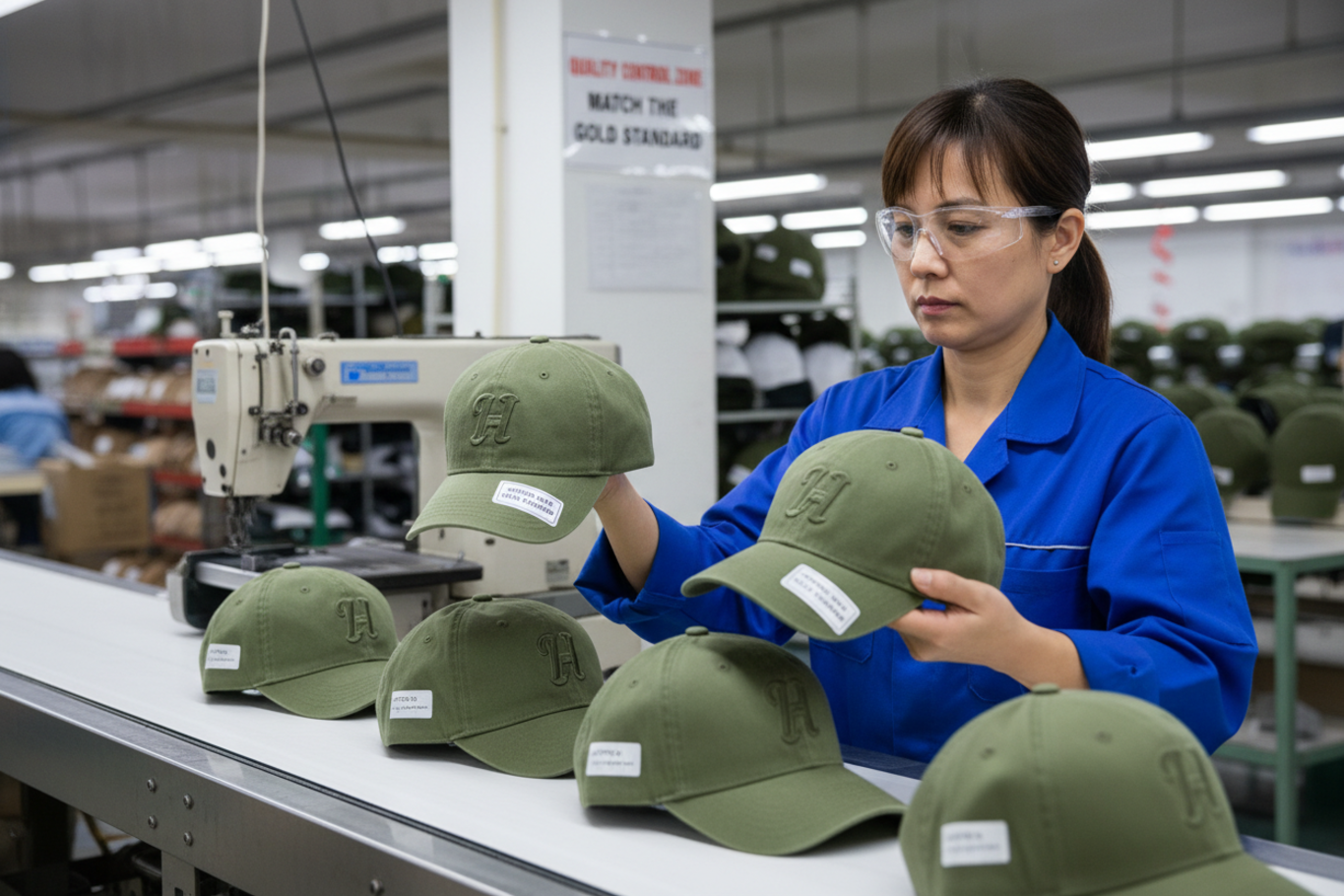
The sample is your contract. In the manufacturing world, words can be misunderstood, but a physical object is clear. The approved sample sits on the production line. The workers look at it while they sew the other hats.
The "Gold Sample"16 Standard
We call the approved sample the "Gold Sample." It is the ruler we measure everything against. If the bulk hats have a different color thread than the Gold Sample, it is a defect. Without this sample, you cannot prove the factory made a mistake. You might say "it looks wrong," but the factory can say "it looks standard." The sample removes this argument.
Common Issues Prevented
Here is a list of specific problems that the sample helps us avoid during mass production:
| Potential Issue | How Sample Prevents It |
|---|---|
| Logo Misplacement | The sample shows the exact distance from the bottom seam. |
| Wrong Buckle Type | The sample confirms the metal or plastic quality. |
| Fabric Bleeding | You can wash the sample to see if colors run. |
| Size Variance | The sample sets the circumference measurement. |
Your Right to Compensation
If you receive a bulk order1 that is bad, you compare it to the sample. If they are different, reliable factories like Anthea will take responsibility. We will fix it or refund you. But if you never approved a sample, you have no proof of what you wanted. The sample protects your money.
Conclusion
Pre-production samples cost time and money, but they ensure your bulk order1 matches your vision and protect your brand’s reputation.
-
A practical checklist helps protect your cash, timeline, and customer satisfaction before committing to volume. ↩ ↩ ↩ ↩ ↩ ↩ ↩ ↩ ↩ ↩ ↩
-
Learn the standard definition and best-practice use so you can avoid costly bulk-production surprises. ↩ ↩ ↩ ↩
-
Understand how one prototype becomes the benchmark that controls consistency across the entire run. ↩
-
Step-by-step inspection criteria helps you spot weaknesses and comfort issues before approving production. ↩
-
Approval documentation protects you in disputes and ensures the factory follows the exact agreed standard. ↩
-
Testing methods reduce returns by confirming hand-feel, true color, and clean embroidery before you scale. ↩
-
See where mockups fail so you don’t rely on visuals that can’t reveal real fit, texture, or finish. ↩
-
Learn why screen color differs from real dye lots and how to set tolerances that factories can meet. ↩
-
Fabric guides help you choose twill that holds color, wears well, and fits your target quality level. ↩
-
Knowing what fees include helps you budget correctly and negotiate scope (materials, tooling, revisions). ↩
-
A complete tech pack reduces factory guesswork and prevents spec errors that cause rework and delays. ↩
-
Digitizing choices control stitch direction, density, and edge sharpness—key to a premium-looking logo. ↩
-
Transit-time expectations help you plan launches and approvals without derailing your production schedule. ↩
-
Durability tests reveal early failures (fade, deformation, wear) so you can fix specs before bulk output. ↩
-
A solid pre-order strategy improves cash flow and validates demand while production is still underway. ↩ ↩
-
Gold-sample QC gives you leverage: a physical standard for inspections, claims, remakes, or refunds. ↩